Spain Elections Explained, How the Vote Works in 2026
SPAIN · ELECTIONS
Key Facts
- The vote Spain elects a new parliament on Sunday 29 November 2026, under Royal Decree 806/2026.
- The size Voters fill 350 seats in the Congress of Deputies and elect senators province by province.
- The catch Voters pick a party list, not a prime minister; parliament chooses the head of government later.
- The race Pedro Sánchez of the Socialists faces Alberto Núñez Feijóo of the People’s Party.
- The next step The new parliament meets on 23 December; 176 deputies make a majority.
The Spain elections on Sunday 29 November 2026 will choose a new parliament, and parliament will then choose the next prime minister. Voters do not elect the head of government directly.
This guide explains how the system works, who leads the main parties and what the vote decides. It also covers what US readers should know about a NATO ally that votes months ahead of schedule.

Spain Elections at a Glance
Spain is a parliamentary monarchy. The King is head of state, but the prime minister runs the government and needs the backing of the lower house of parliament.
A royal decree published on 6 October dissolved the old parliament and called the vote. The previous general election was on 23 July 2023.
Prime Minister Pedro Sánchez called the early vote after Congress rejected two of his housing decrees. Junts, a Catalan separatist party, had often vetoed his measures, including those decrees.
Two Chambers, One That Decides
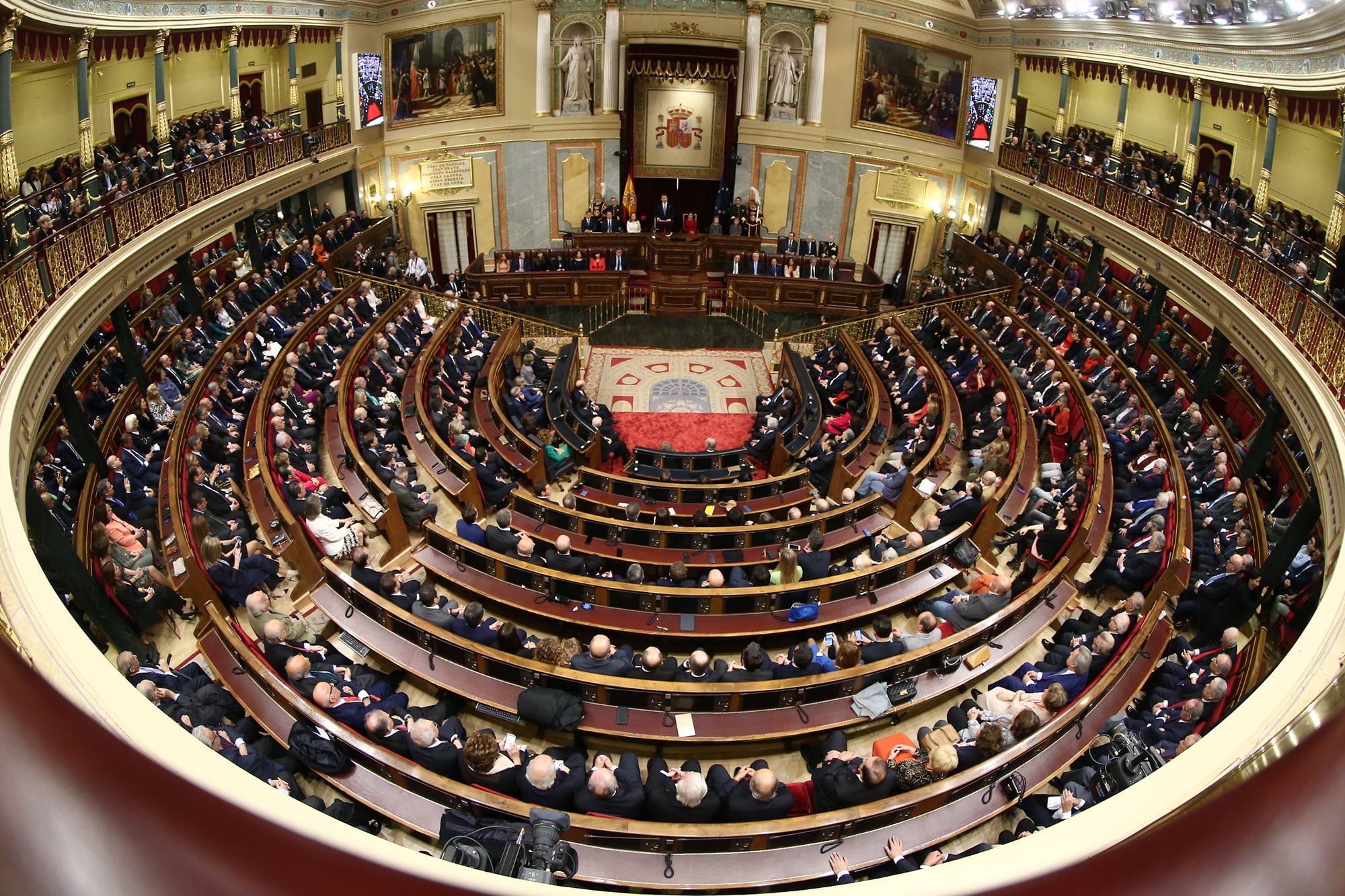
Spain’s parliament, the Cortes Generales, has two chambers. The Congress of Deputies has 350 members and decides who governs, while the Senate is the chamber of territorial representation.
Each province is its own constituency, and each one elects at least two deputies. Ceuta and Melilla, two Spanish cities on the African coast, elect one each, and the other 248 seats are shared out by population.
Madrid elects 38 deputies and Barcelona 32, while Soria, a small inland province, elects only two. That is why smaller provinces count for more per voter than the big cities.
How Seats Are Won
Voters choose a party list, and the order of names on the list is fixed by the party. A list that wins less than 3% of the valid votes in a province gets no seats there.
The remaining seats go to the lists with the highest vote totals after repeated division by one, two, three and so on. The system rewards the biggest parties in small provinces and helps regional parties that are strong in their home area.
The Senate works differently. Each mainland province elects four senators, and voters can mark up to three names, so the leading party usually takes three seats.
The Canary Islands and Balearic Islands elect senators by island, and Ceuta and Melilla elect two each. Regional parliaments also appoint further senators, one per region plus one per million inhabitants.
How a Prime Minister Is Chosen
After each election the King consults the party groups and proposes a candidate for prime minister. The candidate presents a programme to Congress and asks for its confidence.
An absolute majority of the 350 deputies, which is 176, wins the vote at once. If that fails, a second vote 48 hours later needs only a simple majority, meaning more votes in favour than against.
If nobody wins confidence within two months of the first vote, the King dissolves both chambers and calls a new election. That makes coalition talks the real contest after election night.
Who Holds Power Now
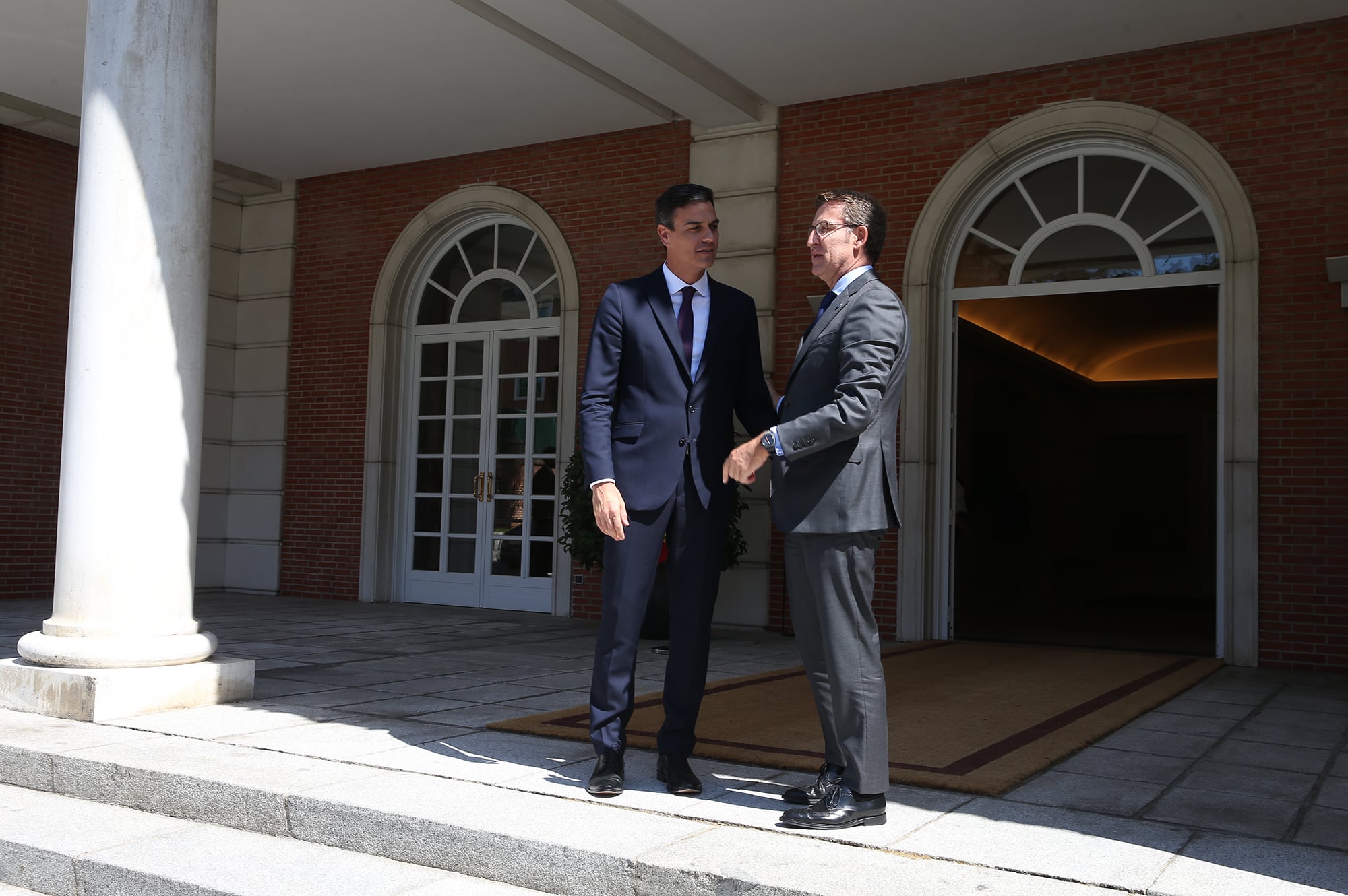
Pedro Sánchez, leader of the Spanish Socialist Workers’ Party (PSOE), is prime minister and the government’s candidate. His party is the main centre-left force in the country.
Alberto Núñez Feijóo leads the People’s Party (PP), the main conservative opposition party. The PP won the most seats in 2023 but could not form a government.
In 2023 the PP won 137 seats and the PSOE 121. Vox took 33, Sumar 31, and seven smaller parties split the remaining 28 seats.
The Parties and Their Leaders
The PP’s Feijóo campaigns on tax cuts and support for business, and he does not rule out a deal with Vox. The party hopes to improve on its 137 seats.
Vox, a conservative party, is led by Santiago Abascal. It campaigns against immigration and aims for close to 20% of the vote.
On the left, a new alliance called Frente Amplio, or Broad Front, joins Sumar, Más Madrid, Izquierda Unida and Catalunya en Comú. Ada Colau, the former mayor of Barcelona, leads it, and Yolanda Díaz of Sumar is not leading again.
Podemos, a left-wing party, mostly runs separately, and Irene Montero heads its Madrid list. In Catalonia Podemos has agreed with the Republican Left of Catalonia (ERC) to stand down in return for places on ERC’s lists.
Junts per Catalunya, a Catalan separatist party, is led in Congress by Míriam Nogueras. It has said it will not back a Sánchez government again if its votes prove decisive.
ERC’s Gabriel Rufián heads its Barcelona list, and the Basque Nationalist Party (PNV) is seeking new powers and more funding for its region. EH Bildu, a Basque left-wing nationalist party, is now led by Oskar Matute.
The Galician Nationalist Bloc (BNG) is led by Néstor Rego and holds one seat. The Canarian Coalition (CC) is led by Cristina Valido and campaigns for island funding.
What Is Underway Before the Vote
Parties registered their candidate lists between 21 and 26 October. The Socialists and their allies run joint Senate lists under the name Senado de Progreso.
The official campaign runs from midnight on Friday 13 November to midnight on Friday 27 November. Opinion polls may not be published in the last days, and Saturday 28 November is a day of silence.
The Spanish government counts 38,728,356 registered voters, of whom 2,769,645 live abroad. About 1.6 million are voting for the first time.
What US Readers Should Know
Spain joined NATO in 1982. The United States uses the bases at Rota, in Cádiz, and Morón de la Frontera, near Seville, under a 1988 defence agreement.
That agreement renews automatically each year, and it was renewed again on 22 May 2026. The election decides which government Washington deals with on defence and trade.
Spain is six hours ahead of New York in November, and polls close at 2 pm Eastern. Our election day guide has the full timetable and the rules for visitors.
What the Vote Decides
The 29 November vote decides the composition of both chambers of parliament. The new parliament holds its first sessions on 23 December at 10 am Madrid time.
Only after that session does the King propose a candidate for prime minister, so the new government may take time to form. If the first candidate fails, the King can propose another.
For the polls and the candidates, see our poll tracker and our Spain election dossier. Our profile of Alberto Núñez Feijóo and our account of how Spain got here give the background.
More: Europe politics news in English, every day from The Rio Times.
Frequently Asked Questions
When is the Spanish general election in 2026?
Spain votes on Sunday 29 November 2026, from 9 am to 8 pm local time. Royal Decree 806/2026 called the election and dissolved parliament.
How many seats are in the Spanish parliament?
The Congress of Deputies has 350 seats, and 176 make a majority. In the Senate, each mainland province elects four senators, and regional parliaments appoint more.
Who can be Spain’s next prime minister?
The King proposes a candidate after the election, and Congress must back that person. Pedro Sánchez of the PSOE and Alberto Núñez Feijóo of the PP are the main contenders.
Do Spaniards vote for the prime minister directly?
No. Spaniards vote for party lists in each province, and the elected parliament then chooses the head of government.
When does the new Spanish parliament meet?
The Congress and the Senate hold their first sessions on 23 December 2026 at 10 am Madrid time. A prime minister is chosen only after that first session.
Sources: Royal Decree 806/2026, Boletín Oficial del Estado, 6 October 2026; Spanish government guide to the 29 November general election; National Statistics Institute (INE), electorate figures, 9 October 2026; Organic Law 5/1985 on the General Electoral System, articles 162, 163 and 166; Spanish Constitution, articles 68, 69 and 99; US Navy, the US-Spain alliance.
This article was produced by The Rio Times’ automated newsroom system. How we use AI · Report an error · Editorial responsibility: Matthias Camenzind, Editor-in-Chief
Spain's Election and Pedro Sánchez
- How Spain Got Here: Pedro Sánchez’s Eight Years in Power
- Why Spain’s Prime Minister Pedro Sánchez Could Lose His Job
- Spain’s Next Leader? Meet Alberto Núñez Feijóo
- Spain Explained 2026, How It Ranks in Europe