Haiti Explained 2026: The Gang Crisis, the Transition, the Economy and What to Watch
GUIDES · HAITI
Key Facts
- —The country The western third of the island of Hispaniola, shared with the Dominican Republic. Independent since 1 January 1804, the first republic founded by formerly enslaved people.
- —Why it matters Armed gangs control most of the capital, Port-au-Prince, and are pushing into the farm belt. The state has no elected official at national level.
- —Who governs Prime Minister Alix Didier Fils-Aimé and his cabinet hold executive power alone, as of September 2026. The nine-member presidential council dissolved on 7 February 2026.
- —The security force A UN-authorised Gang Suppression Force may field up to 5,550 personnel. About 1,083 soldiers had deployed by 8 July 2026, roughly one-fifth of the ceiling.
- —The numbers About 11.9 million people. Nearly 1.47 million are displaced inside the country. The gourde traded at about 130 to the US dollar on 28 September 2026.
- —What it means for you The US government rates Haiti Level 4, Do Not Travel. US airlines may not fly to Port-au-Prince.
- —Still open Whether the first national vote since 2016 happens on 13 December 2026, and whether the Security Council keeps the force going beyond 30 September 2026.
Haiti explained for foreign readers: who holds power after the transitional council, what the new anti-gang force can and cannot do, how an economy that shrank for seven straight years survives, and which dates matter next.
Haiti explained in one sentence: a crowded country with a remarkable history, whose state has been hollowed out by armed gangs, and whose next step depends on an election and a foreign-backed force that is only partly built. Every other story about Haiti sits inside that frame.
What kind of country is this?
Haiti covers about 27,750 square kilometres, slightly less than Belgium. It holds roughly 11.9 million people, the World Bank’s estimate, so it is about as crowded as Belgium too. The Dominican Republic, its only land neighbour, shares the same island and is several times richer.
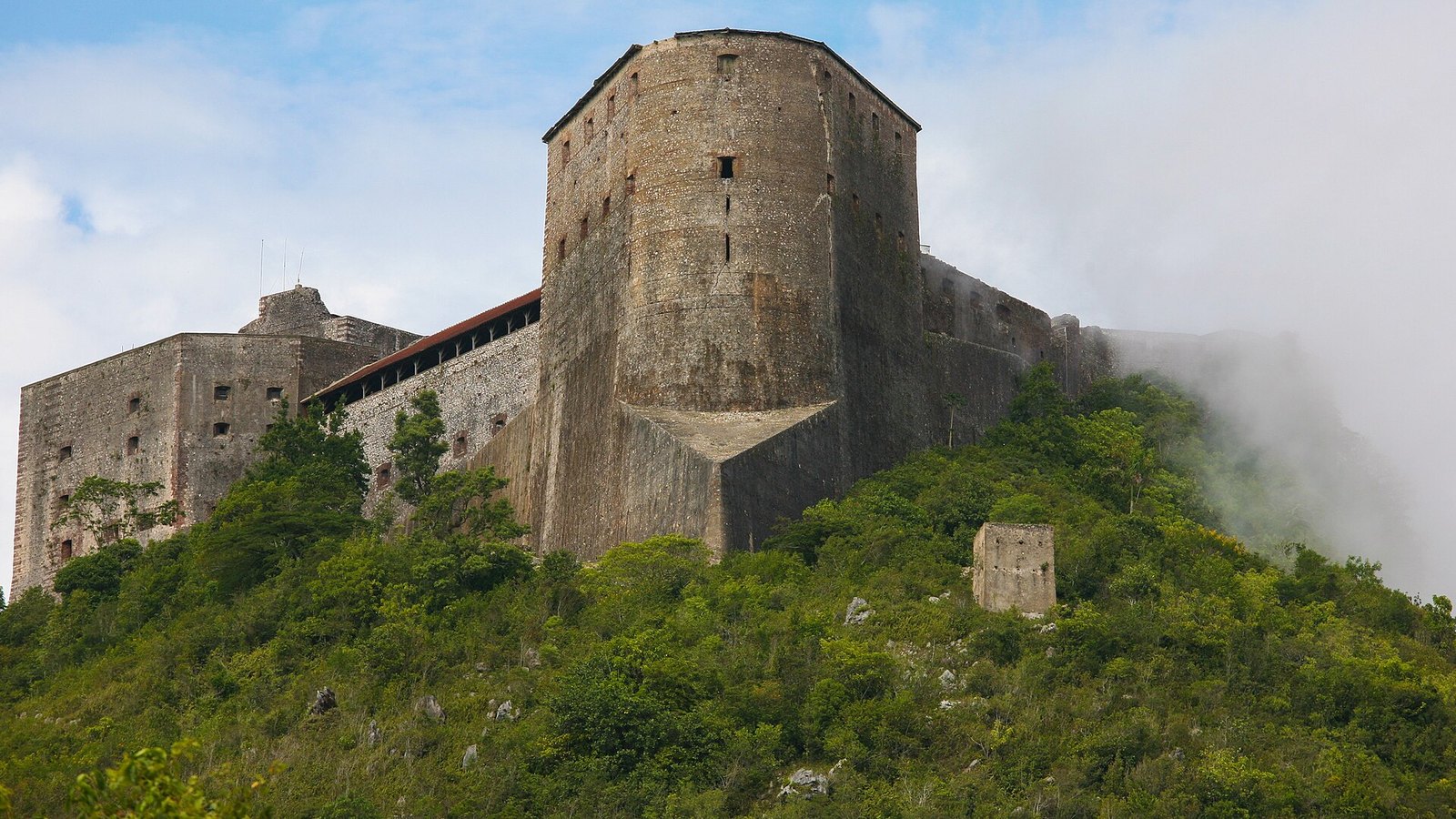
History explains much of the present. Enslaved Africans revolted against French rule in 1791 and declared independence on 1 January 1804. In 1825 France forced the young state to pay an indemnity for lost property, a debt that drained public money for generations.
The two official languages are Haitian Creole and French. Creole is what almost everyone speaks at home; French is the language of courts, contracts and much of the press. A large diaspora lives in the United States, Canada, France and the Dominican Republic.
Two shocks shaped the modern crisis. An earthquake on 12 January 2010 devastated Port-au-Prince. Then President Jovenel Moïse was assassinated at his home on 7 July 2021. No president has been elected since, and Haiti has not held a national election since 2016.
Who runs Haiti and how
On paper Haiti is a semi-presidential republic under the 1987 constitution. That means an elected president shares power with a prime minister who answers to parliament. In practice none of those elected offices is filled. Parliament has not sat since the terms of its last members ran out in January 2023.
After Moïse’s death an interim prime minister governed alone. In April 2024, under Caribbean and US pressure, a nine-member Transitional Presidential Council took over the presidency’s powers. It was meant to restore security and organise elections before its mandate ended.
The council did neither, and it was weakened by infighting and corruption allegations. It dissolved on 7 February 2026. Its president at the time, Laurent Saint-Cyr, handed executive authority to Prime Minister Fils-Aimé and his Council of Ministers. As of September 2026, Prime Minister Alix Didier Fils-Aimé is the country’s sole executive authority.
This does not mean Fils-Aimé has a popular mandate. He was appointed, not elected, and no body can formally hold him to account. His government’s legitimacy rests on a promise to hand over to elected leaders. The electoral council has set a first round for 13 December 2026 and a run-off for 21 February 2027.
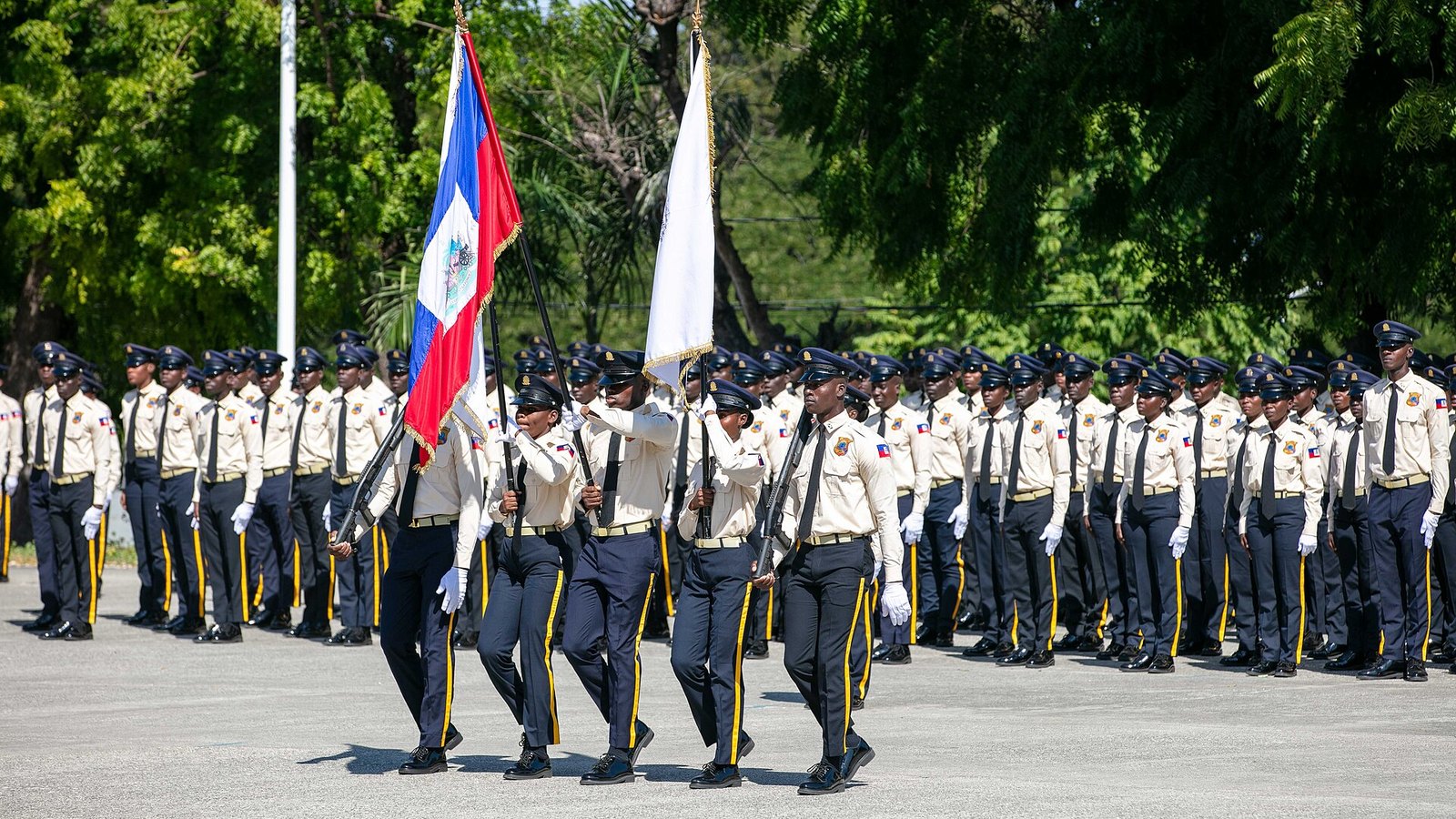
Security is the job of the Haitian National Police, a force of limited size facing well-armed gangs. Haiti also revived a small army in 2017. Both rely heavily on foreign funding, training and equipment.
How the economy works
Haiti’s economy has shrunk every year since 2019. The World Bank estimates real output fell 4.2 percent in fiscal 2024 and 2.7 percent in fiscal 2025. Haiti’s fiscal year runs from October to September. For fiscal 2026 the bank projects growth of just 0.6 percent, conditional on better security.
Prices have risen fast. Inflation averaged 28.3 percent in fiscal 2025, according to the World Bank, which forecasts about 22 percent in fiscal 2026. To put that in perspective, goods that cost 1,000 gourdes (about US$7.70) a year earlier cost on average about 1,283 gourdes in fiscal 2025.
Poverty is deep. The World Bank puts 49 percent of Haitians below its international poverty line of US$3.00 a day. The line uses 2021 prices adjusted for purchasing power. That is about one person in two.
The currency is the gourde. It traded at about 130 gourdes to the US dollar on 28 September 2026, according to market data. That is close to the central bank’s published reference rate. A 1,000-gourde note is therefore worth roughly US$7.70. Larger payments, such as rents, are often quoted in US dollars.
Three things keep the economy running. The first is money sent home by Haitians abroad, one of the largest sources of foreign currency. The second is garment assembly for the US market. US trade preferences for Haitian apparel, known as HOPE and HELP, now run to 31 December 2028. The third is aid.
The International Monetary Fund monitors Haiti’s policies through a staff-monitored programme. That is a light-touch arrangement without a loan, meant to build a track record. One aim is to stop the central bank printing money to fund the government.
What is happening right now
As of September 2026, gangs control most of Port-au-Prince and the roads that link it to the rest of the country. Many belong to a coalition called Viv Ansanm, meaning “living together” in Creole. The United States designated Viv Ansanm and a second group, Gran Grif, as foreign terrorist organisations on 2 May 2025.
The human cost is heavy. The UN Integrated Office in Haiti is known by its French acronym, BINUH. It counted more than 1,600 people killed in the first quarter of 2026 and at least 1,408 in the second. That is more than 16 deaths a day. About 40 percent of second-quarter casualties occurred during security operations against gangs, the UN said.
Violence is spreading beyond the capital. Gangs have moved into the Artibonite valley, Haiti’s rice bowl, and into the hills above Port-au-Prince. An attack in Kenscoff in August 2026 killed at least 47 people. Nearly 1.47 million Haitians were displaced by May 2026, about one in eight of the population.
Hunger follows. Security Council Report, citing UN-backed food-security analysis, says around 5.8 million people faced acute food insecurity in the first half of 2026. That is roughly half the population.
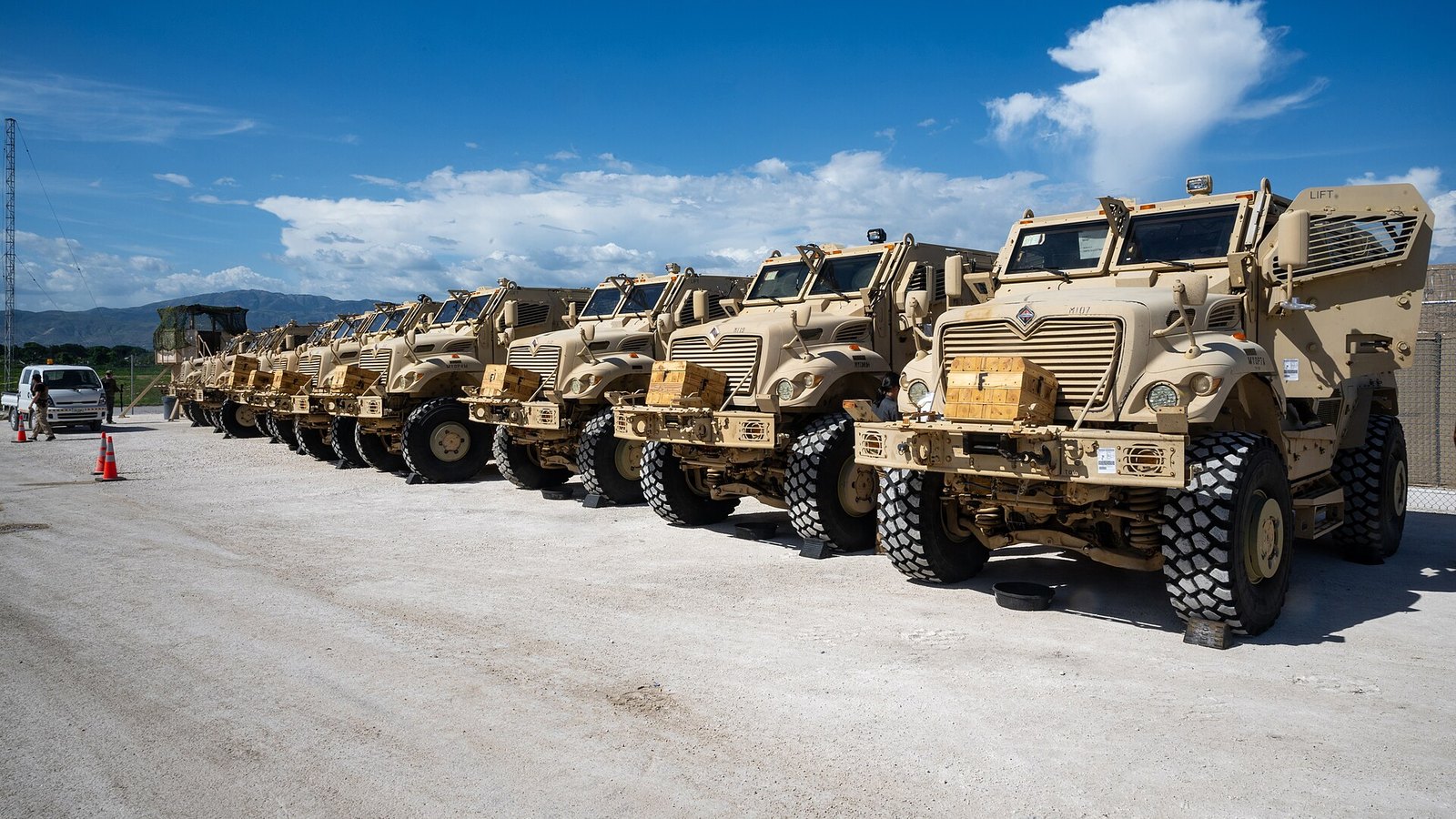
The main international response is the Gang Suppression Force. The UN Security Council authorised it in resolution 2793 on 30 September 2025, replacing a smaller Kenyan-led mission. It is not a UN peacekeeping force. It is led by contributing states, while a new UN Support Office in Haiti, fully operational since 1 April 2026, supplies logistics.
The force is far from full strength. Its ceiling is 5,500 uniformed personnel plus 50 civilians. By 8 July 2026 about 1,083 military personnel had deployed. Kenyan police left in April 2026, and new contingents have come from Chad, Jamaica, Mongolia and Sri Lanka. Its first 12-month authorisation expires on 30 September 2026, and the Security Council’s renewal vote is due that day.
What to watch
The first date is 30 September 2026, when the Security Council’s renewal vote is due; the force’s authorisation lapses that day unless renewed. The Haitian government and member states of the Organization of American States have asked the Security Council to extend it. Its size, funding and duration after renewal all matter.
The second is the election calendar. Campaigning for the first round is scheduled to open in October. The vote itself is set for 13 December 2026, with a run-off on 21 February 2027. Elected leaders would then take office during 2027.
The third is whether the security force can retake ground before voting. Credible polls need safe roads, open schools for polling stations and registered voters who can reach them. Watch the Artibonite, the road north to Cap-Haïtien and the hills around Kenscoff.
Finally, watch Washington. US policy shapes Haiti through funding, deportations and migration rules. The end of Temporary Protected Status for Haitians in the United States in 2026 could reduce the money families receive from abroad.
What this means for foreigners
The US State Department rates Haiti Level 4, Do Not Travel, its highest warning, citing crime, kidnapping, terrorism and civil unrest. The US Federal Aviation Administration bars US airlines from flying to Port-au-Prince. Many other governments give similar advice.
Kidnapping for ransom is a business in Haiti. Foreigners, aid workers and Haitians with relatives abroad are all targets. The US embassy says it has an extremely limited ability to help its citizens. Its own staff may not travel away from the embassy for non-essential reasons.
For investors the message is equally blunt. The garment sector still operates, mostly around Port-au-Prince and in the north, because of duty-free access to the US market. Beyond that, contracts are hard to enforce, courts barely function and security costs are high. This does not mean nothing works. The north, around Cap-Haïtien, has generally been calmer than the capital, though it is not risk-free.
Anyone with family, staff or supply chains in Haiti should plan around the calendar above. A renewed and better-staffed force, followed by a credible vote, would change the picture. Neither is guaranteed.
Connected Coverage
Dominican Republic Explained 2026: Haiti’s Neighbour on Hispaniola
Haiti December Election Set as First Vote in a Decade
Haiti Gang Violence: 613 Killed Around the Capital in Five Months
Haiti Sends 18 Suspects in President Moïse’s 2021 Killing to the US
Sources: Governance, the security force and the election calendar from Security Council Report and the UN; violence and displacement from BINUH and UN News; economic data from the World Bank; travel guidance from the US State Department; the exchange rate from market data and the Banque de la République d’Haïti.
- Security Council Report — Haiti, September 2026 monthly forecast
- UN News — Security Council authorises the 5,550-strong Gang Suppression Force, 30 September 2025
- UN News — BINUH second-quarter 2026 human rights figures
- BINUH — more than 1,600 people killed in the first quarter of 2026
- World Bank — Haiti Macro Poverty Outlook, April 2026
- US State Department — Haiti travel advisory
- Al Jazeera — transitional council hands power to the prime minister, 7 February 2026
- Banque de la République d’Haïti — reference exchange rate
What Is Not Known
Whether the Security Council renews the force on schedule, and on what terms. Governments in the region have called for renewal, but funding has lagged and the force has never been close to its ceiling. A renewal on paper does not guarantee more troops on the ground.
Whether the 13 December vote can be held nationwide. Haiti has not voted since 2016, and large parts of the capital are outside state control. A delay would extend rule by an appointed prime minister with no formal check on his power.
How many people gangs actually control, and how much territory they hold. UN bodies say gangs hold most of Port-au-Prince but do not publish a reliable percentage, and figures quoted elsewhere vary widely.
When commercial flights to Port-au-Prince will resume normally. The US ban has no public end date, and airlines decide their own schedules once it lifts.
Frequently Asked Questions
Who is in charge of Haiti in 2026?
Prime Minister Alix Didier Fils-Aimé and his cabinet, as of September 2026. The nine-member Transitional Presidential Council dissolved on 7 February 2026 and handed executive power to Prime Minister Fils-Aimé and his Council of Ministers. There is no elected president or sitting parliament.
What is the Gang Suppression Force?
A multinational force authorised by the UN Security Council on 30 September 2025 to fight Haiti’s gangs. It is led by contributing countries, not the UN, and may field up to 5,550 personnel. About 1,083 soldiers had deployed by July 2026.
When are Haiti’s elections?
The electoral council has scheduled the first round for 13 December 2026 and a run-off for 21 February 2027. They would be the first national elections since 2016. Security conditions will decide whether they happen on time.
Is it safe to travel to Haiti?
The US State Department rates Haiti Level 4, Do Not Travel, citing crime, kidnapping, terrorism and unrest. US airlines are barred from flying to Port-au-Prince. Other governments give similar warnings.
What currency does Haiti use?
The gourde. It traded at about 130 gourdes to the US dollar on 28 September 2026. US dollars are widely used for larger payments such as rents.
This article was produced by The Rio Times’ automated newsroom system. How we use AI · Report an error
Read More from The Rio Times
Rotate for Best Experience
This report is optimized for landscape viewing. Rotate your phone for the full experience.
You've reached your free article limit
Subscribe to The Rio Times for unlimited access to expert analysis, market intelligence, and daily briefings on Latin America.