
HAITI · POWER
Key Facts
- What is happening Haiti has no elected president or parliament; Prime Minister Fils-Aimé governs while gangs hold much of the capital.
- Why it matters Elites, some sanctioned abroad, share power with armed groups; 50.8% of Haitians live on under US$3 a day.
- The numbers About 1.5 million are displaced, and the UN counted at least 1,408 killed in April to June.
- Who is who Fils-Aimé is prime minister, Jimmy Chérizier leads the Viv Ansanm gang coalition, and Luckson Elan leads Gran Grif.
- What to watch Watch whether the 18 July 2027 first round holds and how many foreign troops reach the UN-backed force.
- What it means for you The US says do not travel to Haiti, and treats Viv Ansanm and Gran Grif as terrorist organisations.
Haiti is run by a prime minister without a parliament, business and political elites, and gangs that rule whole districts. Here is who dominates whom in November 2026.
Power in Haiti is split among a prime minister without a parliament, elites and gangs holding much of the capital area. No national election has been held since 2016-17, so most Haitians have little say.
This guide maps who dominates whom, by institution, region, skin colour and wealth, using UN, World Bank and official sources. Every figure carries its date, and what could not be confirmed is listed at the end.
More coverage sits on the Rio Times Haiti page. For the outside powers, read the Haiti geopolitics explainer.
Who Holds Formal Power in Haiti
Haiti’s constitution gives the president a five-year term, elected by direct vote (Articles 134 and 134-1). Parliament has three senators per department and one deputy per municipal district (Articles 94-1 and 90).
President Jovenel Moïse was assassinated on 7 July 2021, and no president has been elected since. The US State Department’s 2023 human rights report found no elected officials in office, with the last national vote held in 2016-17.
A Transitional Presidential Council, set up under an accord of 3 April 2024, ended its mandate on Saturday, 7 February 2026. Prime Minister Alix Didier Fils-Aimé then took sole executive authority, with his Council of Ministers.
The provisional electoral council said on Wednesday, 28 October 2026 that the first round will be held on Sunday, 18 July 2027. It set the second round for 4 October 2027.
The vote was first due on 30 August 2026, then on 13 December. The council dropped the December date on 6 October and published the new calendar three weeks later.
Outsiders carry much of the security burden. The UN Security Council created the Gang Suppression Force on 30 September 2025 and extended it on 29 September 2026.
The extension runs to 31 March 2027, and the force may field up to 5,500 uniformed personnel. US ambassador to the UN Mike Waltz said about 1,500 troops were in Haiti on 29 September.
For the wider regional picture, see Haiti’s role in Latin America. The Haiti explainer gives the country basics.
The Business Elite and the Politicians Around It

Canada listed two individuals under its Haiti sanctions on 3 November 2022. It said the measures target the political and economic elite giving gangs financial and operational support.
Further Canadian listings followed on 17 November and 2 December 2022. They targeted what Canada called political and economic elites using their influence to support armed gangs.
In December 2025 the EU listed former president Michel Martelly, former senators Youri Latortue and Rony Célestin, and the 5 Segond gang. The EU’s stated reasons include that Martelly took part in creating a gang, which is an allegation.
The sources checked contain no response from the three men. The EU extended its Haiti sanctions framework to 29 July 2027 by a decision of 10 July 2026.
The UN sanctions list names former parliament member Prophane Victor, listed on 27 September 2024 for weapons trafficking and political violence. Most other entries are gang leaders, and Dimitri Herard and Kempes Sanon were added on 17 October 2025.
Listings are sanctions measures, not criminal convictions. The sources checked do not name which business families dominate imports or banking.
The World Bank says Haiti’s economy shrank 2.7% in 2025 and may shrink 1.5% in 2026, the eighth straight annual fall. It puts inflation at 21.5% in 2026.
Gangs as a Parallel Power
The constitution creates the Armed Forces of Haiti and the National Police and bars any other armed body (Articles 263 and 263-1). The police answer to the Ministry of Justice (Article 269).
Gangs now defy that rule across the capital region. The UN sanctions list names Jimmy Chérizier, a former police officer listed in 2022, as leader of the Viv Ansanm coalition.
Luckson Elan leads the Gran Grif gang, which the UN listed on 27 September 2024 with him. The UN listed the groups Viv Ansanm and Gran Grif themselves on 8 July 2025.
The US Secretary of State designated Viv Ansanm and Gran Grif as foreign terrorist organizations on 22 April 2025. The designation took effect on publication in the Federal Register on 5 May 2025.
The UN Integrated Office in Haiti (BINUH) counted at least 1,408 people killed and 656 injured in the second quarter of 2026. It had reported more than 1,600 killed in the first quarter.
The UN human rights chief counted 5,700 people killed or injured by gangs and related security operations from January to September 2026. The World Bank puts the number displaced by violence at 1.5 million as of September 2026.
Regions and Skin Colour in Haitian Power
Haiti had about 11.9 million people in 2025, the World Bank estimates, and the capital area is the centre of gang violence. BINUH has reported on intensifying gang violence in the Plaine du Cul-de-Sac and Cité Soleil areas near the capital.
The sources checked give no official breakdown of who holds ministerial or military posts by region. No confirmed share of Port-au-Prince under gang control was found either.
No official count of skin colour or ethnic groups was found. This guide therefore makes no claim about who dominates by colour.
Creole and French are both official languages (Article 5). The constitution also sets a quota of at least 30% women at all levels of national life (Article 17-1).
How Haiti Power Is Shared With Churches and Unions
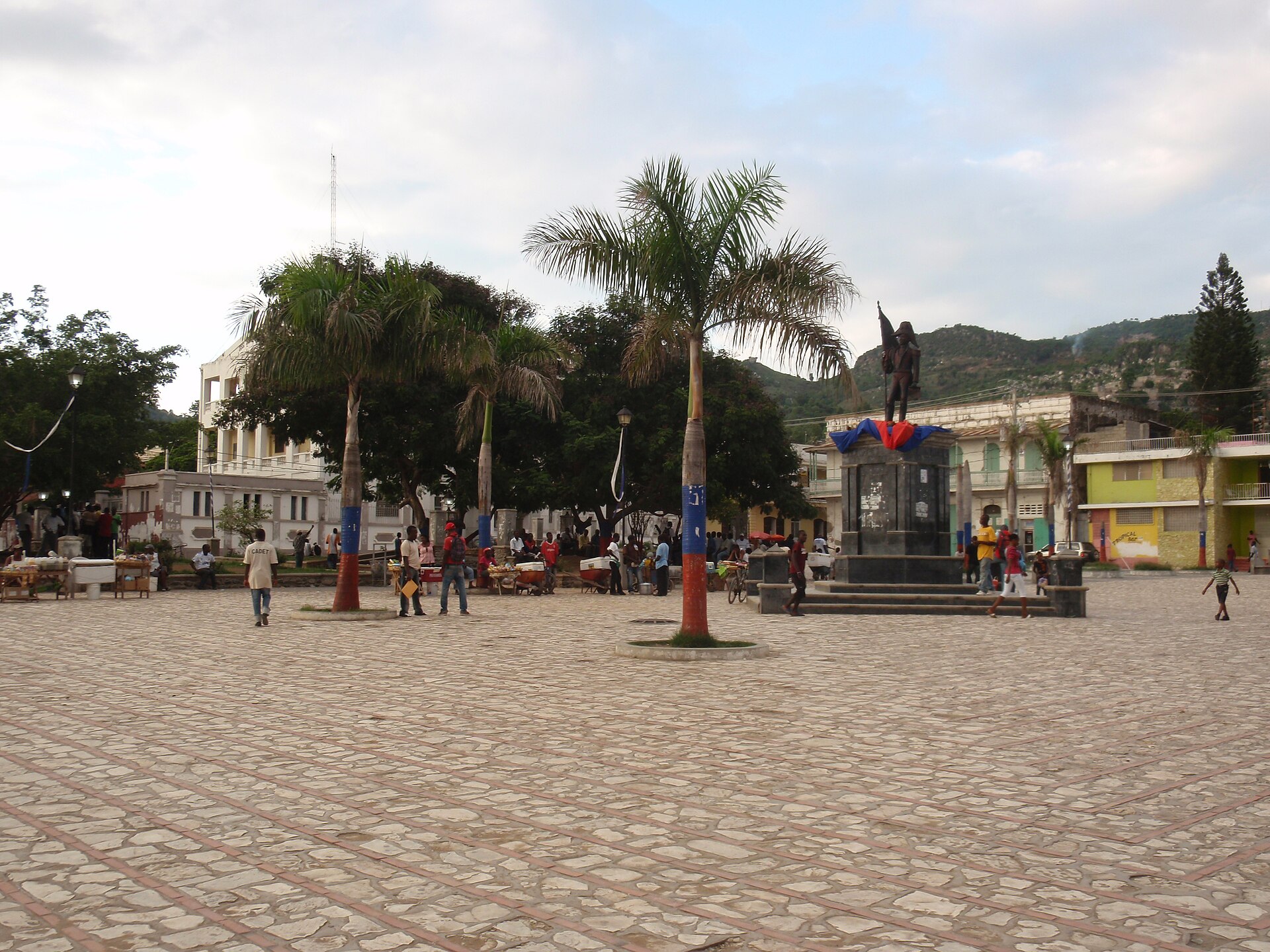
A 2017 government survey found 52% Protestant, 35% Catholic, 2% Vodou and 11% unaffiliated, the State Department’s 2023 religious freedom report says. An 1860 concordat gives the Catholic Church a special legal status.
The constitution says all religions and faiths shall be freely exercised (Article 30). The sources checked give no confirmed list of church leaders holding seats in the current transition bodies.
Article 35-3 of the constitution guarantees trade union freedom. The sources checked give no current union membership figures or recent strike data.
Inequality and Who Is Left Out
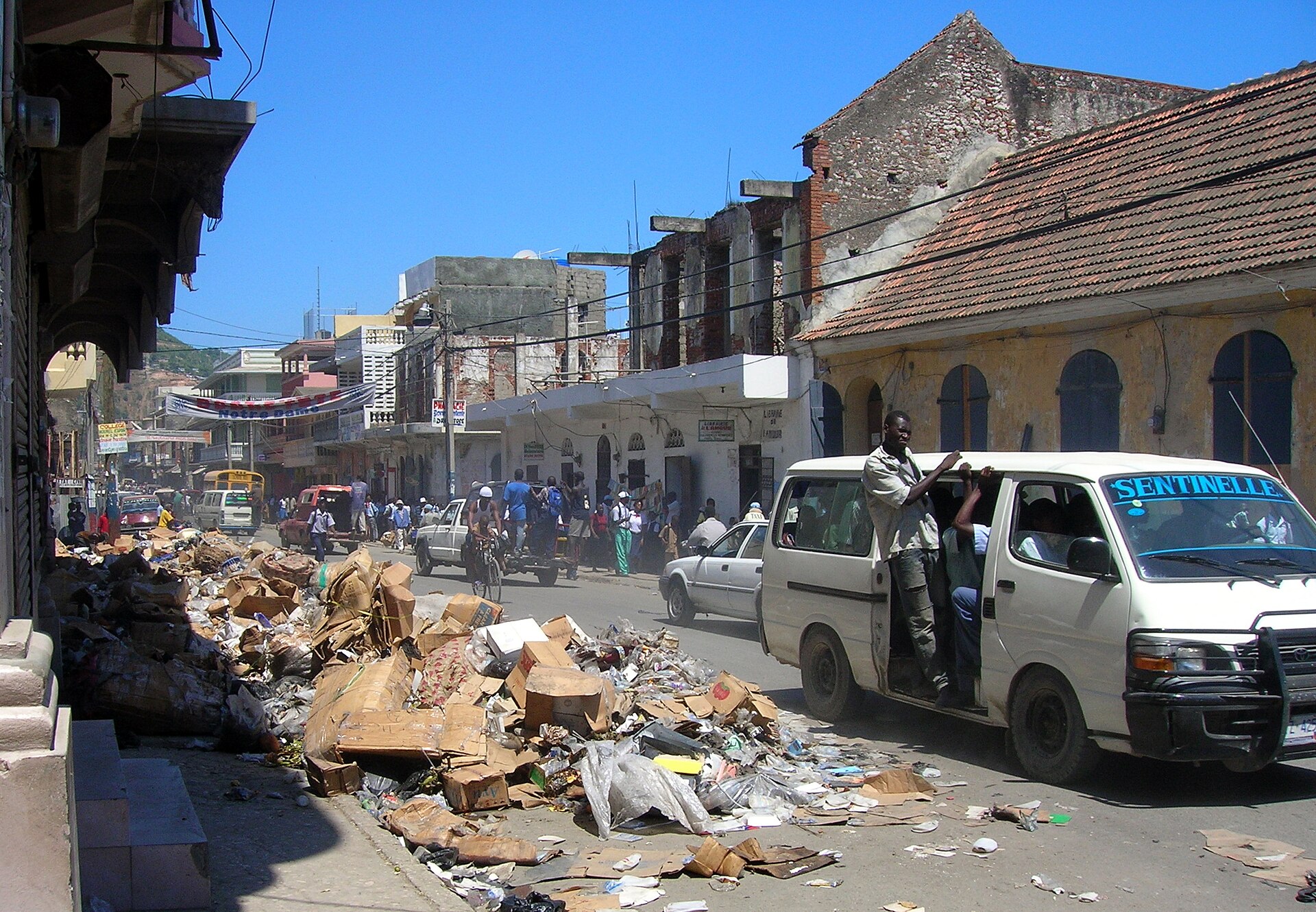
The World Bank estimates that 50.8% of Haitians live on less than US$3 a day and expects 51.2% by 2028. More than 5.83 million people faced acute food insecurity between March and June 2026.
The UN humanitarian office (OCHA) says violence has forced about 1.4 million people, around 12% of the population, to flee. Its 2026 response plan asks for US$880 million to help 4.2 million people.
The constitution recognises a quota of at least 30% of women at all levels of national life. No election has been held since 2016-17 to apply it.
Displaced families and the poorest households have no elected body to hear their claims. The planned vote would be the first national election since 2016-17.
What It Means for US Readers
The US State Department says do not travel to Haiti, and its ability to help citizens there is very limited. Check its advisory before any trip.
Washington designated Viv Ansanm and Gran Grif as foreign terrorist organizations, so dealings with them carry serious US legal risk. Companies should screen Haitian partners against US, Canadian, EU and UN lists.
For the gangs and the UN force in more depth, read the Haiti gang crisis explainer. For the arts and public life, see the Haiti culture guide.
What Is Not Known
- The vote: the electoral council now says 18 July 2027 and 4 October 2027, but earlier dates have slipped twice, and nobody has confirmed security for either round.
- Executive power: it is unclear who governs if the new dates slip, because no handover rule after the council’s end was found.
- Business families: which families dominate imports, banking and ports, and their links to armed groups, are not documented in the sources checked.
- The army and the force: the strength of the Armed Forces of Haiti was not found, and the troop count of the UN-backed force rests on a statement by a US diplomat.
- Skin colour and ethnic groups: no official count was found, so no claim is made about who dominates by colour.
Frequently Asked Questions
Who runs Haiti in 2026?
Prime Minister Alix Didier Fils-Aimé and his Council of Ministers govern alone since the presidential council ended on 7 February 2026. No parliament sits and no president has been elected since July 2021.
Who are Haiti’s elites?
They are political figures and business owners. Canada, the EU and the UN have sanctioned some political and economic figures, and a listing is not a conviction.
Who controls Port-au-Prince?
Armed gangs hold large parts of the capital region, and the UN names Jimmy Chérizier as leader of the Viv Ansanm coalition. No confirmed share of the city under gang control was found.
When is Haiti’s next election?
The electoral council set the first round for 18 July 2027 and the second for 4 October 2027. It dropped 13 December 2026, and earlier dates have slipped before.
What role do churches and Vodou play in Haitian power?
A 2017 government survey found 52% Protestant and 35% Catholic, and the Catholic Church has an 1860 concordat. Vodou followers were 2% in that survey.
Why is Haiti so unequal?
The World Bank says 50.8% of Haitians live on less than US$3 a day. Gangs, displacement and eight years of economic decline have deepened the gap.
Is it safe for Americans to visit Haiti?
No, the State Department says do not travel to Haiti, and its ability to help citizens there is very limited. Check the advisory before any plan.
Sources: Constitution of Haiti (1987, amended 2012); US State Department, 2023 human rights report on Haiti; US State Department, 2023 religious freedom report on Haiti; World Bank, Haiti overview; World Bank, population, Haiti; UN OCHA, Haiti; UN Integrated Office in Haiti (BINUH), news of 8 May, 25 August 2026; UN Security Council sanctions list, Haiti; Government of Canada, Haiti sanctions; Council of the EU, Haiti listings, December 2025; Official Journal of the EU, Decision 2026/1438 of 10 July 2026; US Federal Register, notice 2025-07464, foreign terrorist organization designations, 5 May 2025; Haiti’s provisional electoral council, updated electoral calendar of 28 October 2026 (all accessed 3 November 2026).
This article was produced by The Rio Times’ automated newsroom system. How we use AI · Report an error · Editorial responsibility: Matthias Camenzind, Editor-in-Chief
Expat Guide to Haiti
What The Rio Times publishes for foreigners who live in or move to Haiti.
Start here
Coming up in Haiti
Understand Haiti
Haiti
- What Is Happening in Haiti?
- What Is Happening in Haiti?
- Haiti Gang Crisis Explained 2026 Gangs and the UN Force
- Haiti’s 13 December Vote, What US Travellers Need to Know