
HAITI · GEOPOLITICS
Key Facts
- —What is happening Haiti has no president and no parliament, and the UN extended its Gang Suppression Force on Tuesday, 29 September 2026 to 31 March 2027, while the December 13 election date is in doubt.
- —Why it matters The United States, Canada, the UN and troop contributors from three continents now carry Haiti’s security, so Port-au-Prince is a test of US led Caribbean policy and of Chinese and Russian resistance.
- —The numbers The force may field 5,500 uniformed personnel but had 1,083 soldiers on 8 July 2026, and gangs hold 80% to 90% of Port-au-Prince with about 1.47 million people displaced.
- —Who is who Prime Minister Alix Didier Fils-Aimé governs alone since 7 February 2026, Mongolian General Erdenebat Batsuuri commands the force, and China, Russia and Pakistan abstained on its mandate votes.
- —What to watch Candidate registration closes on Saturday, 31 October 2026, and the electoral council still owes a revised calendar for the first round set for Sunday, 13 December.
- —What it means for you Americans face a Level 4 Do Not Travel advisory and armed men tried to board a US flagged ship in Port-au-Prince bay, while about 352,959 Haitians were due to lose TPS status on 3 February 2026.
Haiti has no president and no parliament, and the UN now backs the force that fights its gangs. Here is who stands behind Haiti in October 2026.
Haiti geopolitics in October 2026 turns on who can secure and govern a country where gangs hold most of the capital. The United States, Canada and the United Nations are carrying that task, with troops from Africa, Asia and Latin America.
Haiti, a Caribbean nation, has 50.8% of its people living on under US$3 a day, the World Bank says. More coverage sits on the Rio Times Haiti page.
Conversions use the open.er-api.com rate of 19 October 2026 (00:02 UTC): 130.87 gourdes (HTG) and 0.891 euros per US$1. Every figure carries its date, and unconfirmed points are listed at the end.
Who Governs Haiti in October 2026
Haiti has had no elected president since Jovenel Moïse was assassinated on 7 July 2021. It has held no national election since 2016, and no parliament is sitting.
The Transitional Presidential Council ended its mandate on Saturday, 7 February 2026, under the political accord of 3 April 2024. France’s foreign ministry said on 9 February that executive power passed to the Council of Ministers under Prime Minister Alix Didier Fils-Aimé.
Africanews reported that Fils-Aimé survived a council attempt to remove him in January, after Washington warned of serious consequences. It found no successor body to the council, and no announcement of a new presidency has followed.
The electoral council (CEP) published a calendar in late July, with a first round on Sunday, 13 December 2026. The second round was set for Sunday, 21 February 2027.
On Tuesday, 6 October the CEP suspended the campaign and moved candidate registration to Saturday, 31 October. No revised calendar had been published by 20 October.
Fils-Aimé met the electoral council and security chiefs on Tuesday, 13 October, and no new date came out of it. On 19 October the UN’s envoy, Carlos Ruiz Massieu, urged the Security Council to back a credible and realistic calendar.
Sixteen presidential candidates were registered by 19 October, according to Le Nouvelliste. Diario Libre reported that Michel Martelly, a former president under US, Canadian and EU sanctions, registered preliminarily.
The same report said transitional authorities had revised the electoral decree three times in four months. One change dropped a central bank check that had worked as a safeguard against sanctioned candidates.

The Gang Suppression Force and the UN Mandate
The UN Security Council created the Gang Suppression Force (GSF) on 30 September 2025 in resolution 2793, by 12 votes to none. China, Pakistan and Russia abstained.
The text turned the Kenya-led Multinational Security Support mission into the GSF for an initial 12 months. It also created the UN Support Office in Haiti (UNSOH) to supply the force.
On Tuesday, 29 September 2026 the Council adopted resolution 2829 by 12 votes, with the same three abstentions. It extends the GSF and UNSOH to Wednesday, 31 March 2027.
Security Council Report called the text a technical rollover that keeps the core tasks unchanged. China and Russia had asked for three months and an independent strategic review, and neither made it in.
The text also requires the UN Secretary-General to report every six months on Haitian progress against the benchmarks of resolution 2793. The UN stresses that Haitian authorities carry primary responsibility for security.
The Council authorised up to 5,500 uniformed personnel and 50 civilians. On 8 July 2026 the military component stood at 1,083, Security Council Report says, and the civilian component at 16.
The force is far below its ceiling, and the Dominican foreign minister says it lacks the backup units its mandate requires. No date for full strength has been published.
The contributors and commanders as of October 2026 are listed below. The figures come from Security Council Report, Le Nouvelliste, Diario Libre and BSS.
- Chad sent the largest new contingent, with about 400 troops on the ground by late April and a 1,500 person battalion pledged.
- Mongolia supplies the force commander, Major General Erdenebat Batsuuri, who arrived in Port-au-Prince on Thursday, 14 May 2026.
- Guatemala sent just over 50 more soldiers on Sunday, 18 October, and its president has set a goal of 300.
- El Salvador, Jamaica and Sri Lanka also have troops, and Bangladesh sent an advance party of 50 on Thursday, 15 October, with about 1,600 expected by late November.
- Kenya, which led the earlier mission, withdrew its troops in April 2026.
A Standing Group of Partners governs the force. The United States and Canada lead it, with El Salvador, Guatemala, Jamaica and the Bahamas.
PassBlue reported in May that the UN special representative, Jack Christofides, reports to the group. UNSOH, run by Daniela Kroslak, supplies the force but does not fight.
The force is paid for in two ways. UNSOH comes from the UN peacekeeping budget, while the force itself relies on a voluntary trust fund.
PassBlue reported in May 2026 that 13 countries had pledged about US$223 million, with US$66 million paid out. Qatar pledged US$30 million over three years, and PassBlue names Canada and Germany among the top donors.
On Sunday, 18 October four Salvadoran aviation technicians went missing after an attack on their armoured vehicle near Croix-des-Bouquets. They were still missing on 20 October.
Neither the Salvadoran government nor the force had confirmed a capture, Diario Libre reported. The United States condemned the attack.
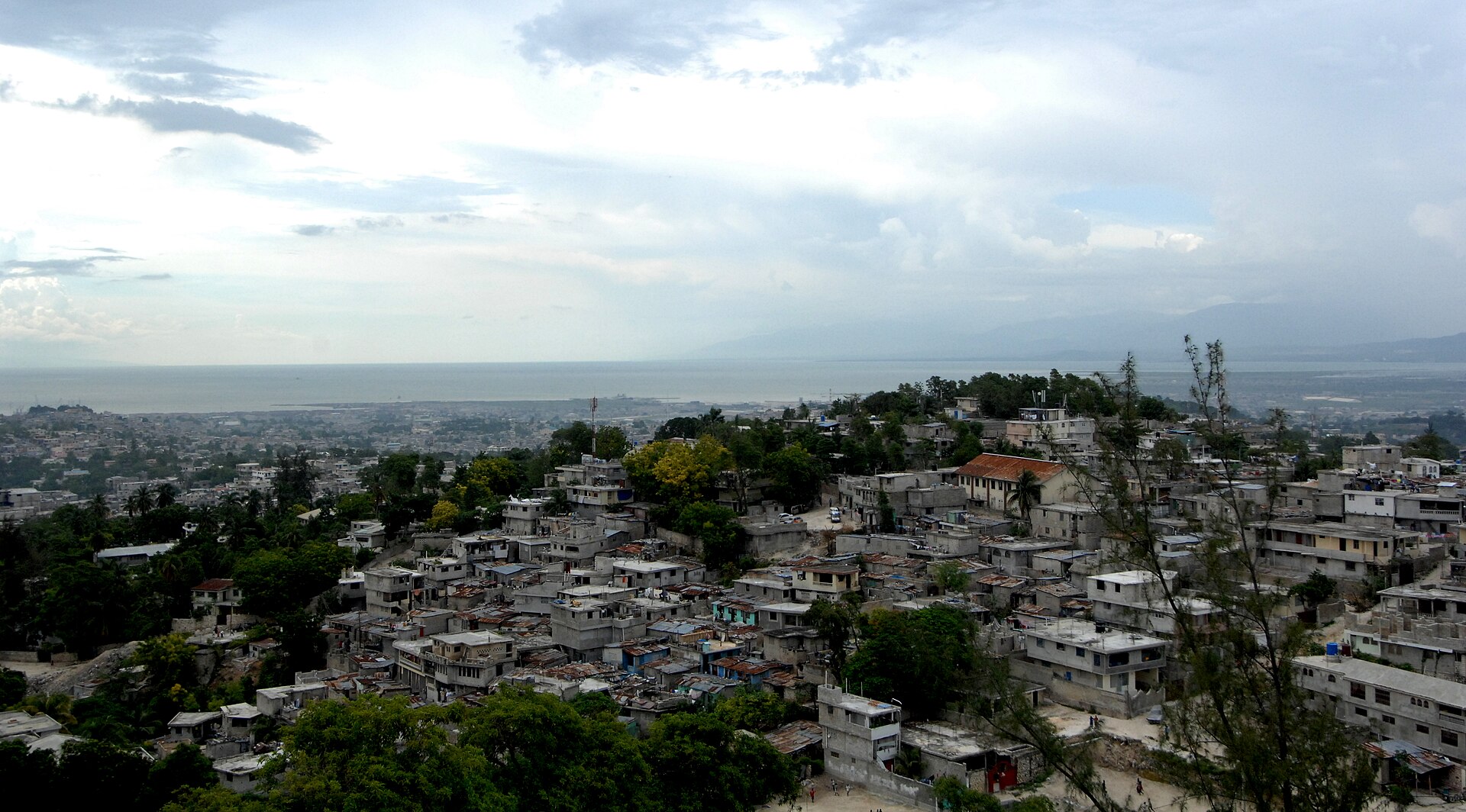
Washington, the Biggest Outside Power
The United States is Haiti’s largest outside actor. It holds the pen on Haiti at the Security Council with Panama and co-leads the force’s governing group.
Its UN ambassador, Mike Waltz, praised the force on 24 September 2026. He asked other countries for more troops.
The State Department designated the gangs Viv Ansanm and Gran Grif as Foreign Terrorist Organizations by a determination dated 22 April 2025. The Federal Register notice made it effective on 5 May 2025.
Viv Ansanm is the main gang coalition, and Gran Grif is the dominant armed group in the Artibonite valley. For Washington the label ties Haiti to counterterrorism law and sanctions risk.
PassBlue reported that the State Department licensed the private firm Vectus Global to export services to Haiti. A UN report found over 60% of casualties from January 2025 to March 2026 came in operations involving the government and Vectus.
Human Rights Watch counted 1,243 people killed in 141 drone operations from 1 March 2025 to 21 January 2026. The figure includes 17 children.
A notice of 28 November 2025 ended Temporary Protected Status (TPS) for Haiti. It covered about 352,959 people, with effect from 3 February 2026.
That notice rested on a court judgment that barred any earlier end date. The state of that litigation in October 2026 is unconfirmed.
The US Trade Representative’s latest figures found, for 2019, show US$1.1 billion of US imports from Haiti. Knit apparel made up US$858 million of that.
Haiti’s garment exporters rely on duty-free access under the HOPE II and HELP Acts, according to the US Commerce Department. For the wider picture see the Haiti gang crisis explainer and Haiti explainer.
Haiti Geopolitics: China, Taiwan and Russia
Haiti recognises Taiwan, not Beijing, and is one of Taiwan’s 12 formal allies. The Taipei Times reported a reception in Taipei on 30 April 2026 marking 70 years of ties.
Ambassador Roudy Stanley Penn said in October 2025 that China had not pressed Haiti to switch. He asked Taiwan for help with security equipment and training, and no Taiwanese arms transfer has been confirmed.
Because Haiti recognises Taiwan, Beijing has no formal ties, and its leverage runs through the Security Council. It abstained on resolutions 2793 and 2829 and had pressed for a three-month renewal.
On Wednesday, 14 October 2026 Deputy Ambassador Sun Lei urged states to stop arms trafficking at the source, without naming a country. Diario Libre reported that UN assessments point mainly to trafficking from the United States.
Russia abstained on resolution 2793, on resolution 2829 and again on the sanctions renewal. It argued that new language on misused public funds goes beyond the 2022 criteria and could invite outside interference.
That renewal, resolution 2831, passed 14 votes to none on 14 October 2026. It keeps the travel ban, asset freeze and arms embargo for a further year.
A Colombian delegate said nine individuals and two entities are now listed. The Security Council Report page shows the earlier renewal, resolution 2794, added Dimitri Herard and Kempes Sanon in October 2025.
No Chinese or Russian loan, base or investment in Haiti is documented in the sources checked. Chinese and Russian goods may still reach Haiti, but dated official trade figures were not found.
Europe, the Gulf, Turkey, India and BRICS
The European Union extended its Haiti sanctions framework on 26 June 2026 until 29 July 2027. Nine individuals and one entity are listed, with asset freezes and EU travel bans.
In December 2025 the EU listed three individuals and one entity. They were Martelly, his former adviser Youri Latortue, former senator Rony Celestin and the gang 5 Segond.
The European Commission says EU contributions to Haiti for 2021 to 2027 come to close to EUR 261 million (about US$293 million). It gives no split by year.
France said on 9 February 2026 that it would back the Haitian police and army and accompany the force’s deployment. That is the clearest European commitment found in the sources checked.
Among Gulf states, only Qatar’s role is documented, with its US$30 million pledge to the force’s trust fund. No Saudi or Emirati pledge, loan or base was found.
Turkey’s foreign ministry calls relations limited by distance. Its embassy in Santo Domingo covers Haiti, and trade was about US$140.9 million in 2021, almost all Turkish exports.
Turkey gave US$1 million after an earthquake near Port-au-Prince and sent staff to the UN mission from 2004. No Turkish military or security role in 2026 was found.
Haiti is neither a member nor a partner of BRICS, whose official site lists 11 members and nine partners. No verified India Haiti agreement on security, aid or trade was found.
Neighbours, Lenders and Minerals
Dominican Foreign Minister Ito Bisono told a UN ministerial meeting on 24 September 2026 that security gains are real but fragile. He asked for a stronger force.
Caribbean states sit inside the force and its governing group, with Jamaica and the Bahamas named among the partners. Jamaica is one of the six troop contributors listed in July 2026.
The World Bank puts Haiti’s economy down 2.7% in 2025, with a further 1.5% fall estimated for 2026. It says 50.8% of Haitians live on less than US$3 a day.
The bank’s portfolio holds 17 projects, with about US$1.25 billion committed. Its 2025 to 2029 plan includes about US$320 million in grants.
Minerals are a sanctions issue more than a business one. Since resolution 2752 of 2024, people who destabilise Haiti through illegal exploitation or trade in natural resources can be listed.
No verified data on a large-scale mine was found. The 2026 resolution adds misappropriation of public funds as a concern.
What It Means for US Readers
The State Department has rated Haiti Level 4, Do Not Travel, since 10 July 2026. The FAA bars US airlines from flying to Port-au-Prince.
The embassy can barely help citizens outside its walls, and kidnapping is widespread. Dual nationals and aid workers should plan on that basis.
Armed men tried to board the US flagged container ship MV National Glory in Port-au-Prince bay. It happened on the night of 10 to 11 October, Haiti’s coast guard chief said.
Jean Pedro Mars said officers returned fire, and about 20 crew were unharmed, according to AyiboPost. Insurers and shippers should treat the bay as a risk zone.
Policy follows from the arms trail. UN assessments cited by Diario Libre point to weapons trafficking from the United States, which puts US export controls in the frame.
For migrants, the end of TPS affects about 352,959 people. Court outcomes will decide who can stay.
Investors’ main exposure is through apparel supply chains with duty-free access. US importers also face sanctions screening risk.
What Is Not Known
Nobody has said whether the election of Sunday, 13 December 2026 will go ahead. The CEP promised a revised calendar but gave no date for it.
It is unclear who would hold executive power if the vote slips beyond the transition. No legal text setting a handover date was found.
The fate of the four missing Salvadoran soldiers is unknown. No group has been confirmed responsible.
How fast the force reaches 5,500 is unknown, and so is funding after 31 March 2027. The next UN decision is due before that date.
The current state of TPS litigation and any extension of HOPE and HELP trade preferences are unconfirmed. So are any Chinese, Russian, Indian, Saudi or Emirati money in Haiti, and any mining deal.
Frequently Asked Questions
Who runs Haiti in October 2026?
Prime Minister Alix Didier Fils-Aimé and his Council of Ministers govern alone since the presidential council ended on 7 February 2026. Haiti has had no elected president since July 2021.
What is the Gang Suppression Force?
It is a UN authorised force created by resolution 2793 on 30 September 2025 to fight gangs alongside Haitian police. It may reach 5,500 uniformed personnel, and had 1,083 soldiers on 8 July 2026.
Until when is the UN mandate valid?
Resolution 2829 of 29 September 2026 extends the force and its UN support office to 31 March 2027. It passed 12 votes to none, with China, Pakistan and Russia abstaining.
Does Haiti recognise China or Taiwan?
Haiti recognises Taiwan, with ties since 1956 and a 70th anniversary reception in April 2026. Beijing has no formal ties and acts through the Security Council.
What are the sanctions on Haiti?
The UN renewed its sanctions on 14 October 2026 for one year by 14 votes to none, with Russia abstaining. They include a travel ban, an asset freeze and an arms embargo.
Is Haiti in BRICS?
No. Haiti is neither a member nor a partner of BRICS, according to the group’s official list. Its main outside partners are the United States, Canada, the UN and the European Union.
Is it safe for Americans to visit Haiti?
No, the State Department has rated Haiti Level 4, Do Not Travel, since 10 July 2026. US airlines are barred from flying to Port-au-Prince.
Sources: Security Council Report, Haiti documents (resolutions 2793, 2794, 2814, 2829); Security Council Report, What’s In Blue (September 2026); UN meetings coverage of resolution 2831 (14 October 2026); UN Security Council 2653 Sanctions Committee; French foreign ministry, end of the transitional council (9 February 2026); Federal Register, FTO designations (5 May 2025); Federal Register, TPS termination (28 November 2025); US State Department, Haiti travel advisory (10 July 2026); US Trade Representative, Haiti; US Commerce Department, Haiti trade agreements; Council of the EU, Haiti sanctions (26 June 2026); Council of the EU (15 December 2025); European Commission, Haiti; World Bank, Haiti overview; IMF, Haiti; BRICS official site; Turkish foreign ministry, Haiti; Taiwan foreign ministry, Haiti; Taipei Times (1 May 2026); Taiwan Plus (29 October 2025); PassBlue (21 May 2026); Africanews (8 February 2026); Le Nouvelliste; Le Nouvelliste, Bangladesh advance party; Le Nouvelliste, candidates (19 October 2026); Vant Bèf Info (15 October 2026); Diario Libre / EFE, UN briefing (19 October 2026); Diario Libre, missing Salvadoran soldiers (20 October 2026); Diario Libre / EFE, Guatemala (19 October 2026); Diario Libre, sanctions renewal (14 October 2026); Diario Libre / AyiboPost, MV National Glory (14 October 2026); Diario Libre, Martelly (17 October 2026); Diario Libre, Fils-Aimé (17 October 2026); Jamaica Observer, Dominican foreign minister (24 September 2026); BSS (10 July 2026) (all accessed 20 October 2026). Related: Haiti in Latin America, Dominican Republic geopolitics, the UN renewal vote and Bangladesh troops in Haiti.
This article was produced by The Rio Times’ automated newsroom system. How we use AI · Report an error · Editorial responsibility: Matthias Camenzind, Editor-in-Chief
Expat Guide to Haiti
What The Rio Times publishes for foreigners who live in or move to Haiti.
Start here
Coming up in Haiti
Understand Haiti
Read More from The Rio Times