HAITI · POPULATION
Key Facts
- —People About 11.9 million in 2025, a United Nations estimate; the last census was in 2003.
- —Age 30.8% of Haitians are under 15 and 4.8% are 65 or older (2025).
- —Where About 56% live in towns and cities (2025); 12% were displaced inside Haiti in May 2026.
- —Language Haitian Creole is the common language; French shares official status with it.
- —Faith Protestant-type churches 52%, Catholic 35%, Vodou 2%, no religion 11% (2016 to 2017 survey).
- —Abroad Nearly 731,000 Haitian immigrants live in the United States (2022) and 497,825 in the Dominican Republic (2017).
The Haiti population is about 11.9 million people, and more than half of them live in towns and cities. This guide explains who they are, what they speak and believe, and why Haiti’s story reaches Florida, New York and Quebec.

Haiti Population in Plain English
Haiti is a Caribbean country that shares the island of Hispaniola with the Dominican Republic. Most Haitians descend from enslaved Africans whose revolt won independence from France on 1 January 1804.
Almost everyone speaks Haitian Creole, a language that grew out of French and West African languages. The terms below come up throughout this guide.
- UN Population Division: the United Nations office whose estimates put Haiti at about 11.9 million people in 2025.
- IHSI: Haiti’s national statistics institute, which ran the last census in 2003.
- IOM: the International Organization for Migration, a UN agency that counts people displaced by violence inside Haiti.
- EMMUS-VI: the 2016 to 2017 national household survey on health and living conditions, Haiti’s latest large survey of faith and family.
- Creole: Kreyòl, the everyday language of Haiti, official next to French since the 1987 constitution.
- Vodou: an Afro-Haitian religion with West African roots, often practised alongside Christianity.
- Diaspora: Haitians and their children who live abroad.
How Many People Live in Haiti
The United Nations Population Division puts the Haiti population at 11.9 million in 2025, up from 11.5 million in 2022. That is growth of about 1.1% a year, or roughly 130,000 more Haitians annually.
Nobody has counted every Haitian since 2003, the country’s fourth census after those of 1950, 1971 and 1982. Every later total, including the UN figure, is therefore a projection.
Haiti’s land area is 27,560 square kilometres, according to the World Bank. On the 2025 estimate, that means about 430 people for every square kilometre.
Women are slightly more numerous than men, at about 50.5% of the population in 2025. That works out to roughly 6.0 million women and 5.9 million men.
Age, Births and Life Expectancy
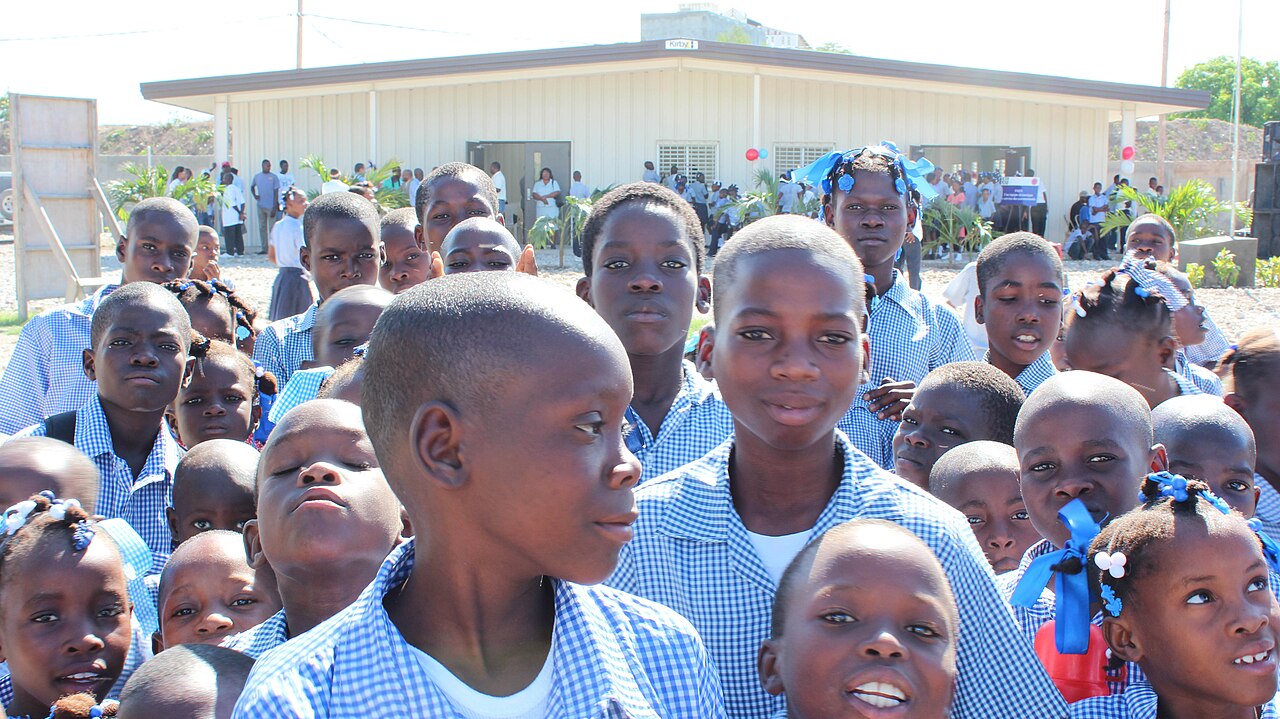
The Haiti population is young: 30.8% of people were under 15 in 2025, while only 4.8% were 65 or older. That means roughly three in ten Haitians are children, and about one in twenty is a senior.
Women had 3.0 children on average in 2016 to 2017, and the UN-based estimate for 2024 is 2.6. Life expectancy at birth was 65.1 years in 2024, up from 62.6 in 2021.
About 22 babies were born for every 1,000 Haitians in 2024, against 7.8 deaths per 1,000. Infant mortality was 39 deaths per 1,000 live births.
More people leave Haiti than arrive, a net loss of about 32,000 a year in the UN-based estimate for 2025. Emigration therefore trims growth that births would otherwise push higher.
City, Countryside and the Displaced
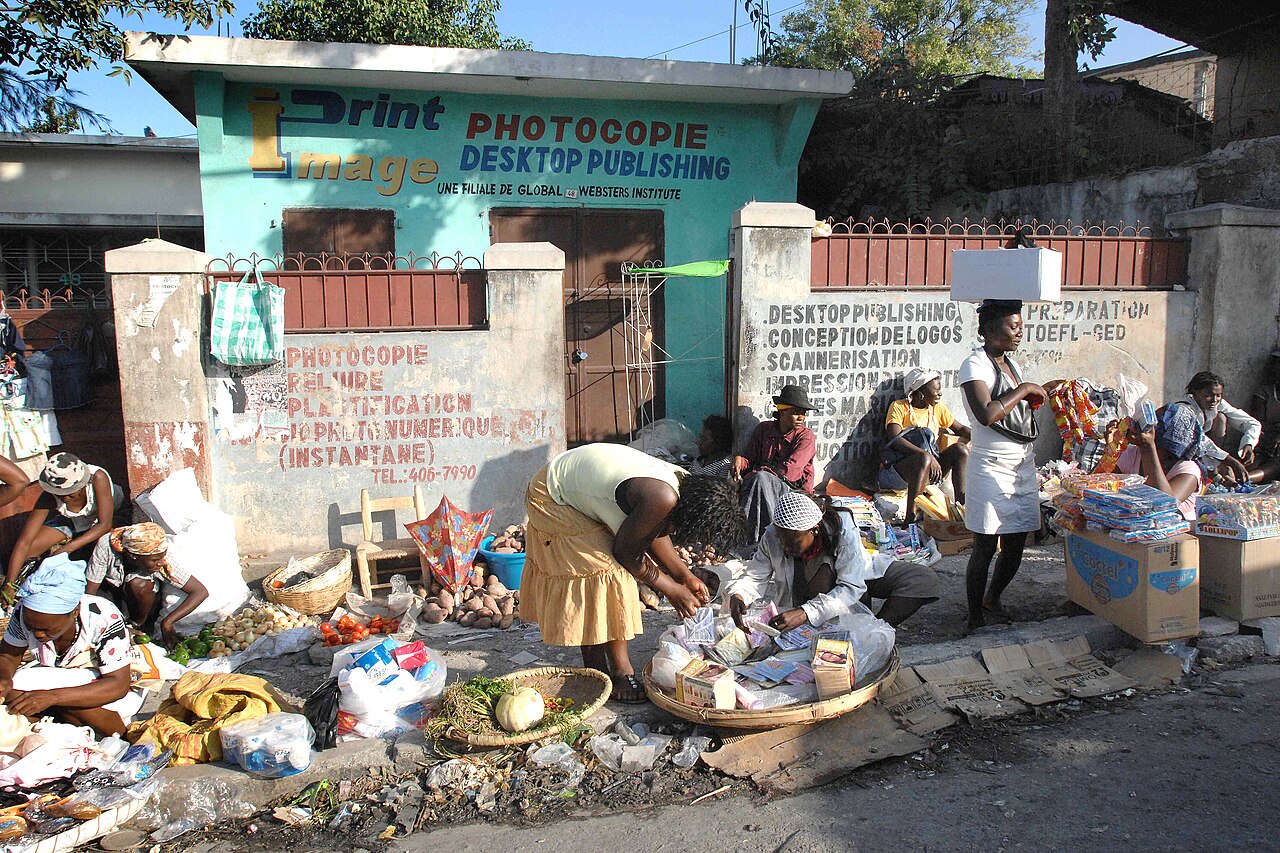
About 56% of Haitians lived in towns and cities in 2025, up from about 54% in 2022. Haiti counts the main town of each commune as urban, an administrative label that says little about water, power or planning.
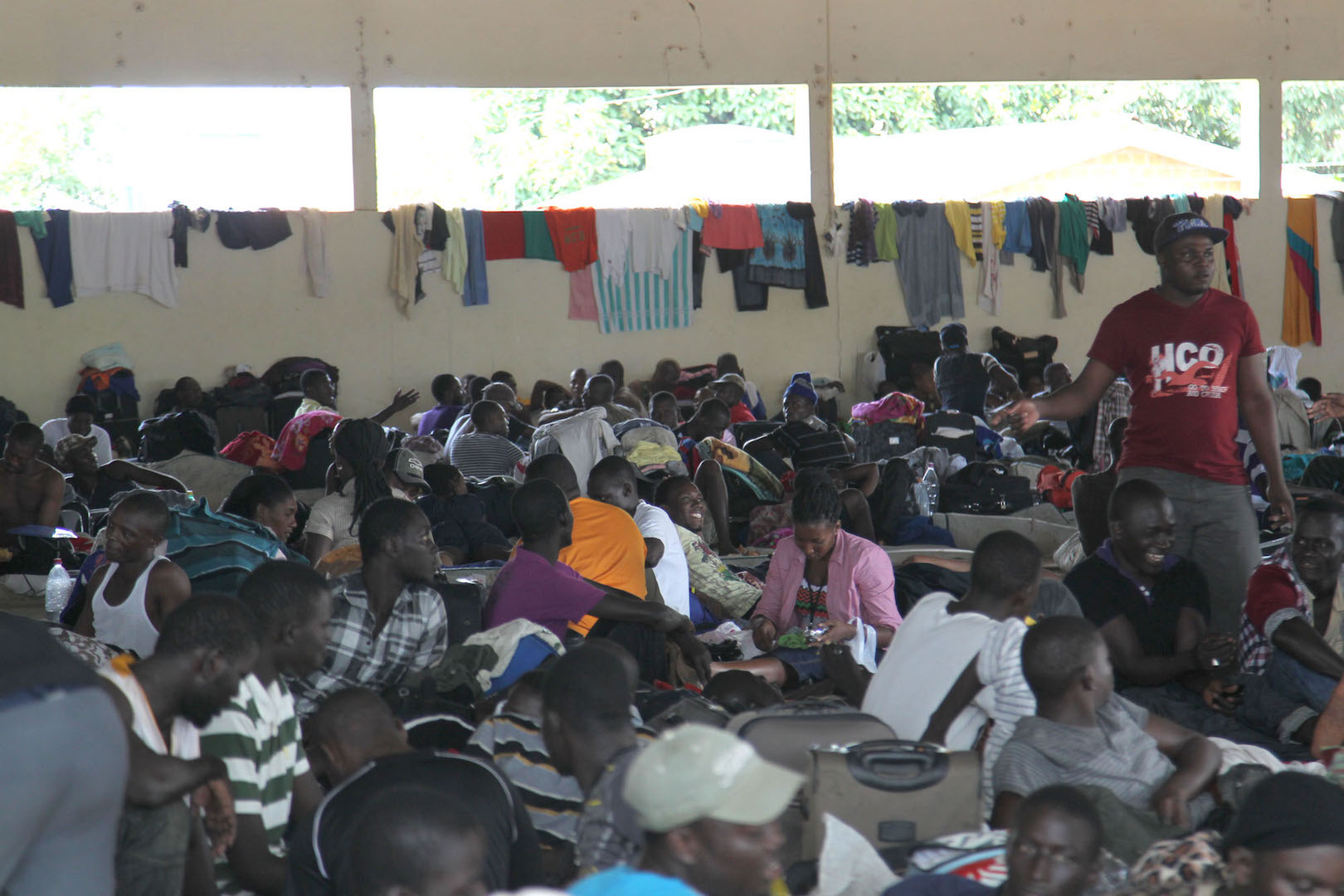
The capital, Port-au-Prince, is the centre of government, and gang violence since 2022 has pushed many families out of its districts. The International Organization for Migration counted 1,466,862 displaced people in May 2026, or 12% of all Haitians.
Some 84% of them stay with host families rather than in camps, and 21% are in the capital area. The agency counted 113,582 displaced people in September 2022, so the number has grown roughly thirteen-fold.
The same May 2026 round recorded 165,937 people who had returned home, an 89% rise since December 2025. The agency calls it premature to say those returns will last.
Ethnic Roots, Colour and Minorities
Haiti publishes no official count by ethnic group, and the 2016 to 2017 household survey has no question on ethnicity. Most Haitians trace their roots to Africans brought to the French colony of Saint-Domingue, which became Haiti.
Colour still matters in social life. The US State Department’s human rights report for 2023 records “high levels of colorism”, meaning prejudice against darker skin.
A Syrian-Lebanese minority is also part of Haitian society, and the same report cites ethnic discrimination against it. The report adds that the community controlled many aspects of the economy.
With no official ethnic count, language, faith and place of residence are the best guides to who Haitians are. The sections below use those measures.
Languages and Faith
Article 5 of the 1987 constitution calls Creole the common language of all Haitians and names Creole and French as official languages. Creole is the most commonly spoken language, the State Department notes.
Yet all laws are written in French, and most court proceedings are held in it. That leaves the courts and statutes in the less widely spoken of the two official languages.
Faith is mostly Christian. The State Department, using the 2016 to 2017 survey, reports Protestant-type churches at 52% of Haitians and Catholics at 35%.
Vodou followers make up 2% and 11% name no religion. Protestant-type means Protestant, Episcopalian, Methodist, Adventist and Jehovah’s Witness churches.
Among women aged 15 to 49 in the survey, 55.8% named a Protestant-type church, 35.1% Catholicism and 1.3% Vodou. Among men, the shares were 44.8%, 35.8% and 2.6%, and 16.5% of men named no religion.
The same report cites about 10,000 Muslims, mostly converts, and about 20 Jews. The Church of Jesus Christ of Latter-day Saints says it has 24,000 members, mostly in Port-au-Prince.
Migration and the Haitian Diaspora
The World Bank, the global development lender, puts remittances (money Haitians abroad send home) at 16.9% of Haiti’s economic output in 2024. That makes money from abroad a major source of income for Haitian households.
The Migration Policy Institute, a Washington research group, counted nearly 731,000 Haitian immigrants in the United States in 2022. Its 2021 tabulation found over 1.2 million people born in Haiti or of Haitian ancestry, and 42% were US-born.
Florida holds 49% of Haitian immigrants and New York 19%, according to the 2017 to 2021 data. Four counties, Broward, Miami-Dade and Palm Beach in Florida and Kings County (Brooklyn) in New York, hold 41%.
The Dominican statistics office ONE counted 570,933 foreign-born residents in its 2017 survey, and 497,825 (87.2%) were born in Haiti. The State Department adds that many children born there to Haitian parents have also become stateless.
Quebec’s immigration ministry reported 156,070 people of Haitian origin in the province in the 2021 Canadian census, about 1.9% of Quebec’s residents. Of them, 71,920 were immigrants and 75,165 were born in Canada.
How the Groups Live Together
Everyday life mixes Haiti’s groups more than the labels suggest. The survey’s authors warn that religion figures need careful reading, because blending Vodou with Christian practice is common.
The same mixing shows in the displacement crisis, where 84% of displaced Haitians live with host families. Even so, food is the top need in 73% of localities, followed by livelihoods (65%), shelter (38%) and water (38%).
The documented tensions concern colour, minority status and borders rather than rival ethnic blocs. Examples are colorism, discrimination against the Syrian-Lebanese minority and statelessness among Haitian-descended children in the Dominican Republic.
For the wider picture, see our guides to Haiti’s politics and key players, Haiti’s economy and Haiti’s culture and key figures. Our Haiti hub collects all Haiti coverage, and the Dominican Republic population guide covers the neighbour where many Haitians live.
What It Means for US Readers
Florida and New York hold about two thirds of Haitian immigrants, so events in Haiti reach local schools, clinics and churches there. With nearly 731,000 Haitian immigrants nationwide, US decisions on visas and legal status touch a large community.
Remittances equal 16.9% of Haiti’s economic output, so a US job or a transfer rule can change a Haitian household’s food budget. For the security and aid background, read what is happening in Haiti and who the foreign players are.
What Is Not Known
Haiti has not held a census since 2003, so every national total is a projection. The true number may differ, especially after years of displacement and emigration.
There is no official count of ethnic groups, of Creole or French speakers, or of Vodou followers beyond survey answers. The newest Dominican immigrant survey dates from 2017, so the current number of Haitians living there is not published.
No single count shows how many displaced Haitians have left the country rather than moved inside it. The displacement figures also depend on field surveys that cannot reach every district.
Frequently Asked Questions
What is the population of Haiti?
The United Nations estimates about 11.9 million people in 2025. Haiti’s last census was in 2003, so the figure is a projection.
What are the main ethnic groups in Haiti?
Haiti publishes no official count by ethnic group. Most Haitians descend from enslaved Africans, and a small Syrian-Lebanese minority also lives in the country.
What language do Haitians speak?
Haitian Creole is the most commonly spoken language, and the constitution names Creole and French as official languages. Laws and most court proceedings use French.
What religion is most common in Haiti?
In the 2016 to 2017 survey, 52% named a Protestant-type church, 35% Catholicism, 2% Vodou and 11% no religion. Many Haitians blend Vodou with Christian practice.
How many Haitians are displaced inside Haiti?
The International Organization for Migration counted 1,466,862 displaced people in May 2026, or 12% of Haitians. About 84% stay with host families.
How many Haitians live in the United States?
The Migration Policy Institute counted nearly 731,000 Haitian immigrants in 2022 from Census Bureau data. Including US-born people with Haitian ancestry, its 2021 tabulation passes 1.2 million.
Is the Haiti population growing?
Yes, by about 1.1% a year in 2025 in United Nations estimates. Births outnumber deaths, although about 32,000 more people leave than arrive each year.
Sources: United Nations Population Division, World Population Prospects 2024 (Haiti population, age, fertility, migration), via UNFPA World Population Dashboard, 2025; World Bank, World Development Indicators for Haiti (population, urban share, age structure, fertility, life expectancy, remittances, land area), 2026-10-31; Institut Haitien de l’Enfance, IHSI and ICF, EMMUS-VI Haiti Demographic and Health Survey 2016-2017, final report, 2018; International Organization for Migration, Displacement Tracking Matrix Haiti, Key information sheet, Round 13 (May 2026), 2026-06; US Department of State, 2023 Report on International Religious Freedom: Haiti, 2024; US Department of State, 2023 Country Reports on Human Rights Practices: Haiti, 2024; Constitution of Haiti, 1987 (as amended), Article 5, 2012; Migration Policy Institute, Haitian Immigrants in the United States (2022 American Community Survey, Census Bureau data), 2023; Oficina Nacional de Estadistica (Dominican Republic), Encuesta Nacional de Inmigrantes ENI-2017, 2018; Quebec Ministere de l’Immigration, de la Francisation et de l’Integration, Origines des Caraibes, Recensement 2021 (Statistics Canada special order CO-2439), 2025-11.
This article was produced by The Rio Times’ automated newsroom system. How we use AI · Report an error · Editorial responsibility: Matthias Camenzind, Editor-in-Chief
Expat Guide to Haiti
What The Rio Times publishes for foreigners who live in or move to Haiti.
Start here
Coming up in Haiti
Understand Haiti
Haiti
- What Is Happening in Haiti?
- What Is Happening in Haiti?
- Haiti Gang Crisis Explained 2026 Gangs and the UN Force
- Haiti’s 13 December Vote, What US Travellers Need to Know
Brazil runoff date: Sunday, October 25, poll closing times and when results start · Brazil runoff polls: Flávio 51%, Lula 49% · Kalshi and Polymarket odds
Rotate for Best Experience
This report is optimized for landscape viewing. Rotate your phone for the full experience.
You've reached your free article limit
Subscribe to The Rio Times for unlimited access to our news, expat and nomad guides and market intelligence on Latin America and Africa.
Keep reading for free
Your first article was on us. Register with your email address to read 6 free articles every month. You will also receive The LatAm Brief: what moved in Latin American markets, politics and expat life, every weekday morning.
Expat Guide to Haiti
What The Rio Times publishes for foreigners who live in or move to Haiti.
Start here
Coming up in Haiti
Understand Haiti