Haiti’s Gang Crisis Explained: Who Holds Port-au-Prince and Can the UN-Backed Force Win?
HAITI · SECURITY
Key Facts
- —The country Haiti, a Caribbean state of about 11.9 million people sharing the island of Hispaniola with the Dominican Republic.
- —The crisis Armed gangs control up to 90 percent of the capital, Port-au-Prince, and are spreading into farm regions.
- —The toll The UN counted 1,642 killings in early 2026 and 1,408 more from April to June.
- —The response A UN-authorised Gang Suppression Force of up to 5,550 personnel, deployed only in part so far.
- —The catch Haiti has held no national election since 2016 and has no elected official at national level.
Haiti’s gang crisis explained for outsiders: who the armed groups are and how they captured the capital. It also covers the new international force and what the violence means for anyone with family, business or plans in the country.
Haiti is a country where armed gangs, not the state, decide who can use the main roads out of the capital. A UN-backed force is trying to reverse that, while a caretaker government prepares the first national vote in a decade.
What the Gang Crisis Is
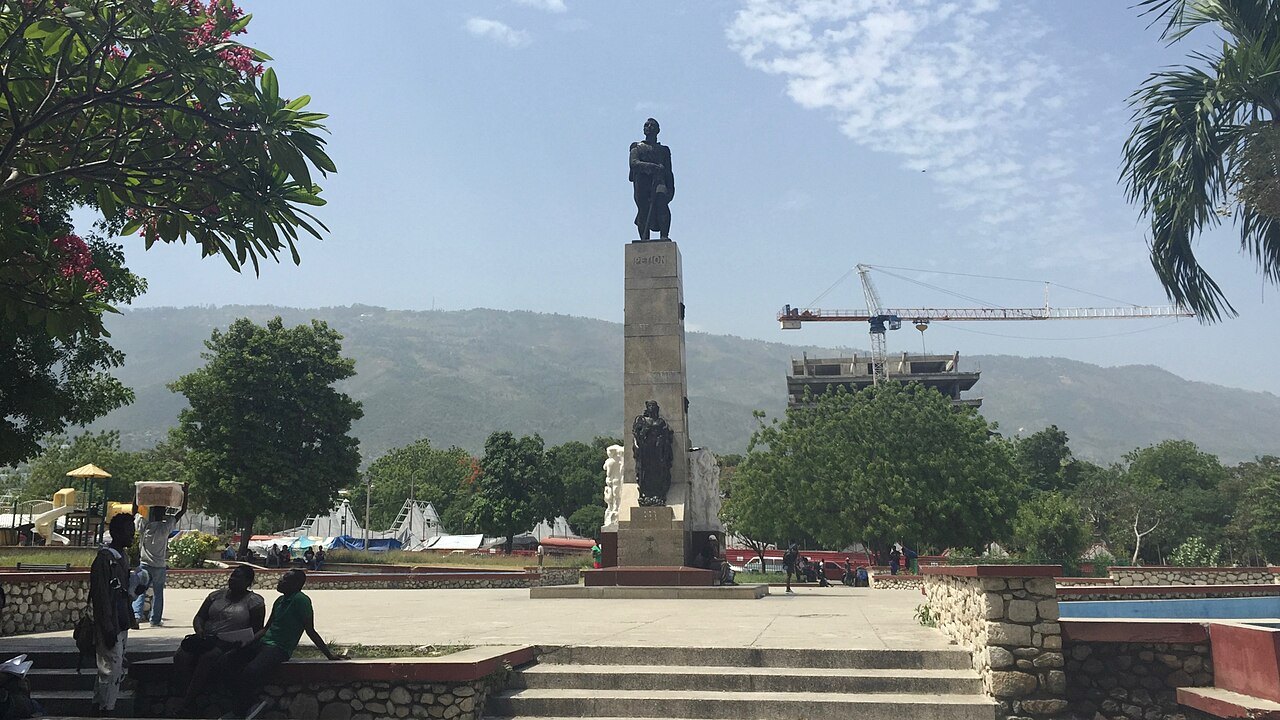
Haiti occupies the western third of Hispaniola, a Caribbean island it shares with the Dominican Republic. About 11.9 million people lived there in 2025, according to the World Bank, and nearly all of them speak Haitian Creole.
The crisis is a long armed takeover of the capital region by criminal groups. Gangs control up to 90 percent of Port-au-Prince, by UN estimates, and now reach deep into farmland.
This is not a civil war between two political camps. It is a contest between heavily armed gangs, a weak national police force and a slowly arriving international mission.
The currency is the gourde, which traded at about 130.6 gourdes per US dollar in late September 2026. That rate comes from the Banque de la République d’Haïti, the central bank.
How Haiti Got Here
The current spiral began with the assassination of President Jovenel Moïse in his home on 7 July 2021. Since then Haiti has had no elected president, and the terms of the last elected senators expired in 2023.
In early 2024 the gangs launched a joint offensive on the capital. They broke open two major prisons and shut the international airport, stranding Prime Minister Ariel Henry abroad.
Henry announced his resignation on 11 March 2024. A nine-member Transitional Presidential Council, sworn in on 25 April 2024, took over the presidency.
That council dissolved on 7 February 2026 without a successor. Executive power passed to Prime Minister Alix Didier Fils-Aimé, in office since November 2024, who now governs alone.
The Rio Times has followed the legal fallout of the 2021 killing too. In September 2026 Haiti sent 18 suspects in the Moïse case to the United States for trial.
Who the Gangs Are and How They Make Money
The dominant force is Viv Ansanm, Creole for “living together”, a coalition founded in September 2023. It joined the two rival gang federations of the capital, known as G9 and G-Pèp.
Its best-known figure is Jimmy Chérizier, a former police officer nicknamed “Barbecue”. In August 2025 US prosecutors charged him with conspiring to violate sanctions, and Washington offers up to US$5 million for his arrest.
Jeanine Pirro, a federal prosecutor in Washington, called him “a gang leader responsible for heinous human rights abuses”. As of September 2026 he has not been arrested, and the charges remain allegations untested in court.
Outside the capital, the main armed group is Gran Grif, based in the Artibonite valley, Haiti’s main farming region. On 2 May 2025 the US State Department designated both Viv Ansanm and Gran Grif as foreign terrorist organisations.
That designation has practical weight for outsiders. Paying a gang, even for safe passage, can now expose a company or donor to US terrorism-financing law.
Gangs earn money mainly through kidnapping for ransom, extortion and robbery. The UN’s political office in Haiti, BINUH, recorded 81 kidnappings from April to June 2026, up from 57 in the first quarter.
The Human Toll
BINUH, the UN Integrated Office in Haiti, publishes the most detailed casualty counts. It recorded 1,642 people killed and 745 injured from January to March 2026.
From April to June it counted 1,408 killed and 656 injured. Gang attacks caused about 55 percent of those casualties, and security-force operations over 40 percent.
For comparison, the UN counted 5,601 people killed in gang violence across all of 2024. Volker Türk, the UN human rights chief, said then that the figures could not capture “the absolute horrors being perpetrated in Haiti”.
Sexual violence is used as a weapon of control. BINUH documented 796 victims in the second quarter of 2026, and 87 percent were raped by several attackers.
Displacement has reached a record. The International Organization for Migration, the UN migration agency, said in June 2026 that nearly 1.5 million people had fled their homes.
Hunger follows the violence. About 5.8 million Haitians, more than half the population, faced acute food insecurity in April 2026, the UN-backed IPC hunger monitor said.
The violence is spreading well beyond the capital. In March 2026 a Gran Grif attack near Petite-Rivière killed at least 70 people, the Haitian rights group Defenseurs Plus said.
Official counts for that attack were lower, at 16 to 17 dead, which shows how hard verification is. In August 2026 an attack killed at least 47 people in Kenscoff, a hillside town above the capital.
From the Kenyan Mission to the Gang Suppression Force
The first outside answer was a Kenyan-led police mission, approved by the UN Security Council in October 2023. Its first 400 Kenyan officers landed in Port-au-Prince on 25 June 2024.
That mission never had enough people or money. It peaked at roughly 1,000 personnel, and the International Crisis Group, a conflict think tank, called it largely a failure.
On 30 September 2025 the Security Council replaced it with the Gang Suppression Force, or GSF, in Resolution 2793. The vote was 12 in favour, with China, Russia and Pakistan abstaining.
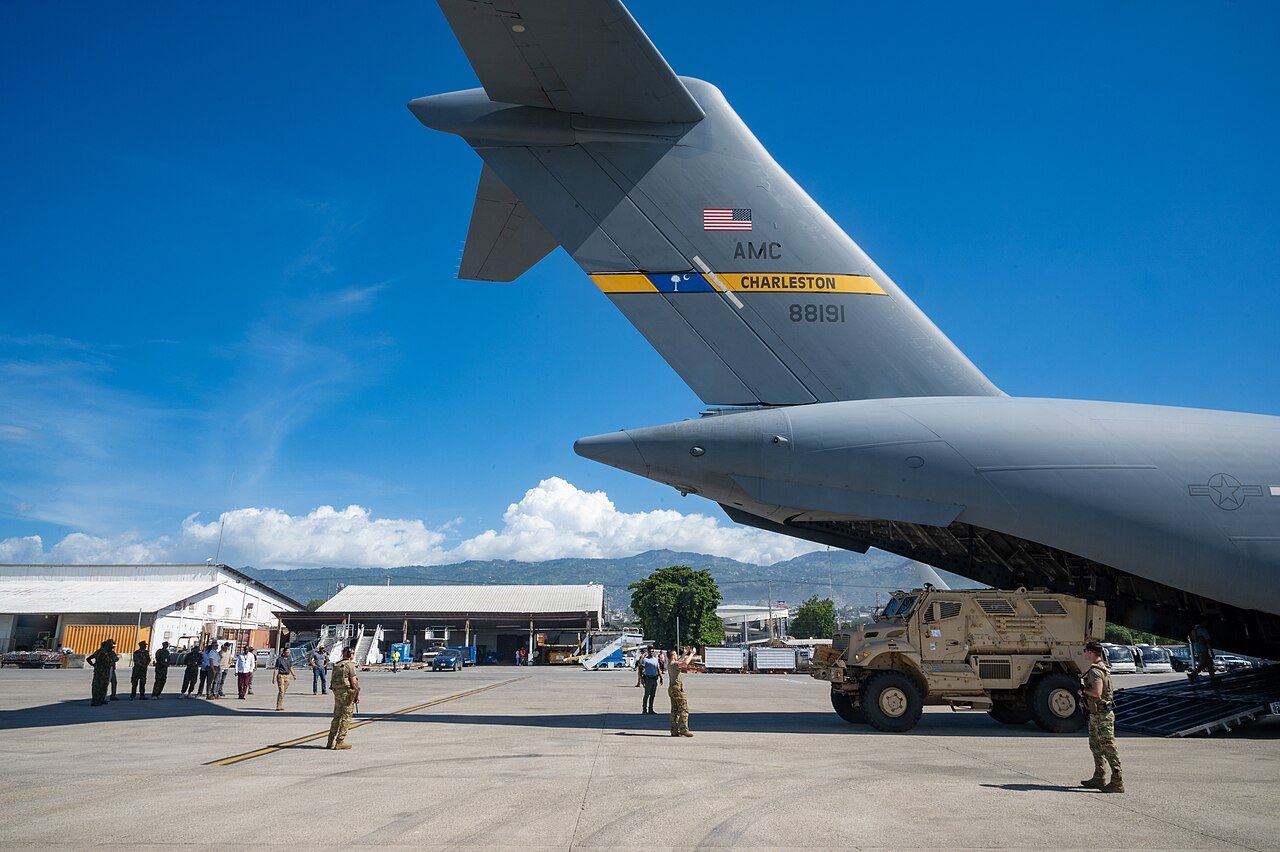
The new force may have up to 5,550 uniformed personnel and, unlike its predecessor, can arrest suspected gang members. A new UN Support Office in Haiti supplies its food, medical care and transport.
The first 400 Chadian troops arrived in April 2026. By July it had just over 1,000 personnel from six countries, including Chad, Jamaica and Sri Lanka, the Jamaica Observer reported.
Al Jazeera reported about 1,500 deployed by late September, around 30 percent of the planned size. At the end of September 2026 the Council extended the mandate for six months, to 31 March 2027.
Mike Waltz, the US ambassador to the UN, defended the approach at the renewal debate. He said seven earlier missions had seen “limited success” and that this one was “genuinely different”.
Not every Council member agreed in 2025. China’s ambassador Fu Cong warned that the resolution “risks exacerbating Haiti’s already complex and dire situation”, and China abstained.
The Drone War and the Rights Debate
Alongside the international force, Haiti’s government runs its own task force with armed drones. Vectus Global, a private security firm linked to the American businessman Erik Prince, supports that work.
Human Rights Watch, the New York rights group, counted 141 drone strikes between March 2025 and January 2026. It said at least 1,243 people were killed, including 17 children.
The group urged the international force to withhold operational support until safeguards against unlawful killings are in place. Its report was published on 10 March 2026.
Colonel Justin Gorkowski of the US Defense Department called Haiti’s drone task force “a tremendous partner” in July 2026, Reuters reported. He said he did not know specific civilian death tolls, and told Congress: “This is a war situation.”
Public opinion inside Haiti is mixed rather than hostile. A Chatham House survey in May 2026 found 49.5 percent approval of the force, rising above 67 percent in gang-held areas.
Trust in politicians is much lower than trust in the force. More than three quarters of respondents in the same survey said they did not trust the political leadership.
Who Governs and the Road to Elections
Prime Minister Fils-Aimé governs with the backing of a “National Pact for Stability” signed by parties and civic groups in February 2026. No one in the national government has been elected.
The electoral council has set the first round of general elections for 13 December 2026. A run-off is planned for 21 February 2027, with a new president due to take office on 12 March 2027.
The date has already slipped once, from 30 August. In May 2026 Fils-Aimé said “the security conditions are not met” for an August vote, Al Jazeera reported.
Critics accuse the government of using insecurity to stay in power. The journalist Michael Deibert wrote in April 2026 that the pact’s backers were working to change the constitution and further delay elections.
The government’s own message centres on security and outside help. Foreign Minister Raina Forbin said in early September 2026 that Haiti needed support “up to the challenge”.
Haiti’s UN ambassador, Pierre Ericq Pierre, set out the test after the renewal vote. He said it is “not enough to wrest territory from the gangs” unless the state then holds it and restores services.
What It Means for Foreigners and Investors
For travellers the advice is blunt. The US State Department rates Haiti at Level 4, “Do not travel”, and the UK Foreign Office advises against all travel.
US airlines are barred by the Federal Aviation Administration from flying to Port-au-Prince. Kidnapping is widespread, including of foreigners, and ransom demands often run from tens to hundreds of thousands of US dollars.
The economy shrank by 2.7 percent in 2025, the seventh straight year of decline, according to the World Bank. Inflation averaged 28.3 percent, pushed up by food and housing costs.
For companies the key risks are legal as well as physical. Any payment to Viv Ansanm or Gran Grif can breach US terrorism and sanctions law, including extortion paid at a roadblock.
The crisis also reaches neighbours and the diaspora. The UN migration agency counted more than 110,000 Haitians forcibly returned to the country between January and early June 2026.
For background on the wider country, see our Haiti explainer. Our earlier report on Haiti’s displacement crisis traces how the flight from the capital began.
What to Watch and What Is Not Known
The first test is troop numbers, since the force stood at about 30 percent of its planned size in late September. Holding cleared districts, as Haiti’s UN ambassador demanded, needs far more people on the ground.
The second is money, because troop costs depend on voluntary donations. The Associated Press reported in April 2026 that donors had pledged more than US$200 million, but only US$59 million had been paid.
The third is the 13 December vote. Holding it requires secure polling stations, and about one million identity cards still had to be produced and handed out.
Some things remain unknown. There is no reliable public count of gang fighters, and casualty figures vary widely between police, the UN and local groups.
It is also unclear whether arrests will lead to trials. Haiti’s own Moïse murder case has not reached trial in five years, and the government cited “major difficulties” when sending suspects abroad.
The mandate now runs to 31 March 2027. By then the Security Council will judge whether the force has turned the tide or only slowed the gangs.
Frequently Asked Questions
Who controls Port-au-Prince in 2026?
Armed gangs control up to 90 percent of the capital, according to UN and Council on Foreign Relations estimates. The main coalition is Viv Ansanm, led by the former police officer Jimmy Chérizier.
What is the Gang Suppression Force?
It is a multinational force authorised by UN Security Council Resolution 2793 in September 2025. It may have up to 5,550 uniformed personnel and can arrest suspected gang members.
Who governs Haiti now?
Prime Minister Alix Didier Fils-Aimé holds executive power alone since the transitional council dissolved on 7 February 2026. No national official has been elected since 2016.
When are Haiti’s next elections?
The first round of general elections is set for 13 December 2026, with a run-off on 21 February 2027. The date has already been moved once because of insecurity.
Is it safe to travel to Haiti?
No, the US government rates Haiti at Level 4, “Do not travel”, and the UK advises against all travel. Kidnapping is widespread and US airlines cannot fly to Port-au-Prince.
This article was produced by The Rio Times’ automated newsroom system. How we use AI · Report an error
Read More from The Rio Times