Bolivia’s Role in Latin America: Lithium, Mercosur, Allies

BOLIVIA · LATIN AMERICA
Key Facts
- —The basics Bolivia is a landlocked Andean republic of about 11.4 million people, a full Mercosur member since August 2024 and a member of the Andean Community, the OAS and CELAC, whose ALBA membership was suspended in October 2025.
- —Why it matters Bolivia holds an estimated 23 million tonnes of lithium resources, the third largest national figure in the world, while its gas exports are shrinking, so its alliances shape regional energy and minerals.
- —The numbers The IMF’s October 2026 outlook forecasts a 3.0% contraction in 2026 for an economy of US$53.8 billion, income of US$4,223 per person, the lowest in South America, and public debt near 100% of output.
- —Who is who President Rodrigo Paz of the Christian Democratic Party took office on 8 November 2025, Héctor Huanca has been foreign minister since 3 August 2026, and Vice President Edmand Lara broke publicly with the government in November 2025.
- —What to watch Chile’s President José Antonio Kast is due in La Paz on Friday, 16 October 2026 for talks on trade, fuel and the sea claim, and the fate of two lithium contracts with Chinese and Russian partners is open.
- —Power Index Bolivia ranks 12th of 14 in The Rio Times Latin America Power Index, with 28.4 points (October 2026 edition).
- —What it means for you US investors face a shrinking economy but a US$1.9 billion IMF programme, US travellers face a Level 2 advisory with sudden road blockades, and Washington has promised to restore ambassadors after 17 years.
The Bolivia continent story is a landlocked, mineral-rich country with a shrinking economy and falling gas exports. This guide explains its weight, its regional seats, its disputes and its allies, as of October 2026.
The central question is how a landlocked Andean republic of about 11.4 million people fits into Latin America. The short answer is that Bolivia is small in money, large in minerals and busy in diplomacy.
For US readers, Bolivia matters because it holds the world’s third-largest national lithium estimate and is courting Washington. It also matters because Brazil buys its gas, Chile and Argentina share its lithium region, and Chile holds the coast Bolivia claims.
Figures come from the IMF’s World Economic Outlook of October 2026, the national statistics institute INE and Bolivian ministries. All money is given in US$, using the IMF’s own dollar series.
Daily news is in the Rio Times Bolivia section, and the pillar Bolivia in 2026 explained covers the fuel crisis. The lithium explainer and the profile of President Rodrigo Paz go deeper on two themes below.
The Bolivia Continent Story in Numbers
INE counted 11,365,333 people in the census of Saturday, 23 March 2024. The IMF projects 12.75 million for 2026, about 1.4 million above the census, and its per-person figures use that higher number.
The IMF forecasts an economy of US$53.8 billion in 2026, shrinking 3.0%, with a further fall of 1.5% in 2027. Income per person is about US$4,223, the lowest of South America’s 12 countries.
Prices rose fast, with average inflation of 19.5% in 2025 and a projected 12.7% in 2026. The IMF also puts gross public debt at 100.2% of output in 2026, up from 83.3% in 2025.
The IMF and Bolivia agreed on 29 July 2026, at staff level, on a 36-month programme worth about US$1.9 billion. Press reports say the IMF board approved it in early October 2026, releasing about US$214 million at once.
The IMF said the authorities plan a more flexible, market-based exchange rate and an end to distortions in the currency market. The programme also aims to rebuild reserves and strengthen social safety nets.
The COB, Bolivia’s main union body, and peasant groups blocked roads for seven weeks in May and June 2026, demanding Paz resign. A state of exception followed on Saturday, 20 June 2026, with losses estimated unofficially at about US$3 billion.

Mercosur and the Andean Community, Bolivia in Both
Bolivia handed over its accession instrument at the Mercosur summit in Asunción on Monday, 8 July 2024. Under the protocol, full membership took effect 30 days later, on Wednesday, 7 August 2024.
Mercosur is the customs union of Argentina, Brazil, Paraguay, Uruguay and Bolivia, with Venezuela suspended. Mercosur says Bolivia has up to four years to adopt the bloc’s rules, and the accession protocol dates from 2015.
President Paz attended the 68th summit in Paraguay on Tuesday, 30 June 2026. Leaders pledged there to speed up the protocol’s implementation.
The leaders also backed respect for Bolivia’s constitutional government. They welcomed the interim trade agreement with the European Union, in provisional application since Friday, 1 May 2026.
Mercosur lists Chile, Colombia, Ecuador and Peru among its associated states, so Bolivia sits where two blocs overlap. Bolivia is also a founding member of the Andean Community, created by the Cartagena Agreement of Monday, 26 May 1969.
The community has four members today, Bolivia, Colombia, Ecuador and Peru, and its secretariat sits in Lima. Peru took over its rotating presidency from Ecuador on Wednesday, 30 September 2026, in Quito.
Where Bolivia Sits in the OAS, CELAC, ALBA and BRICS
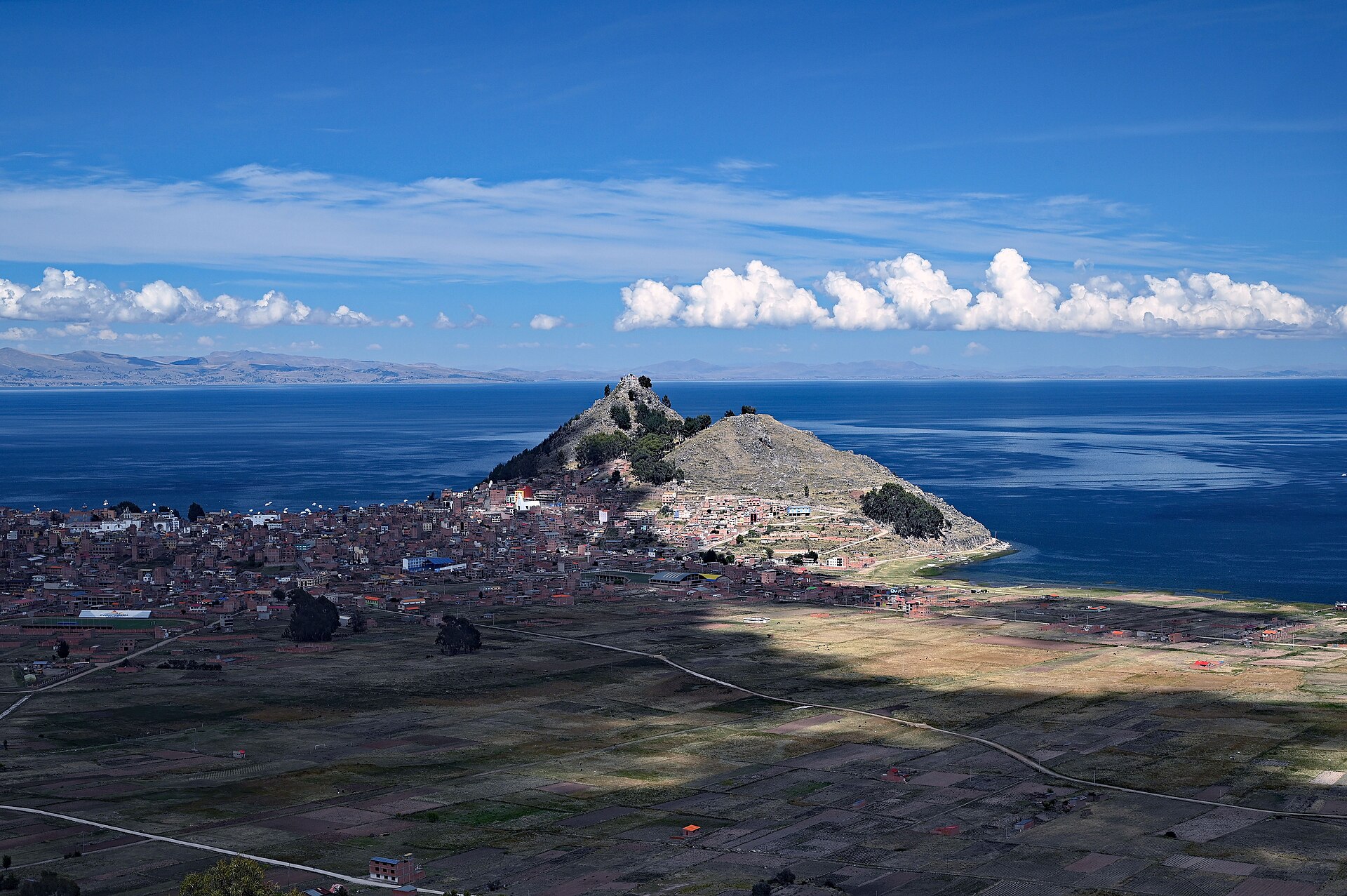
Bolivia belongs to the Organization of American States, the Washington-based political body of the Americas. In June 2026 its General Assembly in Panama passed a resolution backing Bolivia’s elected government, ABC Color reported.
OAS Secretary General Albert Ramdin led a mission to La Paz and Santa Cruz from Wednesday, 29 July 2026. The mission praised its frank talks with Bolivian sectors and will report to the Permanent Council in Washington.
Bolivia is one of 33 members of CELAC, the Community of Latin American and Caribbean States, constituted in 2011. Uruguay’s President Yamandú Orsi took over its rotating presidency at the Bogotá summit in March 2026.
ALBA, the leftist alliance founded by Venezuela and Cuba, suspended Bolivia on Friday, 24 October 2025. It cited statements by the incoming Paz government against Cuba, Venezuela and Nicaragua, and spoke of a suspension, not an expulsion.
Bolivia had announced its withdrawal from ALBA once before, in November 2019, under its interim government. Its status after the October 2025 suspension could not be confirmed, and no formal withdrawal notice was found.
BRICS, the group of emerging powers chaired by India in 2026, lists Bolivia as a partner country since Wednesday, 1 January 2025. Partner status is a step below full membership.
The Shield of the Americas is a US-led security grouping that began at a Doral, Florida, summit in March 2026. Bolivia took part, and on Friday, 5 June 2026 its foreign ministry thanked the grouping’s member countries for their support.
Chile, the Sea and 48 Years Without Ambassadors
Bolivia has no coastline, and its claim to sea access has shaped relations with Chile for generations. On Monday, 1 October 2018, the International Court of Justice found that Chile never undertook a legal obligation to negotiate sovereign access.
The two countries have kept only consular relations since Friday, 17 March 1978. On Tuesday, 10 March 2026, the Bolivian presidency announced that ambassadors would be restored.
The Chilean daily Emol still described relations as consular, without ambassadors, on 2 October 2026. Chile’s conservative President José Antonio Kast took office on Wednesday, 11 March 2026.
Kast is due in La Paz on Friday, 16 October 2026, with an 11-point agenda on trade, security, fuel and critical minerals. The Chilean outlet Pauta calls it the first official visit by a Chilean president to La Paz since August 1955.
Officials plan to sign terms of reference to modernise ACE 22, the bilateral trade agreement. La Paz also wants faster fuel transport from the Chilean port of Arica to Sica-Sica in Bolivia.
Bolivia also raised timber shipments investigated in Chilean ports, and the foreign ministries had agreed to convene a free-transit working group. Minister of the Presidency Fernando Aramayo said the sea claim stays on the agenda.
Aramayo added that Bolivia has never abandoned the path of its maritime claim. The Rio Times has followed the oil and minerals talks, and the pillar on Chile and its neighbours covers the Chilean side.
Lithium, Gas and the Resource Disputes
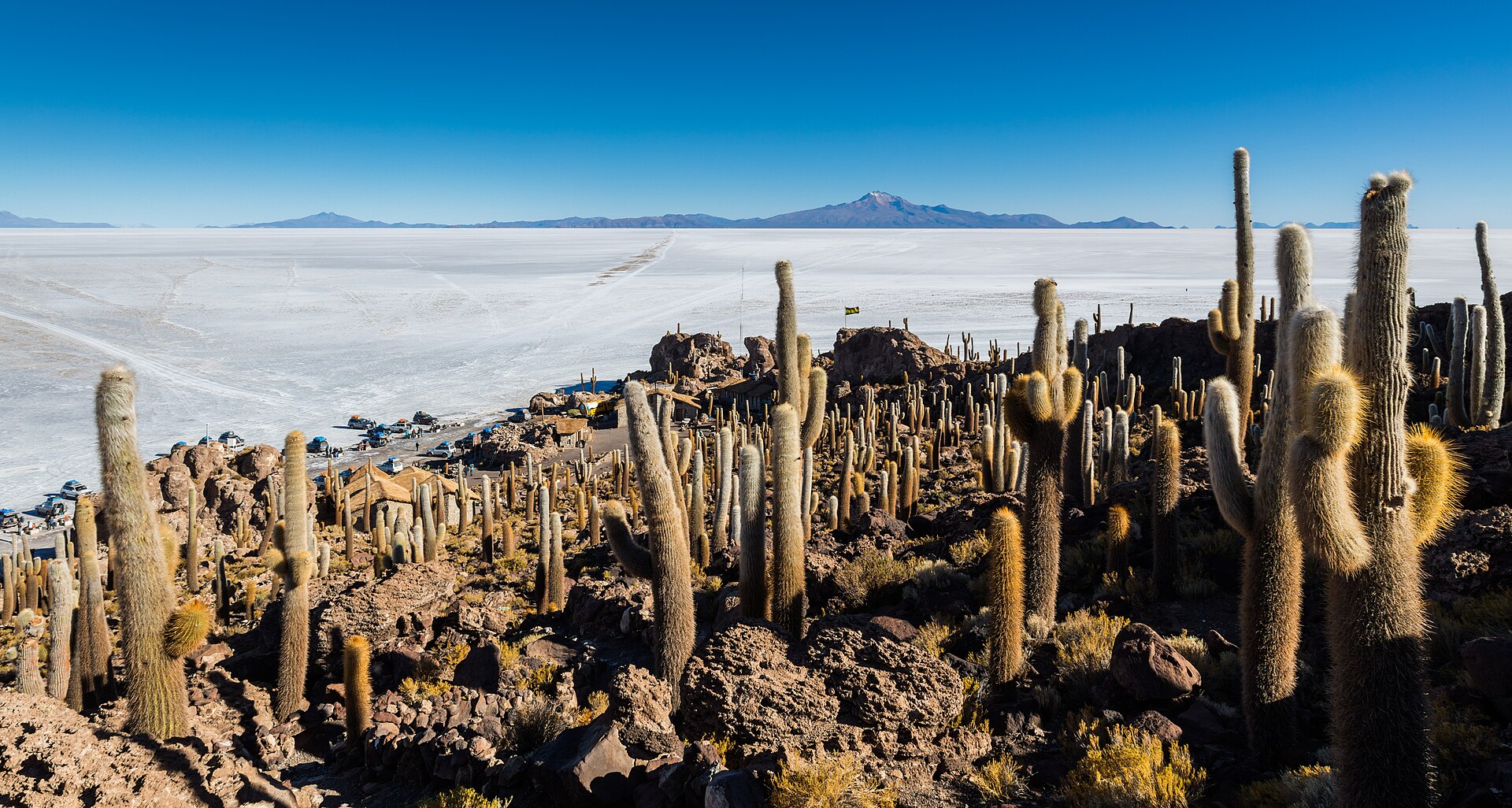
The US Geological Survey puts Bolivia’s lithium resources at 23 million tonnes, behind Argentina’s 28 million and ahead of Chile’s 13 million. The three countries form the “lithium triangle” of the high Andes, which the Rio Times lithium guide maps.
YLB, Bolivia’s state lithium company, signed two contracts in late 2024 with CBC of China and Uranium One Group of Russia. Both cover industrial plants in the Salar de Uyuni, and YLB confirmed in February 2026 that they went to the Legislative Assembly.
There they must follow the procedure for a law, and the Assembly’s final decision could not be confirmed in October 2026. The contract values reported in 2025 differ between outlets, so none is given here.
YLB said in February 2026 that no industrial contract was signed under Paz, only a talks deal with Australian-German group EAU Lithium. It added that the 2024 and 2025 agreements will be subject to a new lithium law, whose passage could not be confirmed.
In a presidency note dated 16 October 2026, Aramayo said lithium calls for coordinated action among Chile, Argentina and Bolivia. The 2024 contracts, by contrast, went to partners from China and Russia.
Gas export revenue fell to US$283.8 million in January to May 2026 from US$471.3 million a year earlier, INE data show. YPFB, the state oil and gas company, calls the picture very worrying.
YPFB projects a 30% fall in gas exports in 2026, the Brazilian outlet eixos said in May. Exports average 9.11 million cubic metres a day, and YPFB sees export capacity ending in 2030 on current reserves.
Proven reserves are 3.7 trillion cubic feet, against 8.95 trillion in 2018, Correo del Sur wrote in July 2026. Argentina ended its Bolivian gas purchases in 2024, after the supply contract expired on 31 July and extra volumes ran through September.
GTB, the pipeline operator, expects under 0.5 million cubic metres a day of Argentine gas through Bolivia in 2026, eixos reported. Brazil’s President Luiz Inácio Lula da Silva met Paz on 30 June 2026, saying Bolivia should stay Brazil’s top gas supplier.
Lula and Paz agreed to speed up talks between Petrobras, Brazil’s state-controlled oil company, and YPFB on gas extraction. The earlier Rio Times pillar on Bolivia in 2026 covers the fuel side of the crisis.
Washington, Brasília, Buenos Aires and Beijing
US Deputy Secretary of State Christopher Landau and Paz announced on Saturday, 8 November 2025 that ambassadors would return after 17 years. Ties were downgraded in 2008, when Evo Morales expelled the US ambassador and Washington reciprocated.
China took 21.6% of Bolivia’s goods trade in 2025, against 4.6% for the United States. Those IMF trade shares feed The Rio Times Latin America Power Index, which also lists Bolivia as a Belt and Road partner.
Argentine President Javier Milei attended Paz’s inauguration and met him in La Paz on Saturday, 8 November 2025. Both pledged a common agenda, and Paz stressed cooperation across Bolivia’s five borders.
Paz repeated the point in October 2026, saying his government is working across all five borders, Chile included. Correo del Sur reported his remarks on 12 October 2026, and added that Bolivia has already held dialogue with Brazil.
Where Bolivia Ranks in the Power Index
The Rio Times Latin America Power Index, October 2026 edition, puts Bolivia 12th of 14 countries with 28.4 points. It scores Bolivia highest on military means (54.6) and state capacity (49.4), and lowest on influence (13.0) and economic weight (13.2).
The index puts Bolivia in its hedging group: a BRICS partner that also takes part in the Shield of the Americas. Only Brazil, Mexico and Uruguay share that middle group.
Who Leads Bolivia in October 2026
Rodrigo Paz Pereira of the Christian Democratic Party won the runoff on Sunday, 19 October 2025, with 54.96% of valid votes. He beat former president Jorge “Tuto” Quiroga, who took 45.04%, and took office on Saturday, 8 November 2025.
Vice President Edmand Lara, elected on Paz’s ticket, said on 25 November 2025 that he was no longer part of the government. On Monday, 5 October 2026, as president of the Assembly, he swore in José Armando Urioste as interim attorney general.
Foreign Minister Héctor Huanca, a former official of the foreign-trade vice-ministry, was sworn in on Monday, 3 August 2026. He replaced Fernando Aramayo, who became Minister of the Presidency.
How Bolivia Compares With Its Peers
Bolivia’s peers in Mercosur and the Andean Community are mostly richer and faster growing. The IMF’s October 2026 forecasts for 2026 give the following picture.
- Bolivia: about 12.75 million people, an economy of US$53.8 billion, about US$4,223 per person and a contraction of 3.0%.
- Paraguay: about 6.46 million people, US$64.0 billion, about US$9,907 per person and growth of 4.5%.
- Ecuador: about 18.24 million people, US$138.2 billion, about US$7,575 per person and growth of 2.7%.
- Peru: about 34.75 million people, US$399.6 billion, about US$11,498 per person and growth of 3.0%.
- Chile: about 20.15 million people, US$402.2 billion, about US$19,961 per person and growth of 0.6%.
- Brazil: about 214.14 million people, US$2.65 trillion, about US$12,397 per person and growth of 2.2%.
Paraguay, the other landlocked state in Mercosur, has half of Bolivia’s population but a larger economy. Brazil’s economy is about 49 times the size of Bolivia’s.
Bolivia is the only one of these six countries the IMF expects to shrink in 2026. It forecasts a smaller contraction of 1.5% in 2027 and public debt of 95.1% of output.
What It Means for US Readers
Investors face an economy in contraction, average inflation of 12.7% and public debt near 100% of output. The US$1.9 billion IMF programme gives Bolivia fresh financing, but its reviews will set the pace.
US policy has moved from confrontation to courtship, with ambassadors promised and Bolivia taking part in the Shield of the Americas. The two 2024 lithium contracts went to Chinese and Russian partners, and the Assembly’s final decision on them could not be confirmed.
US travellers face a Level 2 advisory, exercise increased caution, issued on Tuesday, 18 August 2026, citing crime, unrest and health. Blockades can close roads quickly, so flexible plans matter.
Lithium buyers and Brazilian gas importers watch the same two files. Those are the Assembly’s decision on the lithium contracts and the talks between Petrobras and YPFB.
Readers planning a stay can start with the guide to the cost of living in La Paz. Daily developments appear in the Bolivia section linked above.
What Is Not Known
The outcome of the Kast visit on 16 October 2026 was not public when this guide was finalised. That includes whether ambassadors will be restored, and the full list of the 11 agenda points was not found.
Whether Bolivia’s new lithium law has passed, and whether the Assembly has voted on the two contracts, could not be confirmed. Nor is it clear what ALBA’s status is after the suspension or whether La Paz plans a formal exit.
It is unclear whether Bolivia is covered by the EU-Mercosur interim trade agreement. Nor is it known whether either capital has named an ambassador since November 2025.
The exact date of the IMF board approval, reported for early October 2026, could not be confirmed on the IMF’s own site. The same applies to the exact launch day of the Shield of the Americas, which was in March 2026.
Frequently Asked Questions
Is Bolivia a member of Mercosur?
Yes, Bolivia deposited its accession instrument on 8 July 2024, and full membership took effect on 7 August 2024. It has up to four years to adopt the bloc’s rules.
Does Bolivia have access to the sea?
No, Bolivia is landlocked. The International Court of Justice ruled in 2018 that Chile has no legal obligation to negotiate sovereign sea access.
Which regional bodies does Bolivia belong to?
Bolivia is a member of Mercosur, the Andean Community, the OAS and CELAC, and a BRICS partner country. Its ALBA membership was suspended on 24 October 2025, and its current status could not be confirmed.
How much lithium does Bolivia have?
The US Geological Survey estimates 23 million tonnes of resources, second in Latin America after Argentina’s 28 million. No industrial plant is confirmed as approved, because the Assembly’s decision on two 2024 contracts could not be confirmed.
Who is the president of Bolivia?
Rodrigo Paz Pereira of the Christian Democratic Party has been president since 8 November 2025. His vice president, Edmand Lara, said in November 2025 that he was no longer part of the government.
Does Bolivia still export gas to Argentina and Brazil?
Exports to Argentina ended in 2024, while Brazil remains a gas buyer. Gas export revenue fell to US$283.8 million in January to May 2026 from US$471.3 million a year earlier.
Sources: IMF World Economic Outlook, October 2026 (DataMapper); IMF Press Release 26/268, 29 July 2026; Report.az on the IMF board approval, 3 October 2026; INE, final census 2024 results, 1 September 2025; INE, first census results, 29 August 2024; Presidency of Bolivia, note of 16 October 2026; Foreign Ministry of Bolivia; Radio Pauta, 14 October 2026; Emol, 2 October 2026; Eju.tv, 10 March 2026; International Court of Justice, case 153; Mercosur, member countries; Paraguay Foreign Ministry, joint communique of 30 June 2026; Mercosur, release of 8 July 2024; teleSUR, 8 August 2024; Andean Community, member countries; Vanguardia, 1 October 2026; ABC Color, 29 July 2026; India Ministry of External Affairs, CELAC brief; Presidency of Uruguay, 22 March 2026; Eju.tv on the ALBA suspension, 25 October 2025; America TV, 15 November 2019; BRICS Brazil, partner countries; Los Tiempos, 5 June 2026; USGS Mineral Commodity Summaries 2026, lithium; Correo del Sur, 26 February 2026; Correo del Sur, 12 October 2026; El Tiempo, 20 June 2026; Primicias, 25 November 2025; Correo del Sur, 7 July 2026; eixos, 5 May 2026; Los Tiempos, 29 September 2024; Los Tiempos, 30 June 2026; PISM, 10 March 2026; Gulf Times (QNA), 9 November 2025; El Ancasti, 8 November 2025; US State Department, Bolivia travel advisory; Eju.tv on the runoff count, 23 October 2025; Eju.tv, 3 August 2026; Correo del Sur, 5 October 2026; Presidency of Bolivia; The Rio Times Latin America Power Index, October 2026 (all accessed 16 October 2026).
This article was produced by The Rio Times’ automated newsroom system. How we use AI · Report an error · Editorial responsibility: Matthias Camenzind, Editor-in-Chief
Expat Guide to Bolivia
What The Rio Times publishes for foreigners who live in or move to Bolivia.
Start here
- Best Places to Live in Bolivia for Expats in 2026
- Cost of Living La Paz 2026 — Budgets, Rent and Dollar Access
- Opening a Bank Account in Bolivia as a Foreigner
- Taxes in Bolivia for Expats: Territorial Income, Global Assets
Understand Bolivia
Lithium in Latin America
- Lithium in Latin America 2026: Inside the Lithium Triangle
- Bolivia’s Lithium Explained for 2026
- Chile Lithium 2026: Deals, Policy Shift and Race to Stay No. 2
- Argentina Natural Resources Explained 2026