What Is Mercado Libre? Latin America’s Online Shopping and Fintech Giant in 2026, Explained
COMPANIES · LATIN AMERICA
Key Facts
- —The country Latin America, home to more than 650 million people. Online shopping still takes a much smaller share of retail there than in richer markets. Brazil, Mexico and Argentina are the three markets that matter most.
- —What it is MercadoLibre, Inc., founded in Argentina in 1999, incorporated in Delaware and run from Montevideo, Uruguay. It owns the region’s largest online marketplace and Mercado Pago, a digital wallet, payments and lending business.
- —Size US$10.2 billion of revenue and US$466 million of net income in the second quarter of 2026. US$28.9 billion of revenue in 2025. A stock-market value of about US$89 billion on 24 September 2026.
- —Ownership Listed on Nasdaq as MELI and widely held. The largest disclosed holders are Baillie Gifford with 7.46 percent and the Galperin Trust with 7.00 percent.
- —Why it matters It is where Latin Americans shop online, and increasingly where they keep money and borrow it. Mercado Pago had 88 million monthly active users and a loan book above US$16 billion in mid-2026.
- —The catch Revenue grows fast, but profit is shrinking as the company pays for free shipping and credit cards. Net income fell 11 percent year on year in the second quarter.
What is Mercado Libre? The short answer: Latin America’s Amazon and its PayPal in one company, with a growing bank-like lending arm attached.
For anyone selling to, investing in or living in Brazil, Mexico or Argentina, Mercado Libre is hard to avoid. It is the biggest online shop in the region, one of its largest payment networks and a lender with a loan book above US$16 billion.
What the company does
Mercado Libre began in Buenos Aires in 1999, co-founded by Marcos Galperin. Today it describes itself as the leading online commerce and fintech ecosystem in Latin America. The marketplace runs in 18 countries. Mercado Pago, the financial arm, runs in eight.
The company has five main pieces. The marketplace connects buyers and sellers. Mercado Envios is its own delivery network. Mercado Ads sells advertising on the site. Mercado Libre Classifieds lists cars, property and services. Mercado Pago handles payments, savings, cards and loans.
Most goods are sold by independent merchants, not by Mercado Libre itself. The company’s annual report says selling on its own account covers less than 10 percent of merchandise volume. The rest comes from third-party sellers who pay fees to reach its buyers.
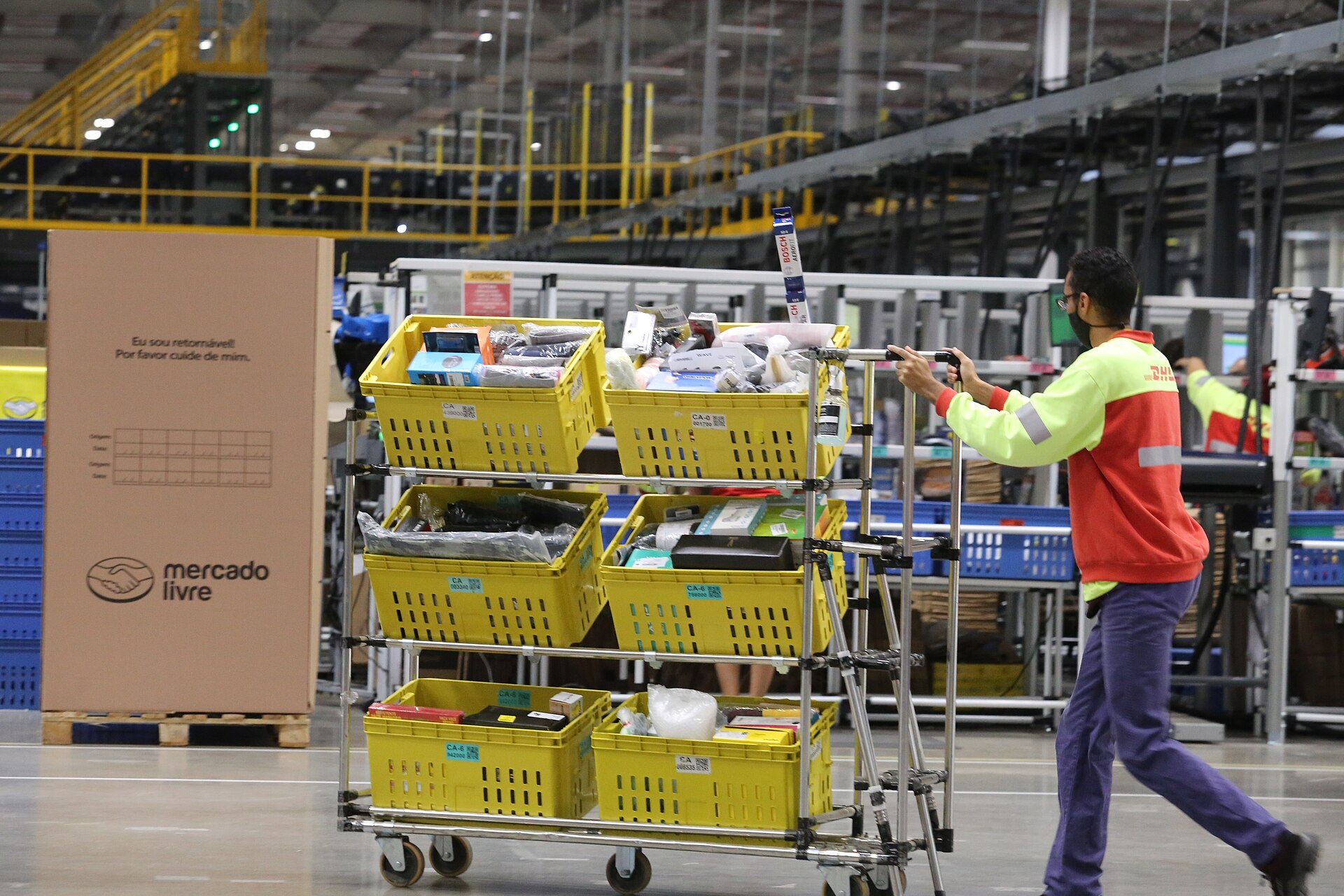
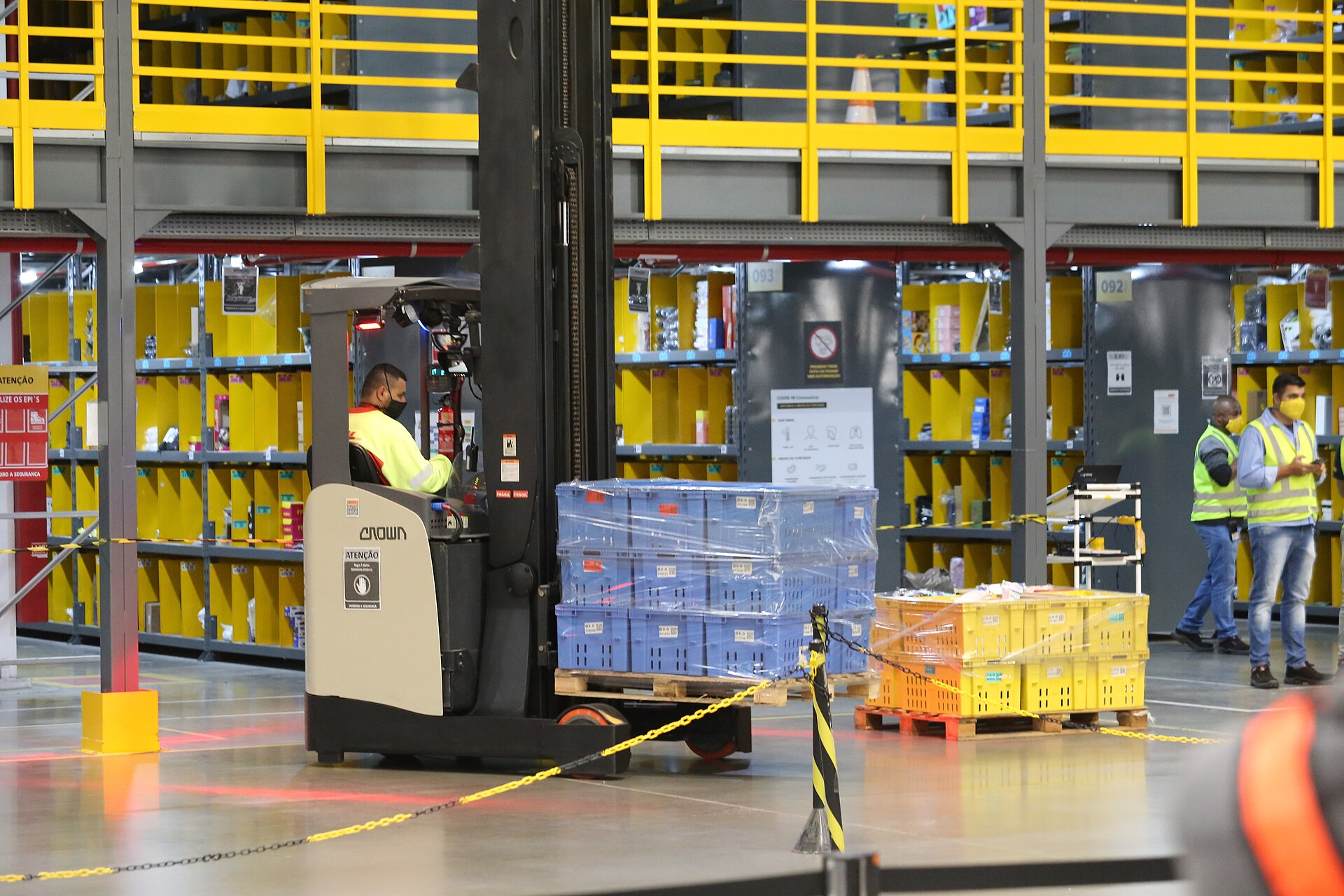
Delivery is where it differs most from a simple website. Sellers can store stock in Mercado Libre warehouses, and those fulfilment centres handle more than half of all shipments. Its network also uses dedicated cargo aircraft, trucks and thousands of delivery vans, mostly run by partner carriers.
How it makes money
Revenue splits roughly 57 to 43 between commerce and fintech. In the second quarter of 2026, commerce brought in US$5.8 billion and Mercado Pago US$4.4 billion. Both halves grew by roughly half in dollar terms over a year.
On the commerce side, the main income is fees. Sellers pay a commission on each sale, plus shipping and storage charges and advertising. These commerce services earned US$4.3 billion in the quarter. Goods Mercado Libre sold itself added US$1.5 billion.
On the fintech side, two lines dominate. Payment fees and other financial services earned US$2.1 billion, mostly commissions on transactions made off the marketplace, in shops and online. Credit revenues, meaning interest and fees on loans and cards, earned US$2.3 billion.
That last figure is the one to watch. Lending is now the single largest fintech revenue line, at about 22 percent of the group total. It is also the most volatile, because it depends on borrowers repaying.
Advertising is small but growing fastest. Ad revenue rose 62 percent at constant exchange rates in the second quarter. The company says its share of Latin America’s digital advertising market passed 10 percent for the first time.
Live Company IntelligenceMercadoLibre Inc. — the full investor dossier
Wall Street view
Valuation & profitability
Price & risk
$1,495.0052-wk high
$2,428.00
Revenue trend · 6y
Ownership
Dividend
The numbers: second quarter of 2026
The latest reported period is the second quarter of 2026, the three months to 30 June, published on Wednesday 5 August 2026. Net revenue and financial income reached US$10.17 billion, up 50 percent in dollars. It was the first time the company passed US$10 billion in a single quarter.
Profit went the other way. Income from operations was US$683 million, a margin of 6.7 percent, down from US$825 million a year earlier. Net income was US$466 million against US$523 million, a fall of about 11 percent. The company says it is putting long-term investment ahead of short-term profit.
The main reason is visible in the accounts. Provisions for bad loans reached US$1.28 billion in the quarter, up from US$690 million a year before. More lending means more money set aside for loans that may not be repaid.
Activity numbers were strong. Gross merchandise volume, the value of goods sold on the platform, was about US$22 billion, up 36 percent at constant exchange rates. Items sold rose 45 percent to 795 million. Unique active buyers grew 26 percent to 89 million.
In fintech, total payment volume passed US$100 billion for the first time, at US$101 billion. Assets that users keep in Mercado Pago rose 68 percent to US$23 billion. The credit portfolio grew 75 percent to more than US$16 billion, of which credit cards made up US$7.7 billion.
Loan quality held up on the company’s own measure. The share of loans 15 to 90 days overdue was 7.0 percent across the book and 4.6 percent for credit cards. The company describes both as near historic lows.
For context, full-year 2025 revenue was US$28.9 billion and net income US$2.0 billion. The operating margin slipped from 12.7 percent in 2024 to 11.1 percent in 2025. The annual report blames the lower free-shipping threshold in Brazil and higher bad-debt provisions from the card business.
Where the money comes from, by country
Brazil is the core. It produced US$5.53 billion, or about 54 percent, of second-quarter revenue. Mexico brought in US$2.34 billion, Argentina US$1.84 billion and all other countries together US$463 million.
Revenue and profit do not line up. Argentina earned the largest direct contribution of any country, US$623 million, against US$550 million for much bigger Brazil. In 2025 Argentina’s direct contribution margin was 41.6 percent, against 13.7 percent in Brazil, where the company is spending heavily on shipping.
Ownership and governance
MercadoLibre, Inc. is a Delaware company, incorporated in October 1999, with its principal offices in Montevideo. Its shares trade on the Nasdaq Global Select Market under the ticker MELI. There were about 50.7 million shares outstanding in 2026.
No single owner controls it. The 2026 proxy statement lists two holders above 5 percent: the Scottish fund manager Baillie Gifford with 7.46 percent, and the Galperin Trust with 7.00 percent. Directors and executives as individuals each hold less than 1 percent.
Leadership changed at the start of 2026. Marcos Galperin, chief executive for more than 25 years, became executive chairman on 1 January. Ariel Szarfsztejn, previously head of commerce and before that of the Mercado Envios logistics arm, became president and chief executive. Martín de los Santos is chief financial officer.
The company had 123,670 employees at the end of 2025. Almost half, 61,139, worked in Brazil. Mexico had 34,336 and Argentina 16,726, with the rest mainly in Colombia, Chile and Uruguay.
Why it matters for the region
Mercado Libre is the default online shop for hundreds of millions of people. For small merchants it is often the cheapest way to reach customers in another city, with delivery, payment and even working capital supplied in one package.
Its financial arm matters even more. Mercado Pago says it has the most monthly active users of any fintech in Argentina, Chile and Mexico, and the second most in Brazil. In a region where many people have thin credit histories, its data on shopping and payments lets it lend to customers banks often pass over.
In Mexico the company is building a card-acceptance network in physical shops. It says Mercado Pago now has 1.4 million active payment devices there, which it claims equals all of the country’s incumbent banks combined. That makes it a direct competitor to Mexico’s largest lenders.
It is also one of the few Latin American companies that can borrow cheaply abroad. On 9 September 2026 it agreed to sell US$1 billion of ten-year notes with a 5.850 percent coupon, due 2036. The deal closed on 14 September.

Risks
Credit is the first risk. A loan book growing 75 percent a year can look healthy until an economy turns. Bad-debt provisions already rose faster than revenue in the second quarter of 2026. The company is also deliberately issuing more cards: 2.6 million in the quarter, against 1.6 million a year earlier.
Regulation is the second. Mercado Pago operates without a full banking licence in its main markets. In Mexico it has held an electronic payment institution licence since April 2022 and applied to become a bank in September 2024. In Argentina it applied for a banking licence on 17 June 2025. On 23 September 2026 central bank director Juan Curutchet said it would receive that licence before the end of the year.
Tax and competition are the third. The company says Mexico’s 2026 tax reform weighed on growth there. Its annual report warns that international rivals are expanding, mainly in Brazil and Mexico, and that competition regulators across the region watch digital markets closely.
Currency is the fourth. Mercado Libre reports in US dollars but earns in reais, pesos and other local currencies. A weaker real or Argentine peso shrinks dollar revenue even when local sales grow, which is why the company also reports growth at constant exchange rates.
Finally, investors have grown less patient. The share price closed at US$1,754.13 on 24 September 2026, about 30 percent below its highest close of the previous 52 weeks, US$2,501.31 on 29 September 2025. The market is asking when heavy spending turns back into rising profit.
What to watch
As of 25 September 2026, the next marker is third-quarter results. No date had been announced; a year earlier the company reported third-quarter results on 29 October 2025. The key questions are whether net income stops falling and whether the operating margin recovers from 6.7 percent.
Watch loan quality closely. The 15-to-90-day overdue ratio of 7.0 percent is the single best early warning. A rise of a point or more would suggest the card push is running ahead of underwriting.
Watch the licences. Argentina’s central bank expects to grant a licence there by the end of 2026. A banking licence in Mexico or Argentina would let Mercado Pago take deposits as a bank and fund loans more cheaply. Until then it relies on customer balances, partners and bond markets.
Watch the calendar in Brazil. The general election falls on Sunday 4 October 2026, with a possible runoff on Sunday 25 October. Then come the year-end campaigns, led by Black Friday on 27 November and Mexico’s Buen Fin, which the company says lift transactions.
Connected Coverage
MercadoLibre Q2: Revenue Tops US$10 Billion, Shares Slip
Mercado Pago Says It Has Passed Caixa in Brazilian Cards — Without a Banking Licence
Mercado Pago, Mercado Libre’s Fintech, Launches Payroll-Deducted Loans in Brazil
MercadoLibre Raises US$1 Billion in Ten-Year Notes
What Is Nubank? Brazil’s Fintech Giant Explained: the Business, the Numbers and What to Watch
What Is Not Known
When profit turns. Management has not given a date or a margin target for when heavy spending on shipping and cards starts lifting earnings again. The company says it will keep investing where demand and returns justify it.
How the loan book behaves in a downturn. Mercado Pago’s credit portfolio has grown quickly during a period of low overdue ratios. It has not yet been tested at its current size by a sharp recession in Brazil or Mexico.
When, or whether, the banking licences arrive. Mexico’s regulator has not published a timetable. In Argentina a central bank director expects approval before the end of 2026, but no licence had been issued by the dateline.
How the Galperin Trust’s stake is controlled. The proxy lists the trust as a 7 percent holder through several entities, but public filings give limited detail on who directs its votes.
Sources: MercadoLibre, Inc. filings with the US Securities and Exchange Commission and its investor-relations releases, all accessed 25 September 2026. Share price from Nasdaq trading data.
- MercadoLibre Investor Relations — Q2 2026 press release, 5 August 2026
- SEC — MercadoLibre Form 10-Q for the quarter ended 30 June 2026
- SEC — MercadoLibre Form 10-K for 2025
- SEC — MercadoLibre 2026 proxy statement, beneficial ownership
- SEC — Form 8-K on the chief executive transition, May 2025
- SEC — Form 8-K on the US$1 billion 5.850% notes due 2036
- Tribunal Superior Eleitoral — 2026 electoral calendar
More: Argentina news in English, every day from The Rio Times.
Frequently Asked Questions
What is Mercado Libre?
Mercado Libre is Latin America’s largest online marketplace and, through Mercado Pago, one of its biggest payment and lending businesses. It was founded in Argentina in 1999, is incorporated in Delaware, has its main offices in Montevideo and trades on Nasdaq as MELI.
How big is Mercado Libre?
In the second quarter of 2026 it reported US$10.17 billion of revenue and US$466 million of net income. Full-year 2025 revenue was US$28.9 billion. It had 123,670 employees at the end of 2025 and a stock-market value of about US$89 billion on 24 September 2026.
Is Mercado Pago a bank?
Not in its main markets. It operates under payment and finance licences. In Mexico it has held an electronic payment institution licence since April 2022 and applied for a banking licence in September 2024. In Argentina it applied for one on 17 June 2025, and a central bank director said in September 2026 that it would be granted before the end of the year.
Who owns and runs Mercado Libre?
It is widely held. The largest disclosed shareholders are Baillie Gifford with 7.46 percent and the Galperin Trust with 7.00 percent. Founder Marcos Galperin became executive chairman on 1 January 2026, when Ariel Szarfsztejn took over as chief executive.
Why is Mercado Libre’s profit falling?
Because it is spending on growth. Net income fell about 11 percent year on year in the second quarter of 2026 as the company paid for cheaper free shipping in Brazil and set aside more money for bad loans as it issued more credit cards.
Which country matters most to Mercado Libre?
Brazil, which produced about 54 percent of second-quarter 2026 revenue. Mexico and Argentina follow. Argentina, though smaller, generated the largest direct contribution of any country in that quarter.
This article was produced by The Rio Times’ automated newsroom system. How we use AI · Report an error
LatAm Markets: Live Signals → — real-time movers, turnover leaders and FX across Latin America.
Read More from The Rio Times