Enzo Maqueira’s Cult Novel Electrónica Returns in New Edition
Argentina · Culture
Key Facts
—The return. Enzo Maqueira’s novel Electrónica is back in a corrected and expanded tenth-anniversary edition.
—The reach. The new edition, from an independent publisher, is aimed at readers in Spain, Mexico and beyond.
—The story. It follows a literature teacher in her early thirties whose life turns when she falls for an eighteen-year-old student.
—The author. Maqueira, born in Buenos Aires in 1977, has won the city’s Municipal Prize and is widely read in Argentina.
—The status. A decade on, the book is treated as a contemporary coming-of-age classic.
A novel that once struggled to find its audience is being reissued as a classic. Enzo Maqueira Electrónica, first published a decade ago, returns in a revised edition pitched at readers across the Spanish-speaking world.
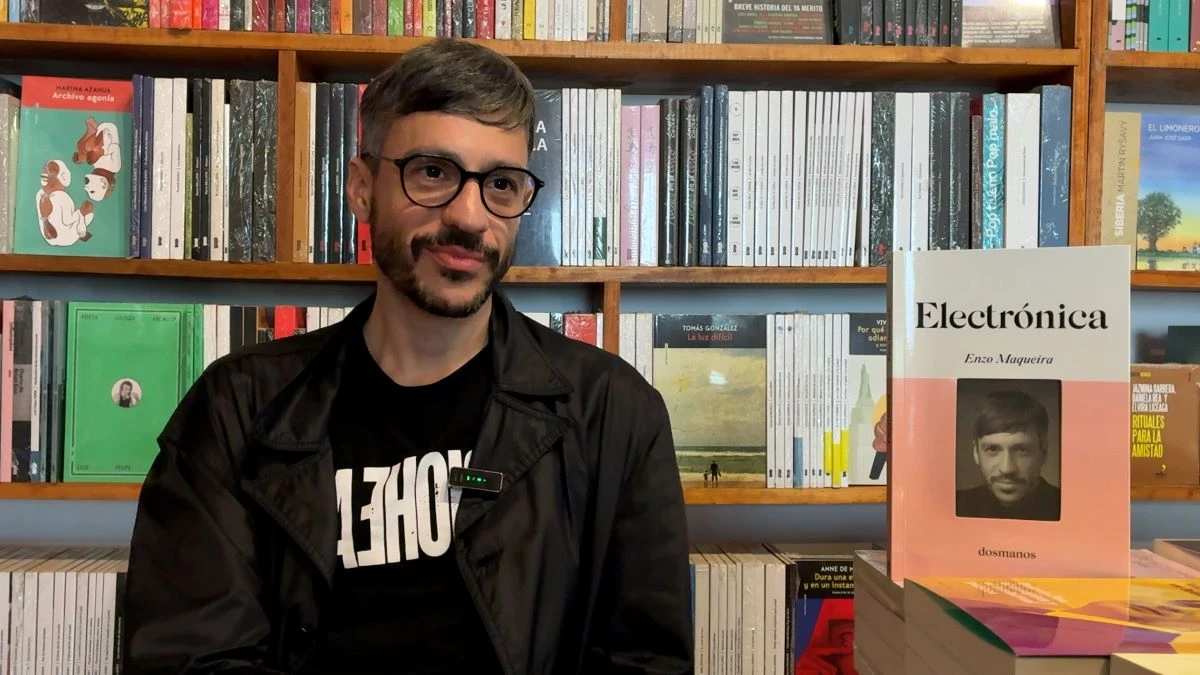
The anniversary edition is corrected and expanded, and reaches beyond Argentina to markets including Spain and Mexico, as Infobae has reported. For an international release, the author reworked local references that would have meant little outside Argentina.
What the novel is about
At its centre is a literature teacher in her early thirties whose settled life is upended when she falls for an eighteen-year-old student. The book uses that charged premise to explore desire, frustration and the questions that arrive with early adulthood.
It was, on first release, dismissed by some as a book for a narrow readership. Ten years later that judgement looks mistaken; the novel has aged into a touchstone of the coming-of-age genre.
Why the reissue matters
The return of Electrónica is a small case study in how contemporary Latin American fiction finds a second life: an initially divisive book, revised by its author and re-launched for a wider Spanish-language market. For readers abroad, it is a chance to catch up on a novel Argentina already considers part of its canon.
More: Argentina news in English, every day from The Rio Times.
Frequently Asked Questions
What is Electrónica about?
It follows a literature teacher in her early thirties whose life changes when she falls for an eighteen-year-old student, a coming-of-age story about desire and early adulthood.
Who is Enzo Maqueira?
An Argentine writer born in Buenos Aires in 1977, a winner of the city’s Municipal Prize, known for novels including Electrónica, Hágase usted mismo and Higiene sexual del soltero.
What is new in this edition?
It is a corrected and expanded tenth-anniversary edition, with local references reworked for readers in Spain, Mexico and elsewhere.
Connected Coverage
Angela Davis Joins FLIP in Paraty, Brazil’s Biggest Book Festival
This article was produced by The Rio Times’ automated newsroom system. How we use AI · Report an error
Read More from The Rio Times