Uganda Oil Delayed Again, Now Targeting June 2027
UGANDA · OIL
Key Facts
- —The prize Uganda has about 1.4 billion barrels of recoverable oil under Lake Albert, found in 2006.
- —The wait Twenty years. First oil was meant to flow in 2018, then 2020, then 2025, then June 2026, then July 2026.
- —The new date June 2027, given to parliament on 11 September by the finance minister.
- —The fields Tilenga, operated by TotalEnergies, and Kingfisher, operated by China’s CNOOC.
- —The pipeline 1,443 km to the Tanzanian coast. All but 29 km has been laid and buried.
- —The nearer date The regulator told MPs the pipeline should receive crude by mid-December 2026.
Uganda found oil in 2006 and has been about to produce it ever since. The date has moved seven times, and the pipeline is now almost finished.
Uganda’s first oil has been pushed back to June 2027. It is the latest in a line of target dates stretching back almost a decade.
What Was Said in Parliament
Finance Minister Henry Musasizi gave the new date to parliament’s finance committee on 11 September. The committee is chaired by Maximus Ochai.
Officials from the Petroleum Authority, the national oil company, the planning authority and the revenue authority attended.
The previous target was July 2026, set in March. That had already replaced a June 2026 date announced in May 2025.
Before that came 2025, then 2020, and originally 2018. This is the seventh published target.
MP Patrick Oshabe Nsamba put the frustration plainly. Is it in March when we have the first oil, he asked. Is it in April? Is it in January?
The Two Dates That Are Not the Same
Two figures came out of the same hearing and they describe different things.
Michael Ochan, acting head of the Petroleum Authority, told MPs the pipeline would receive crude by mid-December 2026.
The June 2027 date is for first commercial oil and export. Crude entering a pipeline is not the same as oil reaching a market.
Conflating the two produces a six-month error in either direction.
Where the Project Stands
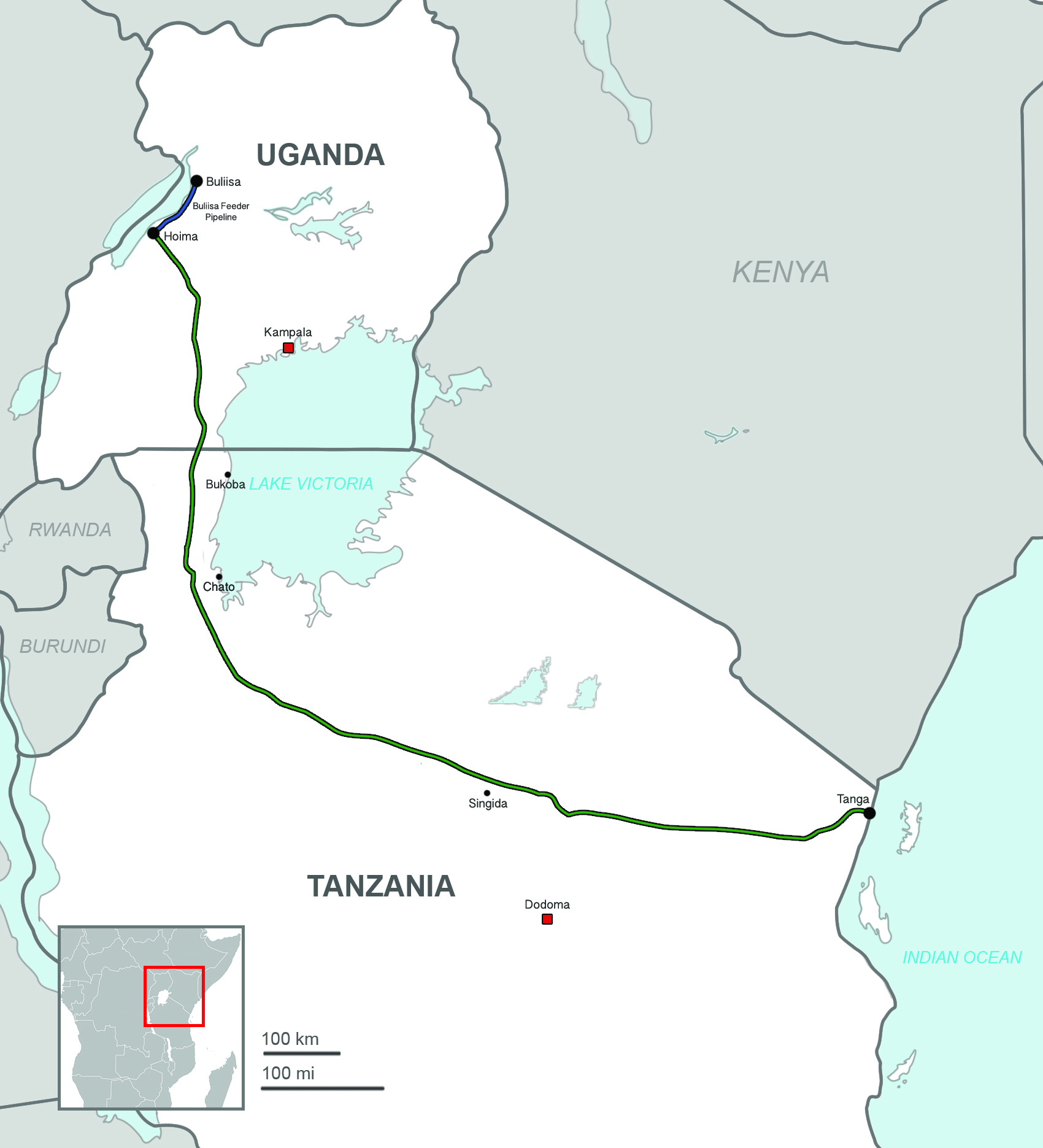
The East African Crude Oil Pipeline runs 1,443 kilometres from Hoima in western Uganda to Tanga on the Tanzanian coast.
It is heated along its length, because Ugandan crude is waxy and solidifies at ambient temperature. That makes it the longest heated crude pipeline in the world.
Of the total, 1,414 kilometres have been laid and buried. Twenty-nine remain.
The Tilenga field, operated by TotalEnergies, was 67% complete in March. Kingfisher, operated by CNOOC of China, was 77%.
Those completion figures are from March and have not been updated publicly.
Why It Keeps Slipping
The project has faced a combination of problems that would slow any development of this scale.
Financing was the hardest. More than twenty international banks and insurers refused to fund the pipeline after campaigns over its route and its climate impact.
Land acquisition across two countries displaced thousands of households and produced litigation in Uganda, Tanzania and France.
Then there is the engineering. A heated pipeline crossing a continent to reach a port has no close precedent.
Who Pays for the Delay
Every slipped date carries a cost that falls on the Ugandan budget rather than on the operators.
The government borrowed against future oil revenue and has been servicing that debt without the revenue arriving.
Contractors, port capacity in Tanga and refinery plans all sit on the same timetable.
A year of delay is a year of interest on money already spent. That is why MPs pressed the minister as hard as they did.
What It Means When It Comes
Uganda expects peak production of about 230,000 barrels a day. That would make it a mid-sized African producer, well behind Nigeria and Angola.
The revenue matters more in proportion than in absolute terms, in an economy where oil would become the largest single export.
For the region, a working pipeline to Tanga changes how landlocked East African resources reach markets.
For Uganda, June 2027 is the eighth date. The pipeline being 98% buried is the strongest argument yet that one of them will hold.
More: Africa news and analysis, every day from The Rio Times.
Frequently Asked Questions
When will Uganda produce its first oil?
June 2027, according to the finance minister, speaking to parliament on 11 September 2026.
What was the previous target?
July 2026, set in March 2026. Before that came June 2026, 2025, 2020 and 2018.
How far along is the pipeline?
1,414 of 1,443 kilometres have been laid and buried. It should receive crude by mid-December 2026.
Who operates the fields?
TotalEnergies operates Tilenga and CNOOC of China operates Kingfisher.
Why has it taken so long?
Financing refusals by international banks, land acquisition disputes and the engineering of the world’s longest heated crude pipeline.
How much oil is there?
About 1.4 billion barrels recoverable, with peak production expected around 230,000 barrels a day.
Sources: The Observer (Kampala), The Independent (Kampala), Petroleum Authority of Uganda, Parliament of Uganda.
This article was produced by The Rio Times’ automated newsroom system. How we use AI · Report an error
Read More from The Rio Times