Kenya Explained 2026: The Country, Its Politics, Its Economy and What to Watch
GUIDES · KENYA
Key Facts
- —Capital Nairobi, which is also the largest city and the regional headquarters for most international organisations working in East Africa.
- —Population Disputed. The World Bank gives 57.5 million for 2025; the national projection from the 2019 census tracks nearer 53.3 million. The gap is about 8 percent.
- —Currency The Kenyan shilling, at 129.45 to the US dollar on the central bank’s indicative rate of 23 September 2026.
- —Language Kiswahili and English are both official. Kiswahili is additionally the national language, and English is the working language of business and the courts.
- —Economy Tea, coffee, horticulture and tourism, plus East Africa’s leading technology and financial sector. Mobile money is infrastructure here, not a product.
- —Government A presidential republic under the 2010 constitution, with 47 county governments holding real budgets and a bicameral parliament above them.
Kenya explained for newcomers: how devolution actually works, why inflation is going the wrong way, and what the crackdown on foreign traders means if you run a business.
Kenya explained in 2026 turns on two things a visitor will not see from Nairobi’s skyline. The first is devolution: 47 county governments hold budgets and set rules. The second is that inflation has been climbing all year, from 4.39 percent in March to 6.59 percent in August, which changes the arithmetic of living there.
What kind of country is this?
Kenya sits on the Indian Ocean at the eastern edge of the continent, straddling the equator. The Great Rift Valley runs north to south through the middle of it, separating the fertile central highlands from the drier west. The coast around Mombasa has its own Swahili culture, older than the modern state and closer to the Indian Ocean world than to the interior.
That geography sets the economy. The highlands grow the tea and coffee, the Rift lakes grow the cut flowers that reach European supermarkets overnight, and the coast and the Maasai Mara carry the tourism. Nairobi sits at altitude in between, which is why its climate surprises people who expect equatorial heat. A Kenya explained guide that skips the altitude gets the clothing advice wrong.
Kenya became independent in 1963 and spent its first decades under a strongly centralised presidency. The turning point was the constitution of 2010, written after the violence that followed the 2007 election. It devolved money and power to 47 new counties and rebuilt the judiciary. A newcomer who understands 2010 understands why a Kenyan business argues with a county governor as often as with a ministry.
Who runs Kenya and how
William Ruto has been president since 13 September 2022, having won the August 2022 election with 50.49 percent against Raila Odinga’s 48.85 percent. The Supreme Court dismissed the challenge to that result and Odinga accepted it. Ruto is in his first term and may stand again in 2027.
The 2010 constitution deliberately broke with the Westminster model. The president is both head of state and head of government, and cabinet members are drawn from outside parliament, so a minister is not simultaneously a legislator. Legislative power sits with parliament alone, and the judiciary is constitutionally independent.
Parliament has two chambers. The National Assembly seats 349: 290 from single-member constituencies, 47 women representatives one per county, 12 nominated in proportion to party strength, plus the Speaker. The Senate seats 67 and exists to protect county interests and county revenue, which is its real job rather than a ceremonial one.
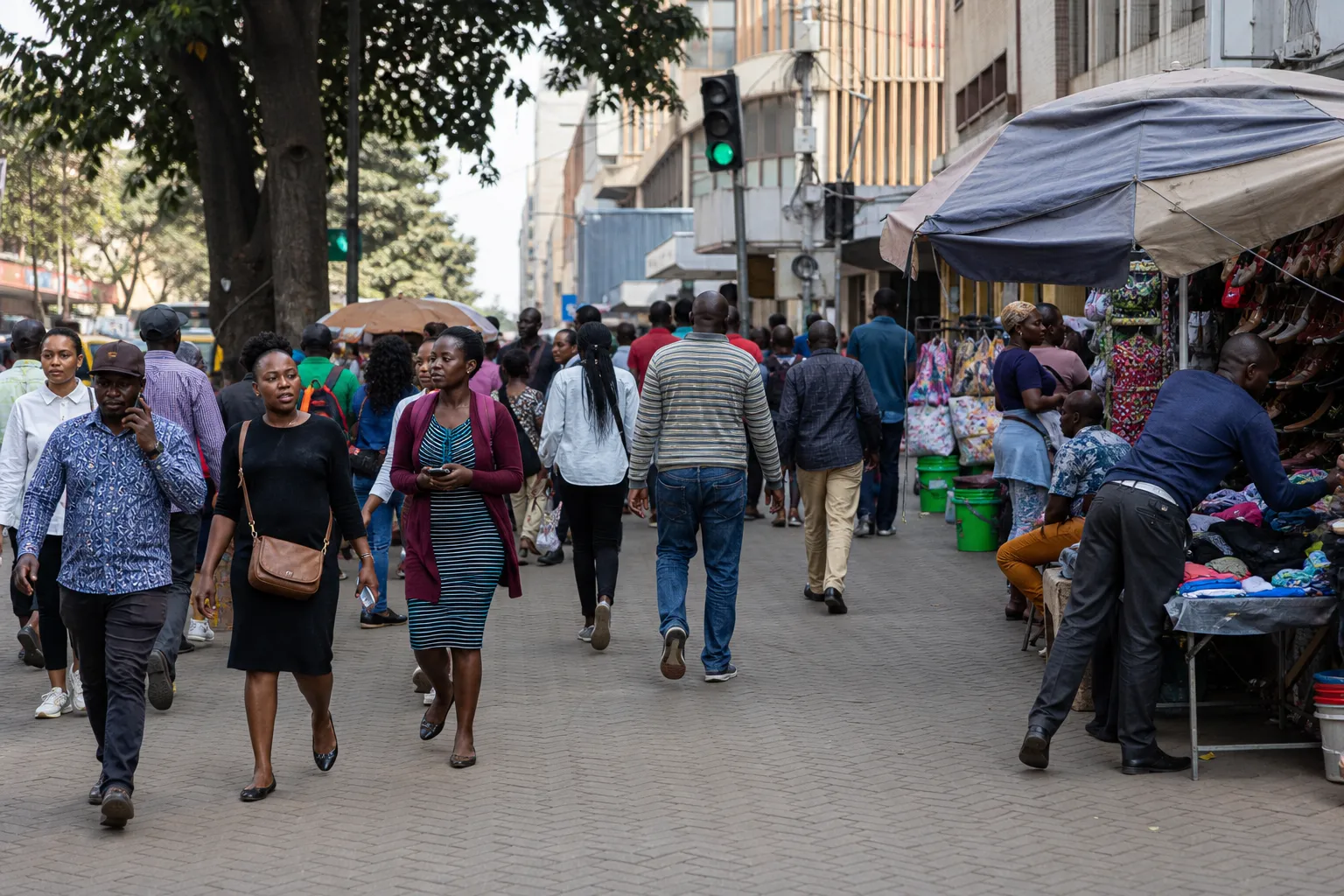
The 47 counties are the layer that matters most for anyone doing business. Each has an elected governor, an executive committee and an assembly of ward representatives, and each delivers the devolved functions. Licensing, land and local levies are county matters, so the practical answer to most regulatory questions in Kenya is county-specific.
How the economy works
Kenya exports tea, coffee, cut flowers and horticulture, and earns substantially from tourism. What distinguishes it regionally is the services layer on top: East Africa’s deepest financial sector, a large technology industry and mobile money so widely used that it functions as payments infrastructure rather than as an app.
Inflation is the number to watch, because it has turned. Twelve-month inflation was 6.59 percent in August 2026, up from 4.39 percent in March. The monthly path ran 4.39, 5.59, 6.68, 6.41, 6.49 and 6.59 percent from March to August. Transport was the standout driver at 15.7 percent year on year, which shows up in air fares and in matatu fares.
That figure sits above the International Monetary Fund’s own full-year 2026 projection of 5.9 percent and above the midpoint of the central bank’s 5 percent target band with its 2.5-point tolerance. Any guide written from 2024 or 2025 material will tell you Kenyan inflation is low and falling. That is no longer true.
The Central Bank Rate stands at 8.75 percent, effective 11 August 2026, and the Monetary Policy Committee meets on Wednesday 7 October 2026. The level is doubly sourced. Whether the August decision was a cut, a hold or a rise could not be established, because the bank’s press release archive was not reachable, so this guide does not characterise the direction.
The shilling has been stable, at 129.45 to the dollar on the bank’s indicative rate of 23 September 2026, corroborated within one percent by two independent feeds. For a dollar earner that stability is worth more than it sounds, because it removes the currency guesswork that dominates budgeting in several neighbouring markets.

What is happening right now
As of 24 September 2026 the dominant story concerns foreigners directly. The president directed authorities to shut down small retail businesses and street vending run by foreign nationals, announced on 2 September 2026 and effective from 7 September, with implementation reported from 9 September. The stated principle is that hawking and small-scale retail are reserved for Kenyans while foreign capital remains welcome in larger enterprises.
Parliament is separately considering a local content bill that would require foreign companies to increase local hiring and sourcing. Critics read both measures as pre-election positioning. For context, foreign direct investment stock stood at 1.458 trillion shillings, about US$11.27 billion, at the end of 2023, and foreign-invested enterprises employed 224,769 people as of June 2024, of whom only 1.6 percent were foreign workers.
The crackdown had an immediate regional consequence. Burundians queued at their embassy to leave from 8 September, with reports of harassment; around 16,000 Burundian migrants and refugees live in Kenya. The government then opened a temporary registration window under which undocumented East African migrants who register at their embassies are treated as legally present, restoring access to health services, banking and legal protection.
That episode sits awkwardly against East African Community free-movement commitments, and how it is resolved will matter to anyone operating across the region rather than only in Kenya.
What to watch
The Monetary Policy Committee meets on Wednesday 7 October 2026 with the rate at 8.75 percent and inflation up more than two points since March. The bank announces each meeting individually rather than publishing a forward calendar, and it meets roughly every two months, so the following meeting would fall around early December. That is an inference, not a published date.
The general election falls on Tuesday 10 August 2027. The constitution fixes general elections to the second Tuesday of August every fifth year, which is where that date comes from; the electoral commission refers to the 2027 election without publishing the day itself. Presidential, parliamentary and gubernatorial contests all run together.
Nearer term, the statistics bureau publishes consumer prices at the end of each month, mirrored by the central bank, and a university lecturers’ strike was called for 2 October 2026 over a stalled collective agreement, which would disrupt public universities.
What this means for foreigners
Entry runs on an electronic travel authorisation, which replaced visas in January 2024 and is still in force. The blanket requirement has been substantially walked back since. Exemptions now cover holders of Kenyan permanent residence, work permits and re-entry passes. They also cover citizens of East African Community partner states for up to 180 days, nationals of some 44 mostly Commonwealth and small-state countries for up to 90 days, and nationals of 28 African countries for up to 60 days.
Fees start at US$30 for normal processing within 72 hours, with expedited processing at a further US$100. Official processing runs about three working days and the advice is to apply at least two weeks before travel. The authorisation is permission to travel, not a guarantee of entry; admissibility is decided at the port.
Two things the official portal does not state, and that circulate widely anyway: how long the authorisation stays valid after approval, and whether it is single or multiple entry. The commonly repeated claim of ninety days and single entry could not be confirmed on any of the portal’s pages. Do not plan around it.
On work, the immigration directorate publishes permit classes A, B, C, D, F, G, I, K and M. There is no Class N and no digital nomad category in the published schedule, despite guides that say otherwise. A permit may have been announced politically without being gazetted. Until it appears in the operative schedule, a remote worker cannot apply for one.
The practical picture is that Kenya works well for people with an employer, a company or a posting, and less predictably for independents. Nairobi offers medical and professional services at a regional standard, the shilling is steady, and the county layer means the rules you actually face are local. Kenya explained for a newcomer means asking which county before asking which country.

Connected Coverage
Sources: Inflation, the policy rate and the exchange rate from the Central Bank of Kenya, entry rules from the official travel authorisation portal, population from the World Bank’s indicators, and the September measures on foreign traders from Al Jazeera’s reporting.
- Central Bank of Kenya — inflation rates
- Central Bank of Kenya — rate ticker and next meeting notice
- Republic of Kenya — official electronic travel authorisation portal
- World Bank — Kenya population series
- Al Jazeera — the crackdown on foreign traders and small retailers
- Al Jazeera — the migrant registration window after the Burundian exodus
- Politics of Kenya — parliamentary and county structure under the 2010 constitution
- The 2027 Kenyan general election — the constitutional election date rule
What Is Not Known
Kenya’s population. Two series are in circulation and they cannot be reconciled. The World Bank gives 57.5 million for 2025; the national projection from the 2019 census, which counted 47.6 million, tracks nearer 53.3 million for the same year. That is a gap of about four million people, and it propagates into every per-head figure. The statistics bureau’s own site could not be reached to establish which number Kenya itself publishes.
The direction and reasoning of the August 2026 rate decision. The Central Bank Rate is 8.75 percent effective 11 August 2026, and that level is confirmed twice over. But the bank’s press release archive renders only to 2014 on the reachable pages, so whether the decision was a cut, a hold or a rise, and what the committee said about it, is not established here.
Whether a digital nomad work permit exists. The immigration directorate publishes permit classes A, B, C, D, F, G, I, K and M. There is no Class N and no digital nomad category in that schedule, and the national tourism body does not mention one. A category may have been announced without being gazetted. Until it appears in the operative schedule, readers should not be told they can apply.
The validity and entry terms of the travel authorisation. Four separate pages of the official portal were checked and none states how long it remains valid after approval, how long a non-exempt national may stay, or whether it permits one entry or several. The widely repeated ninety-day single-entry claim has no source on the portal.
Kenya’s position with the International Monetary Fund. Whether the country is currently under an arrangement, negotiating one, or outside one could not be established; every route to the Fund’s own records failed or returned stale content. Separately and verifiably, Kenya is pursuing United States sovereign debt guarantees for the first time, which suggests the financing conversation has moved, but that is not confirmation either way.
Frequently Asked Questions
Who is the president of Kenya?
William Ruto, in office since 13 September 2022. He won the August 2022 election with 50.49 percent against Raila Odinga’s 48.85 percent, the Supreme Court dismissed the challenge, and he is eligible to stand again in 2027.
Do I need a visa for Kenya?
Not a visa, but an electronic travel authorisation, which replaced visas in January 2024. Many nationalities are now exempt: East African Community citizens for up to 180 days, some 44 mostly Commonwealth and small-state countries for up to 90 days, and 28 African countries for up to 60 days.
How much does the Kenyan travel authorisation cost?
From US$30 for normal processing, which the portal gives as up to 72 hours, with expedited processing at a further US$100. Official processing takes about three working days and the advice is to apply at least two weeks before travelling.
Does Kenya have a digital nomad visa?
Not one that appears in the immigration directorate’s published permit schedule, which runs classes A, B, C, D, F, G, I, K and M. There is no Class N and no digital nomad category listed, despite guides that say otherwise.
Is inflation in Kenya rising or falling?
Rising. Twelve-month inflation reached 6.59 percent in August 2026, up from 4.39 percent in March, with transport the biggest driver at 15.7 percent year on year. That is above the International Monetary Fund’s 5.9 percent projection for the year.
What are Kenya’s 47 counties and why do they matter?
They are the devolved governments created by the 2010 constitution, each with an elected governor, an executive committee and an assembly. They hold real budgets and handle licensing, land and local levies, so most practical regulatory questions in Kenya have a county-level answer rather than a national one.
This article was produced by The Rio Times’ automated newsroom system. How we use AI · Report an error
Read More from The Rio Times