
GUIDES · PUERTO RICO
Key Facts
- —Status An unincorporated US territory as of October 2026, neither a state nor a country. Residents have been US citizens since 1917.
- —People 3,184,835 residents on 1 July 2025, according to the US Census Bureau, down 3.1 percent since the 2020 census.
- —Who governs Governor Jenniffer González Colón since January 2025. Resident Commissioner Pablo José Hernández represents the island in Washington as of October 2026.
- —Neighbours The Dominican Republic lies across the Mona Passage to the west. The Virgin Islands lie east, and a 1978 treaty fixes the sea boundary with Venezuela.
- —Regional seats An associate member of ECLAC, the UN commission for the region, as of October 2026. It is not a member of CARICOM, the Caribbean Community.
- —Status vote Statehood won 58.61 percent in the non-binding plebiscite of Tuesday, 5 November 2024. Congress has not acted on it, and the next general election is due in November 2028.
Puerto Rico is a US territory in the northeastern Caribbean. Any map of Puerto Rico neighbours therefore starts with Washington, not the islands next door. Its foreign policy, sea borders and defence belong to the United States. Yet its trade, migration routes and daily ties run to the Dominican Republic, the Virgin Islands and beyond.
For a US reader, that mix matters. The island is a domestic destination for travellers and investors and a frontline for Coast Guard migrant patrols. Since late 2025 it has also hosted renewed US military activity.
This guide explains who Puerto Rico’s neighbours are, how it deals with them, and where it leads or follows. For the island’s own politics, people and economy, see the companion guide linked below.
First, What Puerto Rico Is: A US Territory
Puerto Rico has belonged to the United States since 1898. The Foraker Act of 1900 set up a civil government run from Washington, according to the US House of Representatives’ history office. The Jones-Shafroth Act of 1917 then made Puerto Ricans US citizens.
The island adopted its own constitution in 1952 and calls itself a commonwealth, or Estado Libre Asociado in Spanish. But it remains an unincorporated territory. Congress keeps the final word on trade, citizenship, immigration and federal taxes.
That status shapes every relationship in this guide. Puerto Rico cannot sign treaties or join the United Nations as a state. Its sea boundaries are US boundaries, and its border is guarded by US agencies.
Residents elect a governor, a legislature and mayors. Jenniffer González Colón of the New Progressive Party (PNP), the pro-statehood party, has been governor since January 2025. Pablo José Hernández of the Popular Democratic Party (PPD) backs the current commonwealth status. He took his oath as Resident Commissioner on 3 January 2025.
The Resident Commissioner has a seat in the US House but no vote on the final passage of laws. Island residents also cannot vote for the US president. A federal oversight board, created by the PROMESA law of 2016 after the island’s debt crisis, still reviews its budgets.
In the status plebiscite of 5 November 2024, statehood took 620,782 votes, or 58.61 percent, according to the State Elections Commission. Free association took 29.57 percent and independence 11.82 percent. The vote was not binding on Congress, which decides any change.
The Map: Hispaniola to the West, the Virgin Islands to the East
Puerto Rico is the smallest and easternmost of the Greater Antilles. That chain also includes Cuba, Jamaica and Hispaniola. The territory also takes in Vieques, Culebra and Mona Island, plus many smaller cays.
Its neighbours fall into three groups. Each has a different legal relationship with the island.
- West: the Dominican Republic, which shares Hispaniola with Haiti, across the Mona Passage.
- East: the US Virgin Islands, another US territory, and the British Virgin Islands, a British overseas territory.
- South: Venezuela, whose Aves Island sits opposite the US Virgin Islands across a sea boundary agreed in 1978.
- North: open Atlantic. The nearest US state, Florida, lies far to the northwest.
The US and Venezuela signed their maritime boundary treaty in Caracas on 28 March 1978. It entered into force on 24 November 1980, according to the State Department. The line runs 298.7 nautical miles, with Puerto Rico and the US Virgin Islands to the north and Venezuela to the south.
The treaty left its western end open, pending talks with a third state. That small gap shows how Puerto Rico’s borders are negotiated: by Washington, on the island’s behalf.
The Dominican Republic and the Mona Passage
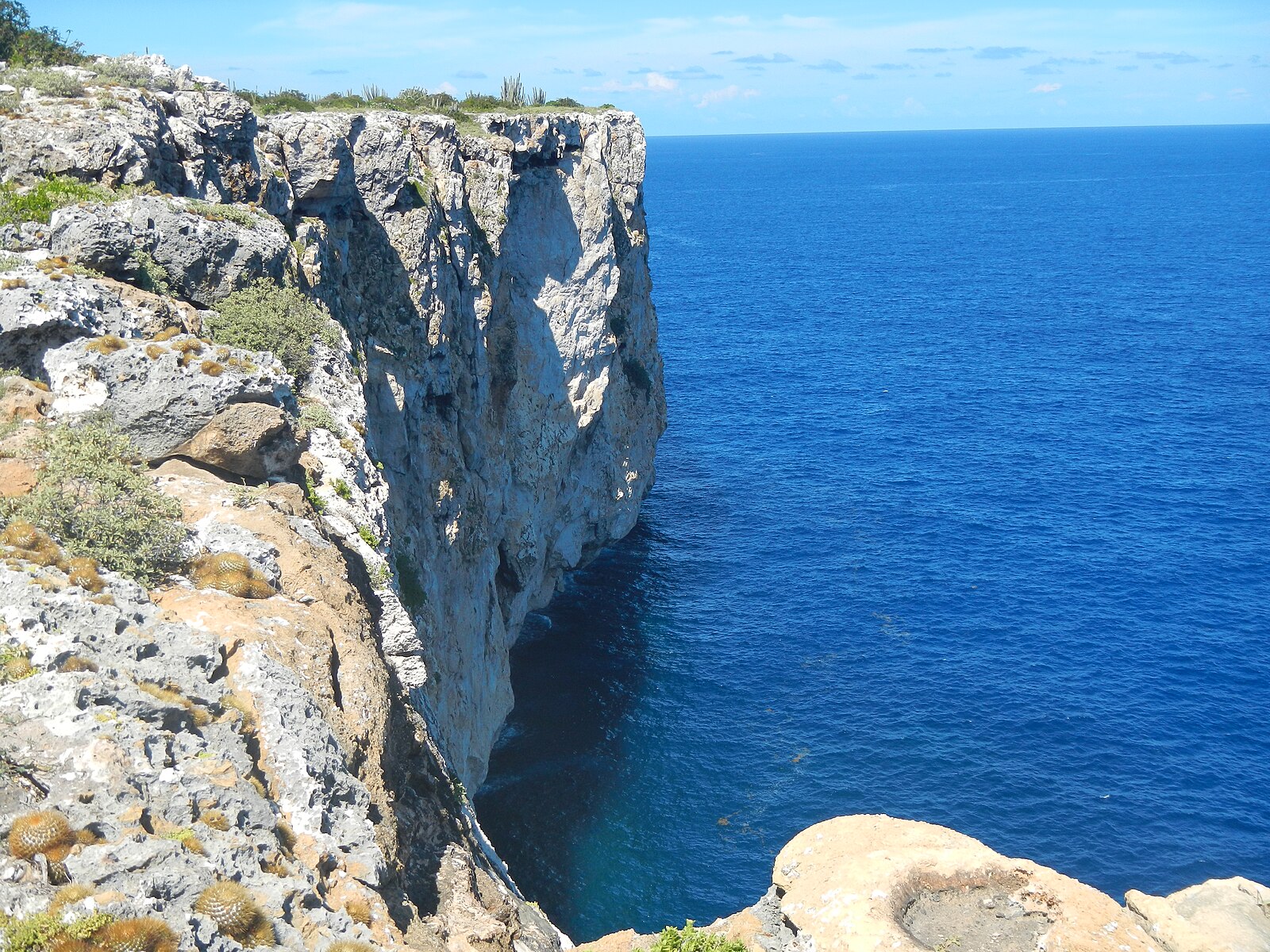
The Dominican Republic is Puerto Rico’s largest foreign neighbour. The Mona Passage between them is about 110 kilometres (roughly 68 miles) wide, according to Infobae. It is one of the sea routes used by Dominican and Haitian migrants trying to reach US soil.
Those crossings are often deadly. The week before, a boat carrying more than 60 people capsized in the Mona Passage. A multi-agency response rescued 49 people and recovered three bodies; several remained unaccounted for, the US Coast Guard said.
On Monday, 5 October 2026, a Coast Guard cutter and two Dominican Navy boats saved 61 migrants from a sinking vessel. The cutter was patrolling Dominican waters under a bilateral agreement to deter unlawful maritime migration.
“These dangerous and unlawful voyages are increasing,” said Commander Matthew Romano, chief of response for Coast Guard Sector San Juan. The patrols form part of Operation Vigilant Sentry, run with the Homeland Security Task Force Southeast.
Trade is the friendlier side of the relationship. Puerto Rico was the fifth-largest destination for Dominican exports in 2025. It took 4.8 percent of a record US$14.6 billion, according to the statistics office ONE.
From 2019 to 2024, Puerto Rico bought about US$3.6 billion of Dominican goods and sold about US$1.2 billion, El Vocero reported. Dominican factories ship electrical devices, circuit breakers and roasted coffee; Puerto Rico sells plastics, electrical equipment, natural gas and medicines.
The Dominican Republic is the island’s tenth-largest export market, Isla News reported. Exports there grew about 11.6 percent in fiscal year 2025, an increase of roughly US$55.5 million, according to Planning Board data cited by the outlet.
The Virgin Islands, US and British
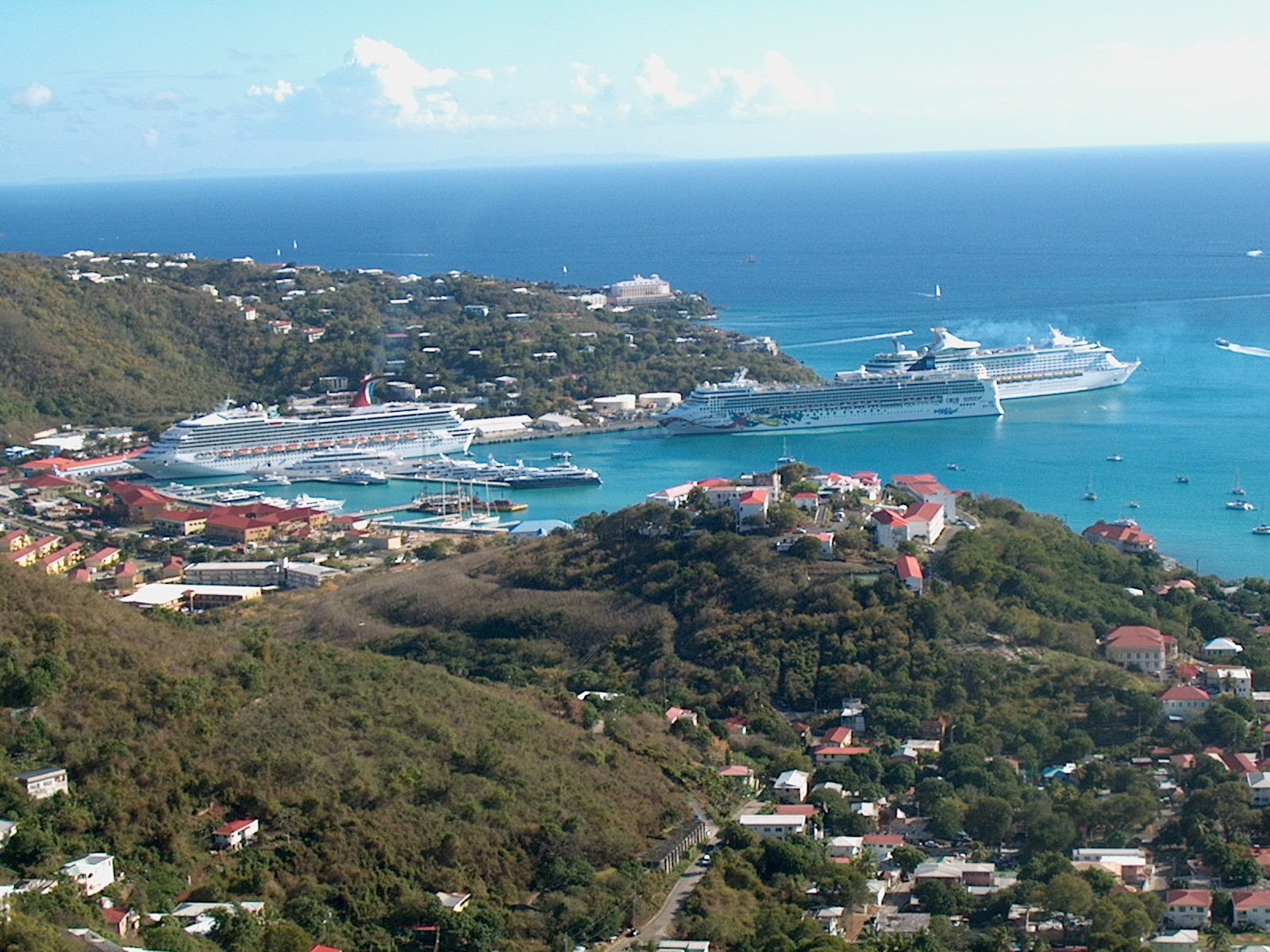
East of Puerto Rico lie the Virgin Islands, split between two flags. The United States bought the Danish part in 1917 for US$25 million, mainly for strategic reasons, the Interior Department says.
US Virgin Islanders received US citizenship in 1927. Their territory, made up mainly of St Thomas, St John and St Croix, is supervised by the Interior Department, unlike Puerto Rico.
The British Virgin Islands, a British overseas territory, sit next door. Travel between the US and British islands is international travel, with passports and customs checks.
For Puerto Rico, the US Virgin Islands are the closest partner. They are a fellow territory facing similar questions over federal funding, hurricanes and status. The British islands are a near neighbour but sit inside a different legal system.
Venezuela, Cuba and the Return of Roosevelt Roads
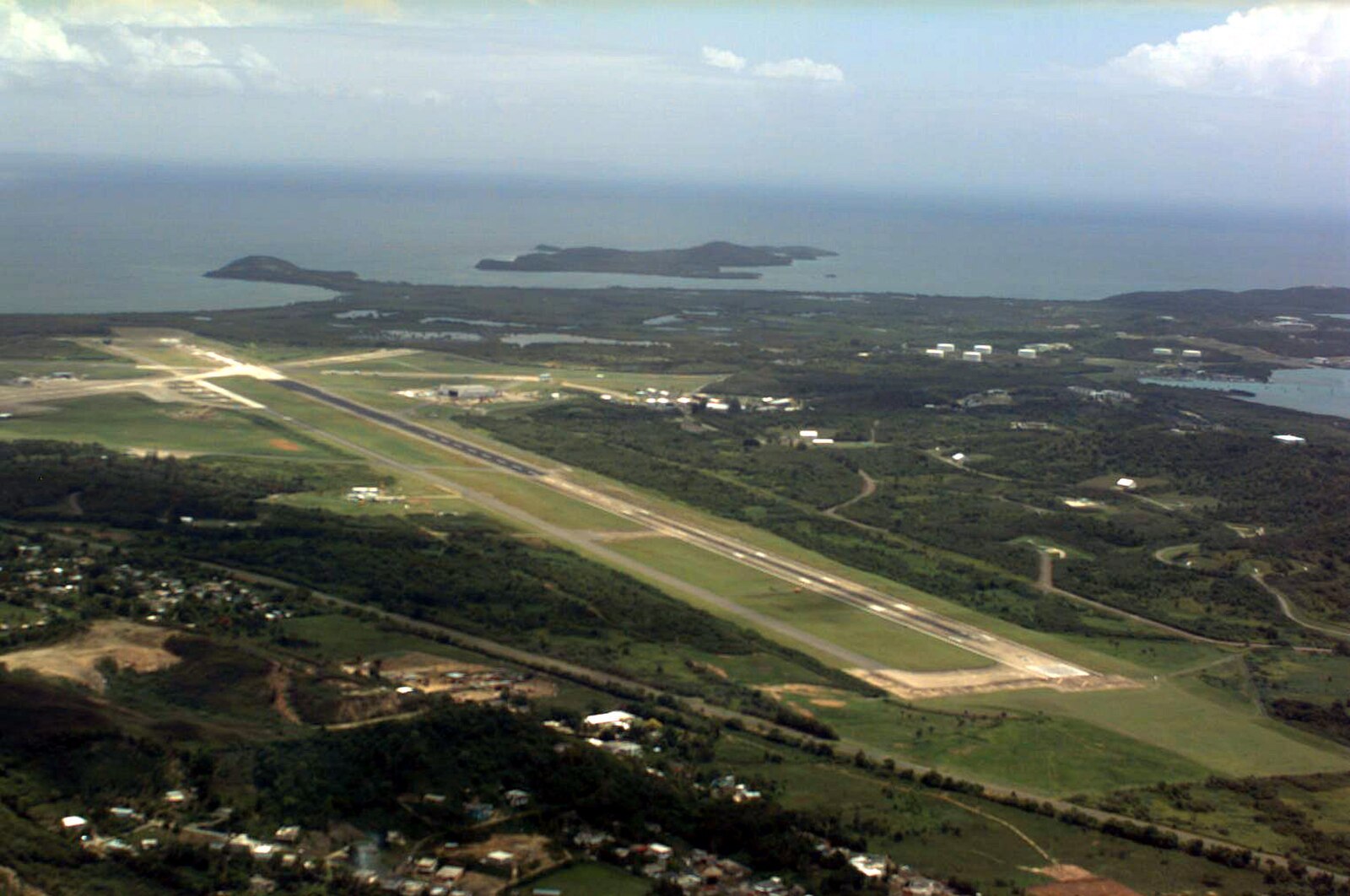
The biggest change in Puerto Rico’s neighbourhood since 2025 is military. The former Roosevelt Roads naval station in Ceiba closed on 31 March 2004. It regained part of its old activity in late 2025 as tension rose between Washington and Caracas, El Nuevo Día reported.
El Mundo reported in August 2026 that the base was reactivated in November 2025, with about US$79 million of planned investment. The island’s government also let the US Navy use Roosevelt Roads, Ramey in Aguadilla and Muñiz Air Base for logistics.
On Saturday, 3 January 2026, US forces captured Venezuela’s Nicolás Maduro in Caracas. Telemundo Puerto Rico reported, citing sources, that the plane carrying him made a short stop at Ramey in Aguadilla.
The activity did not stop there. Governor González Colón said more than 8,100 US troops took part in exercises on the island between May and August 2026. She described them as logistical, with no weapons use on Vieques or Culebra.
Local outlets have linked the build-up to rising US pressure on Cuba. El Político stressed in August 2026 that nothing about any operation against Cuba had been confirmed. Roosevelt Roads closed after years of protest over military activity on Vieques and Culebra. Ceiba residents are divided over its return, El Nuevo Día reported.
Regional Clubs: A Seat at Some Tables, Not Others
Because it is not a sovereign state, Puerto Rico joins regional bodies only where territories are welcome. Its main seat is at ECLAC, the UN Economic Commission for Latin America and the Caribbean.
ECLAC has 14 non-independent Caribbean territories as associate members, including Puerto Rico, the US Virgin Islands, the British Virgin Islands and Anguilla. That gives the island a voice in regional economic work without a vote at the UN itself.
CARICOM, the Caribbean Community, groups 15 member states and eight associate members, according to its secretariat. Puerto Rico is neither. In July 2026, CARICOM’s reparations commission counted at least 20 Caribbean territories tied to outside powers, including the US, WLRN reported.
Sport is the exception to the rule. Puerto Rico has its own Olympic committee and has competed at every Summer Olympics since 1948, separately from the US team.
Trade, Shipping and the Jones Act
Puerto Rico’s shipping links with the US mainland are shaped by a 1920 federal law known as the Jones Act. It sets the island apart from its foreign neighbours.
The law, 46 U.S.C. 55102, requires that goods shipped between US points travel on US-built, US-owned vessels with a coastwise endorsement, says the Maritime Administration (MARAD). Shipments between Puerto Rico and mainland ports must follow that rule.
The rule covers trips between US points, not trade with foreign neighbours such as the Dominican Republic. MARAD publishes the waivers it grants, including one in 2022 for a foreign-flagged vessel sailing from Texas to Guayanilla, Puerto Rico.
Where Puerto Rico Leads and Where It Follows
Puerto Rico leads where its US status is an advantage. It offers US courts, US citizenship and the dollar in a Spanish-speaking Caribbean setting, which no independent neighbour can match.
It is also a sizeable market for the region. In 2025 it ranked fifth among destinations for Dominican exports, behind only Haiti among Caribbean markets.
It follows wherever sovereignty is required. Washington sets its migration policy, sea borders, trade rules and military use. Island leaders can lobby Congress but cannot negotiate with Caracas, Havana or Santo Domingo on their own.
That split shapes how the region sees the island. Its Spanish language and culture tie it to Cuba and the Dominican Republic, while its status and bases tie it to Washington.
What It Means for US Readers
- Travellers: a US citizen flying from the mainland to San Juan needs no passport. A side trip to the Dominican Republic or the British Virgin Islands is international travel and does.
- Investors: the island uses the US dollar and US courts, but federal oversight of its budget continues as of October 2026. Status remains a live political question ahead of the November 2028 election.
- Expats and retirees: moving from the mainland needs no visa, and daily life runs on the dollar and federal law. Spanish is the main language of daily life and local government.
- Security watchers: Roosevelt Roads, Ramey and Muñiz Air Base are again part of US operations in the Caribbean. Military flights and exercises are frequent in eastern Puerto Rico.
- Migration: the Mona Passage remains a deadly route. Coast Guard patrols, repatriations to the Dominican Republic and boat accidents are recurring news.
Connected Coverage
Puerto Rico Explained 2026, a U.S. Territory Guide
Moving to Puerto Rico 2026 Step by Step
Dominican Republic and Its Neighbours in the Caribbean
Cuba Neighbours Explained, the Island in the Caribbean
Mona Island Shipwreck Off Puerto Rico: 40 Rescued, 2 Dead on Dominican Migrant Route
NFE Says Payment Order Delayed Puerto Rico Gas Tanker
Caribbean Leaders Push for Slavery Reparations and End to Colonial Territories
What Is Not Known
- Whether Congress will act on the 2024 plebiscite result. No binding status law has passed as of October 2026.
- How long the larger US military presence at Roosevelt Roads will last, and whether it will serve any operation involving Cuba.
- How many migrants cross the Mona Passage undetected each year, and how many die. Official counts cover only interdictions and recovered bodies.
- When the western end of the US-Venezuela sea line, left open in 1978 pending talks with a third state, will be closed.
- Full-year 2026 trade figures between Puerto Rico and the Dominican Republic, which will only be published after the year ends.
Frequently Asked Questions
Is Puerto Rico a country?
No. Puerto Rico is an unincorporated US territory with its own 1952 constitution. Its residents are US citizens, but Congress keeps final authority over trade, citizenship and federal taxes.
Which countries are Puerto Rico’s neighbours?
The Dominican Republic lies to the west across the Mona Passage. The US and British Virgin Islands lie to the east, and Venezuela shares a sea boundary to the south agreed in 1978.
How wide is the Mona Passage?
About 110 kilometres, or roughly 68 miles. It is the main sea route for Dominican and Haitian migrants trying to reach Puerto Rico, and the US Coast Guard patrols it.
Is Puerto Rico a member of CARICOM?
No. CARICOM has 15 member states and eight associate members, and Puerto Rico is neither. Puerto Rico is an associate member of ECLAC, the UN commission for Latin America and the Caribbean.
Why is the US military back at Roosevelt Roads?
The former naval station in Ceiba was reactivated from late 2025 amid US operations against Venezuela. More than 8,100 US troops took part in exercises in Puerto Rico between May and August 2026.
Do US citizens need a passport to visit Puerto Rico?
No, not when flying from the US mainland. A side trip from Puerto Rico to the Dominican Republic or the British Virgin Islands is international travel and needs a passport.
Sources: US House of Representatives, history office: Puerto Rico, https://history.house.gov/Exhibitions-and-Publications/HAIC/Historical-Essays/Foreign-Domestic/Puerto-Rico/; US Census Bureau QuickFacts: Puerto Rico, https://www.census.gov/quickfacts/fact/table/pr; Office of the Clerk, US House: Pablo José Hernández, https://clerk.house.gov/Members/H001103; State Elections Commission (CEE): 2024 plebiscite certification, https://ww2.ceepur.org/sites/ComisionEE/es-pr/Certificaciones/Certification%20of%20final%20results%20-%20Plebiscite%202024.pdf; US State Department: Limits in the Seas No. 91, US and Venezuela, https://www.state.gov/wp-content/uploads/2019/10/LIS-91.pdf; US Coast Guard: rescue of 61 migrants, 5 October 2026, https://www.news.uscg.mil/Press-Releases/Article/4619503/coast-guard-dominican-republic-navy-rescue-61-alien-migrants-from-sinking-vessel/; ONE, Dominican Republic: foreign trade yearbook 2025, https://www.one.gob.do/media/oxgiu0em/anuario-de-comercio-exterior-2025.pdf; US Department of the Interior: US Virgin Islands, https://www.doi.gov/oia/islands/virgin-islands; ECLAC: member states and associate members, https://www.cepal.org/en/member-states-and-associate-members; CARICOM: membership, https://caricom.org/membership/; US Maritime Administration: the Jones Act, https://www.maritime.dot.gov/ports/domestic-shipping/domestic-shipping; El Nuevo Día: Roosevelt Roads military revival, https://www.elnuevodia.com/english/news/story/military-revival-at-former-roosevelt-roads-naval-base-divides-ceiba-residents/; El Mundo América: US remilitarises Puerto Rico, https://www.mundoamerica.com/news/2026/08/26/6a8ebb55e9cf4a7e1f8b457d.html; El Político: Roosevelt Roads base, https://elpolitico.com/base-naval-puerto-rico-cuba/; Telemundo Puerto Rico: Maduro stop at Ramey, https://www.telemundopr.com/noticias/puerto-rico/gobierno-de-estados-unidos-hizo-parada-en-puerto-rico-con-nicolas-maduro/2776880/; El Vocero: Dominican exports and Puerto Rico trade, https://www.elvocero.com/economia/aranceles-de-trump-no-desalientan-exportaci-n-desde-la-rep-blica-dominicana/article_d281c23c-d9b3-4ad1-8444-bd94fd76b9d7.html; Isla News: DDEC mission to the Dominican Republic, https://islanewspr.com/2026/03/10/delegacion-del-ddec-realiza-visita-estrategica-a-republica-dominicana/; Infobae: Mona Passage rescue, https://www.infobae.com/republica-dominicana/2026/10/06/rescatan-a-61-migrantes-de-una-embarcacion-que-se-hundia-frente-a-republica-dominicana/; Olympedia: Puerto Rico, https://www.olympedia.org/countries/PUR/; WLRN: Caribbean leaders press for reparations, end of territorial status, https://www.wlrn.org/americas/2026-07-15/caribbean-leaders-press-for-slavery-reparations-end-of-islands-territorial-status; Financial Oversight and Management Board for Puerto Rico, https://oversightboard.pr.gov/. All accessed 6 October 2026.
This article was produced by The Rio Times’ automated newsroom system. How we use AI · Report an error · Editorial responsibility: Matthias Camenzind, Editor-in-Chief