Puerto Rico Marks 30 Years Since Gas Blast
The investigation traced the blast to one cracked pipe and to failures at the gas company and its regulators.

Puerto Rico: Anniversary
Puerto Rico marks 30 years on Saturday 21 November 2026 since a propane explosion wrecked the Humberto Vidal building and damaged others, a six-storey commercial building in Río Piedras, the business district of San Juan. The blast came at 8:30 a.m. on Thursday 21 November 1996, and the US National Transportation Safety Board (NTSB), the federal agency that investigates pipeline accidents, counted 33 people killed and 69 injured.
Federal investigators blamed a cracked gas pipe, a gas company that failed to train and supervise its workers, and weak oversight by regulators and the company’s owner. Their findings were published in December 1997, about thirteen months after the blast.
Key Facts
- Who. The NTSB, the US accident investigator, blamed San Juan Gas, a propane distributor owned by Enron.
- What. A propane explosion in a basement wrecked the Humberto Vidal building and damaged others, killing 33 people.
- Where. Río Piedras, the business district of San Juan, Puerto Rico.
- When. Thursday 21 November 1996, 8:30 a.m.; anniversary Saturday 21 November 2026.
- As of. 20 November 2026, 12:00 GMT.
The investigation traced the blast to one cracked pipe and to failures at the gas company and its regulators.
The NTSB traced the pipe damage to an excavation in 1992, according to its release of 16 December 1997. A new water line had been laid above a propane pipe serving a nearby restaurant, and the stress cracked the pipe over the following years.
The pipe belonged to San Juan Gas Company, owned by Houston-based Enron Corp., a US energy firm. Propane leaking from it ran downhill underground into the basement of the Humberto Vidal building, investigators said, and ignited when a basement air-conditioning system was switched on.
The NTSB’s probable cause was that San Juan Gas failed to oversee its employees so that unsafe conditions were found and fixed, and failed to train them. Workers had been called to Río Piedras several times before the blast over suspected leaks, and again that morning, but they did not find the leak.
The NTSB found that the federal Office of Pipeline Safety, the pipeline-safety office of the US Department of Transportation, did not effectively oversee pipelines in Puerto Rico. It also found that the Puerto Rico Public Service Commission, the island’s utility regulator, did not make San Juan Gas fix known deficiencies, and that Enron, the Houston energy group that owned the company, did not adequately oversee it.
The company also did not adequately warn citizens and businesses of propane’s dangers, which the agency said added to the loss of life. The NTSB release does not mention a company response.
The NTSB issued nine recommendations, among them a final federal rule on how pipeline employees are qualified, trained and tested within one year. It also urged the US Secretary of Transportation to intervene personally to improve how the department evaluates and rates pipeline safety programmes in Puerto Rico and across the country, and asked federal and island regulators to make sure that pipelines abandoned by San Juan Gas were purged of propane, secured and mapped.
The board asked federal pipeline authorities to require operators to test employees and prove their work skills, and to strengthen monitoring and enforcement across the country. It told Enron to require San Juan Gas to develop procedures so its employees can judge whether a building or area should be evacuated when a leak is suspected.
A rescue task force from the Federal Emergency Management Agency (FEMA), the US disaster agency, was deployed within hours, FEMA’s account says. After assessing the damaged six-floor structure, FEMA asked for a further 31-person task force and a 23-person support team, and in a week of work the teams brought out 10 bodies before the building was judged too unstable.
FEMA’s page gives an earlier count of 30 killed and 85 injured, and we use the NTSB’s final figures. The NTSB’s figures are the later ones, issued in December 1997.
For readers in the United States the link is direct, because Puerto Rico is a US territory and the investigation and the rescue were federal. The gas company’s owner was a Houston energy group, and the NTSB aimed its recommendations at pipeline safety across the country.
Puerto Rico enacted Law 75 on 5 July 1995, a special law to rehabilitate Río Piedras, about sixteen months before the blast. We found no announced commemoration programme for the 30th anniversary, and our sources carry no figures on compensation or court outcomes.
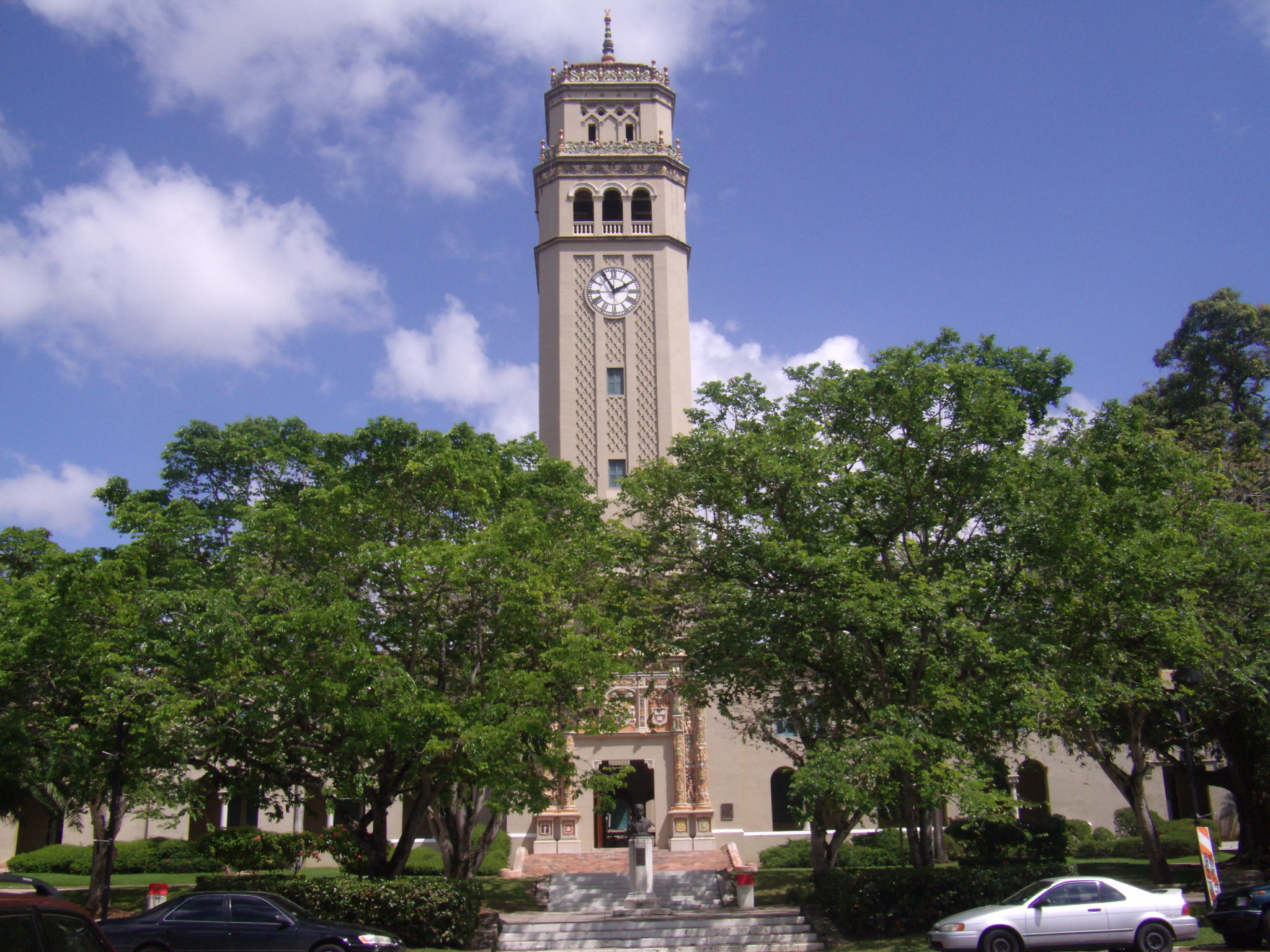
For background on the island see our explainers on education and healthcare and on culture and key figures. The campus clock tower pictured above stands in the same district.
Frequently Asked Questions
What caused the 1996 explosion in Río Piedras?
A cracked propane pipe leaked gas into a basement, where it ignited. Federal investigators blamed weak oversight and training at the gas company, with regulators also at fault.
Why does this anniversary matter to readers in the United States?
Puerto Rico is a US territory, and federal bodies investigated and responded. The recommendations were aimed at pipeline safety across the country.
Is a ceremony planned for the anniversary?
We found no announced programme for Saturday 21 November 2026. The NTSB findings are the main public record of what went wrong.
Sources: US National Transportation Safety Board (NTSB), press release of 16 December 1997; Federal Emergency Management Agency (FEMA), archived urban search-and-rescue page. Links: National Transportation Safety Board’s 16 December 1997 release · FEMA’s account of the rescue.
This article was produced by The Rio Times’ automated AI newsroom. Editorial responsibility: Matthias Camenzind, Publisher and Editor-in-Chief. The Rio Times also runs Ask Rio Times, which answers from 100,000+ of our own articles, the daily Latin America Power Map, and prediction-market odds on elections and markets.. How we use AI · Report an error