Who Dominates Puerto Rico, Elites and Regions Explained
PUERTO RICO · POWER
Key Facts
- —Status Puerto Rico is a US territory with its own governor and legislature, but Congress has the last word.
- —Governor Jenniffer González Colón of the pro-statehood New Progressive Party leads the executive, as of October 2026.
- —Senate Of 28 seats, the New Progressive Party holds 19, the Popular Democratic Party 5, independence supporters 2, independents 2.
- —In Congress Resident Commissioner Pablo José Hernández Rivera speaks for the island in the US House.
- —Status vote House Bill 9246 proposes a four-option vote on 14 March 2027 but has not become law.
- —Money A federal board created in 2016 still oversees the budget; factories make up about 44% of output.
- —Age The median age is 45.6, and 24.6% of islanders are 65 or older.
Puerto Rico power sits in Washington, the governor’s mansion and a federal oversight board, with banks and old party machines underneath. This guide explains who decides what on an island of US citizens, and who is shut out, as of October 2026.

Puerto Rico Power at a Glance
Puerto Rico is a US territory, not a state, and the US Congress holds the final authority over it. People born on the island are US citizens under federal law, a status that dates to a 1917 act.
Day to day, an elected governor and a legislature run the island’s own government. The governor is Jenniffer González Colón, whose New Progressive Party (PNP) also controls the Senate, official websites show in October 2026.
Around them sit a federal oversight board, a few large banks and factories, and the voters of the San Juan region. Each holds a different kind of power, and our Puerto Rico country hub links the full series.
Washington Holds the Final Say
Congress can change the island’s laws, and islanders cannot vote for US president. They also have no senators, which is the sharpest limit on their power.
The island’s voice in the US House is the Resident Commissioner, Pablo José Hernández Rivera. His office issued statements on 16 October 2026 about the statehood push and on 26 October 2026 about immigration raids.
On 10 June 2026 he introduced House Bill 9246, which proposes a four-option status vote on 14 March 2027. If no option wins a majority, a runoff between the top two would follow on 16 May 2027.
The bill sits in the House Natural Resources Committee and has not become law. Its text also promises a nonpartisan voter-education campaign and bilingual ballots before any vote.
In his 16 October statement, Hernández said the status will not change and the government should fix electricity and water. That puts the daily grid, not the flag, at the center of Puerto Rico power politics.
A seven-member oversight board, created by the PROMESA law of 2016, supervises the island’s budgets and debt plans. The President appoints its members, most from lists submitted by congressional leaders, according to the statute.
The four options are independence, commonwealth, statehood and free association, and the bill spells out a transition path for each. Independence would start with a constitutional convention, a joint transition commission and new rules on citizenship.
Commonwealth would create a development commission shared by the United States and Puerto Rico. Statehood would need a presidential proclamation, after which the island would elect its own senators and representatives.
One section of the bill concerns the PROMESA law, which shows how closely status and the oversight board are linked. Hernández introduced it with five co-sponsors, the bill text shows.
For the political side of this story, see our guide to who holds power in Puerto Rico in 2026. The parties that compete for that power come next.
The Governor, the Legislature and the Three Camps
Governor González Colón took office in January 2025 and leads the PNP. On 16 October 2026 she signed a resolution with legislators that reaffirms the island’s request for statehood.
The Senate has 28 seats: 19 PNP, 5 Popular Democratic Party (PPD), 2 Puerto Rican Independence Party (PIP) and 2 independents. Its president is Thomas Rivera Schatz of the PNP, according to the Senate website in October 2026.
Carmelo Ríos Santiago of the PNP is first vice president, and José Dalmau Santiago of the PPD is a former Senate president. The two independents are Joanne Rodríguez Veve and Eliezer Molina Pérez.
The governor also uses her office to steer money to voters. On 25 October 2026 it announced US$20 million for the Ama de Llaves home-aid programme in 65 municipalities, plus pay raises for police.
On 4 October 2026 she presented a final multi-sector report and demanded funds and improvements for Medicaid on the island. On 26 October she signed seven measures, from protecting the dignity of minors to widening paths to a high-school diploma.
- New Progressive Party (PNP): wants Puerto Rico to become a US state; holds the governorship and 19 of 28 Senate seats.
- Popular Democratic Party (PPD): wants to keep the commonwealth status, with its own constitution since 1952; holds 5 Senate seats.
- Puerto Rican Independence Party (PIP): wants full independence; holds 2 Senate seats.
Banks, Factories and the Money Elite
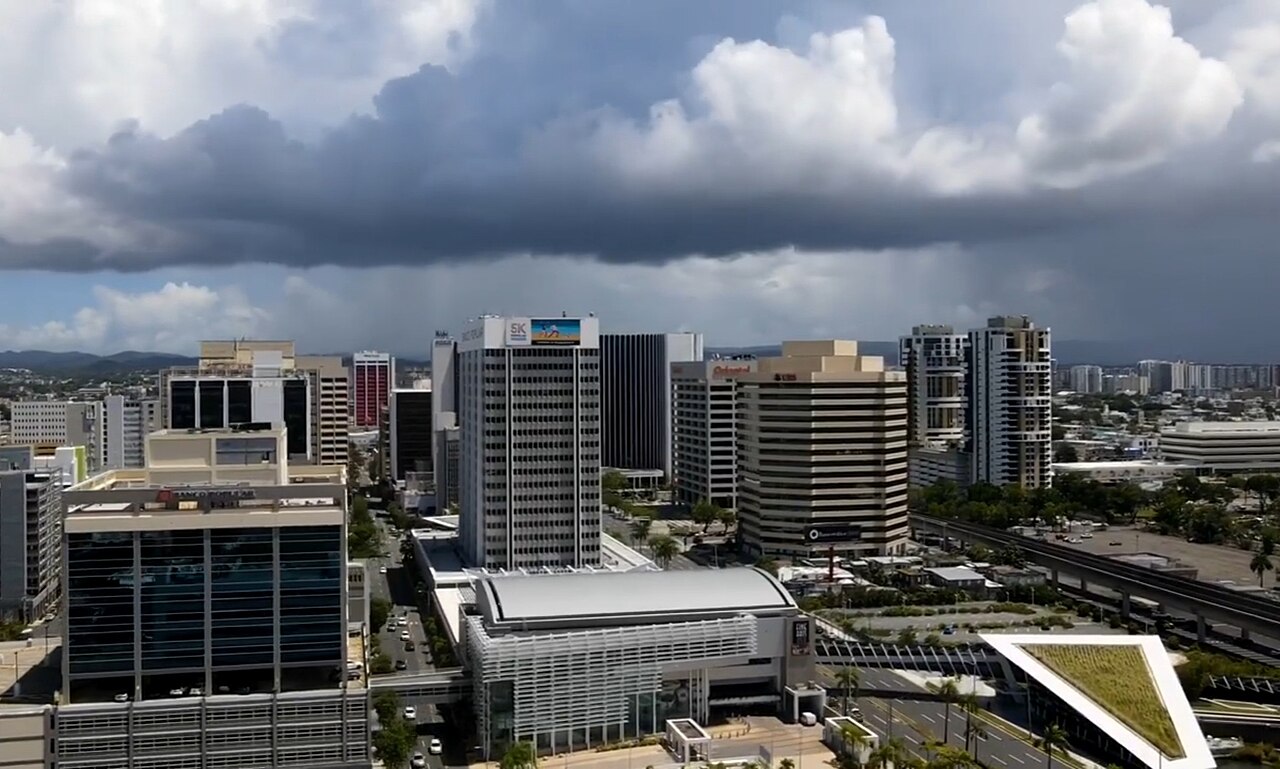
Economic power rests on factories, which made up about 44% of the island’s output, the Planning Board said on 4 May 2026. Real growth was only 0.4% in fiscal year 2025, and about 1.16 million people had jobs.
Consumer spending rose 3.5% and construction investment 4.5%, the board said. The labor-force participation rate reached 44.8%, its highest level in several years, after 19,000 new jobs.
Invest Puerto Rico, the government’s investment agency, reports US$62.4 billion in exports in 2025. It names Bacardi, HP and Lufthansa Group among the companies that choose the island.
Act 60, the island’s incentives code, offers reduced corporate tax rates, capital-gains exemptions and research incentives. Invest Puerto Rico presents it as a core selling point for mainland and foreign firms.
Popular, Inc., the bank group, reported US$77.8 billion in assets and US$266.3 million in third-quarter 2026 net income on 22 October 2026. Its chief executive is Jorge J. García, and it had 9,112 full-time-equivalent employees on 30 September.
Popular held US$68.7 billion in deposits and US$40.0 billion in loans at the end of September. Its second-quarter net income was US$278.2 million.
First BanCorp reported about US$19.2 billion in assets at 30 June 2026, and OFG Bancorp had US$12.1 billion in September. These filings show the size of the banks that lend to island households and firms.
For the companies in more detail, read our guide to who runs Puerto Rico’s economy. Outside investors are covered in our piece on foreign powers and investors in Puerto Rico.
The Power Grid and Daily Politics
Electricity is the island’s most contested public service, and politicians treat it as a test of competence. On 16 October 2026 the Resident Commissioner said the government should fix electricity and water before debating status.
On 15 October 2026 the governor signed measures to strengthen the rights of electricity customers. On 23 October her office promoted a temporary sales-tax exemption and new aid because of high energy costs.
On 20 October 2026 she highlighted a US$4.9 billion pipeline of solar and storage projects at an industry summit. Every household pays the bill, so the grid works as a political lever.
Regions, From San Juan to the Interior
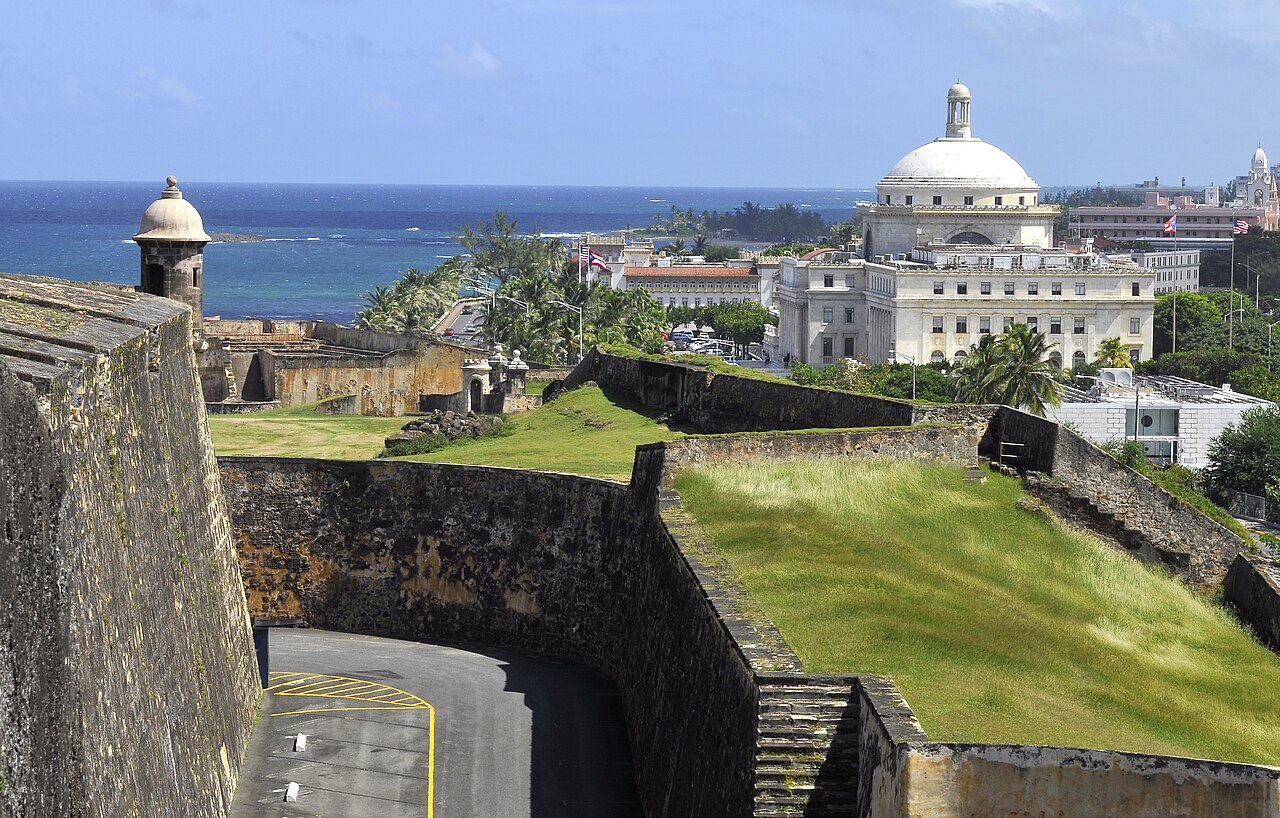
Political power is concentrated in the San Juan area, where the Capitol and the governor’s office stand. The island is divided into 78 municipalities, each with its own mayor.
The governor’s office also works beyond the capital. On 30 September 2026 it marked the revitalization of Yauco’s town center and the handover of homes and property titles.
The Resident Commissioner announces federal money from Caguas as well as San Juan. On 27 October 2026 he announced US$45.4 million in FEMA grants for rebuilding projects linked to hurricanes María and Fiona.
Those grants cover public housing, water and sewer systems, schools, government buildings and flood control. Federal disaster money therefore shapes which towns get rebuilt first.
Age is reshaping the map. The Census Bureau found the island’s median age rose to 45.6 in 2024, and nearly all municipios grew older.
Who Is Left Out of Island Power
Islanders cannot vote for US president, and the island has no senators. That leaves it a small say in the federal decisions that shape its budget.
Older adults are a growing group with high needs. The Census Bureau counted 24.6% of islanders aged 65 or older in 2024, against 15% for children under 18.
Older adults outnumbered children by more than 300,000 in 2024, up from 151,000 in 2020. The governor’s Medicaid report of 4 October 2026 is a reminder that health funding depends on Washington.
Immigrants also have little voice. On 26 October 2026 the Resident Commissioner voiced solidarity with immigrants facing ICE raids, as our report on leaders condemning the ICE operations shows.
For the population picture, see our guide to Puerto Rico’s population and ethnic groups. Our geopolitics guide covers the island’s place in the Caribbean.
What It Means for US Readers
Puerto Rico power is a US issue, because Puerto Ricans are US citizens and status is a matter of US law. A status vote, if Congress ever sets one, would affect the House, the Senate and the Electoral College.
Investors face a federal oversight board and a government that offers tax breaks under Act 60. Travelers and mainland relatives should expect energy costs and immigration enforcement to remain in the headlines.
What Is Not Known
Watch whether the House Natural Resources Committee takes up House Bill 9246, which proposes the 14 March 2027 vote. Until Congress acts, the status question stays open.
Also watch the Medicaid funding request, the energy-cost aid and the US$4.9 billion solar and storage pipeline. Each decides how islanders judge their government as the status debate returns.
Frequently Asked Questions
Who runs Puerto Rico?
Congress holds final authority, and a governor and legislature run local government. Governor Jenniffer González Colón leads the executive, and a federal oversight board still supervises budgets and debt plans, as of October 2026.
Can Puerto Ricans vote for US president?
No, not while living on the island. They elect a governor, a legislature and a Resident Commissioner in the House, but the island has no senators.
Which parties hold power in Puerto Rico?
The New Progressive Party, which backs statehood, holds the governorship and 19 of 28 Senate seats. The Popular Democratic Party has 5, the Independence Party 2, and 2 senators are independents.
What is the Puerto Rico oversight board?
A seven-member federal board created by the PROMESA law of 2016 to supervise the island’s budgets and debt plans. The President appoints its members, most from lists submitted by congressional leaders.
How old is the population of Puerto Rico?
The Census Bureau put the median age at 45.6 in 2024. Adults aged 65 or older made up 24.6% of the population, and children under 18 made up 15%.
Will Puerto Rico become a state?
Not yet. A House bill introduced on 10 June 2026 proposes a status vote on 14 March 2027, but it has not become law.
Sources: US Census Bureau, 2024 population estimates by age, 2025-06-26; Government of Puerto Rico, La Fortaleza press releases, 2026-10-27; Senate of Puerto Rico, senators, 2026-10-27; Resident Commissioner Pablo José Hernández, press releases, 2026-10-27; US Congress, H.R. 9246 Puerto Rico Democratic Self Determination Act, 2026-06-10; US Code, 48 U.S.C. 2121, PROMESA Oversight Board, 2026-10-31; US Code, 8 U.S.C. 1402, citizenship of persons born in Puerto Rico, 2026-10-31; Puerto Rico Planning Board, Economic Report 2025, 2026-05-04; Invest Puerto Rico, 2026-08-01; Popular, Inc., third quarter 2026 earnings release (SEC filing), 2026-10-22; OFG Bancorp, third quarter 2026 earnings release (SEC filing), 2026-10-21; First BanCorp, second quarter 2026 earnings release, 2026-07-22.
This article was produced by The Rio Times’ automated newsroom system. How we use AI · Report an error · Editorial responsibility: Matthias Camenzind, Editor-in-Chief
Expat Guide to Puerto Rico
What The Rio Times publishes for foreigners who live in or move to Puerto Rico.
Start here
Coming up in Puerto Rico
Understand Puerto Rico
Brazil runoff date: Sunday, October 25, poll closing times and when results start · Brazil runoff polls: Flávio 51%, Lula 49% · Kalshi and Polymarket odds
Rotate for Best Experience
This report is optimized for landscape viewing. Rotate your phone for the full experience.
You've reached your free article limit
Subscribe to The Rio Times for unlimited access to our news, expat and nomad guides and market intelligence on Latin America and Africa.
Keep reading for free
Your first article was on us. Register with your email address to read 6 free articles every month. You will also receive The LatAm Brief: what moved in Latin American markets, politics and expat life, every weekday morning.
Expat Guide to Puerto Rico
What The Rio Times publishes for foreigners who live in or move to Puerto Rico.
Start here
Coming up in Puerto Rico
Understand Puerto Rico