Mexico Population 2026: 130.9 Million, Ethnic Groups
Mexico is growing slowly, ageing fast and far from uniform, and the latest official count is 130.9 million people.

MEXICO · POPULATION
Updated 12 November 2026
Key Facts
- Answer About 130.9 million people live in Mexico, according to INEGI, the national statistics agency (15 October 2025).
- The numbers Median age 32; growth 0.7% a year since 2020; 11th most populous country.
- The groups 18.6% identify as indigenous and 1.6% as Afro-Mexican (2025).
- Biggest places The State of Mexico has 17.6 million people; Mexico City 9.2 million.
- Power Index Mexico ranks 2nd of 14 in The Rio Times Latin America Power Index, with 70.8 points (November 2026 edition).
Mexico is growing slowly, ageing fast and far from uniform, and the latest official count is 130.9 million people.
About 130.9 million people live in Mexico as of 15 October 2025, according to INEGI, the National Institute of Statistics and Geography, the country’s official statistics agency. That is 4.9 million more than the 2020 census found, with growth slowing to 0.7% a year.
The figure comes from INEGI’s 2025 Intercensal Survey, a large household sample survey, published on Tuesday 22 September 2026. For US readers, Mexico matters as a neighbour, a factory partner and a major source of remittances, the money migrants send home; daily news is in the Rio Times Mexico section.
Key Figures at a Glance
Mexico population: key figures with source and date, as of 12 November 2026
- Population (total): 130,911,314. INEGI, 2025 Intercensal Survey, 15 Oct 2025.
- Previous full census: 126,014,024. INEGI, 2020 Population Census, March 2020.
- Average growth: 0.7% a year, 2020 to 2025. INEGI, 2025 Intercensal Survey, 15 Oct 2025.
- Median age: 32 years. INEGI, 2025 Intercensal Survey, 15 Oct 2025.
- Indigenous (self-identified): 24.2 million, 18.6%. INEGI, 2025 Intercensal Survey, 15 Oct 2025.
- Afro-Mexican or Afro-descendant: 2.1 million, 1.6%. INEGI, 2025 Intercensal Survey, 15 Oct 2025.
- State of Mexico, largest state: 17.6 million. INEGI, 2025 Intercensal Survey, 15 Oct 2025.
- Mexico City: 9.2 million. INEGI, 2025 Intercensal Survey, 15 Oct 2025.
- United States, for comparison: 341,784,857. US Census Bureau (federal statistics agency), population estimates, 1 Jul 2025.
How This Figure Is Measured
The figure comes from the 2025 Intercensal Survey of INEGI, the National Institute of Statistics and Geography, which runs Mexico’s official census. It is a large household sample, not a head-by-head count. INEGI collected the data between 6 October and 14 November 2025 and set the result to 15 October 2025.
A full census is held every ten years, the last in March 2020 (INEGI Census 2020 results). The next INEGI release will replace this figure, and we will update this page when it does. The US comparison uses the US Census Bureau’s 2025 population estimates series, released in 2026.
How Big Is the Mexico Population in 2026
The latest official count is the 2025 Intercensal Survey, a very large sample rather than a full census. INEGI collected its data between 6 October and 14 November 2025.
It estimated 130,911,314 residents as of 15 October 2025. Of these, 130.4 million lived in private homes and just over 517,000 in collective dwellings such as institutions.
The last full count, the March 2020 census, found 126,014,024 people. INEGI then ranked Mexico the world’s 11th most populous country.
CONAPO, the government’s National Population Council, projected 134.4 million people for mid-2026 in an earlier forecast. INEGI’s survey count is about 3.5 million lower, so projections made before it are likely to be revised down.
At the 2020 census the most populous state was the State of Mexico, which wraps around the capital, with 16,992,418 people.
In 2025 Mexico City itself had 9.2 million residents and Jalisco, home to Guadalajara, had 8.6 million, INEGI’s state results show. The State of Mexico remains first, ahead of both.
Mexico Population: INEGI Count Versus CONAPO Projection
A count and a projection answer different questions. INEGI interviews homes and reports what it found on a set date, while CONAPO projects forward from older censuses, births, deaths and migration.
For a single number to quote today, use INEGI’s 130.9 million. CONAPO’s 134.4 million is the older forecast, and we found no update to it for the 2025 survey.
Biggest States and Cities by Population
The State of Mexico, which wraps around the capital, is the most populous state, with about 17.6 million residents in 2025. Mexico City, a separate federal entity, is second with about 9.2 million, so the two together hold about one in five Mexicans.
Guadalajara and Monterrey are the next big urban poles, in the states of Jalisco and Nuevo León. Our city guides to Mexico City, Guadalajara and Monterrey explain each one.
How Mexico’s Population Compares With the United States
The US Census Bureau estimated 341,784,857 residents for 1 July 2025, so Mexico has about 38 people for every 100 Americans. The US grew 0.5% in the year to July 2025, while Mexico averaged 0.7% a year from 2020 to 2025.
Mexico ranks 11th among the world’s most populous countries. Its ties to the US run through families too, as our guide to the Mexican diaspora in the United States shows.
An Ageing Country With Fewer Births
Half of all Mexicans were 32 or younger in 2025, up from 29 in 2020. Women made up 51.9% of residents of private homes.
Women aged 12 and over had borne 1.9 children born alive on average in 2025, against 2.1 in 2020, INEGI found.
Cities, States and the Rural South
Mexico City and the surrounding State of Mexico form one continuous metropolitan area, the country’s economic and political centre. Guadalajara and Monterrey are the next big urban poles.

Indigenous Mexico, and Its Languages
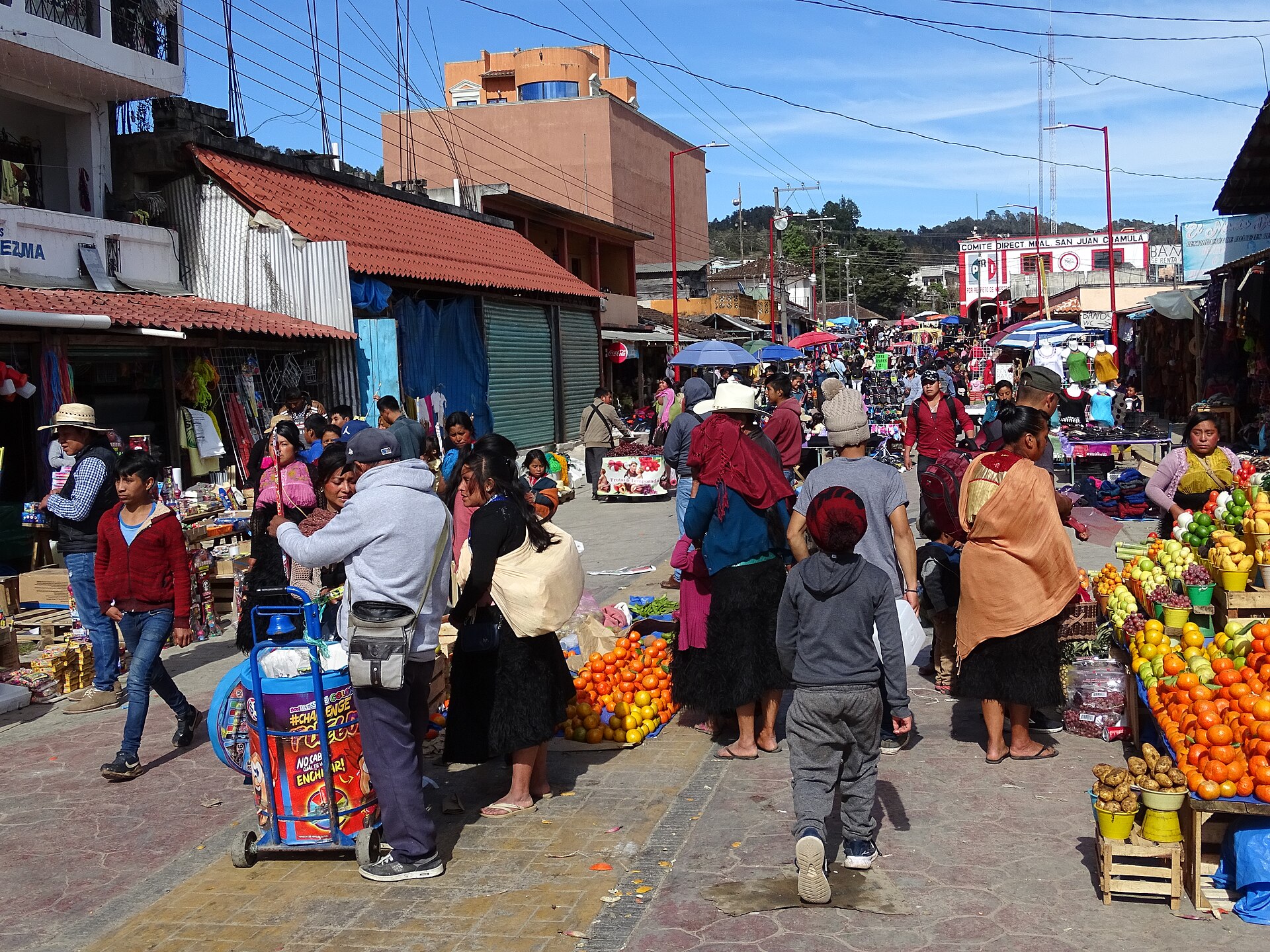
Article 2 of the constitution describes a pluricultural and pluricultural nation originally founded on its indigenous peoples. Awareness of indigenous identity is the fundamental test of who counts as indigenous.
By that test, 24.2 million people considered themselves indigenous in 2025, or 18.6% of the population.
In all, 7,421,285 people aged three and over spoke an indigenous language in 2025, 5.9% of that age group. The share was 6.1% in 2020.
Afro-Mexicans, Mestizos and Religion
The constitution also recognises Afro-Mexican peoples, descendants of people brought from Africa and settled in Mexico since colonial times. In 2025, 2.1 million people identified as Afro-Mexican or Afro-descendant, 1.6% of the population.
Most Mexicans are commonly described as mestizo, of mixed indigenous and European ancestry.
Foreigners are few: people born abroad were 0.9% of residents in 2025. Of those, 57.1% were born in the US.
Religion data come from the 2020 census, when 77.7% of Mexicans were Catholic, down from 82.7% in 2010. Protestants and evangelicals made up 11.2%.
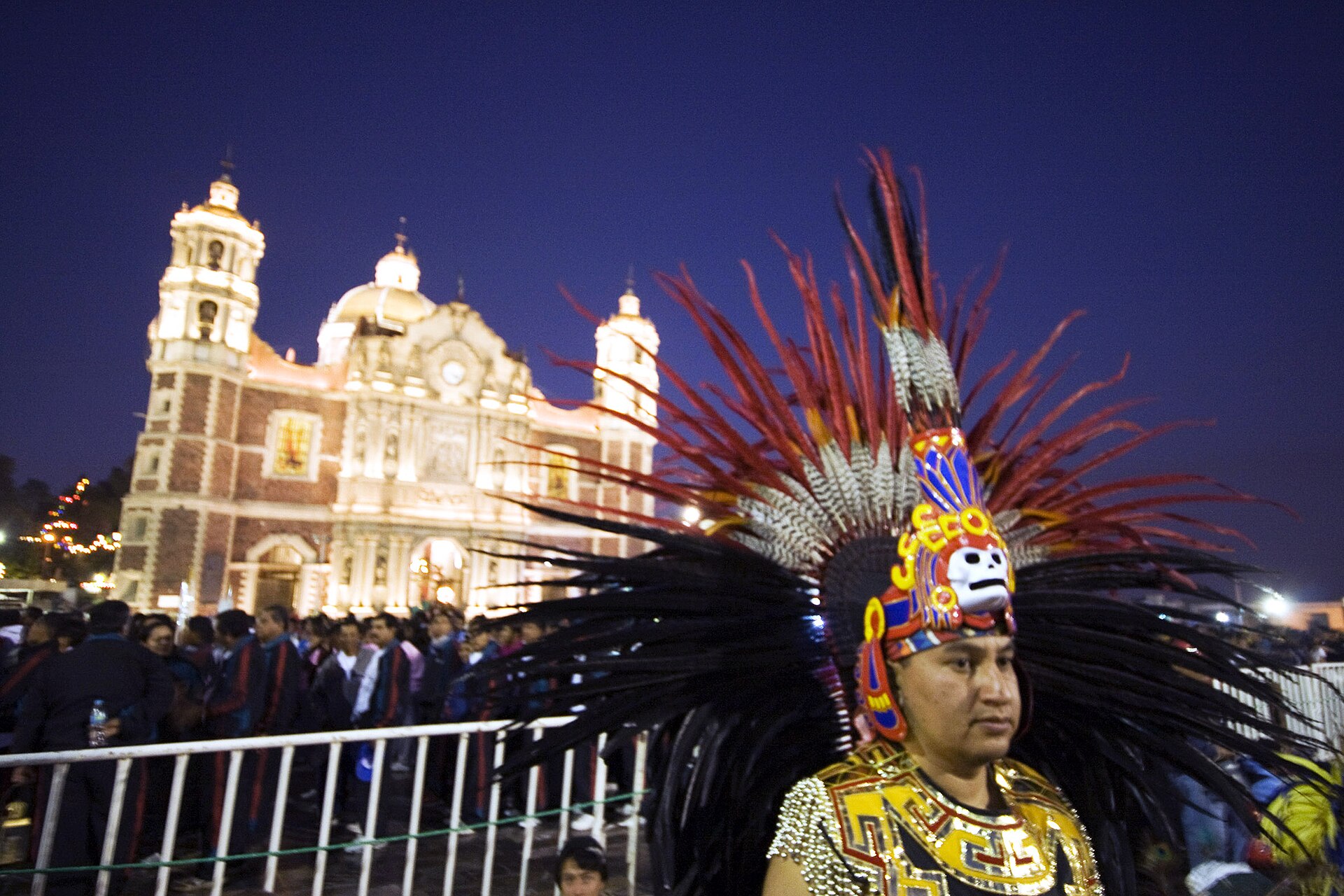
The Virgin of Guadalupe is central to Mexican Catholicism, and her feast day on 12 December draws huge pilgrimages to Mexico City; our guide to religion in Mexico covers the rest.
Migration and Remittances
Money flows the other way. Banco de México, the central bank, recorded US$5.36 billion in remittances in September 2026, from about 12.6 million transfers averaging roughly US$426.
Remittances totalled US$47.2 billion from January to September 2026, up 2.1% on a year earlier, according to Banco de México data published on 3 November 2026.
A 1% US tax (section 4475 of the Internal Revenue Code) has applied since January 2026 to remittances paid in cash, money orders or cashier’s checks under US tax law.
What It Means for US Readers
Mexico’s demographic shift matters to US companies that build plants there, a trend covered in Mexico nearshoring explained. A median age of 32 still means a young workforce.
The 1% US tax applies when senders pay in cash or with a money order, cashier’s check or a similar physical instrument.
For investors and consumer brands, Mexico is a market of 130.9 million people, with a young, urban-leaning consumer base. The companies that serve it are profiled in who runs Mexico’s economy, with wider context in Mexico explained.
What Is Not Known
We found no CONAPO projections that incorporate the 2025 survey, so official forecasts for 2026 and beyond may come down. The survey is a sample, so its figures carry sampling error.
The latest religion data are still from the 2020 census.
The full effect of the US remittance tax on money sent home in 2026 cannot yet be measured.
Readers comparing countries can start with our guides to Colombia population, Egypt population and Kenya population. Brazil is covered in Brazil population by race and Brazil population in 2026.
Frequently Asked Questions
How many people live in Mexico in 2026?
About 130.9 million, according to INEGI’s Intercensal Survey for 15 October 2025. CONAPO, the National Population Council, put mid-2026 at 134.4 million in an earlier forecast.
Is Mexico’s population growing or shrinking?
It is growing slowly: about 0.7% a year between 2020 and 2025.
What is the population of Mexico City?
Mexico City had about 9.2 million residents in 2025. The neighbouring State of Mexico is larger, with 17.6 million.
How does Mexico’s population compare with the United States?
Mexico has about 130.9 million people against 341.8 million in the US, or about 38 for every 100 Americans. Mexico ranks 11th among the world’s most populous countries.
What are the main ethnic groups in Mexico?
Most Mexicans are commonly described as mestizo, of mixed indigenous and European descent, though the census does not count that category. In 2025, 18.6% identified as indigenous and 1.6% as Afro-Mexican.
Sources: INEGI, Encuesta Intercensal 2025, press release 54/26; INEGI, Encuesta Intercensal 2025, results report 37/26; INEGI state results for Mexico City, Jalisco, Chiapas, Oaxaca, Guerrero and Yucatán; INEGI, Censo 2020 results; INEGI, Censo 2020 main results; INEGI, indigenous peoples statistics 2022; INEGI, indigenous peoples statistics 2024 (national demographic survey 2023); Constitution of Mexico, Article 2; General Law on Linguistic Rights of Indigenous Peoples; Banco de México, remittances table; US Census Bureau, Vintage 2025 population estimates (INEGI figures as published 22 September 2026; US Census Bureau pages checked 12 November 2026).
This article was produced by The Rio Times’ automated AI newsroom. Editorial responsibility: Matthias Camenzind, Publisher and Editor-in-Chief. The Rio Times also runs Ask Rio Times, which answers from 100,000+ of our own articles, the daily Latin America Power Map, and prediction-market odds on elections and markets.. How we use AI · Report an error
Expat Guide to Mexico
What The Rio Times publishes for foreigners who live in or move to Mexico.
Start here
- Mexican Peso Falls Past 18.40 on Central Bank Minutes
- Crocodiles in Puerto Vallarta Safety Guide
- Mexico Security and Crime Explained 2026
- Mexico Visa Options 2026 Explained
City guides
Mexico City, Playa del Carmen, Tulum, Puerto Vallarta, Mérida, Oaxaca, San Miguel de Allende, Guadalajara, Monterrey, Cancún
Coming up in Mexico
- Singer LP Plays Mexico City Nov 22, 2026 22 Nov
- Soda Stereo Tour Hits Mexico City 23 Nov 23 Nov
- Love of Lesbian Mexico City Farewell: Auditorio Sold Out, 24 November Added 24 Nov
- Guadalajara Book Fair 2026 Opens 28 November 28 Nov
Understand Mexico