MEXICO · MIGRATION
Key Facts
- Power Index Mexico ranks 2nd of 14 in The Rio Times Latin America Power Index, with 71.4 points (October 2026 edition).
- Prediction markets Polymarket gives a 3.4% chance that President Sheinbaum leaves office by 31 December 2026 (28 October, 7:59 a.m. ET).
- Mexican-born About 11.1 million in 2024, the largest immigrant group.
- Mexican origin About 39 million US residents in 2024, including the US-born.
- Where California holds about 35 percent and Texas about 22 percent.
- Money sent home US$61.8 billion in 2025, down 4.6 percent.
- New in 2026 A 1 percent US tax on cash remittances since 1 January.
The Mexico diaspora is the largest immigrant group in the United States, with about 11.1 million Mexican-born residents in 2024. This guide explains where they live, why they came, what they earn and send home, and how US policy affects them.

What the Term Means in Plain English
The Mexico diaspora is the community of people born in Mexico, or with Mexican roots, who live in the United States. It is part of daily life in American schools, farms, restaurants, hospitals and elections.
The US Census Bureau counts these people by birthplace and by family origin. Its American Community Survey, a yearly household survey, found about 11.1 million Mexican-born residents in 2024.
The same 2024 survey counted about 39 million residents of Mexican origin, including people born in the United States. The Census Bureau counted 68 million Hispanic residents on 1 July 2024, and Mexican-origin people are the largest group among them.
Remittances are money migrants send home to relatives. A consulate is a country’s office abroad that helps its citizens.
How Many Mexicans Live in the United States
Mexicans are the largest immigrant group, at about 22 percent of the 50.2 million people born abroad, the 2024 survey shows. No other country comes close to the 11.1 million Mexican-born residents.
The Migration Policy Institute (MPI), a Washington research group, puts the peak at about 11.7 million in 2010. It counted 10.7 million in 2022 and 10.9 million in 2023, and the 2024 survey found 11.1 million.
Where They Live
California is home to about 35 percent of Mexican-born residents and Texas to about 22 percent, the 2024 survey shows. Illinois holds about 6 percent and Arizona about 4.5 percent.
Greater Los Angeles alone holds about 14 percent of Mexican-born residents, and Chicago about 6 percent. Houston, Dallas and Riverside in California hold about 5 percent each, MPI found for 2018-2022.
Why Mexicans Came to the United States
Most came for work and to join relatives who had arrived before them. About 51 percent arrived before 2000 and 77 percent before 2010, the 2024 survey shows, so this is a long-settled community.
Only about 23 percent of Mexican-born residents arrived in 2010 or later, compared with 38 percent of all immigrants. Newcomers from Mexico have been a smaller share of the flow for over a decade.
Many families in the Mexico diaspora have lived in the same American towns for three or four generations. Their US-born children and grandchildren make up most of the roughly 39 million people of Mexican origin.
Work, Income and Education
About 68 percent of Mexican immigrants aged 16 and older were in the labour force in 2023, MPI’s Census analysis shows. The median household headed by a Mexican immigrant earned US$64,500 that year.
About 16 percent of Mexican immigrants lived in poverty in 2023, MPI found. Many work in services, construction, maintenance, transport and factory jobs.
Schooling and Language
About half of Mexican immigrants aged 25 and over lacked a high school diploma in 2023, and about 9 percent held a bachelor’s degree. About 65 percent spoke English less than very well.
These numbers describe immigrants only. Their US-born children are counted separately in the Census Bureau’s family-origin figures.

Money Sent Home to Mexico
Banco de México, the central bank, recorded US$61.8 billion in remittances for 2025, down 4.6 percent from US$64.7 billion in 2024. For the first half of 2026 it recorded about US$30.8 billion: US$14.7 billion in the first quarter, US$16.1 billion in the second.
In the second quarter of 2026 Guanajuato state received 9.03 percent of the total, Michoacán 8.49 percent and Jalisco 8.03 percent. In August 2026 the central bank recorded US$5.45 billion, with an average transfer of US$412.
The New US Tax on Cash Transfers
Since 1 January 2026 the Internal Revenue Service (IRS) taxes cash and money-order remittances at 1 percent. The sending company collects the tax and passes it to the Treasury.
Most money reaches Mexico by electronic transfer. In August 2026 electronic transfers made up US$5.41 billion of the US$5.45 billion, and cash and in-kind payments only about US$33 million.
Citizenship and Visa Routes
About 34 percent of Mexican-born residents were US citizens in 2024, against 51 percent of all immigrants, the Census Bureau survey shows. A lawful permanent resident can apply to become a citizen after five years of continuous residence, according to the US Code.
Most other routes begin with a sponsor. Citizens and permanent residents can petition for close relatives, and employers can sponsor workers, including seasonal farm workers on H-2A visas.
MPI estimated about 5.1 million Mexican immigrants lacked legal status in mid-2022, about 45 percent of all unauthorized immigrants. Mexico’s constitution says Mexican nationality by birth can never be revoked, so those who naturalise in the United States keep it.
Politics, Culture and Mexico’s Reach Abroad
Mexico’s foreign ministry lists about 50 consulates in American cities, from Los Angeles and Chicago to Boston and Seattle. They serve Mexican citizens living in the United States.
Claudia Sheinbaum Pardo is Mexico’s president, according to the presidency’s transcript of her press conference of 13 October 2026. Her government negotiates migration, remittances and trade with Washington.
Culture in American Cities
Chicano Park in San Diego holds 72 murals on highway pillars about the Chicano movement, says the National Park Service. One pillar carries a portrait of the Mexican artist Frida Kahlo among other Mexican muralists.
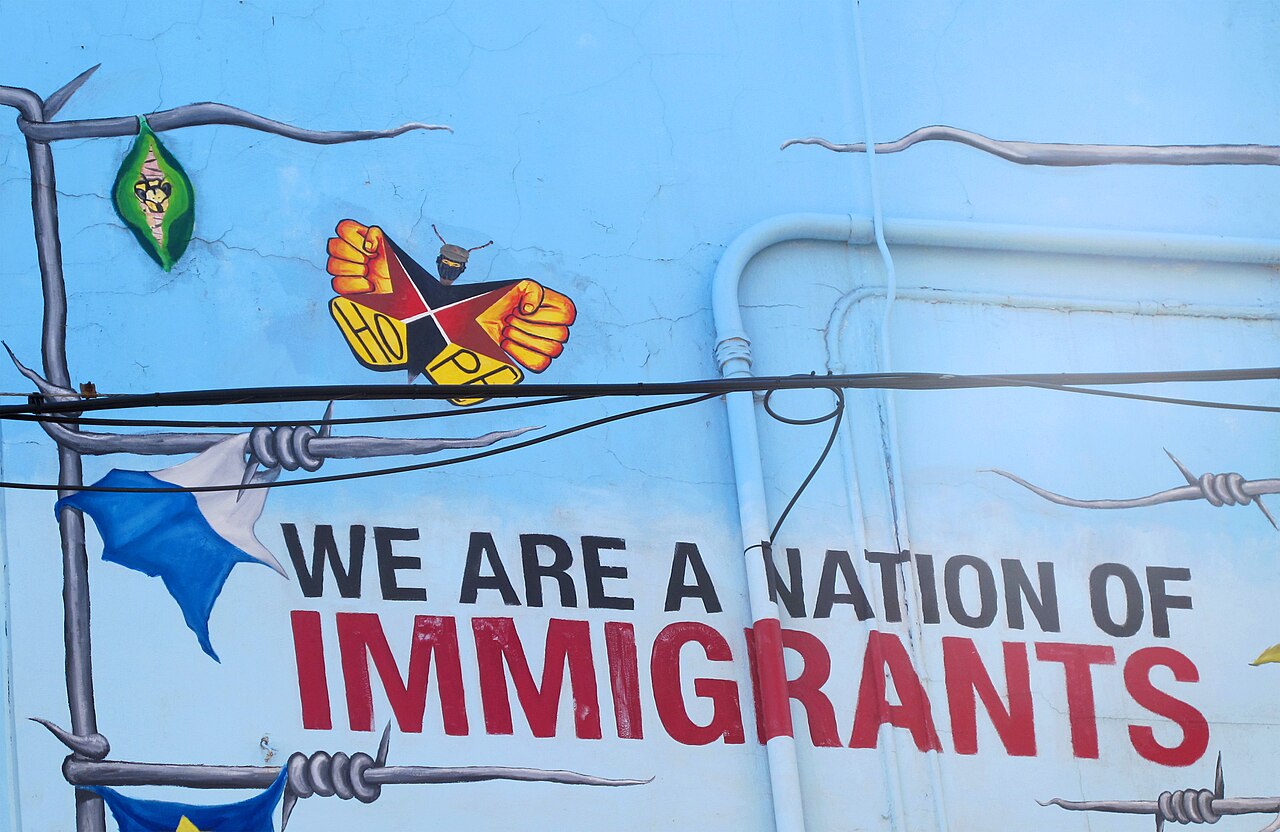
In the Pilsen neighbourhood of Chicago, a mural photographed in 2014 reads We Are a Nation of Immigrants. Murals like these show how the Mexico diaspora has shaped the look of American neighbourhoods.

How US Policy Affects the Diaspora
Mexico’s Interior Ministry runs a strategy called México Te Abraza (Mexico Embraces You) to receive citizens who return from the United States. Its reception centres offer services to people returning home.
Mexico’s state-run Financiera para el Bienestar offers the FINABIEN Paisan@ card for sending money from the United States at a reduced fee. The IRS notice applies the new tax only to cash and similar physical payments.
The returns are covered in more detail in our report on deportations of Mexicans from the United States. Trade talks, tariffs and border security also shape how Washington treats Mexican workers, Mexico and the United States, Relations Explained shows.
Our guide to Mexico geopolitics covers the wider contest between Washington, Beijing and Mexico City. Both guides explain why migration sits at the centre of the relationship.
What Prediction Markets Say
Polymarket, a betting platform, gave Sheinbaum a 3.4 percent chance of leaving office by 31 December 2026 (28 October, 7:59 a.m. ET). About US$41,100 had traded on that outcome and about US$293,500 across the whole market.
A low price means traders see little risk of a sudden change in Mexico City. That government negotiates migration, remittances and trade with Washington.
Why we show this: prediction markets turn real-money bets into a live probability that moves within minutes of the news, which is why investors, campaigns and newsrooms in the United States now follow them closely. We show them next to polls and official results, never instead of them.
What It Means for US Readers
The Mexico diaspora is part of the US economy in farms, kitchens, construction sites, hospitals and trucking. Changes in enforcement, visas or the cash remittance tax can reach local labour markets and consumer spending.
Investors follow remittances because they feed spending in Mexico, a market that buys US exports. Our Mexico population guide and remittances report give the numbers.
What Is Not Known
No official count of Mexicans without legal status exists, and the 5.1 million figure is an MPI estimate for mid-2022. How many people will leave or return in 2027 depends on enforcement choices that have not yet been made.
The central bank’s 2026 remittance figures are preliminary and may be revised. How much of the cash tax will move senders toward cards and bank transfers has not been measured.
Frequently Asked Questions
How many Mexicans live in the United States?
About 11.1 million people born in Mexico lived in the United States in 2024, the Census Bureau survey shows. About 39 million residents trace their origin to Mexico, including those born in the United States.
Where do most Mexican immigrants live?
California holds about 35 percent and Texas about 22 percent of Mexican-born residents in the 2024 survey. Illinois and Arizona come next, and Greater Los Angeles is the largest metro area.
How much money do Mexicans in the US send home?
Mexico received US$61.8 billion in remittances in 2025, down 4.6 percent from 2024, according to Banco de México. The first half of 2026 brought about US$30.8 billion.
Is there a US tax on sending money to Mexico?
Since 1 January 2026 a 1 percent federal tax applies to remittances paid in cash, by money order or by cashier’s check. The IRS says the sending company collects it.
Can a Mexican become a US citizen and keep Mexican nationality?
Yes for people Mexican by birth, because Mexico’s constitution says nationality by birth is never revoked. In the United States a permanent resident can apply after five years of continuous residence.
Is the Mexican-born population growing or shrinking?
MPI puts the peak at about 11.7 million in 2010, with 10.9 million in 2023. The Census Bureau survey counted about 11.1 million in 2024.
Sources: US Census Bureau, American Community Survey 2024 (tables B03001, B05006, B05007), 2025-09; US Census Bureau, Hispanic Heritage Month 2025 facts, 2025; Migration Policy Institute, Mexican Immigrants in the United States, 2024; Banco de México, remittance income table CE81, 2026-10; Banco de México, remittances by state, table CE100, 2026-10; Internal Revenue Service, Notice 2025-55 on the remittance transfer tax, 2025; US Code, 8 U.S.C. 1427 on naturalization, 2026; Constitution of Mexico, Articles 30 and 37, 2015; National Park Service, Mural-making in Latino spaces, 2026; Mexican foreign ministry, consulate directory, 2026-10; Financiera para el Bienestar, FINABIEN card for the United States, 2026; Mexican Interior Ministry, México Te Abraza strategy, 2025.
This article was produced by The Rio Times’ automated newsroom system. How we use AI · Report an error · Editorial responsibility: Matthias Camenzind, Editor-in-Chief
Expat Guide to Mexico
What The Rio Times publishes for foreigners who live in or move to Mexico.
Start here
- Mexican Peso Falls Past 18.40 on Central Bank Minutes
- Crocodiles in Puerto Vallarta Safety Guide
- Mexico Security and Crime Explained 2026
- Mexico Visa Options 2026 Explained
City guides
Mexico City, Playa del Carmen, Tulum, Puerto Vallarta, Mérida, Oaxaca, San Miguel de Allende, Guadalajara, Monterrey, Cancún
Coming up in Mexico
- Xcaret Festival Opens in Playa del Carmen on 30 October 30 Oct
- Mexico City Grand Prix 2026: Schedule, Tickets and TV 30 Oct
- Day of the Dead 2026 in Mexico City: Dates and Parade 31 Oct
- When Is Day of the Dead 2026? 1 and 2 November 2 Nov
Understand Mexico
Brazil runoff date: Sunday, October 25, poll closing times and when results start · Brazil runoff polls: Flávio 51%, Lula 49% · Kalshi and Polymarket odds
Rotate for Best Experience
This report is optimized for landscape viewing. Rotate your phone for the full experience.
You've reached your free article limit
Subscribe to The Rio Times for unlimited access to our news, expat and nomad guides and market intelligence on Latin America and Africa.
Keep reading for free
Your first article was on us. Register with your email address to read 6 free articles every month. You will also receive The LatAm Brief: what moved in Latin American markets, politics and expat life, every weekday morning.
Expat Guide to Mexico
What The Rio Times publishes for foreigners who live in or move to Mexico.
Start here
- Mexican Peso Falls Past 18.40 on Central Bank Minutes
- Crocodiles in Puerto Vallarta Safety Guide
- Mexico Security and Crime Explained 2026
- Mexico Visa Options 2026 Explained
City guides
Mexico City, Playa del Carmen, Tulum, Puerto Vallarta, Mérida, Oaxaca, San Miguel de Allende, Guadalajara, Monterrey, Cancún
Coming up in Mexico
- Xcaret Festival Opens in Playa del Carmen on 30 October 30 Oct
- Mexico City Grand Prix 2026: Schedule, Tickets and TV 30 Oct
- Day of the Dead 2026 in Mexico City: Dates and Parade 31 Oct
- When Is Day of the Dead 2026? 1 and 2 November 2 Nov
Understand Mexico