
GUIDES · COLOMBIA
Key Facts
- —In context The third most populous country in Latin America, after Brazil and Mexico, per World Bank data for 2025.
- —Population About 53.4 million in 2026, according to DANE, the national statistics office. The UN population fund also puts it at 53.4 million for 2025.
- —Last census The 2018 census estimated 48,258,494 people. DANE projects growth until 2043, when the population should pass 56 million.
- —Ethnic groups In 2018, 1.9 million people identified as Indigenous, from 115 peoples. DANE officially estimates 4.67 million Black, Afro-Colombian, Raizal and Palenquero people.
- —Migration Migración Colombia counted 2,831,561 Venezuelans in the country on 31 August 2025, 83 percent of them with legal status.
- —US link The US Census Bureau counted 1,765,862 people of Colombian origin in 2024. They are the largest South American-origin group there.
The Colombia population stands at about 53.4 million in 2026, the third largest in Latin America. It is young by US standards but ageing fast, and it is far more diverse than its Spanish-speaking image suggests.
For a US reader, the numbers matter in three ways. Colombia is the largest host of Venezuelan migrants in Latin America.
It also sends the biggest South American diaspora to the United States, and its population still grows.
How Many People Live in Colombia
DANE, the National Administrative Department of Statistics, is the official source. Its projections, updated in July 2025 after the pandemic, give 53,399,171 people for 2026.
That is a rise of about 340,000 on its 2025 figure of 53,057,212.
International estimates agree. The UN Population Fund puts Colombia at 53.4 million in 2025.
The World Bank gives the same total, with growth of 1.0 percent that year. Growth has slowed every year since at least 2023 in the World Bank series.
The last full count was the National Population and Housing Census of 2018. It counted 44,164,417 people directly and estimated the total at 48,258,494.
The gap reflects 4.1 million people DANE judged were missed, or 8.5 percent of those in private households.
DANE expects growth to continue for almost two more decades. In its July 2025 technical note, the population peaks in 2043 at just over 56 million.
From 2044 the agency projects negative growth.
Age, Births and an Ageing Country
Colombia is still younger than the United States, but it is ageing. In the 2018 census, 22.6 percent of people were under 15 and 9.1 percent were 65 or older.
By 2025 the World Bank put the under-15 share at 20.0 percent and the over-65 share at 10.2 percent. Fertility fell to 1.63 births per woman in 2024, below the level of about 2.1 needed to replace each generation.
DANE links the shift to later and fewer births, especially among young women. Women made up 51.2 percent of the population in 2018.
Households averaged 3.08 people, and 40.7 percent were headed by a woman, up from 29.9 percent in 2005.
Where Colombians Live, From Cities to Countryside
Most Colombians live in towns and cities. In the 2018 census, 77.0 percent lived in municipal seats, 7.1 percent in smaller villages and 15.9 percent in dispersed rural areas.
DANE projects 40.5 million people in municipal seats and 12.9 million in villages and rural areas in 2026.
Bogotá is the capital and the largest city. Medellín, Cali and Barranquilla are the other big urban centres.
Hillside districts such as Medellín’s Comuna 13 show how dense the big cities have become.
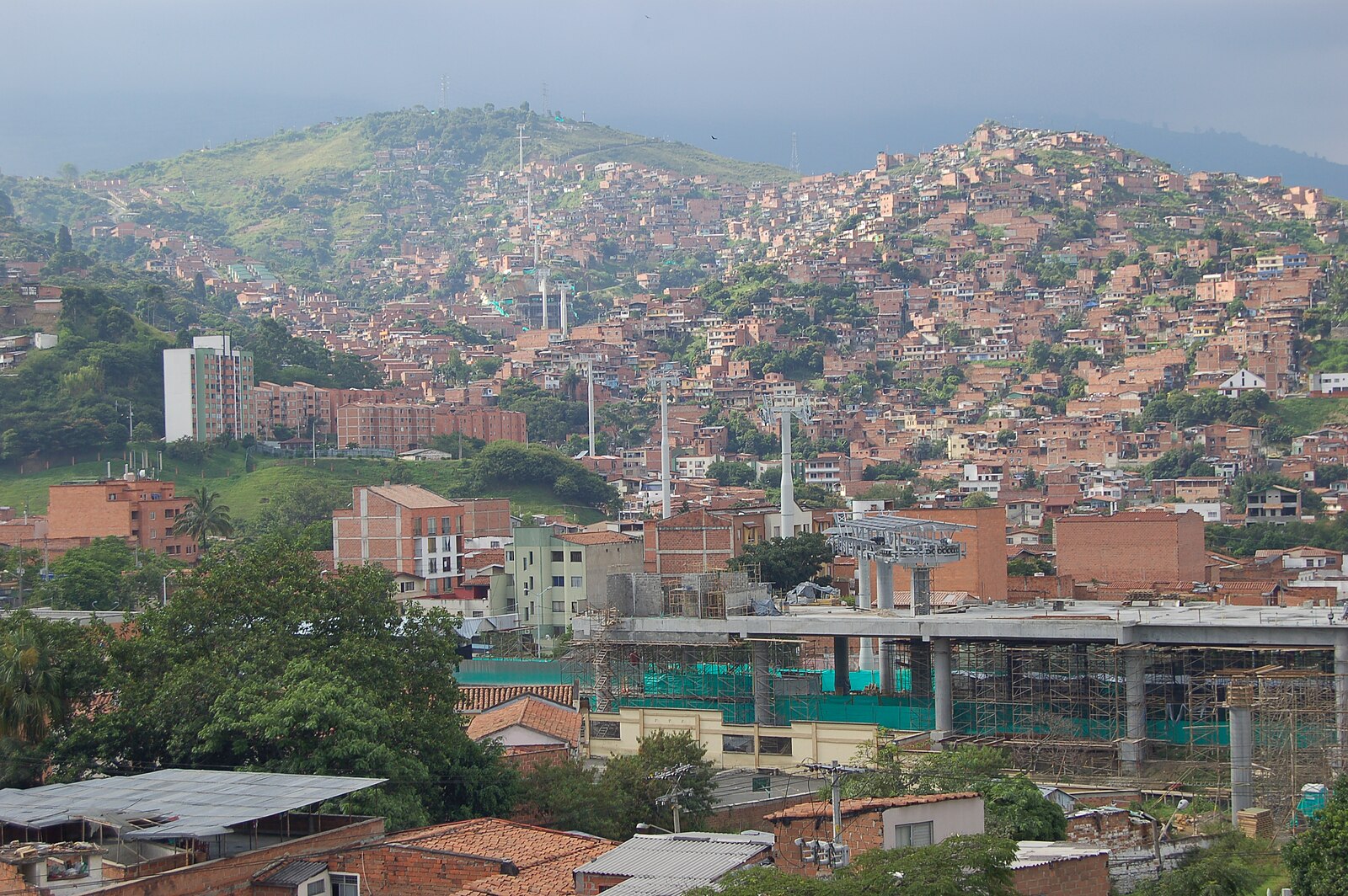
The cities also absorb most newcomers. More than half of Venezuelan migrants live in just seven cities, as the migration section below shows.
Indigenous Peoples and Their Territories
In 2018, 1,905,617 people identified as Indigenous, or 4.4 percent of those who answered the ethnic question. That was 36.8 percent more than in 2005.
DANE credits better coverage and more people choosing to identify, not only births.
The census recorded 115 native Indigenous peoples, up from 93 in 2005. Three peoples living in voluntary isolation, the Jurumi, Passe and Yuri, were deliberately not counted, under rules that protect their choice.
Four peoples make up 58.1 percent of the Indigenous total. They are the Wayuu with 380,460 people, the Zenú with 307,091, the Nasa with 243,176 and the Pastos with 163,873.
La Guajira, Cauca and Nariño have the largest Indigenous populations.
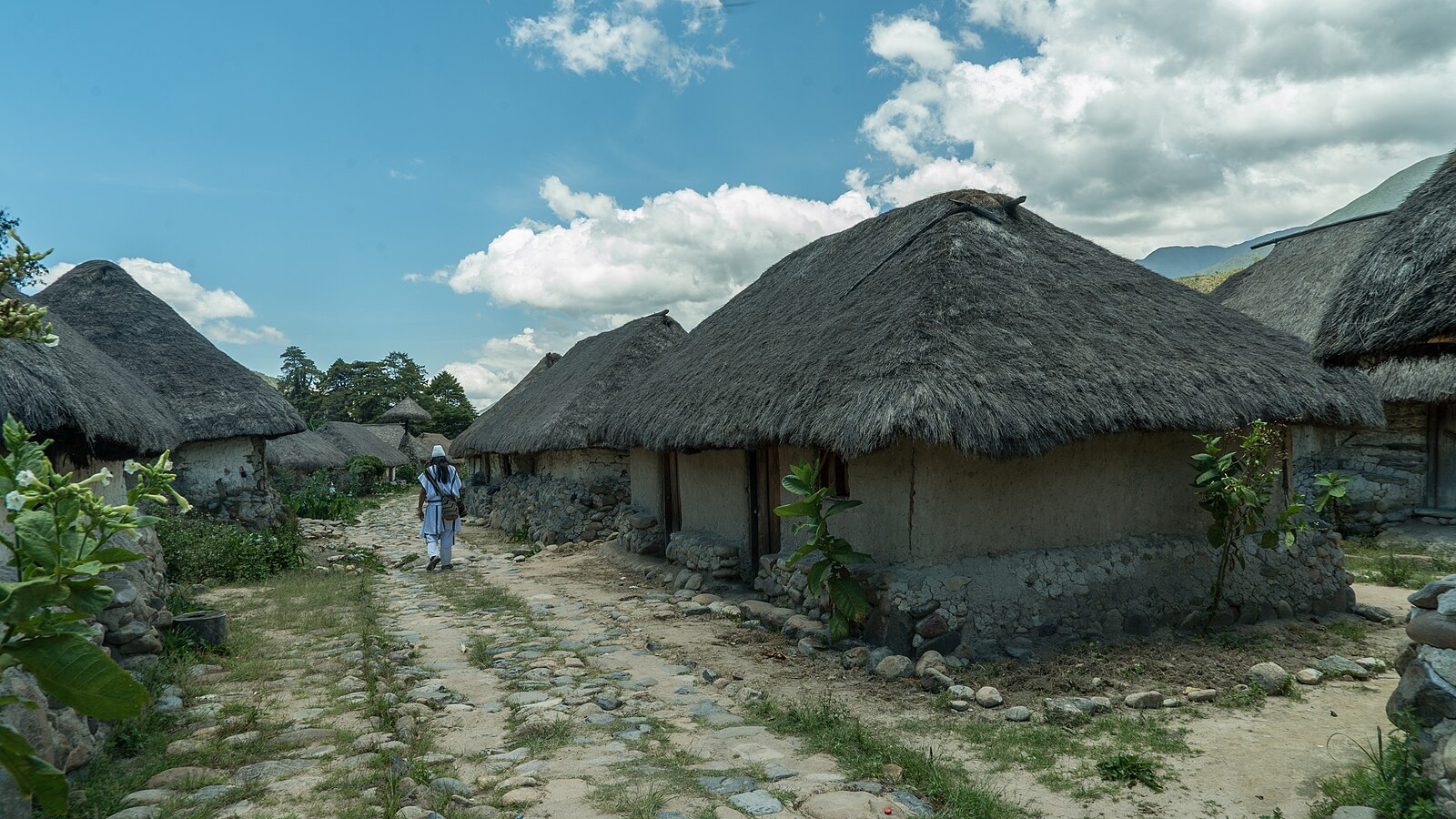
The 1991 Constitution gives these communities real tools. Resguardos, the reserves, are collective property that cannot be sold.
Indigenous authorities may run their own justice within their territories, and two Senate seats are reserved for Indigenous communities.
Language is under pressure. Among Indigenous people in private households, 50.8 percent spoke their people’s own language in 2018.
Among peoples whose language is still alive, the share was 64.7 percent.
Afro-Colombian, Raizal and Palenquero Communities
DANE groups Black, Afro-Colombian, Raizal and Palenquero people together under the acronym NARP. The 2018 census counted 2,982,224 of them, 30.8 percent fewer than in 2005.
DANE itself later questioned that drop.
The agency accepted problems with how the ethnic question worked for this group. It set an official estimate of 4,671,160 Black, Afro-Colombian, Raizal and Palenquero people for 2018.
The census figures are used only for age structure and social indicators.
Valle del Cauca, home to Cali, had the largest NARP count in 2018 with 647,526 people. Chocó, on the Pacific coast, followed with 337,696.
Law 70 of 1993 gives Black communities along Pacific river basins the right to collective land titles.
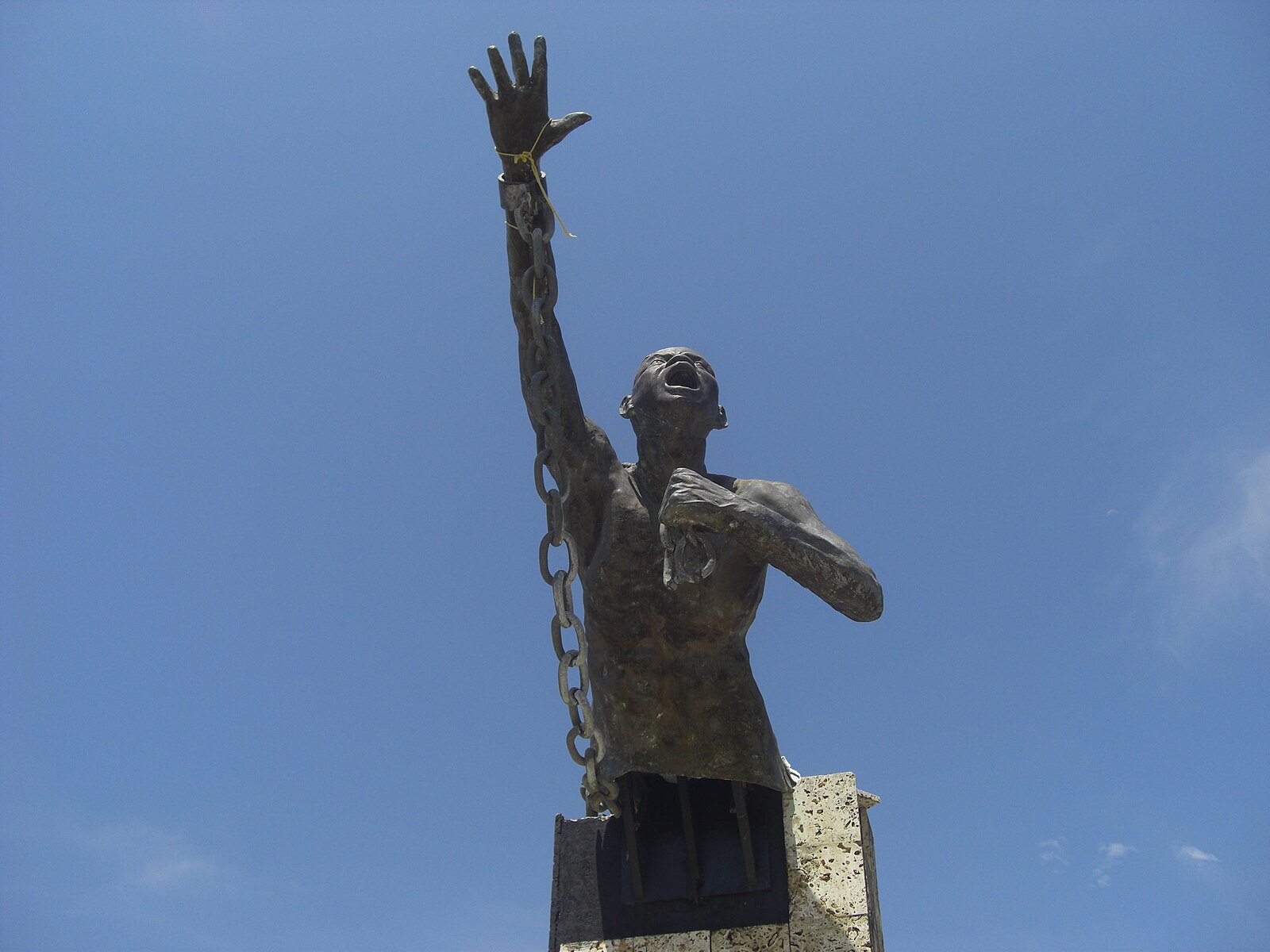
Two smaller groups have their own identity. Raizales are the native islanders of San Andrés, Providencia and Santa Catalina, with their own Creole language.
In 2018, 25,515 people identified as Raizal. Palenqueros come from San Basilio de Palenque in Bolívar and numbered 6,637.
Roma, Languages and Religion
Colombia also recognises the Rrom, or Roma, as an ethnic group. The 2018 census counted 2,649 Rrom, down 45.5 percent from 4,857 in 2005.
DANE says Rrom census takers helped identify the community more precisely.
Rrom families are organised in kumpañy, or local community groups. The largest are in Bogotá and Cúcuta, according to DANE’s 2019 presentation of the census results.
Spanish is the official language nationwide, but the Constitution makes the languages of ethnic groups official in their own territories. Law 1381 of 2010 protects Indigenous languages, the Creole languages of Afro-descendant communities, Romani and the language of the Raizal islanders.
Article 19 of the Constitution guarantees freedom of worship and says all churches are equally free before the law. The 2018 census did not ask about religion, so there is no official count of believers.
Catholicism has deep roots, and Pew Research Center estimates show Catholic identity in Colombia rising by 15 points between 1910 and 1970. Protestant churches have since drawn many converts.
In a 2014 Pew survey, nearly three-quarters of Colombian Protestants had been raised Catholic.
Venezuelan Migration and the Colombian Diaspora
Colombia hosts more Venezuelans than any other country in Latin America. Migración Colombia, the migration authority, counted 2,831,561 on 31 August 2025.
That is about one in nineteen people living in Colombia.
Most have papers. Some 1,950,474 held the Temporary Protection Permit, known as PPT, and 330,406 more had applications in process.
Another 484,658, or 17 percent, were irregular, up from 453,567 in January 2025.
Seven cities hold 51.5 percent of Venezuelan migrants: Bogotá, Medellín, Cúcuta, Barranquilla, Cali, Cartagena and Maicao. Women make up 52 percent of the group.
Policy changed in 2026. President Abelardo De La Espriella took office on 7 August 2026 as head of state and government.
On Monday 24 August, at a security council in Barranquilla, he ordered operations to find and deport migrants without legal status. Foreigners committing crimes come first, Deutsche Welle reported.
Colombians also leave. Migración Colombia’s 2025 report lists the United States as the top destination for Colombian travellers, at 29.6 percent.
Spain follows at 12.9 percent. Residence was the stated reason for 27 percent of departures.
The US diaspora is large and settled. The Census Bureau’s 2024 American Community Survey counted 1,765,862 people of Colombian origin.
That is more than the Venezuelan-origin count of 1,168,271 and the Ecuadorian count of 1,044,023.
How the Groups Live Together
Colombia defines itself in law as a diverse nation. Article 7 of the Constitution says the state recognises and protects the ethnic and cultural diversity of the Colombian nation.
Most people do not identify with any ethnic group in the census.
The law builds that diversity into the state. Indigenous languages are official in their territories and teaching there must be bilingual.
Indigenous reserves and Black communities on Pacific rivers can hold land collectively.
Political voice is protected too. Two Senate seats are reserved for Indigenous communities, and Indigenous authorities may exercise their own justice within their territories.
Venezuelans, the newest large group, depend instead on migration permits that the government can change.
What It Means for US Readers
Investors. A population of 53.4 million that keeps growing until 2043 means a larger consumer market and workforce for years. DANE warns that dependency will rise quickly at older ages once that demographic window closes.
Travellers. Colombia’s diversity reaches well beyond the big cities. San Andrés, the Pacific coast and the Sierra Nevada de Santa Marta are home to Raizal, Afro-Colombian and Indigenous communities.
Expats and families. The 1.77 million people of Colombian origin in the United States tie the two countries closely. Colombia’s migration policy now affects 2.8 million Venezuelans, so changes there are worth watching for anyone tracking migration in the region.
Connected Coverage
Colombia Politics Explained, Who Holds Power in 2026
Colombia Culture, the Key Figures to Know in 2026
Foreign Powers and Investors in Colombia 2026
Famous People From Colombia Who Made Global Impact
What Is Not Known
The true size of the Afro-Colombian population is uncertain. The census counted 2.98 million, while DANE’s official estimate is 4.67 million, and no new census has yet settled the question.
It is not known how many Venezuelans will leave or be removed under the August 2026 deportation order. Updated official counts after 31 August 2025 were not available in the sources consulted.
There is no official measure of religious affiliation. The total number of Colombians living abroad is also not clear from a single official count.
Frequently Asked Questions
What is the population of Colombia in 2026?
About 53.4 million. DANE, the national statistics office, projects 53,399,171 people for 2026, and the UN Population Fund also gives 53.4 million for 2025.
Is the Colombia population still growing?
Yes, but slowly. The World Bank put growth at 1.0 percent in 2025, and DANE projects a peak of just over 56 million in 2043, followed by decline from 2044.
What are the main ethnic groups in Colombia?
Most people do not identify with an ethnic group. In 2018, 1.9 million identified as Indigenous from 115 peoples. DANE officially estimates 4.67 million Black, Afro-Colombian, Raizal and Palenquero people, and 2,649 people identified as Rrom.
Which are the largest Indigenous peoples in Colombia?
The Wayuu, with 380,460 people in 2018, followed by the Zenú, the Nasa and the Pastos. Together these four make up 58.1 percent of the Indigenous population.
How many Venezuelans live in Colombia?
Migración Colombia counted 2,831,561 on 31 August 2025. About 83 percent had legal status, mostly through the Temporary Protection Permit, and 17 percent were irregular.
How many people of Colombian origin live in the United States?
The 2024 American Community Survey counted 1,765,862, the largest South American-origin group in the United States.
Sources: DANE, national population projections 2018 to 2070 (July 2025); DANE, technical note on updated projections (July 2025); DANE, 2018 census results presentation; DANE, Indigenous population, 2018 census; DANE, NARP population, 2018 census; DANE, Rrom population, 2018 census; DANE, ethnic self-recognition and official NARP estimate; UNFPA, World Population Dashboard, Colombia; World Bank, population indicators for Colombia; Migración Colombia, panorama of migration in Colombia (2025); US Census Bureau, ACS 2024 table B03001; Constitution of Colombia, Senate of the Republic; Law 70 of 1993; Law 1381 of 2010; Presidency of the Republic of Colombia; Canal Trece, official inauguration schedule (7 August 2026); Deutsche Welle, De la Espriella orders deportations (24 August 2026); Pew Research Center, Religion in Latin America (2014). All accessed 13 October 2026.
This article was produced by The Rio Times’ automated newsroom system. How we use AI · Report an error · Editorial responsibility: Matthias Camenzind, Editor-in-Chief
Expat Guide to Colombia
What The Rio Times publishes for foreigners who live in or move to Colombia.
Start here
- Colombia SIM Card and Internet for Foreigners in 2026
- Colombia Rent Increase Limit Is 5.10% in 2026
- Bancolombia Explained, Colombia's Largest Bank in 2026
- Cost of Living in Colombia for Expats in 2026: Rent, Transport and Health in Five Cities
City guides
Medellín, Bogotá, Cartagena, Cali
Coming up in Colombia
- Berlin Philharmonic Bogotá Debut: First Colombia Concerts on 14 and 15 October 13 Oct
- JetBlue Cali Flights From Fort Lauderdale Start 15 October 15 Oct
- Bad Gyal Bogotá Concert Brings Más Cara Tour to Colombia on 18 October 18 Oct
- Fonseca El Campín Concert Set for 24 October 2026 in Colombia 24 Oct
Understand Colombia