
GUIDES · KENYA
Key Facts
- —Country An East African republic of 47 counties on the Indian Ocean, under the 2010 constitution. It borders Ethiopia, Somalia, South Sudan, Uganda and Tanzania.
- —Population 47.6 million counted in the August 2019 census. The statistics office uses a provisional 53.3 million for 2025; the World Bank, drawing on UN data, estimates 57.5 million for mid-2025.
- —Age Young: 36.3 percent of residents were under 15 and 3.0 percent were 65 or older in 2025, per the World Bank.
- —Largest groups Kikuyu 17.1 percent, Luhya 14.3, Kalenjin 13.4, Luo 10.7 and Kamba 9.8 percent in the 2019 census. No group is a majority.
- —Faith 85.5 percent Christian and 10.9 percent Muslim in the 2019 census. The constitution says there is no state religion.
- —Refugees 835,793 registered refugees and asylum seekers in 2025 (provisional), mostly from Somalia and South Sudan.
- —US link About 181,766 Kenyan-born people lived in the US in 2024 (Census Bureau). They sent home US$2.73 billion in 2025, 54 percent of all remittances (Central Bank of Kenya).
The Kenya population is young, fast-growing and made up of more than 40 ethnic groups, none of them a majority. Who lives where, which languages they speak and how they pray shape Kenyan elections, markets and security. For a US reader, Kenya hosts more than 800,000 refugees, and its diaspora in America sent home US$2.73 billion in 2025.
How Many People Live in Kenya
The last full count of the Kenya population was the census of August 2019. The Kenya National Bureau of Statistics (KNBS), the government statistics office, recorded 47,564,296 people. That was up from 37.7 million in 2009.
Women made up 50.5 percent of the total, and 1,524 people were recorded as intersex. Average yearly growth between the two censuses was 2.2 percent, down from 2.9 percent in the decade before. Average household size fell from 4.2 to 3.9 people.
The current total depends on who is counting. The KNBS Economic Survey 2026 uses a provisional 53.3 million for 2025. The World Bank, drawing on UN Population Division estimates, puts the mid-2025 figure at 57.5 million, growing 1.9 percent a year.
The gap of about four million people is large, and neither figure is a head count. Until the next census, the 2019 count is the only complete one. Every ethnic, language and religion figure below comes from it.
A Young Country That Is Slowly Ageing
Kenya is young by any measure. In 2025, 36.3 percent of residents were under 15 and only 3.0 percent were 65 or older, according to World Bank data. In the United States, the shares were 17.1 percent and 18.4 percent.
Families are getting smaller. Women had on average 3.2 children in 2024, down from 3.8 in 2014. Life expectancy at birth was 63.8 years in 2024.
That age structure shapes politics and the economy. Schools, clinics and the job market must absorb large new cohorts every year. Young voters and young jobseekers now sit at the centre of every national debate.
Where Kenyans Live: Cities, Counties and the Countryside
Most Kenyans still live in the countryside. The World Bank estimates that 32.2 percent lived in urban areas in 2025. That share is rising by roughly 0.3 percentage points a year.
Nairobi is by far the largest urban centre. The 2019 census counted more than 4.3 million people in Nairobi County. Neighbouring Kiambu had 2.4 million and the port city of Mombasa 1.2 million.
Settlement follows rainfall. The central highlands around Mount Kenya, the Lake Victoria basin and the western counties are densely farmed. The dry north and north-east are vast and thinly settled, home to pastoralist communities that move with their herds.
The 2010 constitution created 47 counties, each with an elected governor and assembly. Many counties are dominated by one community, which is one reason county politics and ethnic identity often overlap.
Kenya’s Ethnic Groups by the Numbers
The 2019 census lists more than 40 Kenyan ethnic groups, many with named sub-groups. No group is a majority. The five largest together make up about two-thirds of the population.
Linguists sort most communities into three language families: Bantu, Nilotic and Cushitic. The labels describe languages, not race. The largest groups in 2019 were:
- Kikuyu: 8,148,668 people (17.1 percent). A Bantu-speaking community centred on the highlands around Mount Kenya and Nairobi.
- Luhya: 6,823,842 (14.3 percent). Bantu-speaking, in western Kenya; the census names 18 sub-groups, the largest being the Bukusu at 1.19 million.
- Kalenjin: 6,358,113 (13.4 percent). Nilotic, in the Rift Valley; the Kipsigis (1.91 million) and Nandi (0.94 million) are the largest sub-groups.
- Luo: 5,066,966 (10.7 percent). Nilotic, around Lake Victoria.
- Kamba: 4,663,910 (9.8 percent). Bantu-speaking, east and south-east of Nairobi.
- Kenyan Somali: 2,780,502 (5.8 percent). Cushitic, in the north-east, organised in clans such as the Ogaden and Gurreh.
- Kisii: 2,703,235 (5.7 percent). Bantu-speaking, in the south-western highlands.
- Mijikenda: 2,488,691 (5.2 percent). Nine related coastal peoples, led by the Giriama at 1.01 million.
- Meru 1,975,869 (4.2 percent), Maasai 1,189,522 (2.5 percent) and Turkana 1,016,174 (2.1 percent).
Smaller communities matter too. The census counted 47,555 Kenyan Asians, mostly descended from families from the Indian subcontinent, and 59,021 Kenyan Arabs. Some groups number only in the hundreds: the Dahalo were 575 and the El Molo 1,104.
Another 183,023 people gave their identity simply as Kenyan. Non-citizens added 463,562 residents, about 1 percent of the total, including 13,781 Americans and 26,753 Europeans.
Languages: Kiswahili, English and Many Mother Tongues
The 2010 constitution makes Kiswahili the national language and both Kiswahili and English official languages. It also tells the state to promote indigenous languages and Kenyan Sign Language. Parliament may work in English, Kiswahili or Kenyan Sign Language.
Many Kenyans switch between three languages in a day. A mother tongue such as Kikuyu, Dholuo or Kalenjin is often spoken at home. Kiswahili serves markets and buses, while English dominates schools, courts and business.
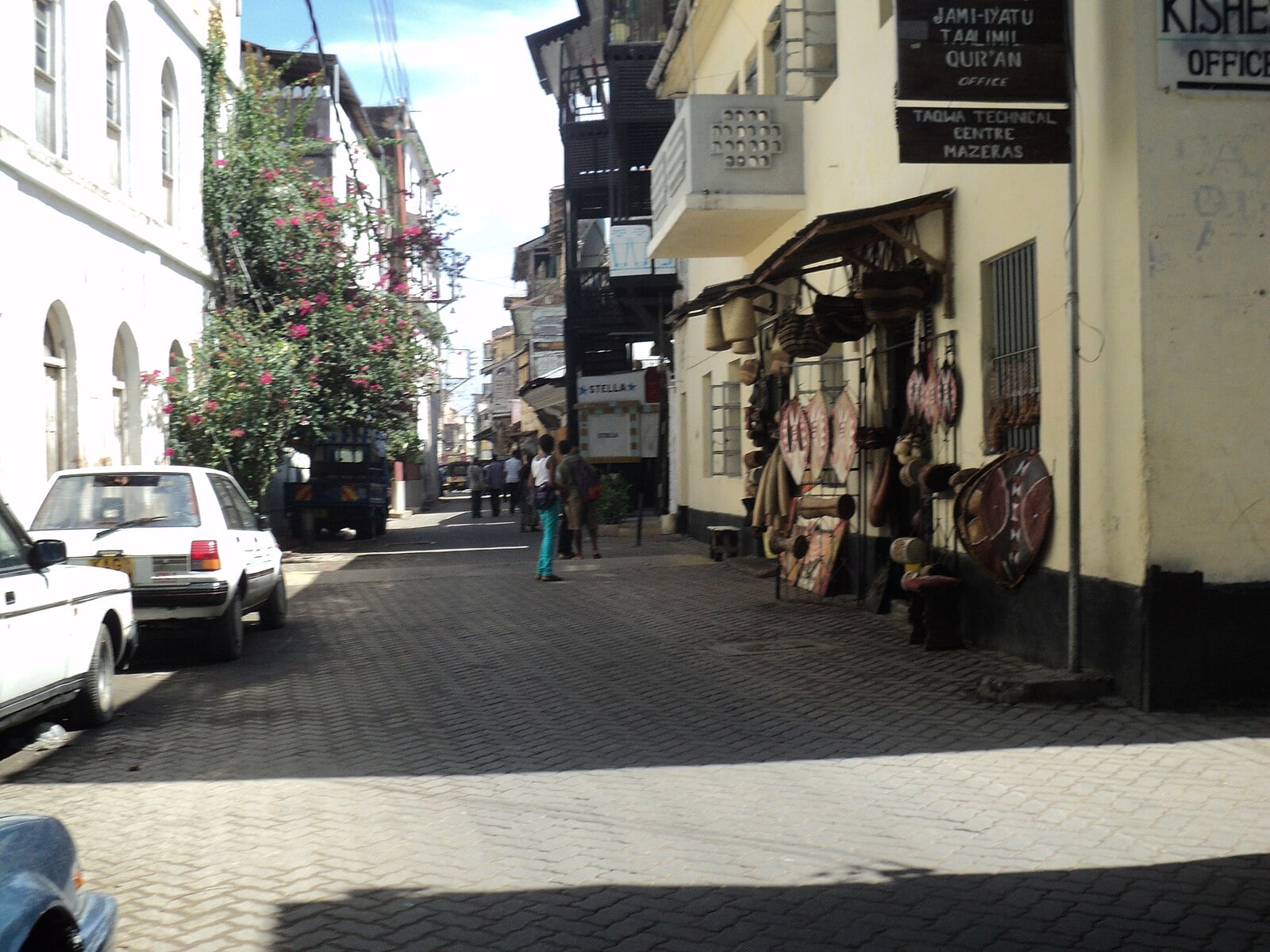
Kiswahili grew in the coastal towns, where Swahili traders dealt across the Indian Ocean for centuries. The census still counts 56,074 people who identify as Swahili, a small group whose language now serves the whole country.
In Nairobi, young people also use Sheng, a street slang mixing Kiswahili, English and local languages. For a US visitor, English is enough in business, government and tourism. A few words of Kiswahili are warmly received.
Faith: A Christian Majority, a Muslim Coast and North-East
Most Kenyans are Christian, but the churches are varied. In 2019, 85.5 percent of residents were Christian: 33.4 percent Protestant, 20.6 percent Catholic and 20.4 percent evangelical. Another 7.0 percent belonged to African-instituted churches, founded by Africans outside the missionary churches.
Muslims were 10.9 percent, about 5.2 million people. They are concentrated on the coast and in the north-east. Islam was the faith of 99.3 percent of Mandera residents, 99.0 percent in Wajir and 97.6 percent in Garissa.
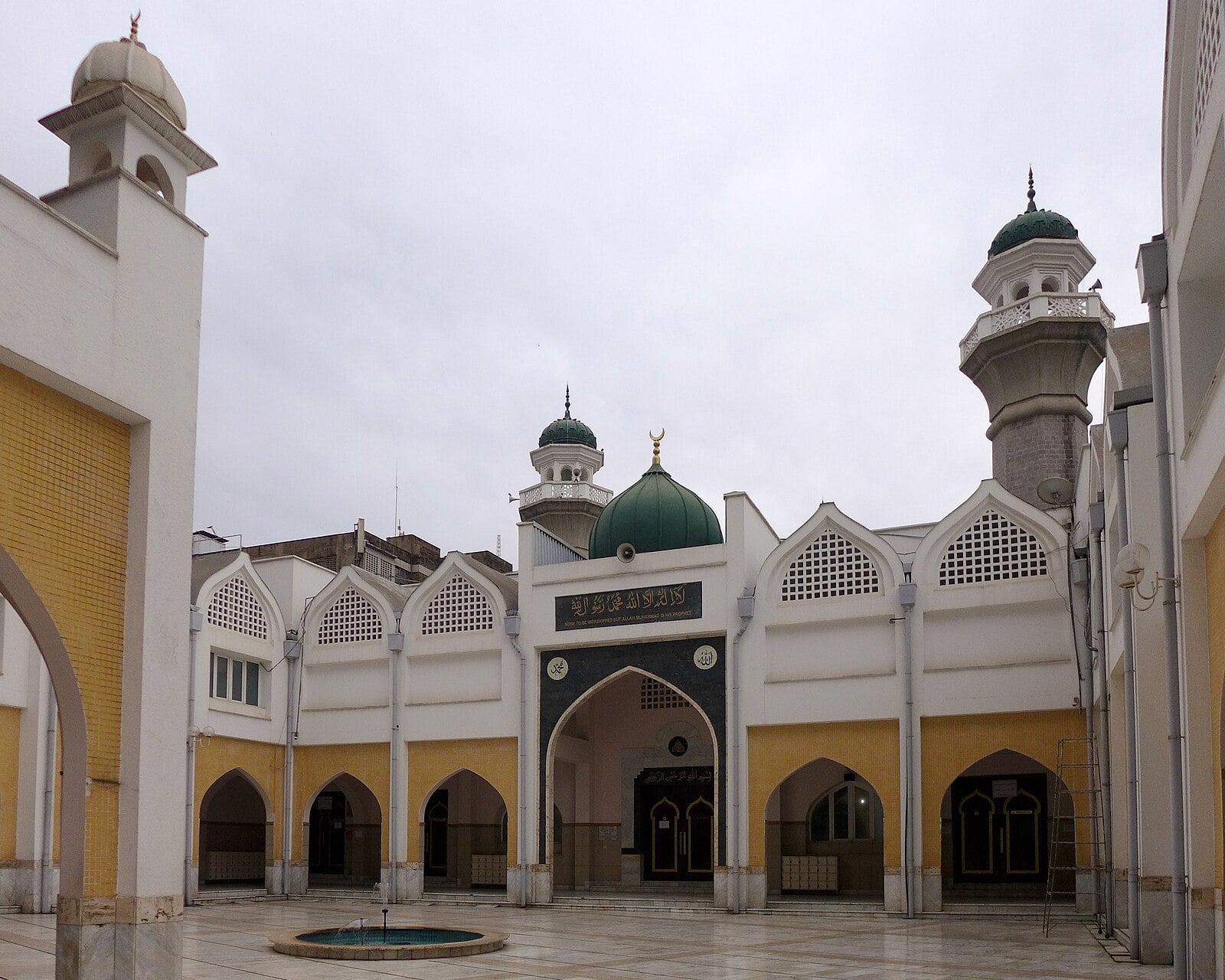
Hindus numbered 60,287, almost two-thirds of them in Nairobi. Some 318,727 people followed traditional African religions, and 755,750 reported no religion or atheism. The constitution states that there shall be no state religion.
Churches and mosques carry real social weight. They run schools and health facilities, and politicians court congregations openly before elections.
Refugees, Migrants and the Diaspora in the United States
Kenya hosts a large refugee population. Registered refugees and asylum seekers reached 835,793 in 2025, according to provisional Department of Refugee Services figures published by KNBS. Somalis made up 54.9 percent and South Sudanese 24.3 percent.
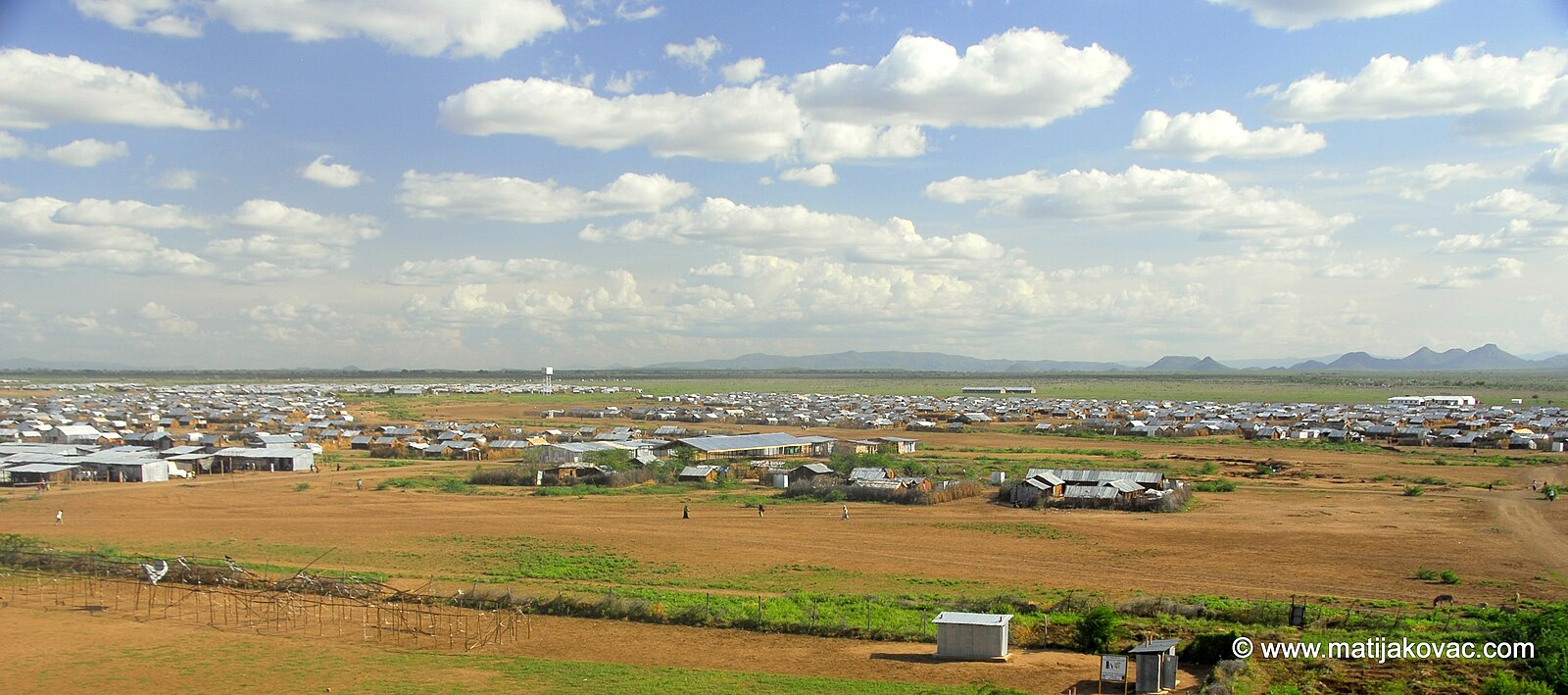
Most live in two large camp areas. Dadaab, in Garissa County, held 406,725 people, and Kakuma, in Turkana County in the north-west, held 310,755. Another 118,313 lived in towns.
Kenyans also leave. The US Census Bureau’s 2024 American Community Survey estimated 181,766 Kenyan-born US residents. The margin of error is about 13,000.
Their money matters at home. The Central Bank of Kenya (CBK) recorded US$5.04 billion in diaspora remittances in 2025. Of that, US$2.73 billion, or 54 percent, came from the United States.
Britain was the second-largest source in 2025, at US$360 million, and Saudi Arabia third at US$302 million. From January to August 2026, inflows from the US fell 12.4 percent to US$1.59 billion. Total inflows were almost flat at US$3.33 billion, as Britain, Germany and the United Arab Emirates sent more.
How Kenya’s Communities Live Together
In daily life, especially in Nairobi and other towns, Kenyans of different groups share schools, churches, workplaces and neighbourhoods. Ethnicity still shapes voting, and national parties are often built on alliances between regional communities.
The worst breakdown came after the disputed December 2007 election. The International Criminal Court (ICC) prosecutor put the toll at over 1,000 people killed and about 350,000 displaced. Its cases against six Kenyan suspects ended without a conviction.
The response included the National Cohesion and Integration Commission (NCIC), a state body that investigates hate speech and ethnic discrimination. The 2010 constitution then devolved power to the 47 counties, partly to ease the winner-takes-all contest for the presidency.
The constitution also orders affirmative action for minorities and marginalised groups, covering representation, jobs, education and access to water and health services. Small forest and pastoralist peoples, such as the Ogiek, counted at 52,596 in 2019, rely on these guarantees.
The next general election is due on Tuesday 10 August 2027, the second Tuesday in August as the constitution requires. Each campaign tests these safeguards again.
What It Means for US Readers
- Investors: a young, growing and mostly rural population underpins demand for mobile money, consumer goods, housing and power. The flip side is steady pressure on jobs and public finances, which feeds protest risk.
- Travellers: English works in Nairobi, Mombasa and on the safari circuit. Questions about a person’s ethnic group can feel intrusive, much as questions about race can in the US.
- Diaspora and expats: US rules on visas, deportations and money transfers touch about 182,000 Kenyan-born residents. They also touch US$2.73 billion a year in transfers home.
- Policy watchers: Kenya hosts more than 800,000 refugees, mostly Somalis and South Sudanese. Cuts to aid or resettlement in the US and Europe land directly on its camps.
Connected Coverage
Kenya Explained: The Country, Its Politics, Its Economy and What to Watch
Kenya Politics Explained, Who Holds Power in 2026
Who Runs Kenya’s Economy, the Key Players in 2026
Foreign Powers and Investors in Kenya 2026
Kenya Remittances From US Fall 12.4% Through August
Who Is William Ruto? Kenya’s President, the ICC Case, Gen-Z Protests and 2027
What Is Not Known
- The true current total. KNBS and the World Bank differ by about four million people for 2025, and no full count has been taken since 2019.
- How ethnic identity is changing. The census records one self-declared group per person, so mixed heritage is not captured, and 183,023 people answered simply “Kenyan”.
- The full size of the diaspora. The US figure counts Kenyan-born residents only, not their US-born children, and undocumented migrants may be undercounted.
- Why remittances from the US fell in 2026. CBK publishes the amounts by country but not the reasons.
- Final refugee numbers for 2025, which KNBS marks as provisional.
Frequently Asked Questions
What is the population of Kenya?
The 2019 census counted 47,564,296 people. For 2025, the Kenya National Bureau of Statistics uses a provisional 53.3 million. The World Bank, drawing on UN data, estimates 57.5 million.
What is the largest ethnic group in Kenya?
The Kikuyu, with 8,148,668 people or 17.1 percent of the population in the 2019 census. They are followed by the Luhya, Kalenjin, Luo and Kamba. No group is a majority.
How many tribes are there in Kenya?
The 2019 census lists more than 40 Kenyan ethnic groups, many with named sub-groups. They range from the Kikuyu, with over 8 million people, to the Dahalo, with 575.
What languages are spoken in Kenya?
Kiswahili is the national language, and Kiswahili and English are the official languages. Many Kenyans also speak a mother tongue at home, and the constitution recognises Kenyan Sign Language.
What religion are most Kenyans?
Christian. In the 2019 census, 85.5 percent of residents were Christian and 10.9 percent Muslim. Muslims are concentrated on the coast and in the north-east.
How many Kenyans live in the United States?
The US Census Bureau estimated 181,766 Kenyan-born residents in 2024. They sent US$2.73 billion home in 2025, 54 percent of all remittances recorded by the Central Bank of Kenya.
Sources: KNBS, 2019 census results, https://www.knbs.or.ke/2019-kenya-population-and-housing-census-results/; KNBS, 2019 census Volume IV, https://www.knbs.or.ke/wp-content/uploads/2023/09/2019-Kenya-population-and-Housing-Census-Volume-4-Distribution-of-Population-by-Socio-Economic-Characteristics.pdf; KNBS, Economic Survey 2026, https://www.knbs.or.ke/wp-content/uploads/2026/04/2026-Economic-Survey.pdf; World Bank population data, https://data.worldbank.org/indicator/SP.POP.TOTL?locations=KE; US Census Bureau, ACS 2024 table B05006, https://api.census.gov/data/2024/acs/acs1/groups/B05006.html; Central Bank of Kenya, diaspora remittances, https://www.centralbank.go.ke/diaspora-remittances/; Constitution of Kenya, 2010, https://www.parliament.go.ke/sites/default/files/2023-03/The_Constitution_of_Kenya_2010.pdf; International Criminal Court, situation in Kenya, https://www.icc-cpi.int/kenya. All accessed 11 October 2026.
This article was produced by The Rio Times’ automated newsroom system. How we use AI · Report an error · Editorial responsibility: Matthias Camenzind, Editor-in-Chief