Haiti Security and Crime Explained 2026
Gangs hold large areas of Haiti’s capital, a UN-authorised force is only partly deployed, and human rights monitors warn that security operations have also killed people with no gang ties.

Haiti · Explainer
Armed gangs still hold large areas of Port-au-Prince, Haiti’s capital, and a UN-authorised force meant to push them back is only partly in place. The UN human rights office said so in Geneva on 17 November 2026, while UN monitors keep recording killings, kidnappings and abuses by gangs and by security forces.
For readers in the United States, Haiti is a Caribbean neighbour whose crisis touches migration, humanitarian aid, terrorism law and travel safety. The sections below cover the violence, the force, US policy and official travel advice, while who holds power in Haiti has its own guide.
Key Facts
- Who. Viv Ansanm, a coalition of gangs, holds large areas of Port-au-Prince.
- What. A UN-authorised Gang Suppression Force is deploying, and security operations have also caused civilian deaths.
- Where. Port-au-Prince, plus the Artibonite and South-East departments; Americans face a Do Not Travel advisory.
- Unknown. How many force personnel are deployed, and what El Salvador’s separate Haiti agreement says.
- As of. 21 November 2026, 13:00 GMT.
Gangs hold large areas of Haiti’s capital, a UN-authorised force is only partly deployed, and human rights monitors warn that security operations have also killed people with no gang ties.
Who Controls Haiti’s Streets?
Violent armed groups “continue to control large areas of Haiti’s capital Port-au-Prince, and beyond,” said Marta Hurtado, spokesperson for the UN human rights office (OHCHR), in Geneva. Her office counted 4,595 people killed and 2,050 injured by armed violence from January to 31 October 2026.
The strongest bloc is Viv Ansanm, “the most powerful gang coalition in the country,” according to Sandra Pellegrini, an analyst at ACLED, the Armed Conflict Location & Event Data group, a US-based conflict-data organisation, on 20 May 2026. ACLED also records fighting inside it, where the 400 Mawozo, Chyen Mechan and Taliban gangs fought two other member gangs, Pierre VI and Terre Noire.
In May, fighting in Cité Soleil, a slum district of the capital, and in the town of Croix-des-Bouquets killed at least 78 people and displaced more than 5,300 in two days, UN figures cited by ACLED for 9 to 11 May show. Over the weekend before 16 November, suspected 400 Mawozo members killed at least ten civilians in the Plaine du Cul-de-Sac, an area of the capital region, in what ACLED described on 18 November as retaliation for suspected support of anti-gang operations.
ACLED records nearly 70 incidents in 2026 in which gangs killed at least three civilians. The UN Integrated Office in Haiti (BINUH) says serious abuses continue across the Port-au-Prince metropolitan area and in the Artibonite and South-East departments, Haiti’s regional divisions.
How Deadly Was the Latest Quarter?
BINUH recorded at least 1,167 people killed and 459 injured from July to September 2026, in a quarterly human-rights report made public on 12 November. Gangs were responsible for more than 45% of those killed or injured, and about 5% came from self-defence groups (vigilantes) targeting gang members and suspected collaborators.
Gangs kidnapped at least 137 people for ransom in the quarter, up from 81 from April to June, and children were 10% of victims. BINUH also documented 344 victims of sexual violence by gang members, 77% of them gang rape.
Two attacks in Kenscoff, a hillside town south-east of the capital, in July and August, left at least 105 dead, including 19 children. More than 36 people were shot dead in the courtyard of a Protestant church, and in early August gangs beheaded at least 19 people in Cité Soleil, including 12 elderly women.
In August at least 32 boys aged 14 to 16, forcibly recruited by a gang, were killed in fighting with security forces in Gressier, a coastal town west of the capital. Gangs driven out of Bel Air and La Saline, two central neighbourhoods of the capital, earlier in the year gradually regained a foothold, BINUH said.
The International Organization for Migration (IOM), the UN migration agency, found that displaced people rose 2%, from 1.47 million to 1.49 million, between 15 May and 12 August 2026. Artibonite had the largest increase, at 16%, in a round published in September 2026.
What Is the Gang Suppression Force?
The UN Security Council, the world body’s top security organ, adopted Resolution 2793 on 30 September 2025, by 12 votes in favour with China, Pakistan and Russia abstaining. It authorised a Gang Suppression Force (GSF) of 5,550 personnel (5,500 uniformed and 50 civilian staff) with an initial 12-month mandate, replacing the Kenyan-led Multinational Security Support mission, the earlier international police effort.
Its tasks are intelligence-led operations to neutralise gangs, security for critical infrastructure and support for humanitarian access, working with the Haitian National Police (HNP) and armed forces. A UN Support Office in Haiti provides rations, medical care, transport and troop rotation.
On 29 September 2026 the Council adopted Resolution 2829, again with three abstentions, and extended the mandate to 31 March 2027. ACLED counted about 1,500 officers deployed on 1 October, well short of the 5,500 uniformed personnel the plan calls for, and OHCHR said the force “has yet to be fully deployed.”
ACLED reports that the force has had a base in Gonaïves since August 2026. On 28 September its officers cleared a toll road run by the Kokorat San Ras gang in Gros-Morne, a town in the Artibonite department, and clashed with its members, leaving three dead.
Gang members then killed residents in retaliation, ACLED analyst María Fernanda Arocha reported on 1 October. Arocha said the episode shows that security forces can launch operations in gang-threatened areas, but that holding ground afterwards is much harder.
Are Security Operations Part of the Problem?
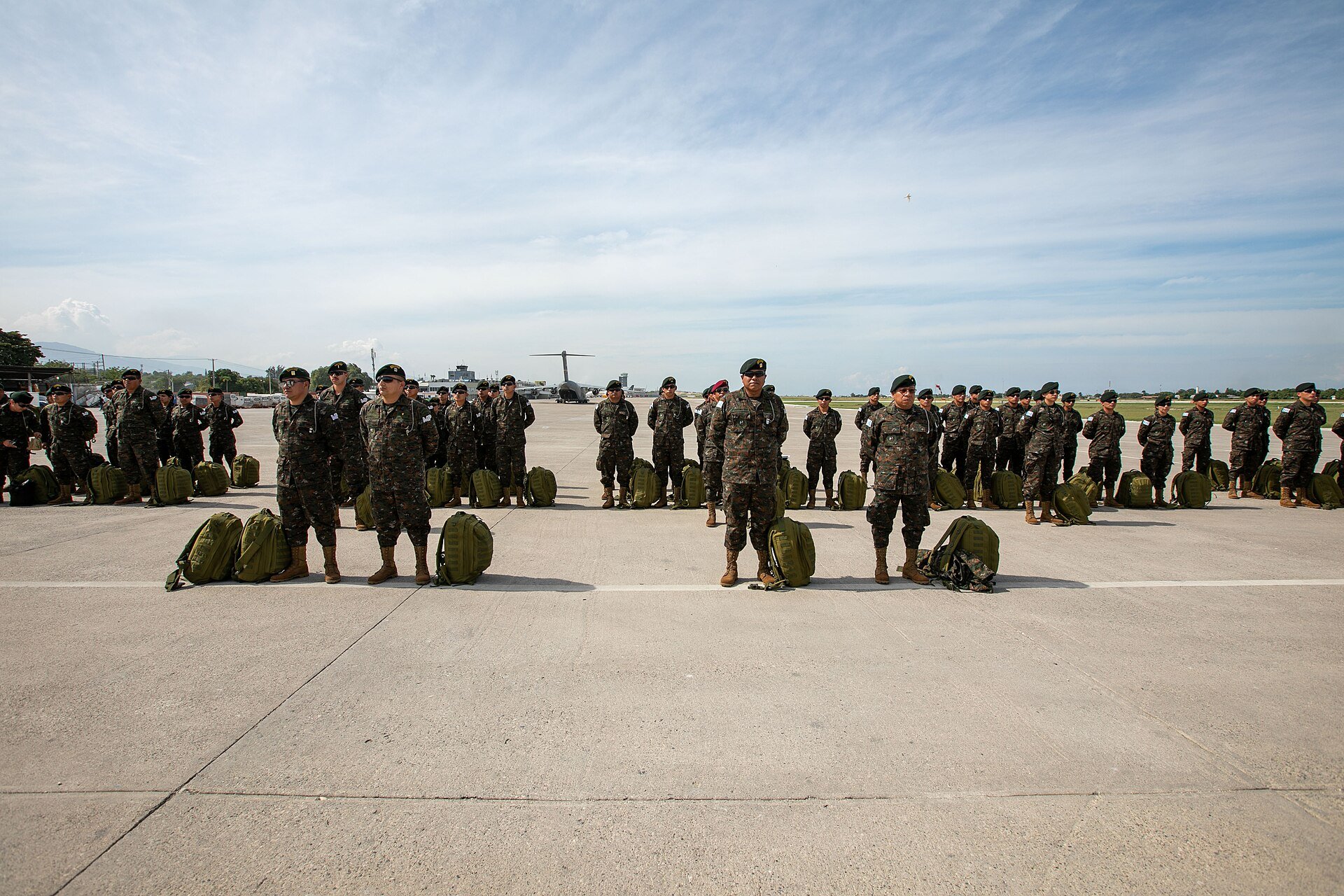
A separate deployment sits outside the force, because ACLED dates El Salvador’s deployment of officers, which it puts at 2,500, from 22 October 2026. ACLED said on 11 November that they mostly operate outside the GSF framework under an undisclosed bilateral agreement with Haitian authorities, and that estimated fatalities in these operations already exceed 100, at least 26 of them civilians.
OHCHR counted at least 514 people killed and 235 injured from July to September in operations by national forces, at times supported by a private military company, a for-profit security contractor. BINUH found that more than half of all documented killings and injuries in the quarter happened during ground or aerial operations against gangs, sometimes with drones.
More than 16% of victims of security-force operations were not associated with gangs, BINUH said. It also documented 44 cases of extrajudicial executions or attempts involving HNP officers, against 14 in the previous quarter.
Volker Türk, the UN High Commissioner for Human Rights, asked all forces, inside or outside the GSF, to comply with human rights law and use lethal force only as a last resort. He also urged prompt, full deployment of the force, and the same office presses for restraint and for more troops.
The UN offices say fighting the gangs and protecting civilians must go together. Gangs commit grave abuses, and operations against them have also killed people with no gang ties.
What Has Washington Done About the Gangs?
On 2 May 2025 the US State Department announced that it had designated Viv Ansanm and Gran Grif as Foreign Terrorist Organizations, a US legal label for groups treated as terrorist. Gran Grif is a gang active in the Artibonite department.
The notice appeared in the Federal Register, the US government’s official daily gazette, as 90 FR 19065 on 5 May 2025 and took effect that day. Anyone giving material support to either group faces possible criminal charges.
In October 2026 the Council extended the work of its Haiti sanctions committee, the body that manages the UN’s sanctions list, by 13 months. Nine individuals and two groups are currently sanctioned.
Is It Safe for Americans to Visit Haiti?
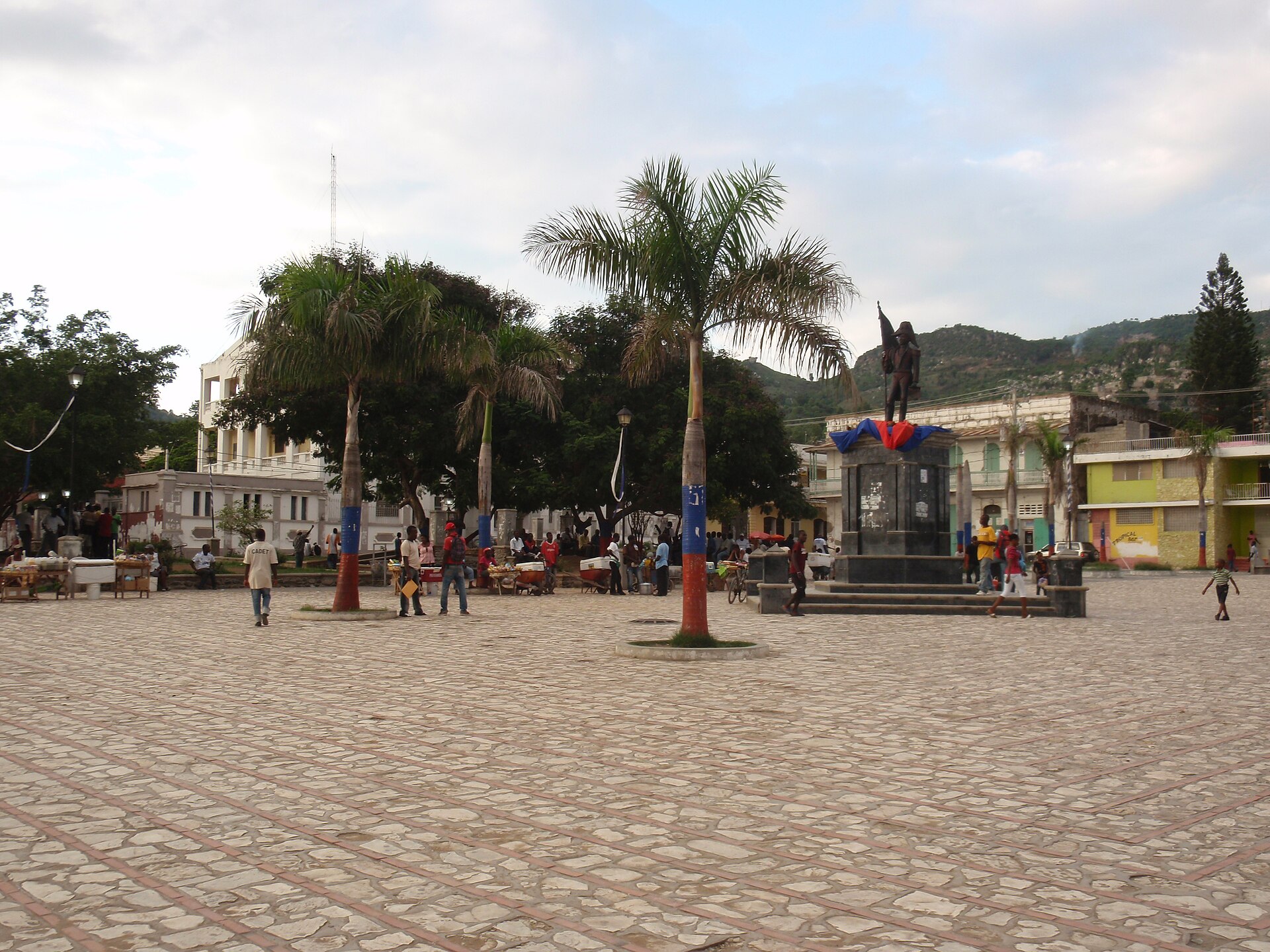
The US State Department advisory for Haiti is Level 4, “Do Not Travel,” citing crime, kidnapping, terrorism, civil unrest and limited health care. It says security conditions severely limit the US government’s ability to help Americans in an emergency.
The department advises having an emergency departure plan that does not rely on the government. Its page says US commercial flights are not operating to or from Port-au-Prince, and the Federal Aviation Administration (FAA), the US aviation regulator, has prohibited US air carriers from flying there.
American Airlines resumed daily Miami to Cap-Haïtien flights, to the northern port city, on 1 November 2026, after about two years. Port-au-Prince remains off limits to US carriers.
Official advisories set the rules and are reported here without being replaced; the current advisory is at travel.state.gov. Rules for foreigners who plan to stay longer are set out in the visa and residency guide.
The Gaps in the Record
The number of GSF personnel now on the ground is unclear, because the sources available give no current UN count, while ACLED counted about 1,500 on 1 October. No official figure says what share of Port-au-Prince the gangs hold, since OHCHR speaks only of large areas.
The terms of El Salvador’s bilateral deal with Haiti have not been disclosed. OHCHR counts deaths only to 31 October, so the full-year 2026 toll is not known.
The mandate expires on 31 March 2027, so the Security Council must decide again within months. The next quarterly UN report will show whether more troops have reached the streets and whether civilian deaths in security operations have fallen.
Frequently Asked Questions
Who controls Haiti’s streets?
Armed gangs control large areas of Port-au-Prince, and Viv Ansanm is the most powerful coalition, according to ACLED. No official figure gives the share of the city they hold.
What is the Gang Suppression Force?
It is a UN-authorised force that replaced the Kenyan-led mission and carries out intelligence-led operations against gangs. The UN human rights office says it has yet to be fully deployed.
Is Viv Ansanm a US-designated terrorist group?
Yes. The State Department designated Viv Ansanm and Gran Grif as Foreign Terrorist Organizations in May 2025, and giving them material support can bring criminal charges.
Is it safe for Americans to visit Haiti?
The State Department advises Level 4, “Do Not Travel,” and says its ability to help Americans in an emergency is severely limited. Readers should check travel.state.gov for the current advisory.
Are security forces also accused of abuses?
Yes. UN monitors report civilian deaths in security operations, including cases involving Haitian National Police officers, and ask all forces to use lethal force only as a last resort.
Sources: UN Integrated Office in Haiti (BINUH), quarterly human rights report, July to September 2026, 12 November 2026; UN human rights office (OHCHR), Geneva briefing, 17 November 2026; UN Security Council Resolution 2793 (30 September 2025); International Organization for Migration, Displacement Tracking Matrix Haiti, Round 14 (23 September 2026); Armed Conflict Location & Event Data (ACLED), analyses of 20 May, 1 October, 11 November and 18 November 2026; US Federal Register, notice 90 FR 19065 (5 May 2025); US State Department, Haiti travel advisory; US Federal Aviation Administration; American Airlines.
This article was produced by The Rio Times’ automated AI newsroom. Editorial responsibility: Matthias Camenzind, Publisher and Editor-in-Chief. The Rio Times also runs Ask Rio Times, which answers from 100,000+ of our own articles, the daily Latin America Power Map, and prediction-market odds on elections and markets.. How we use AI · Report an error
Expat Guide to Haiti
What The Rio Times publishes for foreigners who live in or move to Haiti.
Start here
- Haiti Visa and Residency Rules for Foreigners
- Spain and Portugal Close Their Golden Visa Doors, Forcing LATAM Investors to Reroute
Understand Haiti
Haiti
- What Is Happening in Haiti?
- What Is Happening in Haiti?
- Haiti Gang Crisis Explained 2026 Gangs and the UN Force
- Haiti’s July 2027 Vote, What US Travellers Need to Know