
GUIDES · ECUADOR
Key Facts
- —The country Ecuador is a dollarised Pacific nation of about 18 million people. It sold US$37.2 billion of goods abroad in 2025, mainly oil, shrimp, bananas, flowers, gold and copper.
- —United States Washington is the security anchor and the largest single trade partner. The trade agreement signed on 13 March 2026 now needs a National Assembly vote, the Constitutional Court ruled on 16 October 2026.
- —China Beijing is the second pole. A free-trade agreement has applied since 1 May 2024. President Daniel Noboa made a state visit to China from 16 to 23 August 2026.
- —Bases The constitution bans foreign military bases. Even so, US forces work with Ecuador on the coast, and the legal basis of that presence is unpublished.
- —Neighbours A tariff war with Colombia ended in June 2026. Colombia and Peru have both had new presidents since late July and early August 2026.
- —Power Index Ecuador ranks 8th of 14 in The Rio Times Latin America Power Index, with 38.2 points (October 2026 edition).
- —Smaller powers Russia, India and Turkey together took about 5 percent of Ecuador’s exports in 2023. Ecuador is not a BRICS member or partner country as of October 2026.
Where Ecuador stands between Washington and Beijing, explained for a US reader. It covers security, trade, minerals, neighbours and the smaller powers as of October 2026.
Ecuador geopolitics in October 2026 is a balancing act: deep security ties with Washington and deep trade ties with Beijing. On 10 September 2026 Secretary of State Marco Rubio called Ecuador the most involved partner the United States has in the fight against the cartels.
Why Ecuador Matters to Two Powers
Ecuador sits on the Pacific coast between Colombia and Peru, and it uses the US dollar as its currency. That makes it a small economy whose trade, debt and security choices are tied closely to Washington and, increasingly, to Beijing.
In 2025 Ecuador exported US$37.2 billion of goods and imported US$30.9 billion, a surplus of US$6.2 billion, according to its central bank. In 2023, the latest year with a full partner breakdown, the United States took 23.8 percent of exports and China 18.2 percent.
On imports the order is the same, with the United States at 26.8 percent and China at 20.7 percent in 2023. Colombia came third at 7.4 percent, ahead of Brazil at 4.0 percent and Peru at 3.5 percent.
The United States: Security First
Washington’s relationship with Quito is built on security. At the Carondelet Palace on 10 September 2026, Rubio called Ecuador the most involved partner the United States has in the fight against the cartels.
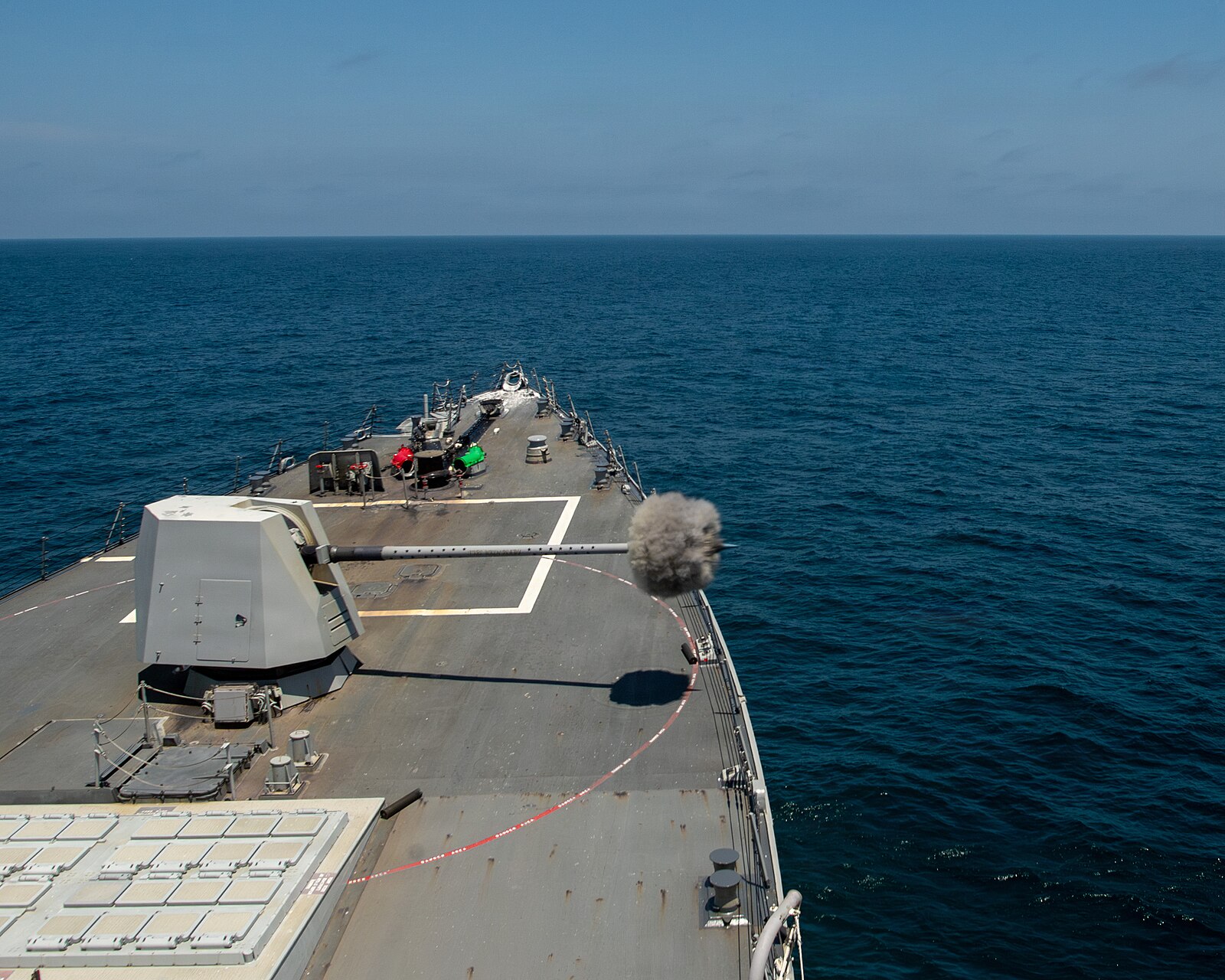
He announced a US$45 million funding request to Congress and a US$10 million initiative against illegal gold mining and gang recruitment. He also promised a 110-foot Coast Guard cutter and five more interceptor boats, bringing this year’s interceptor total to 12.
The State Department announced the designation of Los Tiguerones, an Ecuador-based gang, as a foreign terrorist organisation on 9 September 2026. Rubio said two other Ecuadorian gangs, Los Choneros and Los Lobos, were already on that list.
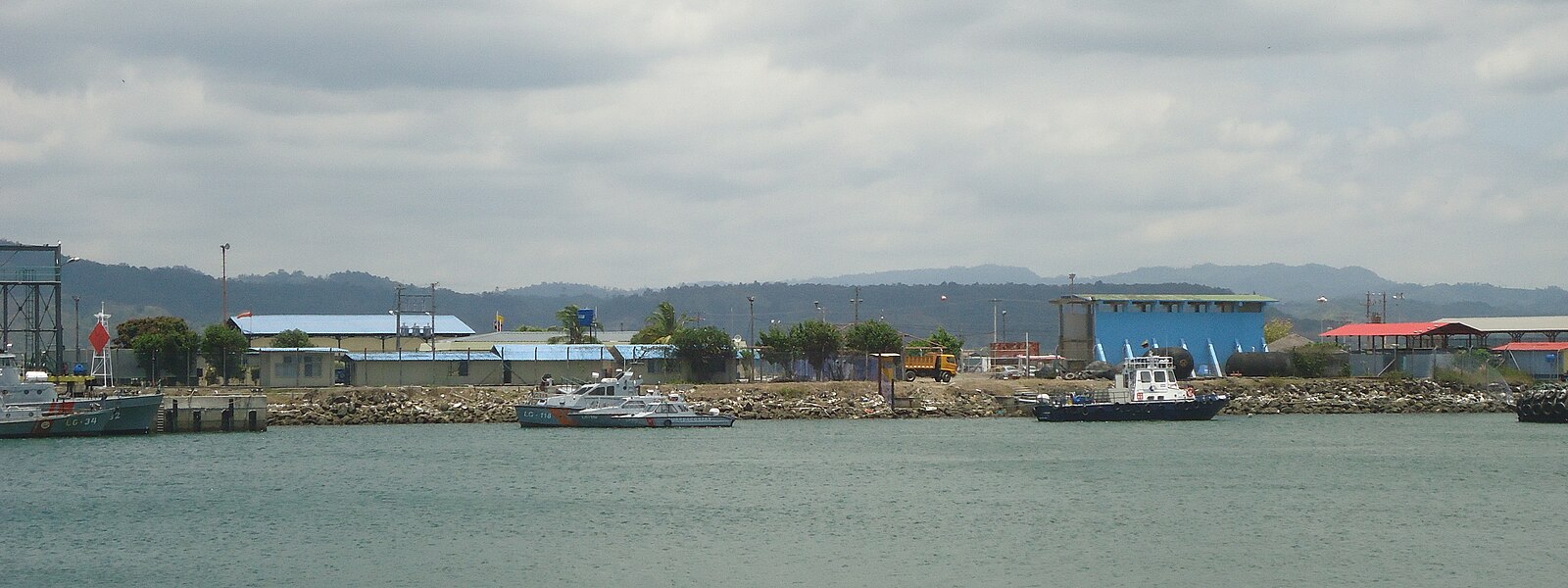
US forces are also on the ground, Ecuadorian officials said in August 2026. The governor of Esmeraldas said US Special Forces work there, and the defence minister said two US warships will patrol from Manta.
US Southern Command declined to comment on those deployments, citing operational security, the military outlet Task & Purpose reported. Southern Command announced joint operations with Ecuador on 3 March 2026, and the outlet called a later strike near the Colombian border the first direct US action.
Article 5 of the constitution says no foreign military bases will be allowed and bars handing national bases to foreign forces. A referendum on 16 November 2025 asked voters to lift that ban, and they refused, as national and international media widely reported at the time.
Ecuador works around the ban through a status-of-forces pact rather than bases. Task & Purpose reported that President Noboa agreed to let US Defense Department personnel enter visa-free for up to 180 days a year.
On 22 September 2026 Ecuador and 14 other governments signed a Shield of the Americas statement on hemispheric sovereignty. It names 24 criminal groups for asset freezes and visa bans and does not mention China.
The United States: Trade and Minerals
US Trade Representative Jamieson Greer and Production Minister Luis Alberto Jaramillo signed a reciprocal trade agreement in Washington on 13 March 2026. Greer said it opens a market of more than 18 million consumers to US farm and industrial goods.
Ecuador’s side is wide: the November 2025 framework gives US farm goods preferential treatment on over 90 percent of its agricultural tariff schedule. It would also stop applying its Andean price-band system to US farm imports.
In return Washington is expected to lift a 10 percent surcharge, imposed in April 2025, on 53 percent of Ecuador’s non-oil exports. That share was worth about US$2.8 billion in 2025 and includes flowers, fish products, gold and copper.
The deal is not yet in force. On 16 October 2026 the Constitutional Court ruled that it needs National Assembly approval because it covers trade and would change laws.
The Court said that ruling is only the first stage of its review. It will keep examining whether the agreement fits the Constitution, and no deadline has been published.
The deal is politically charged at home. Former president Rafael Correa accused Noboa of handing the country to US interests, and Noboa replied that Ecuador was opened to trade, not surrendered.
The nearest the framework comes to a China clause is its economic-security language. Both sides pledge to cooperate on non-market policies, duty evasion, investment security and export controls, without naming any country.
Rubio also said a bilateral critical-minerals framework was signed earlier in 2026. He added that a Millennium Challenge Corporation compact brings a US$12 million grant for Ecuador’s electricity sector.
China: Buyer, Lender and Miner
China is Ecuador’s second-largest trading partner. In 2023 it bought US$5.7 billion of Ecuadorian goods and sold US$6.4 billion, the World Bank’s trade database shows.
A free-trade agreement has applied since 1 May 2024, and more than 90 percent of exportable products went to zero tariff at once. Yet exports to China fell almost 12 percent in the first eleven months of 2024, the Ecuadorian-Chinese Chamber of Commerce said.
Noboa made a state visit to China from 16 to 23 August 2026 at Xi Jinping’s invitation, the Chinese foreign ministry announced. He met Xi in Beijing on 18 August, and the two governments signed a package of cooperation documents.
They cover a digital-economy memorandum, an economic and trade roadmap, green industry and the start of solar cooperation. China also pledged about US$43 million in grants for medical equipment, police vehicles, education and disaster preparation.
The presidency quoted Xi as saying trade rose 20 percent in the first half of 2026, and that China is the top market for non-oil exports. Neither claim has been checked against customs data.
Shrimp is the sore point: China has suspended 14 Ecuadorian exporters, the national aquaculture chamber says. China also took 51 percent of Ecuador’s US$3.5 billion in shrimp sales from January to May 2026.
Ecuador’s shrimp chamber puts the cost of the suspensions at about US$45 million. Quito hoped to settle the issue during the August visit, but the presidency’s account of the Xi meeting does not mention shrimp.
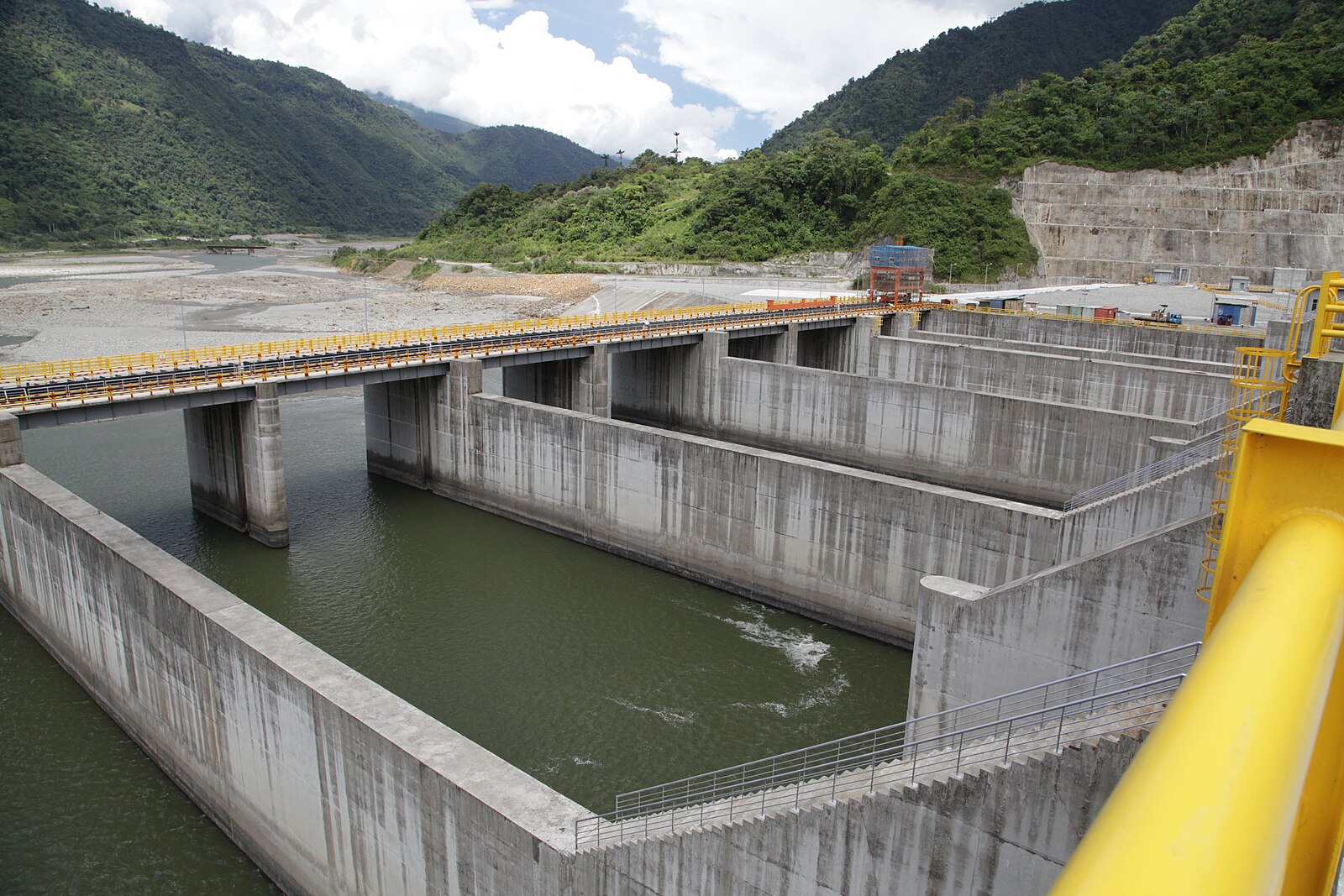
The state took over the Coca Codo Sinclair plant from Sinohydro, a PowerChina subsidiary, on 17 April 2026. A 25-year operating contract worth US$46 million a year is planned but not yet signed.
Chinese miners hold large copper projects. Jiangxi Copper bought SolGold, the developer of the Cascabel project, in March 2026, and the second phase of the Mirador mine awaits a contract addendum.
In both cases the government wants miners to generate their own power, as a shortfall of about 1,300 megawatts is expected in 2026 and 2027. The 2026 budget also counts on US$764 million from Chinese banks, US$420 million from Eximbank and US$344 million from China Development Bank.
Russia, India, Turkey and the Gulf
These powers matter far less to Ecuador than Washington or Beijing. In 2023 Russia took US$924 million of Ecuadorian exports, or 3.0 percent, almost all of it food and farm goods.
India bought US$410 million of Ecuadorian goods in 2023 and sold Ecuador US$538 million, while Turkey bought US$203 million. The United Arab Emirates bought US$601 million but sold Ecuador only US$19 million.
Politically there is little to report. Turkey’s foreign ministry lists Interior Minister John Reimberg’s visit to Türkiye on 12 to 14 January 2026 as the latest high-level contact.
The BRICS group’s official site lists Ecuador as neither a member nor a partner country. No defence, trade or investment pact with Russia, India, Turkey or a Gulf state appeared in the official releases reviewed for this guide.
Europe, Japan, Korea and the IMF
Ecuador joined the European Union’s trade agreement with Colombia and Peru on 1 January 2017. The EU’s current share of Ecuador’s exports was not confirmed in the sources reviewed.
The EU delegation in Quito works mainly on cooperation projects. One example is an anonymous website for reporting wrongdoing, launched on 31 July 2026.
Foreign Minister Kury discussed a possible economic partnership agreement with Japan’s Toshimitsu Motegi on 5 August 2026. A trade pact with South Korea, signed in December 2025, awaited Constitutional Court review in March 2026.
Multilateral money is the other anchor. The International Monetary Fund completed the fifth review of Ecuador’s roughly US$5 billion programme on 22 April 2026 and released about US$394 million.
By then it had disbursed about US$3.7 billion in total. Ecuador also issued US$4 billion of bonds in January 2026, including a US$3 billion debt buy-back.
The Neighbours: Colombia and Peru
Colombia is the sharpest regional test. Ecuador charged a security surcharge on Colombian goods from 1 February 2026, starting at 30 percent and reaching 100 percent on 1 May.
The Andean Community’s secretariat ruled on 7 May 2026 that the tariffs on both sides broke the bloc’s rules and ordered them removed within 10 days. Ecuador dropped its surcharge on 1 June, and Colombia repealed its retaliatory tariffs by Decree 0583, made public on 9 June.
Abelardo de la Espriella was sworn in as Colombia’s president in Cali on 7 August 2026, and Noboa met him there before the ceremony. Both governments have spoken of closer cooperation on border security, crime, electricity and trade.
Peru is calmer. Keiko Fujimori took office as president on 28 July 2026, and she and Noboa said that day they were willing to hold the next Binational Cabinet in Lima.
Their ties rest on the 1998 Brasilia Peace Accords that settled the border dispute. For a wider view, see the guide to Ecuador and its neighbours in the Andes.
What It Means for US Readers
For investors, Ecuador geopolitics means a government that leans on Washington for security while keeping Chinese capital in mining and power. Ecuador uses the US dollar, so there is no peso-style currency risk, but grid and political risk remain.
For importers of Ecuadorian flowers, fish, gold and copper, the key date is when the trade agreement enters into force. It is expected to remove the 10 percent surcharge on covered goods, but it still needs a National Assembly vote.
Compliance teams should note that US terrorist designations now reach Ecuadorian gangs. Rubio also cited sanctions on 15 entities and individuals and the blocking of 10 commercial fishing vessels on 10 September 2026.
For travellers, the State Department’s Ecuador advisory, reissued on 18 August 2026, is Level 2, exercise increased caution, citing crime, terrorism, unrest and kidnapping. Some districts and provinces carry higher warnings.
Expats on the coast, where US and Ecuadorian forces operate together around Manta and Esmeraldas, should follow embassy alerts closely. Anyone doing business there should check partners against US sanctions lists.
Connected Coverage
What Is Not Known
Whether and when the trade agreement takes effect is open. The Assembly has set no date for a vote, and the Court’s review of the treaty’s fit with the Constitution continues.
The size and legal basis of the US military presence are unpublished. Southern Command declined to comment in August 2026, and Ecuadorian officials have given no troop numbers.
It is unclear how many of the 14 suspended shrimp exporters China has cleared since the August visit. No solar contract or financing figure has been published, and the Coca Codo Sinclair operating contract is unsigned.
Ecuador’s voting record on contested United Nations resolutions was not itemised in the sources reviewed. Any shift away from Washington would also depend on elections, with President Noboa’s term running to 2029.
Frequently Asked Questions
Who are Ecuador’s main geopolitical partners?
The United States and China are its two largest trading partners, buying 23.8 percent and 18.2 percent of exports in 2023. The United States is also the main security partner.
Does Ecuador host US military bases?
No, the constitution bans foreign military bases, and voters refused to lift the ban on 16 November 2025. Task & Purpose reported that President Noboa agreed to let US defence personnel enter visa-free for up to 180 days a year.
Is the US-Ecuador trade agreement in force?
Not yet. It was signed on 13 March 2026, and on 16 October 2026 the Constitutional Court ruled that it needs National Assembly approval.
What did Ecuador agree with China in August 2026?
President Noboa met Xi Jinping in Beijing on 18 August 2026, and the governments signed documents on the digital economy, trade, green industry and solar cooperation. China also pledged about US$43 million in grants.
Is Ecuador a member of BRICS?
No, the group’s official site lists Ecuador as neither a member nor a partner country as of October 2026. Russia and India together took 4.3 percent of Ecuador’s exports in 2023.
What happened between Ecuador and Colombia in 2026?
Ecuador charged a security surcharge of up to 100 percent on Colombian goods from 1 February 2026, and Colombia retaliated. Both sides removed their tariffs in June 2026 after the Andean Community ordered them to.
Is it safe for US citizens to travel to Ecuador?
The State Department’s advisory, reissued on 18 August 2026, rates Ecuador Level 2, exercise increased caution. It cites crime, terrorism, unrest and kidnapping, and some areas carry higher warnings.
Sources: USTR, signing of the US-Ecuador Agreement on Reciprocal Trade, 13 March 2026; USTR, fact sheet on the November 2025 framework; State Department, Rubio and Kury statements, 10 September 2026; State Department, Joint Statement on Defending Hemispheric Sovereignty, 22 September 2026; State Department, designation of Los Tiguerones; State Department, Ecuador travel advisory; Primicias, Constitutional Court ruling on the US trade agreement; Primicias, impact of the reciprocal trade agreement; Primicias, Noboa’s China trip agenda; Expreso, China agenda, shrimp and debt; Ecuadorian presidency, bulletin 411, 18 August 2026; Chinese foreign ministry, announcement of the state visit; El Universo, nine months of the China agreement; Banco Central del Ecuador, trade balance 2025; World Bank WITS, Ecuador trade by partner, 2023; European Commission, EU trade with the Andean countries; Turkish foreign ministry, relations with Ecuador; BRICS, members and partner countries; Ecuadorian foreign ministry, Japan talks, 6 August 2026; IMF, fifth review of the Extended Fund Facility, 22 April 2026; Expreso, end of the security surcharge on Colombian goods; Primicias, Andean Community resolutions; El Espectador, Decree 0583; Primicias, Noboa and De la Espriella in Cali; Andina, Fujimori and Noboa in Lima; Constitution of Ecuador, Article 5; Task & Purpose, US Special Forces in Ecuador; Cuenca Dispatch, trade pact signed. All accessed 17 October 2026.
This article was produced by The Rio Times’ automated newsroom system. How we use AI · Report an error · Editorial responsibility: Matthias Camenzind, Editor-in-Chief
Expat Guide to Ecuador
What The Rio Times publishes for foreigners who live in or move to Ecuador.
Start here
- Best Places to Live in Ecuador for Expats 2026
- How to Get Residency in Ecuador in 2026: Visas From US$1,446 a Month
- Cost of Living Cuenca, Ecuador — Rent, Bills and Doctors, Priced in Dollars
- Healthcare in Ecuador for Foreigners: Costs & Steps
City guides
Coming up in Ecuador
- Def Leppard in Quito, Ecuador: Rock Legends at the Estadio Olímpico Atahualpa on October 30, with Extreme 30 Oct
- Carlos Rivera and Reik in Ecuador: Joint Tour Plays Quito on 5 November and Guayaquil on 7 November 5 Nov
- Shakira in Quito, Ecuador: Three Stadium Nights at Estadio Olímpico Atahualpa on November 8, 9 and 11 8 Nov
- Soy Luna Ecuador: Guayaquil on 12 November, Quito on 14 November 12 Nov
Understand Ecuador