
ECUADOR · NEIGHBOURHOOD
Key Facts
- —The basics As of October 2026, Ecuador borders Colombia on a line of about 586 km and Peru on about 1,529 km, and both neighbours have had new presidents since 28 July and 7 August 2026.
- —Why it matters A tariff war with Colombia from 1 February to 1 June 2026 cut Ecuador’s imports from Colombia by 34%, while Peru overtook Colombia as Ecuador’s third-largest import source in the first half of 2026.
- —The numbers Trade with Peru reached US$1.23 billion in the first half of 2026, up 33.5%, and in 2025 Ecuador bought US$1.96 billion of goods from Colombia and sold it US$886 million.
- —Who is who Daniel Noboa is Ecuador’s president, Abelardo de la Espriella has led Colombia since 7 August 2026 and Keiko Fujimori has led Peru since 28 July 2026, all inside the four-nation Andean Community trade bloc.
- —What to watch Ecuador and Peru plan their next Binational Cabinet in Lima before the end of 2026, and Ecuador and Colombia are setting up technical tables on security, trade and electricity, with no dates announced.
- —Power Index Ecuador ranks 8th of 14 in The Rio Times Latin America Power Index, with 38.2 points (October 2026 edition).
- —What it means for you Importers and travellers can expect easier Ecuador-Colombia trade since the June 2026 repeal of the fee, but should check State Department advisories before any overland crossing at Rumichaca or Huaquillas.
The Ecuador neighbourhood, meaning Colombia and Peru, shapes Ecuador’s trade, security and politics. This guide covers borders, rivalries, trade, migration, rivers and regional bodies as of October 2026.
The Ecuador neighbourhood in October 2026 is two very different borders: a settled one with Peru and a tense one with Colombia. After four months of tariffs and a ruling by the Andean Community, Quito and Bogotá are talking again.
For US readers, the stakes are oil, shrimp, medicines and border security in a region where Washington matters. Every figure below carries its date, and money is shown in US$.
The Ecuador Neighbourhood at a Glance
The World Bank counts 18.3 million people in Ecuador in 2025, against 34.6 million in Peru and 53.4 million in Colombia. Its 2025 figures put Ecuador’s economy at about US$130 billion, far below Peru’s US$335 billion and Colombia’s US$457 billion.
The IMF’s October 2026 outlook projects 2026 growth of 2.7% for Ecuador, 3.0% for Peru and 2.2% for Colombia. It expects 2026 inflation of 2.0% in Ecuador, against 6.0% in Colombia.
Output per person tells the same story, at US$7,125 in Ecuador, US$8,562 in Colombia and US$9,684 in Peru. These are World Bank figures for 2025 in current US$.
Borders with Colombia and Peru
Colombia’s foreign ministry puts the Ecuador border at about 586 km, set by a treaty signed in Bogotá on 15 July 1916. In 2026, Ecuador let Colombian goods enter by land only over the Rumichaca bridge.
Peru’s Congress research service puts its Ecuador border at about 1,529 km, from the Pacific to the Putumayo River. The line crosses coast, mountains and rainforest, so it is far longer than the Colombian one.
Peru, from War to a Working Partnership
Peru and Ecuador fought over the border in 1941 and again in 1995, in the Cenepa valley. The Rio Protocol of 29 January 1942 had set the line, with Argentina, Brazil, Chile and the United States as guarantors.
Presidents signed the Brasilia Presidential Act on Monday, 26 October 1998, which ended the dispute. It gave Ecuador a privately owned but non-sovereign square kilometre at Tiwintza and created protected zones on both sides.
A binational development plan then carried out 67 joint projects between 1999 and 2018, the Peruvian Congress research service counts. It also co-financed more than 600 national projects in northern Peru.
Noboa and Fujimori met at Torre Tagle Palace in Lima on Tuesday, 28 July 2026, the day she took office. They confirmed their willingness to hold the next Binational Cabinet in Lima later in 2026, Peru’s state news agency Andina wrote.
They also agreed to deepen dialogue on organised crime and to share experience in prison management. Peru’s foreign ministry says the two countries also work together on energy links, trade and the environment.

Colombia, from Trade War to Reset
Ecuador’s customs service published a new control fee in the official gazette on 30 January 2026, effective Sunday, 1 February. The fee, also called a security fee, was 30% on Colombian goods, and Noboa said it answered weak border control.
Ecuador raised the fee to 50% on 1 March and to 100% on Friday, 1 May 2026. Colombia had answered with a 30% tariff on Ecuadorian goods under Decree 0170 of 20 February, after suspending electricity sales in January.
Colombia’s trade ministry set duties of 35% to 75% on 191 Ecuadorian products under Decree 0455 of 28 April 2026. On Thursday, 7 May 2026, the Andean Community’s General Secretariat ruled that both countries’ measures breached its trade rules.
Resolutions 2581, 2582 and 2583 gave both sides ten working days to remove the measures, and also faulted the Rumichaca-only rule. Ecuador’s customs service replied that the ruling was an administrative decision, not a court judgment.
Ecuador’s customs service signed Resolution SENAE-SENAE-2026-0051-RE on Sunday, 31 May 2026, ending the fee from Monday, 1 June. Colombia’s trade ministry repealed its 30% tariff by Decree 0583 on Friday, 5 June 2026.
Noboa tied the move to a deal with Abelardo de la Espriella, then a Colombian candidate, announced on Friday, 29 May 2026. Colombia’s foreign ministry said Ecuador was complying with the Andean Community rulings, not making a political gesture.
De la Espriella won the runoff on 21 June 2026 and took office in Cali on Friday, 7 August 2026. Noboa attended and met him there, and Ecuador’s foreign minister said the two governments will form technical tables, El Comercio wrote.
Trade and Energy Across the Andes
Colombia was Ecuador’s third-largest supplier in 2025 with 6% of imports, behind the United States at 28.1% and China at 25.9%. Ecuador bought US$1.96 billion of Colombian goods and sold US$886 million, UN Comtrade data show.
Ecuador’s top sales to Colombia in 2025 were fish preparations at US$161 million and palm oil at US$93 million. Colombia’s top sale in 2025 was medicines at US$133 million, and electricity sales fell from US$334 million in 2024 to US$83 million.
Ecuador’s imports from Colombia fell 34% during the tariff months, Ecuador’s central bank data show. In the first half of 2026 Peru displaced Colombia as Ecuador’s third-largest import source, after the United States and China.
Trade with Peru reached US$1.23 billion in the first half of 2026, up 33.5%, the same data show. Ecuador sold US$561.3 million, led by oil, and bought US$665.4 million, led by animal feed, fuels and lubricants.
In the first quarter of 2026 Peruvian investment in Ecuador rose from US$12.2 million to US$101.6 million, the central bank says. Peru is Ecuador’s fifth-largest export market, and Ecuador ran a US$104 million trade deficit with Peru in the first half of 2026.
Colombia restarted electricity sales to Ecuador in the week of De la Espriella’s inauguration, El Comercio wrote. Noboa said on 23 July that an initial deal on a binational power tariff could bring 370 to 380 extra megawatts.
Migration and Refugees Across the Border
Ecuador hosts one of the largest refugee populations in Latin America, mostly people who fled Colombia, UNHCR says. It counted 67,400 active refugees on 8 April 2025 and 519,902 people of concern in total.
UNHCR’s portal lists 444,778 Venezuelan refugees and migrants in Ecuador at the end of 2024, a count from the regional R4V platform. The portal shows no 2026 population figure for either group.
Border security now ties migration to crime policy with both neighbours. Ecuador’s interior ministry said on 21 July 2026 that teams from both countries were discussing joint operations against criminal groups.
Shared Rivers and Infrastructure
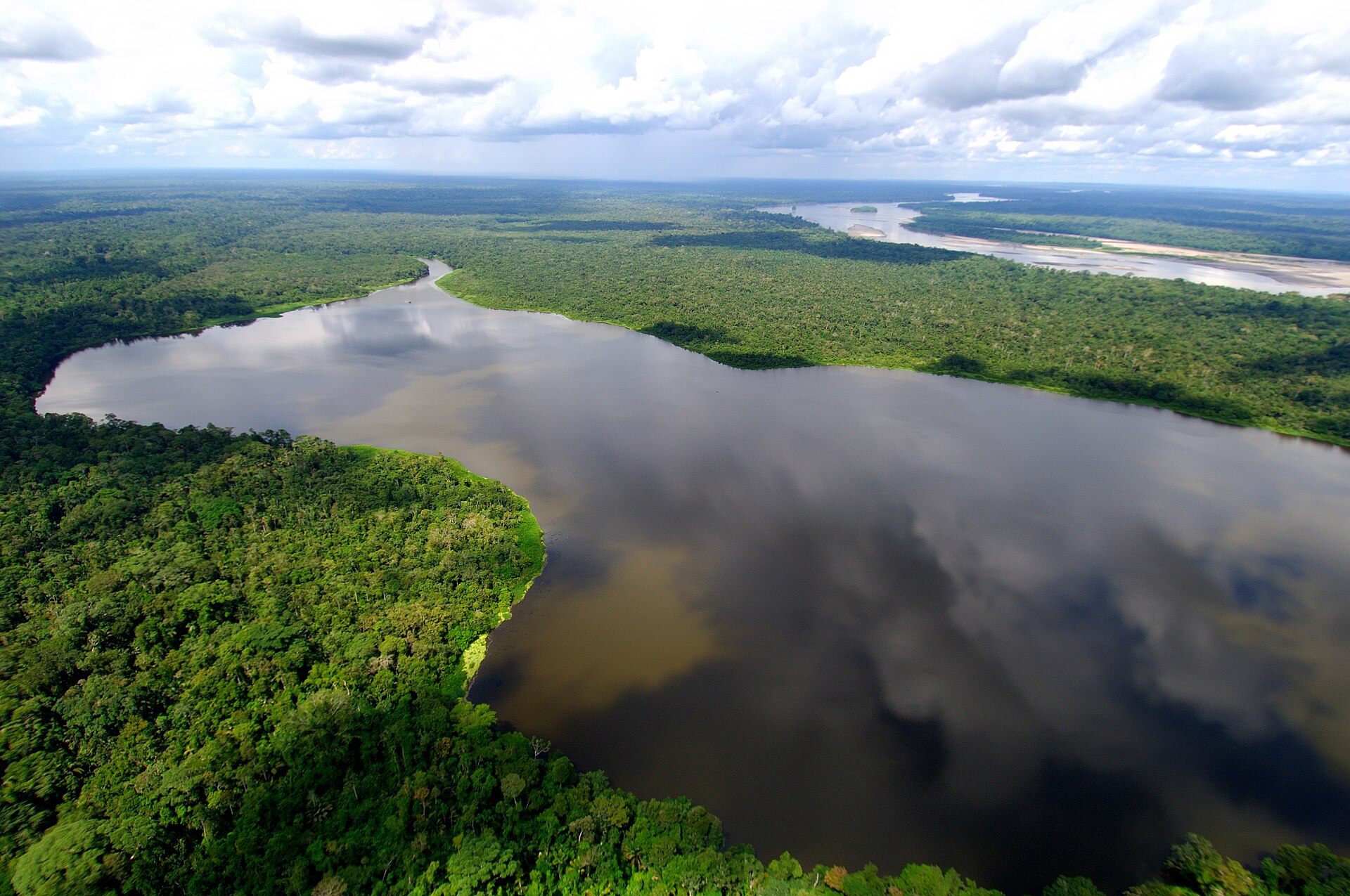
Ecuador and Peru share nine river basins: Zarumilla, Puyango-Tumbes, Catamayo-Chira, Mayo-Chinchipe, Santiago, Morona, Pastaza, Conambo-Tigre and Napo. Peru’s Congress listed them when it approved a binational water agreement on 16 October 2020.
The agreement, signed in Trujillo on 20 October 2017, creates a binational commission to manage those waters together. Peru’s Congress approved it with 115 votes, and Ecuador’s ratification is not confirmed in the sources checked.
Huaquillas in Ecuador and Aguas Verdes in Peru face each other across the southern coastal border. In the north, the Rumichaca bridge links Ecuador with Colombia and was the only land entry for Colombian goods in 2026.
Power lines tie the two grids, and Colombia’s January 2026 suspension of electricity sales showed how exposed that link is. Ecuador’s oil regulator set the fee for Colombian crude in its main pipeline at US$30.77 a barrel, up from about US$3.
The Andean Community and Other Bodies
The Andean Community (CAN) groups Bolivia, Colombia, Ecuador and Peru, about 116 million people, under the Cartagena Agreement of 26 May 1969. Its General Secretariat sits in Lima, and its court, the Andean Tribunal of Justice, sits in Quito.
In May 2026 the General Secretariat showed that the bloc can rule against its own members, even against a security argument. A former trade minister quoted by Primicias estimated that a non-compliance case before the Andean Tribunal could take two to four years.
All three also belong to the Amazon Cooperation Treaty Organization, whose eight members share the Amazon basin. The treaty dates from 3 July 1978, and the permanent secretariat is in Brasília.
Where Ecuador Leads and Where It Follows
The Rio Times Latin America Power Index (October 2026 edition) ranks Ecuador eighth of 14 countries, with 38.2 points. Peru ranks fifth with 54.7 points and Colombia sixth with 51.9, as the Latin America Power Map shows.
Ecuador trails Peru on all six pillar scores and trails Colombia on five. It leads Colombia only on economic relationships, 38.8 against 37.8.
All three sit in the index group closer to Washington, but Ecuador scores 46, against 73 for Peru and 72 for Colombia. The United States took 23.0% of Ecuador’s goods trade in 2025 and China 20.6%, the index shows.
Ecuador beats Colombia on prices: the IMF expects 2026 inflation of 2.0% there, against 6.0% in Colombia. It also grows faster than Colombia, at 2.7% against 2.2%, though slower than Peru at 3.0%.
In 2026 Ecuador tied border security to trade, with a fee on Colombian goods that Noboa said answered weak border control. Both the bloc’s ruling and Noboa’s deal with De la Espriella are named as reasons it ended.
Ecuador follows its larger neighbours in market size and diplomatic reach. It leans on Washington for security help, as a senior US defence official’s January 2026 visit to Quito showed.
What It Means for US Readers
For US businesses with Andean supply chains, the 2026 tariff fight shows how fast border fees can disrupt trade. Medicines and electricity headed Ecuador’s imports from Colombia in 2025, and the fee on Colombian goods ended on 1 June 2026.
The United States is Ecuador’s largest supplier, with 28.1% of its imports in 2025. Disputes that raise Ecuador’s import costs matter to US exporters, and whether fees already paid will be refunded is not known.
Travellers crossing by land at Rumichaca or Huaquillas should read the State Department’s current advisories for Ecuador, Colombia and Peru first. Rules and open crossings changed several times in 2026, so check before you travel.
The matching Colombia border guide and Peru neighbours guide show the same corridor from the other side. More coverage sits on the Ecuador news page, the Ecuador explainer and the profile of President Noboa.
Expats weighing a move can read the Ecuador versus Peru comparison, the Quito city page and the Quito October guide. The earlier news report on the 100% rate shows how the fight escalated on 1 May.
What Is Not Known
It is not known when the Ecuador-Peru Binational Cabinet will meet in Lima, or when the Ecuador-Colombia technical tables will start work. No dates were announced in the sources checked.
The sources checked do not say whether Ecuador must refund fees already paid on Colombian goods. They also do not confirm whether Colombia has lifted every 2026 tariff beyond the 30% one repealed on 5 June.
The Colombian border length of about 586 km comes from Colombia’s foreign ministry, and Ecuador’s own figure was not checked. Whether Ecuador has changed the US$30.77 fee for Colombian crude since January 2026 is not confirmed in the sources checked.
Ecuador’s ratification of the 2017 water agreement with Peru is not confirmed in the sources checked. No 2026 count of border crossings or migrants was found, and Colombian and Peruvian official trade data were not checked.
Frequently Asked Questions
Which countries border Ecuador?
Colombia lies to the north, along about 586 km, and Peru to the south and east, along about 1,529 km. The Pacific Ocean closes the west.
Are Ecuador and Peru friendly neighbours?
Relations are cooperative, since the Brasilia Presidential Act of 26 October 1998 ended their border dispute. On 28 July 2026 their presidents confirmed their willingness to hold a new Binational Cabinet in Lima.
What was the Ecuador-Colombia trade war?
Ecuador’s fee on Colombian goods began at 30% on 1 February 2026, hit 100% on 1 May and ended on 1 June. Colombia answered with tariffs and repealed its 30% tariff on 5 June 2026.
What is the Andean Community?
It is a bloc of Bolivia, Colombia, Ecuador and Peru, formed under the Cartagena Agreement of 26 May 1969. Its secretariat is in Lima and its court, the Andean Tribunal of Justice, is in Quito.
Which neighbour is the bigger supplier to Ecuador?
In 2025 Colombia was Ecuador’s third-largest supplier, with US$1.96 billion of imports. In the first half of 2026 Peru overtook Colombia, supplying US$665.4 million.
How many refugees and migrants does Ecuador host?
UNHCR’s portal lists 444,778 Venezuelan refugees and migrants at the end of 2024 and 67,400 active refugees on 8 April 2025. Most refugees fled Colombia.
Who leads Ecuador’s neighbours in 2026?
Abelardo de la Espriella has led Colombia since 7 August 2026, and Keiko Fujimori has led Peru since 28 July 2026. Daniel Noboa is Ecuador’s president.
Sources: Colombian Ministry of Foreign Affairs, Colombia-Ecuador land frontier; Congress of Peru, research brief on Peru-Ecuador relations, 28 September 2023; Congress of Peru, binational water agreement with Ecuador, approved 16 October 2020; Andina, Fujimori and Noboa in Lima, 28 July 2026; Andina, Brasilia peace accords, signed 26 October 1998; World Bank, population, GDP and GDP per person for Ecuador, Colombia and Peru, 2025 data; El Comercio, IMF October 2026 outlook for Ecuador; Vanguardia, IMF October 2026 outlook for Colombia, 13 October 2026; Forbes Perú, IMF October 2026 outlook for Peru, 13 October 2026; UN Comtrade, Ecuador’s reported trade with Colombia and Peru, 2025; UNHCR operational data portal, Ecuador (figures dated 31 December 2024 and 8 April 2025); Andean Community, about the bloc; Treaty creating the Andean Tribunal of Justice, 28 May 1996, Article 5; Amazon Cooperation Treaty Organization, about us; Primicias, Andean Community resolutions 2581 to 2583, 8 May 2026; Colombian trade ministry, Decree 0455 of 28 April 2026; Expreso, Andean Community rulings, 8 May 2026; El Comercio, fee for Colombian crude in the Ecuadorian pipeline, January 2026; Euronews, Fujimori takes office, 28 July 2026; Primicias, Ecuador-Peru trade, first half of 2026 (central bank data), 26 August 2026; Expreso, end of the security fee, 31 May 2026; Portafolio, Senae Resolution SENAE-SENAE-2026-0051-RE, 31 May 2026; Noticias RCN, Colombian Decree 0583 of 5 June 2026, 9 June 2026; La República, Colombian trade ministry repeal, 9 June 2026; El Espectador, text of Decree 0583, 9 June 2026; El Comercio, Ecuador lifts tariffs on Colombia, 31 May 2026; El Comercio, Noboa and De la Espriella in Cali, 7 August 2026; El Comercio, De la Espriella sworn in, 7 August 2026; Primicias, Noboa and De la Espriella meeting, 7 August 2026; Semana, border security and the US visit to Quito, 26 January 2026; The Rio Times Latin America Power Index, October 2026 edition (all accessed 16 October 2026).
This article was produced by The Rio Times’ automated newsroom system. How we use AI · Report an error · Editorial responsibility: Matthias Camenzind, Editor-in-Chief
Expat Guide to Ecuador
What The Rio Times publishes for foreigners who live in or move to Ecuador.
Start here
- Best Places to Live in Ecuador for Expats 2026
- How to Get Residency in Ecuador in 2026: Visas From US$1,446 a Month
- Cost of Living Cuenca, Ecuador — Rent, Bills and Doctors, Priced in Dollars
- Healthcare in Ecuador for Foreigners: Costs & Steps
City guides
Coming up in Ecuador
- Def Leppard in Quito, Ecuador: Rock Legends at the Estadio Olímpico Atahualpa on October 30, with Extreme 30 Oct
- Carlos Rivera and Reik in Ecuador: Joint Tour Plays Quito on 5 November and Guayaquil on 7 November 5 Nov
- Shakira in Quito, Ecuador: Three Stadium Nights at Estadio Olímpico Atahualpa on November 8, 9 and 11 8 Nov
- Soy Luna Ecuador: Guayaquil on 12 November, Quito on 14 November 12 Nov
Understand Ecuador