
Key Facts
- What happened On Friday 6 November, Ecuador and the US signed two deals against laundering, kidnapping and illegal gold.
- How wide The deals cover three areas: tracing dirty money, an anti-kidnapping police unit and gold trafficking.
- What it means American technology and support now go to Ecuador’s financial watchdog and kidnapping police, deepening a close security partnership.
- The catch The same day, 13 US House Democrats asked for all security help to Ecuador to be suspended.
- Who gets the help Ecuador’s financial analysis unit (UAFE) and its national anti-kidnapping and extortion police unit (UNASE).
- What comes next Ecuador votes for mayors and provincial officials on Sunday 29 November, 23 days after the signing.
- Power Index Ecuador ranks 8th of 14 in The Rio Times Latin America Power Index, with 37.2 points (November 2026 edition).
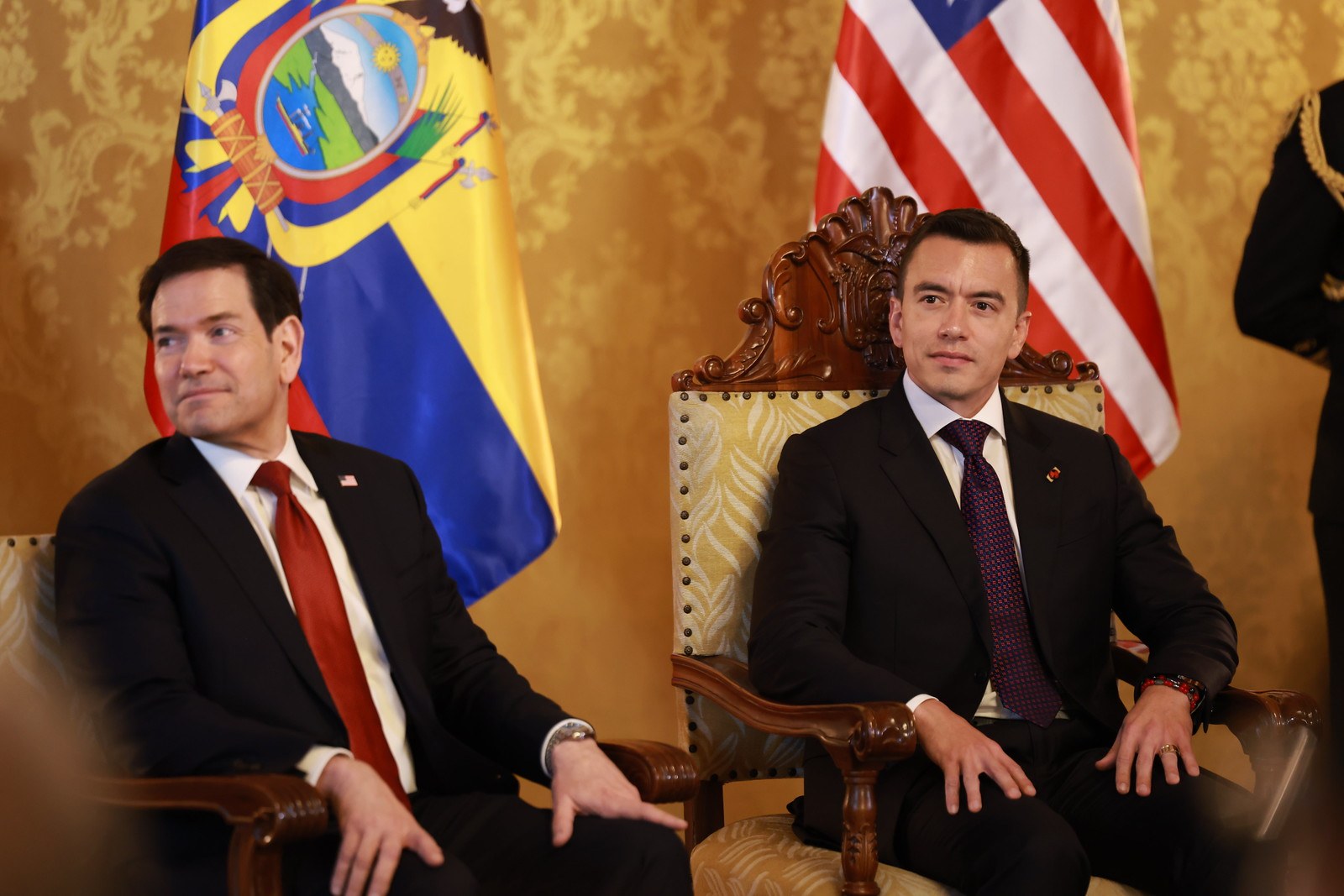
Ecuador and the United States signed two project agreements on Friday 6 November 2026 to trace illicit money, fight kidnapping and extortion, and cut off illegal gold mining. The US embassy in Quito, which announced the signing, said President Daniel Noboa took part.
For US readers, the agreements show Washington putting technology and support into the financial and police units of one of its closest security partners in South America. They also arrive on the same day that 13 Democratic members of the US House of Representatives asked the State Department to suspend all security assistance to Ecuador.
Ecuador is a country on South America’s Pacific coast where President Noboa’s government has fought organised crime under a prolonged state of emergency. The new agreements aim at the money behind the gangs rather than only at the gunmen.
What the Two Agreements Cover
The documents are called Project Implementation Letters, formal papers that set out a specific project under the cooperation the two countries already have. They add to earlier security arrangements and are not a new treaty.
The first front is financial tracking: American technology will strengthen the Financial and Economic Analysis Unit, known as UAFE, Ecuador’s agency for studying suspicious money flows. The embassy said the aim is to follow illicit money, identify criminal networks and fight money laundering.
The second front is kidnapping and extortion: support goes to UNASE, the national police anti-kidnapping and extortion unit, which is being upgraded to a national directorate. The aim is to break up groups that use kidnapping and extortion as a source of funding.
The third front is illegal gold: the agreements target gold trafficking and the criminal networks tied to illegal mining. The stated goal is to cut the money that criminal networks earn from illegal mining.
Who Signed in Quito
Noboa attended the signing, where Cartwright Weiland, the State Department official in charge of narcotics and law-enforcement affairs, and Lawrence Petroni, the embassy’s chargé d’affaires (its acting head), represented Washington. Ecuador’s Interior Minister John Reimberg, Defence Minister Gian Carlo Loffredo and public administration secretary José Julio Neira were also present.
Officials said the cooperation is also meant to strengthen security across the whole region. The letters add new projects to a partnership that already includes several security agreements.
What It Means for US Readers
The agreements tie American technology and assistance to a partner whose record is now being challenged in Congress. Any decision by the State Department to continue or pause the cooperation would be a visible test of that dispute.
For investors and compliance teams, the gold focus is the part to watch, because illegal mining and gold trafficking are named alongside money laundering. The announcements describe support for Ecuadorian agencies and do not set rules for banks or gold buyers.
Ecuador’s electoral council, the CNE, has called local elections for Sunday 29 November 2026 to choose provincial, municipal and parish authorities. The agreements were signed 23 days before that vote.
The Political Backdrop in Washington
Representatives Jesús García, Jonathan Jackson and Greg Casar, all Democrats, led 13 House members in a letter to Secretary of State Marco Rubio, announced on 6 November 2026. They urged him to “immediately suspend all U.S. security assistance and military cooperation with the Noboa administration until democracy and the rule of law are fully restored.”
The letter points to the arrest of former presidential candidate Luisa González and to what the members call repression of opposition figures. It also warns that Congress will use the tools at its disposal to force a change of policy if the administration does not act.
What Is Not Known
- The price tag. The statements issued on 6 November give no dollar value for the two letters. The US embassy in Quito or Ecuador’s presidency can say, and neither has named a date.
- Washington’s answer. It is not known whether Secretary of State Marco Rubio will act on the Democrats’ request. The State Department can answer, and the members’ press release names no deadline.
Frequently Asked Questions
What did Ecuador and the United States sign?
They signed two Project Implementation Letters on Friday 6 November 2026 in Quito. The letters cover financial tracking, anti-kidnapping police work and the fight against illegal gold mining.
What are UAFE and UNASE?
UAFE is Ecuador’s Financial and Economic Analysis Unit, which studies suspicious money flows. UNASE is the national police unit that investigates kidnapping and extortion.
Why does illegal gold matter in these agreements?
Gold trafficking is one of the three fronts, aimed at cutting the money that criminal networks earn from illegal mining. The agreements also aim to strengthen regional security cooperation.
Are US lawmakers trying to stop the cooperation?
Thirteen Democratic members of the House asked Secretary of State Marco Rubio to suspend security assistance to Ecuador. A letter is a request and does not itself halt any programme.
When does Ecuador vote next?
Ecuador holds local elections on Sunday 29 November 2026. Voters choose provincial, municipal and parish authorities.
Sources: US Embassy in Ecuador, announcement of 6 November 2026 (https://ec.usembassy.gov/). Office of Representative Jesús García, press release of 6 November 2026 (https://chuygarcia.house.gov/media/press-releases). Ecuador’s National Electoral Council (CNE), call for local elections of 31 July 2026 (https://www.cne.gob.ec/). Presidencia de la República del Ecuador photo archive (https://www.flickr.com/photos/presidenciaecuador/).
This article was produced by The Rio Times’ automated newsroom system. How we use AI · Report an error · Editorial responsibility: Matthias Camenzind, Editor-in-Chief