AFRICA · DR CONGO · CULTURE
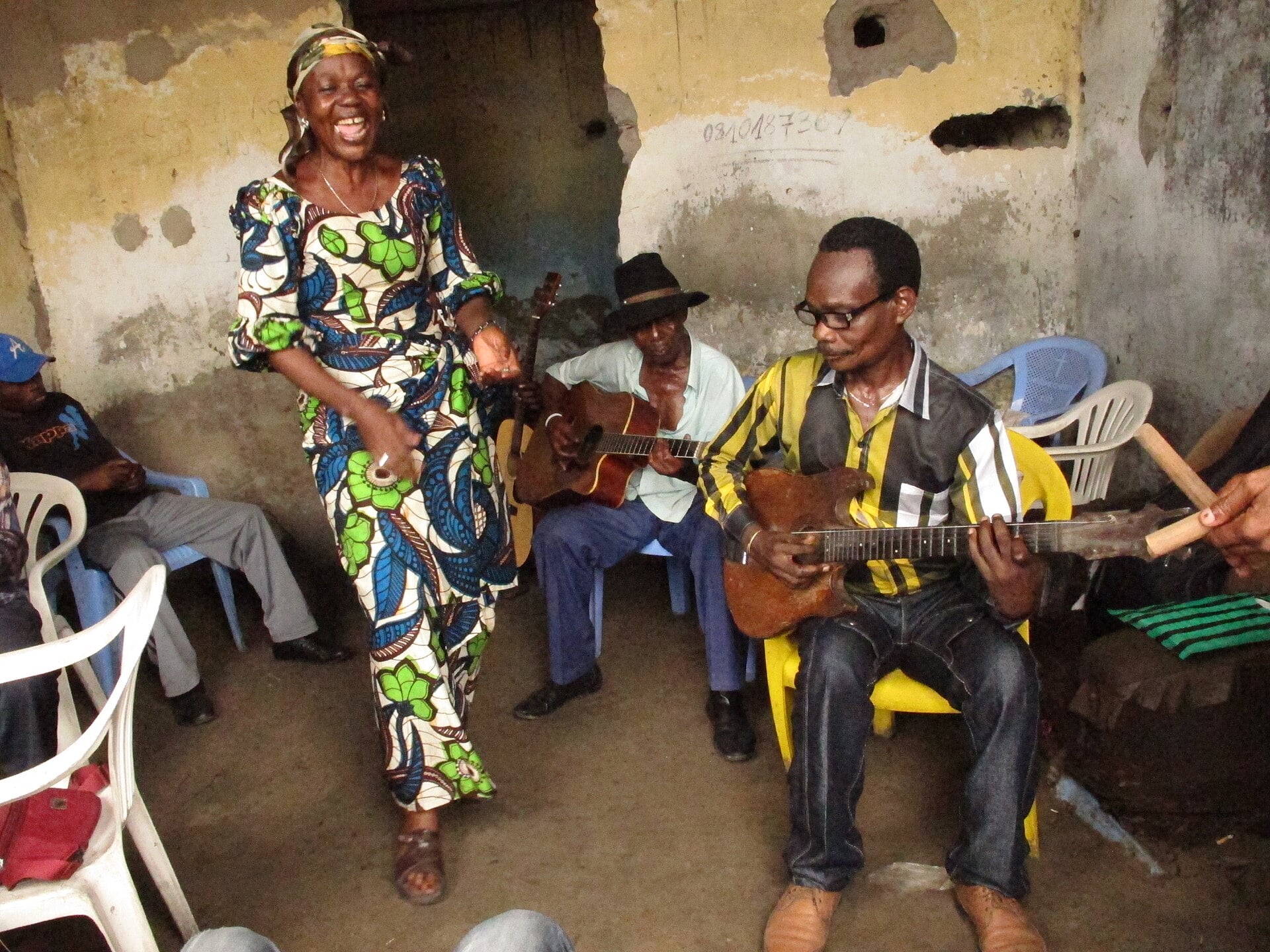
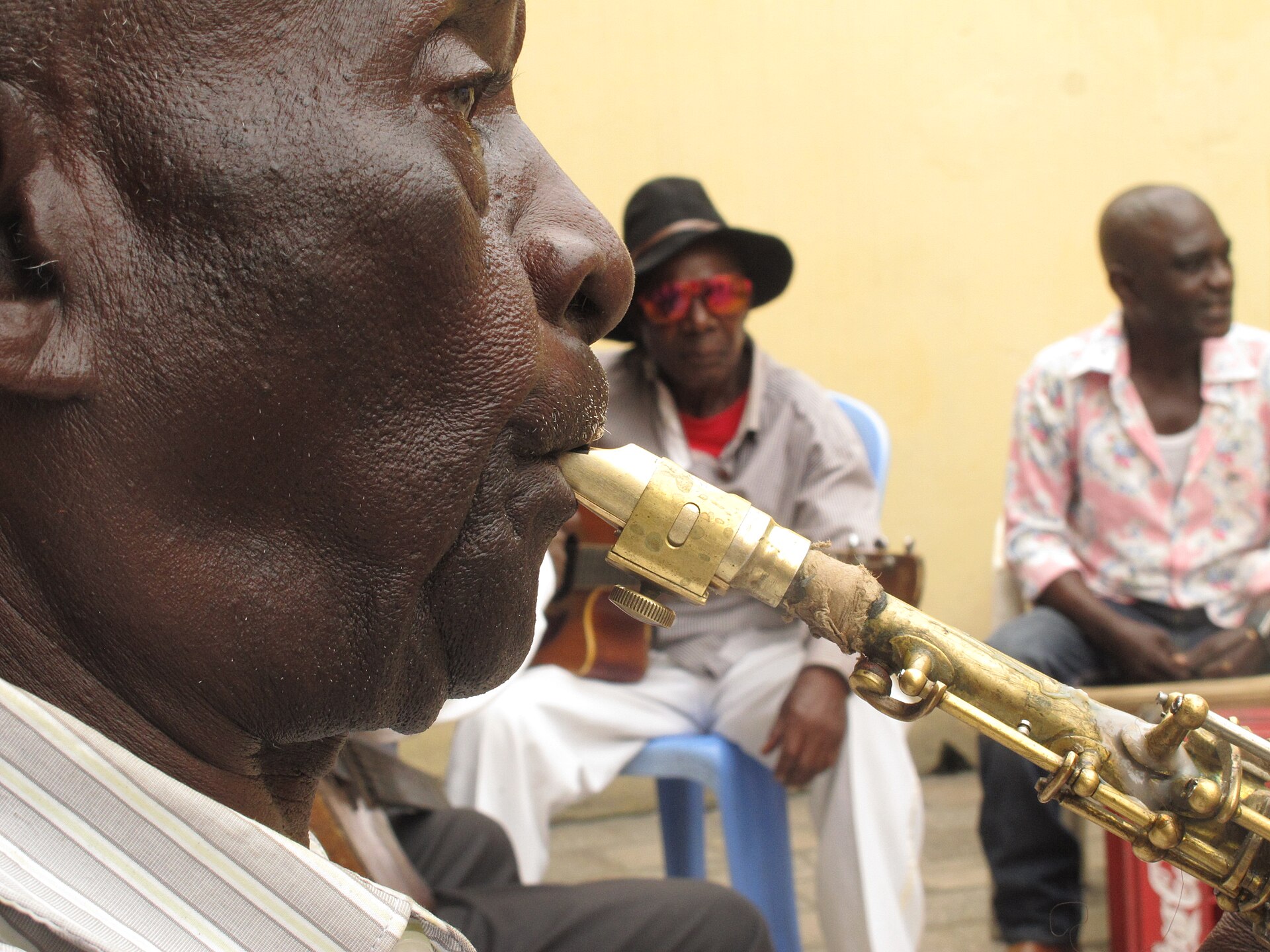
Congolese rumba, the swaying, guitar-led dance music of Kinshasa, the capital, has been on the list of living heritage kept by UNESCO, the United Nations cultural agency, since December 2021. DR Congo, the home of that music, had about 109 million people in 2024, according to the World Bank, the international development lender.
That culture now reaches the United States in plain sight: a basketball Hall of Famer from Kinshasa, a national football team back at the 2026 World Cup, and music that crosses borders without a translator. This guide names the people worth knowing, living and historical, and says what each one did.
Key Facts
- Music Congolese rumba joined UNESCO’s heritage list in December 2021, a joint entry with the Republic of Congo.
- Languages French is the official language; Kikongo, Lingala, Swahili and Tshiluba are national languages.
- Football The national team played the 2026 World Cup, its first since 1974, when it was called Zaire.
- Festival The Amani peace festival moved from Goma to Lubumbashi for its April 2026 edition.
- As of 18 November 2026, 14:36 GMT
DR Congo’s culture is a conversation between Kinshasa’s guitars, painters and novelists and the many Congolese who live abroad.
The Big Picture, Where Congolese Culture Comes From
The Democratic Republic of the Congo was a Belgian colony until independence in 1960, and UNESCO ties rumba to the urban areas of both Congos. The country’s football team has played under several names, including Zaire and DR Congo.
The World Bank counted 109,276,265 people in DR Congo in 2024, up from 105,789,731 in 2023, a rise of about 3.3% in one year. Fally Ipupa, Maître Gims and Dikembe Mutombo were all born in Kinshasa, the capital on the Congo River.
The Amani festival, a peace concert founded in 2014, had to leave Goma after M23, an armed group, took the city in January 2025. It held its 11th edition in Lubumbashi on 10 to 12 April 2026.
In Plain English, the Words You Will Meet
In Plain English
- Rumba: a Congolese dance music built on interlocking guitars, a steady rhythm and call-and-response singing.
- Lingala: a language widely used in Kinshasa and in rumba lyrics.
- M23: an armed group that took the eastern city of Goma in January 2025.
- Leopards: the nickname of the national football team.
Rumba and Congolese Music
Rumba grew out of an old dance called nkumba, a word meaning “waist” in Kikongo, and today it is shared by the two Congos. UNESCO’s Intergovernmental Committee for the Safeguarding of the Intangible Cultural Heritage inscribed it in December 2021 on a joint nomination by DR Congo and the Republic of Congo, which is a different country across the river.
UNESCO lists both countries as associated states of the music. UNESCO’s text says the music is passed on through neighbourhood clubs, training schools and community groups.
François Luambo Makiadi, known as Franco, was born on 6 July 1938 and died on 12 October 1989. He led OK Jazz, a band founded in 1956 and later renamed TPOK Jazz, and is remembered as a guitarist and bandleader.
Papa Wemba, a leading figure of Congolese rumba, died on 24 April 2016 in Abidjan, Côte d’Ivoire. He was 66 and had collapsed on stage at FEMUA, an urban-music festival in the city.
Artists Who Shaped the Look of Kinshasa
Fally Ipupa, born in Kinshasa on 14 December 1977, is among the best-known rumba singers working today. He sang with Quartier Latin, a band formed in 1986 by the singer Koffi Olomidé, from 1999 to 2006 and went solo in 2006.
Maître Gims, a French-Congolese singer and rapper, was born in Kinshasa in 1986, and his father sang in Papa Wemba’s troupe. His family belonged to the Congolese music world, and his own career is built abroad.
In painting, a 2020 Paris show called Kings of Kin paired the painter Chéri Samba, the sculptor Bodys Isek Kingelez and the painter Moké. Moké died in 2001 and Kingelez in 2015, so Samba was the only one of the three alive when the show opened.
Kingelez built imaginary cities from paper, cardboard and everyday objects, and the Museum of Modern Art (MoMA) in New York showed his work in the 2018 exhibition City Dreams. The “popular painters” around Samba, Moké and the painter Chéri Chérin first reached a wide audience through the 1978 Kinshasa show Art Partout.
A 2015 survey in Paris, Beauté Congo 1926-2015, at the Fondation Cartier, a Paris contemporary-art foundation, surveyed Congolese art across almost ninety years. Earlier, the first Yango biennale, a Kinshasa contemporary-art biennale, ran from 21 November to 19 December 2014.
Writers and Voices
Fiston Mwanza Mujila was born in Lubumbashi in 1981 and lives in Austria. His first novel, Tram 83, was published in French in 2014, and its English translation was longlisted for the 2016 Man Booker International Prize.
Mujila writes in French, the official language of DR Congo, and lives abroad. He is an example of a Congolese writer whose home audience and global audience sit on different continents.
Sport Figures and the Leopards
DR Congo has won the Africa Cup of Nations twice, in 1968 as Congo-Kinshasa and in 1974 as Zaire, according to the Confederation of African Football (CAF), the continent’s football body. The 1968 final in Ethiopia ended 1-0 against Ghana.
The team returned to the World Cup in 2026. It beat Nigeria 4-3 on penalties in Rabat on Sunday 16 November 2025 to win the African play-off, then beat Jamaica 1-0 after extra time in Guadalajara on Tuesday 31 March 2026, with Axel Tuanzebe scoring in extra time.
That ended a 52-year wait since Zaire’s 1974 tournament, and the Leopards were drawn in Group K, one of the 12 first-round groups, with Portugal, Colombia and Uzbekistan. For the match details, see our match report on DR Congo against Uzbekistan.
In basketball, Dikembe Mutombo was born in Kinshasa on 25 June 1966, entered the Naismith Basketball Hall of Fame in 2015 and died in September 2024 aged 58. His foundation opened the Biamba Marie Mutombo hospital in Kinshasa, named after his mother.
Languages, the Voice of the Culture
Article 1 of the constitution names French as the official language and lists four national languages: Kikongo, Lingala, Swahili and Tshiluba. The state promises to promote the national languages without discrimination.
In practice, Lingala is widely used in Kinshasa and in rumba lyrics, while Swahili is widely used in the east. Together these languages carry the songs, novels and festivals described in this guide.
Festivals, Peace in Concert Form
The Amani festival, founded in 2014, grew into a symbol of peaceful coexistence in eastern DR Congo, and its 10th edition ran in Goma and ended on 17 November 2024. When M23 took the city in January 2025, organisers moved the 11th edition to Lubumbashi, citing security reasons.
Kinshasa’s contemporary-art scene includes the Yango biennale, whose first edition ran in 2014. We could not confirm a date for the next Amani or biennale edition, so none is given here.
Diaspora Influence Abroad
Congolese culture travels with its people. Gims works in France, Mujila lives in Austria, and Mutombo built his career and his charity work between the United States and Kinshasa.
Congolese culture is not only made at home. We could not find a reliable official count of Congolese communities abroad, so we do not give one.
What It Means for You
For a US reader, the entry points are easy: the legacy of Mutombo in the National Basketball Association (NBA), the 2026 World Cup that the United States co-hosted, and UNESCO-listed music available on any streaming service. For politics and the eastern conflict, see our coverage: who holds power in DR Congo and DR Congo explained.
Readers planning to visit should note that the Amani festival moved because of the conflict, so check organisers before booking. More stories sit in our DR Congo coverage section.
What Is Not Known
It is not confirmed when the Amani festival or the next Yango biennale will take place, and the 2026 programmes have not been published in a form we could verify. Official counts of Congolese communities abroad and of rumba listeners were also not available to us.
Frequently Asked Questions
What is Congolese rumba?
Congolese rumba is a dance music from Kinshasa built on guitars, rhythm and call-and-response singing. UNESCO listed it as intangible heritage in December 2021, on a joint nomination by the two Congos.
What languages are spoken in DR Congo?
French is the official language. Kikongo, Lingala, Swahili and Tshiluba are the four national languages named in Article 1 of the constitution.
Who are the most important Congolese musicians?
Franco and Papa Wemba are historical rumba figures, and Fally Ipupa is a leading living singer. Maître Gims, born in Kinshasa, is a French-Congolese singer and rapper.
Did DR Congo qualify for the 2026 World Cup?
Yes, it beat Nigeria on penalties on 16 November 2025 and Jamaica 1-0 after extra time on 31 March 2026. It was then drawn in Group K.
Who is Dikembe Mutombo?
He was a Naismith Basketball Hall of Fame centre born in Kinshasa on 25 June 1966. He died in September 2024 aged 58.
Where is the Amani festival held?
Amani began in Goma in 2014. Its April 2026 edition was held in Lubumbashi. Organisers cited security reasons after M23 took Goma in January 2025.
Sources: UNESCO, Congolese rumba, inscribed December 2021; Constitution of the Democratic Republic of the Congo, Article 1; Confederation of African Football, DR Congo, multiple names, two titles; Confederation of African Football, DR Congo reach the intercontinental play-off; World Bank, population, total, DR Congo, 2023 and 2024; National Basketball Retired Players Association, Dikembe Mutombo.
This article was produced by The Rio Times’ automated AI newsroom. Editorial responsibility: Matthias Camenzind, Publisher and Editor-in-Chief. The Rio Times also runs Ask Rio Times, which answers from 100,000+ of our own articles, the daily Latin America Power Map, and prediction-market odds on elections and markets.. How we use AI · Report an error