Sassou Nguesso Pins Republic of Congo Oil Revival on China as Mature Fields Decline
Economy · Republic of Congo
—The stakes. Congo’s economy is the third-largest oil producer in Sub-Saharan Africa but output is falling fast from mature offshore fields.
—The date. Crude production reached only 292,000 barrels per day in April 2026, far below the 437,000 b/d record set in May 2010.
—The hub. Pointe-Noire is the export and refining core, hosting the CORAF refinery and a Chinese-built plant meant to start operating by 2026.
—The debt. Public debt stood at 99 percent of GDP at end-2023, classified as in distress but sustainable under an IMF programme.
—The pivot. Brazzaville is chasing gas and LNG projects after missing an earlier target to double output to 500,000 boe/d by 2025.
The Republic of Congo is betting on Chinese capital and gas to offset a slow-motion decline in the crude fields that have funded its state for decades. For investors, the question is whether Pointe-Noire’s project pipeline can outrun the debt and succession risks that shadow it.
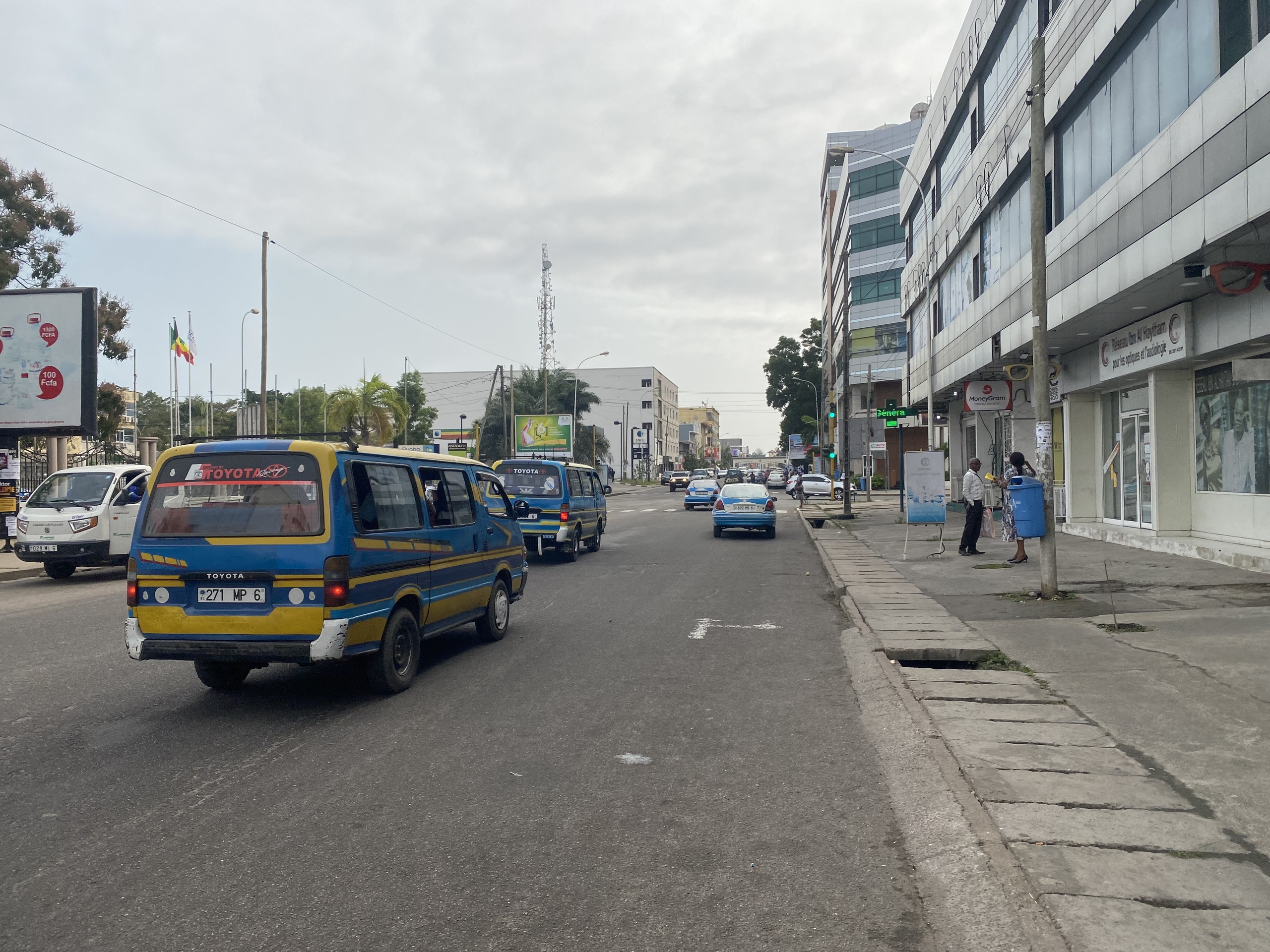
A Petrostate Built on Shrinking Barrels
The Republic of Congo, often called Congo-Brazzaville, is Sub-Saharan Africa’s third-largest oil producer after Nigeria and Angola, according to S&P Global Commodity Insights.
That ranking conceals a painful trend. Crude output has been declining from its peak of 437,000 barrels per day in May 2010.
Trading Economics data show production at 292,000 b/d in April 2026, down from 307,000 b/d in March 2026.
S&P Global describes the country as battling stalling oil production, with volumes falling from about 350,000 b/d in 2019 to roughly 260,000 b/d recently.
The state remains heavily dependent on hydrocarbons for exports and budget revenues, a reality repeated across International Monetary Fund documents.
Mature Fields Drag Down Output
Output has run close to the OPEC allocation of 277,000 b/d, at 286,000 b/d in June 2026 and 274,000 b/d in July, so the quota is not what is holding production back.
Hydrocarbons Minister Bruno Jean-Richard Itoua had set a target to double oil and gas output to 500,000 barrels of oil equivalent per day by 2025.
That ambition was later downgraded to 350,000 boe/d after crude volumes failed to increase meaningfully, S&P Global reported in late 2024.
Africanews noted in September 2025 that Brazzaville now aims to raise production to 500,000 b/d by 2027.
The gap between target and reality reflects aging offshore fields and stalled upstream investment, with new deepwater blocks still years from first oil.
Pointe-Noire as Export and Refining Core
Pointe-Noire is the country’s main Atlantic port city and hydrocarbons hub, handling crude exports and hosting the existing CORAF refinery.
The CORAF plant covers only about 65 percent of domestic demand, leaving 35 percent of refined products to be imported.
A new refinery, Atlantique Petrochimie, is under construction at Fouta near Pointe-Noire with planned capacity of 2.5 million tonnes a year, roughly 50,000 b/d, and a possible second phase taking it to about 100,000 b/d.
The plant is being built by Beijing Fortune Dingheng Investment under a US$600 million investment.
A 50,000 b/d Russian-funded oil products pipeline would connect Pointe-Noire to inland hubs Lutete, Maluco and Trecho, with possible extensions to neighbouring countries.
TotalEnergies Returns to the Offshore
TotalEnergies won a new exploration permit in 2025 for the Nzombo offshore block, located about 100 kilometres off Pointe-Noire.
The company currently produces around 65,000 b/d in Congo, making it a key existing operator.
National output reached 56.9 million barrels from January to July 2025, roughly 268,000 b/d, 5.2 percent higher than the same period in 2024.
The modest gain hints at stabilisation, but analysts and officials treat new deepwater developments as the only route back to 2010-era volumes.
Exploration success at Nzombo could rebuild investor confidence in a basin long dominated by mature fields and declining wells.
The $23 Billion China Oil Surge Deal
Brazzaville signed a US$23 billion oil agreement with the Chinese company Wing Wah on 2 September 2025, reported by Semafor, World Oil and Financial Afrik in the days that followed.
The plan covers three permits, Banga Kayo, Holmoni and Cayo, and aims to lift output from those assets to 200,000 b/d by 2030 and more than 1.3 billion barrels cumulatively by 2050. Banga Kayo is an onshore field currently producing about 45,000 b/d.
No investment decision timetable for the three permits has been published.
Export logistics at Pointe-Noire remain the constraint on any production increase from the three permits.
Neither government has published a financing structure or a governance timetable for the agreement.
Debt Distress and the IMF Anchor
Public debt stood at 99 percent of gross domestic product at end-2023, up from 92.5 percent at end-2022.
The increase reflected a ramp-up in domestic borrowing and the securitisation of arrears, according to the IMF’s debt sustainability analysis.
The Fund classifies Congo’s overall and external public debt as in distress but assessed as sustainable. The three-year Extended Credit Facility ended with its final review in March 2025, and the Board completed a post-financing assessment in March 2026.
The country’s debt service is explicitly tied to oil revenues and oil-price-linked payments to oil traders.
For investors, this means fiscal health remains hostage to crude prices and output even as gas projects and refinery ventures promise diversification.
China as Lender and Restructuring Partner
China is an official bilateral creditor to Congo alongside the oil traders that hold the country’s largest commercial claims, though no current figure for the Chinese debt stock has been published.
The oil deal’s project bonds and shipping joint venture signal deeper integration with Chinese state banks and construction firms.
Previous IMF reports note that debt service includes oil-price-linked payments to oil traders, a structure that can ease pressure when crude prices fall but increases strain when they rise.
The refinery project led by a Chinese consortium including Sinopec ties Beijing’s industrial interests directly to Congo’s downstream capacity.
This dual role as creditor and contractor gives China influence over policy and repayment, a familiar pattern in Central African resource states.
Gas and LNG Ambitions
S&P Global quoted Hydrocarbons Minister Bruno Itoua as saying gas is the future for the Republic of Congo as it battles stalling oil production.
The ministry aims to monetise associated gas from existing fields and develop standalone gas resources for domestic power and export.
No LNG terminal has yet reached final investment decision in the verified research, but gas targets are embedded in the 500,000 boe/d ambition.
The new Pointe-Noire refinery could export surplus fuel to Europe, providing a downstream revenue stream beyond crude sales.
Gas projects would take years to build, leaving the near-term economy dependent on the 292,000 b/d crude base and the China deal’s execution.
Sassou Nguesso’s Long Rule and Succession Quiet
President Denis Sassou Nguesso has ruled Congo for decades, making him one of Africa’s longest-serving heads of state.
No formal succession plan has been announced, and political power remains concentrated in the presidency and his inner circle.
The IMF’s programme and oil deal depend on presidential stability, a factor that reassures some investors and worries others.
A sudden transition could disrupt the joint steering committee, the refinery timeline and the bond issuance on the Shanghai Stock Exchange.
For now, the quiet around succession is itself a risk premium embedded in Congo’s sovereign debt yields and project contracts.
What Foreign Investors Should Watch
Investors should track monthly crude production data. Output was 286,000 b/d in June 2026 and 274,000 b/d in July, so the recent trend is down.
The final investment decisions on the three deep-water developments expected in 2026 are the single most important upstream catalyst.
Pointe-Noire’s new refinery start-up and the Russian-funded products pipeline will show whether downstream margins can offset crude decline.
Debt sustainability hinges on oil prices and the IMF’s continued tolerance of oil-linked payments to traders.
Any sign of succession tension or delay in the agreement’s financing would raise the political risk premium for a market many investors have long overlooked.
The Big Picture
Latest developments
- Angola Police Seize 250+ Three-Wheelers in Luanda — 2 October 2026
- Africa Intelligence Brief — Friday, October 2, 2026 — 2 October 2026
- Dangote Refinery IPO Demand Soars, Price Questioned — 2 October 2026
- Doing Business in the Central African Republic — 2 October 2026
More: DR Congo news in English, every day from The Rio Times.
This article was produced by The Rio Times’ automated newsroom system. How we use AI · Report an error · Editorial responsibility: Matthias Camenzind, Editor-in-Chief
Great Powers in Africa
- Who Backs Whom in Africa 2026: China, Russia, US, Gulf
- Africa: The New Scramble
- DP World and AD Ports Drive Gulf States Africa Investment as Saudi Deals Follow
- China Slashes Africa Lending 46% as Kenya and Angola Race to Refinance Old Debts