
DR CONGO · EXPAT GUIDE
Living in DR Congo as a foreigner means a costly, tightly managed life based in Kinshasa, the capital, or Lubumbashi, the mining centre in the south-east. This guide leaves out the conflict-hit east and covers rent, safety, health cover, banking, schools and internet as of Tuesday, 10 November 2026.
No official data on rents or foreign residents exists, so several prices below are marked reported, not confirmed. Where a government body or regulator publishes a figure, we give it with its date.
Key Facts
- Where Kinshasa is the capital hub; Lubumbashi is the mining base in the south-east.
- Safety The UK Foreign Office advises against travel to the east and several other provinces; Lubumbashi is not listed.
- Money The central bank’s rate was 2,258.86 Congolese francs per US$ on 10 November 2026.
- Health Care is limited; the UK Foreign Office says evacuation to South Africa may be necessary.
Plan around security, health cover and the US dollar before you plan around rent.
- FCDO: the UK Foreign, Commonwealth and Development Office, which publishes British travel advice
- BCC: the Banque Centrale du Congo, DR Congo’s central bank
- ARPTC: the telecom regulator, Autorité de Régulation de la Poste et des Télécommunications du Congo
- Congolese franc: the local currency, written CDF; US dollars circulate widely beside it
- Gombe: the central district of Kinshasa where ministries and the presidency sit
Kinshasa and Lubumbashi: Where Foreigners Live
Kinshasa is the capital and by far the largest city, and its Gombe district holds the ministries and the presidency. The UK Foreign Office (FCDO) says British government support is severely limited outside Kinshasa, so the capital is where official help is concentrated.
Lubumbashi, in Haut-Katanga province, is the commercial centre of the copper and cobalt belt in the south-east. The FCDO does not list Haut-Katanga among the provinces it advises against visiting, but it names Lubumbashi among the cities where foreigners face street robbery.
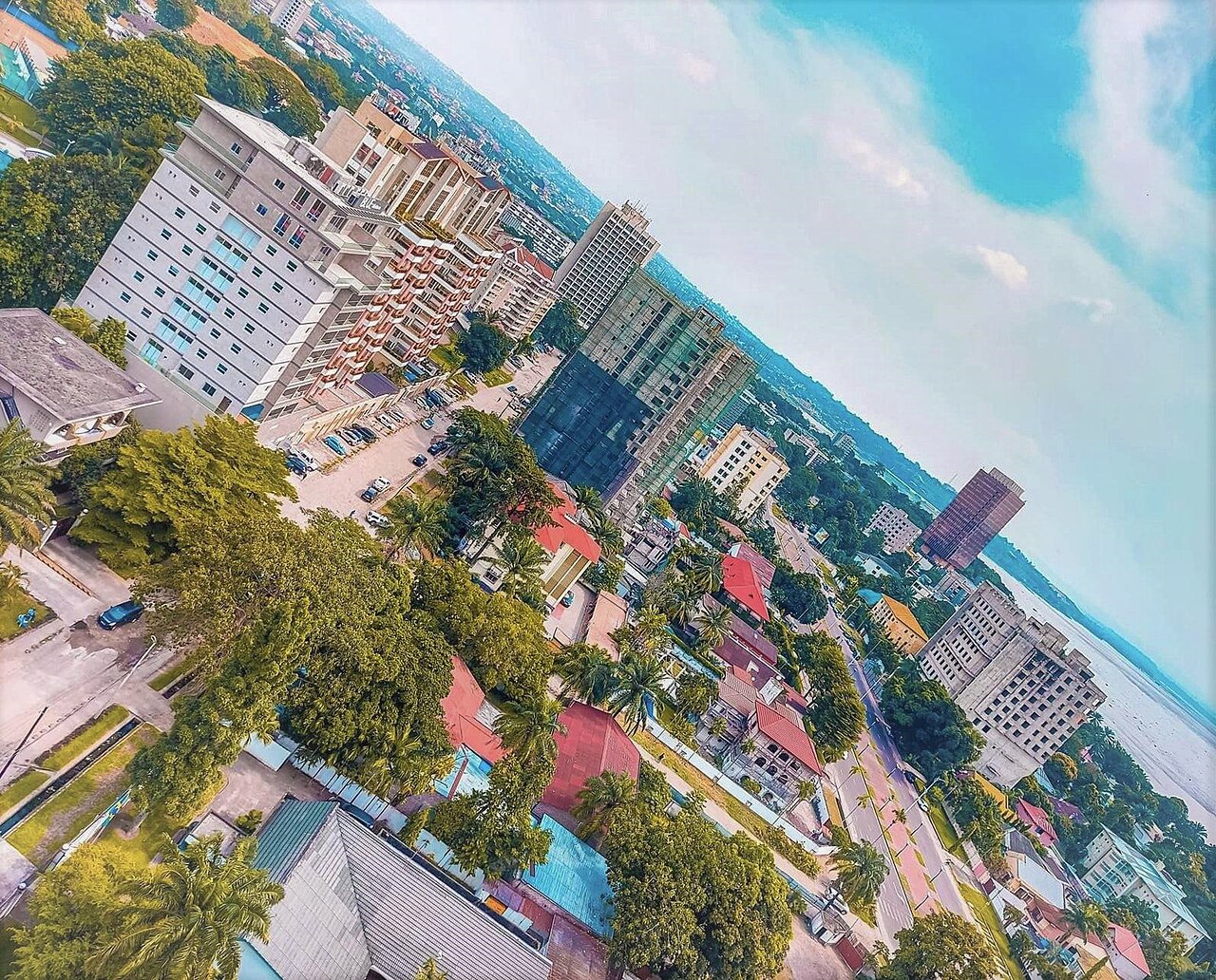
Choosing a neighbourhood in Kinshasa follows security more than style. The FCDO advises against all but essential travel to the N’djili and Kimbanseke districts south of the airport road, and says kidnapping is a risk in parts of the city including Limete, a Kinshasa district.
Housing Costs in US$
No government body publishes rents for foreigners, so every price here is reported, not confirmed. Agent listings and expat websites quote roughly US$1,200 to US$3,500 a month for an expat-grade apartment in Gombe or Ngaliema, a residential district west of the centre.
One source tied its lowest price, US$500 to US$1,200, to a one-bedroom flat with a generator and a water tank. Ask in writing what any quoted rent includes, because the sources disagree by a factor of two or more.
For Lubumbashi we found no rent figures at all. Expat guides say employers usually arrange walled or guarded housing, reported, not confirmed.
Safety by Region, East Excluded
The FCDO, in advice last updated on 8 October 2026, advises against all travel to North Kivu, South Kivu, Ituri, Haut-Uélé, Maniema, Tanganyika, Haut-Lomami, Kwamouth territory (in Mai-Ndombe Province) and the area within 50 km of the Central African Republic border. This guide does not cover those areas.
The FCDO also advises against all but essential travel to Upemba National Park, a reserve in the south-east. Lubumbashi itself is not named in the FCDO’s lists.
In Kinshasa and Lubumbashi the FCDO says foreign nationals face a particular risk of street robbery. It warns that criminals pose as taxi drivers, passengers or police officers, and that “express kidnaps” take victims to cash machines before releasing them.
The FCDO also warns of roadblocks after dark and of sporadic protests that can involve gunfire. On 28 January 2025, large and violent protests took place outside several embassies in Kinshasa.
The US State Department is reported to rate DR Congo Level 4, Do Not Travel, its highest warning. We could not open the department’s page, so check it before you go, and see our DR Congo visa and residency guide for entry rules.
Healthcare and Evacuation Insurance
The FCDO calls medical care in DR Congo extremely limited and says Western-standard facilities are almost non-existent outside Kinshasa. It names the Centre Privé d’Urgence (CPU), a private emergency clinic in Kinshasa, as able to cope with basic health problems.
The FCDO says medical evacuation to South Africa or elsewhere could be necessary. It tells travellers to hold insurance that covers local treatment and evacuation, plus accessible funds for treatment and repatriation.
The FCDO also says the World Health Organization declared the Bundibugyo (a strain of the Ebola virus) outbreak a public health emergency of international concern on 17 May 2026, and calls it highly active, evolving and geographically widespread. Our Ebola explainer covers where cases are.
Banking in US Dollars and Congolese Francs
The central bank, the Banque Centrale du Congo (BCC), set its indicative rate at 2,258.86 Congolese francs per US$ on 10 November 2026. Reports say most bank deposits and loans are held in foreign currency, chiefly US dollars, which is why dollars dominate daily life; we could not confirm the shares at the BCC.
The BCC is reported to have announced an end to foreign-currency cash transactions from 9 April 2027, which we could not confirm at a BCC notice. Reports say dollars held in bank accounts and paid electronically are expected to stay, so ask your bank how a dollar account and card will work after that date.
The International Monetary Fund (IMF) said on 30 June 2026 that activity remained resilient, with preliminary growth of 5.6% in 2025 and a projected 5.7% in 2026. It also said a pause in further monetary easing is warranted, and that the central bank should stand ready to tighten if needed.
Schools
The American School of Kinshasa (TASOK) offers the International Baccalaureate (IB), a globally recognised curriculum, from Kindergarten to Grade 12, plus a play-based preschool for ages 3 to 5. Its website lists no fees and points families to its admissions page.
We found no verified fee or availability data for international schools in Lubumbashi. Because fees are not published, settle school costs with your employer before you accept a posting.
Internet and Phones
The telecom regulator ARPTC counted 77 million active mobile subscriptions at the end of June 2026, a mobile penetration rate of 68.6%, up from 66.8% in the first quarter. Subscriptions rose 2.76% over the quarter, the ARPTC report says.
We found no verified 2026 figure for fixed-line or fibre home internet. Ask a landlord or employer which provider serves the building before you sign.
Who Actually Goes
There is no official count of foreign residents, so who goes is known only in broad terms. Expat guides describe long-stay foreigners as mostly sent by employers in mining, aid work and diplomacy, which is reported, not confirmed.
Mining draws people to Lubumbashi and the copper-cobalt belt, while embassies and agencies concentrate in Kinshasa. Our DR Congo economy guide and politics guide explain who runs the mines and the state.
What It Means for US Readers
An American weighing a posting should treat the move as contract-led: security, evacuation cover and school fees belong in the employer’s offer before you sign. Check the US State Department’s own advisory first, because we could not open it.
Do not confuse the two Congos, because Republic of Congo (Congo-Brazzaville) has different rules and prices. Our two-Congos explainer sets them side by side.
What Is Not Known
We could not open the US State Department advisory or the US Centers for Disease Control and Prevention pages, so the Level 4 rating is reported, not confirmed. We also found no official rent, school-fee or fibre-internet figures.
The BCC’s April 2027 cash rule and the dollar shares of deposits come from reports, not from a BCC notice we could read. It is also not known how many foreigners live in DR Congo or how security in Lubumbashi will change.
Frequently Asked Questions
Is it safe to live in Kinshasa as a foreigner?
The UK Foreign Office says foreign nationals face a particular risk of street robbery in Kinshasa and Lubumbashi, and that kidnapping is a risk in parts of Kinshasa. It advises against all but essential travel to the N’djili and Kimbanseke districts.
How much does it cost to live in Kinshasa?
We found no official cost figures. Reported rents for expat-grade apartments run from about US$500 to US$3,500 a month, and we could not confirm them.
Do I need US dollars or Congolese francs?
Both circulate: the central bank’s indicative rate was 2,258.86 Congolese francs per US$ on 10 November 2026. Reports say most bank deposits are in foreign currency, and that cash payments in foreign currency are reported to end from 9 April 2027.
Is there an international school in Kinshasa?
The American School of Kinshasa offers International Baccalaureate programmes from Kindergarten to Grade 12, plus a play-based preschool for ages 3 to 5. Its website lists no fees.
Sources: UK FCDO, DR Congo travel advice, updated 8 October 2026; UK FCDO, DR Congo safety and security; UK FCDO, DR Congo health; Banque Centrale du Congo, indicative rate of 10 November 2026; IMF press release of 30 June 2026; ARPTC second-quarter 2026 market figures, 3 November 2026; The American School of Kinshasa, programme page.
This article was produced by The Rio Times’ automated AI newsroom. Editorial responsibility: Matthias Camenzind, Publisher and Editor-in-Chief. The Rio Times also runs Ask Rio Times, which answers from 100,000+ of our own articles, the daily Latin America Power Map, and prediction-market odds on elections and markets.. How we use AI · Report an error