Costa Rica Explained 2026: The Country, Its Politics, Its Economy and What to Watch
GUIDES · COSTA RICA
Key Facts
- —Capital San José, in the Central Valley. San José province holds about 1.67 million people, roughly 32 percent of the population, on the statistics institute’s 2026 projection.
- —Population 5.22 million in 2026, slightly fewer people than Ireland. The land area is 51,100 square kilometres, a little larger than Slovakia.
- —Currency The colón. It traded at about 453 colones to the US dollar on 25 September 2026, so 10,000 colones is roughly US$22.
- —Language Spanish is the official language. English is common in tourist areas and in the multinational companies of the free-trade zones.
- —GDP US$102.9 billion in 2025, about US$20,000 per person, or roughly a fifth of the US level. Real growth was 4.6 percent that year.
- —Government A presidential republic under the 1949 constitution, with no standing army since 1948. Laura Fernández has been president since 8 May 2026.
Costa Rica explained: how a country of 5.2 million with no army is governed, how it earns its dollars, and which dates matter next.
Costa Rica explained properly starts with a paradox: a stable democracy that abolished its army in 1948 has a serious murder problem. In 2023 its murder rate was about three times the US rate. The president who took office in May 2026 has made cutting it her central promise.
What kind of country is this?
Costa Rica sits on the Central American isthmus, between Nicaragua and Panama, with a Pacific and a Caribbean coast. It covers 51,100 square kilometres. The national statistics institute, INEC, projects a 2026 population of 5.22 million.
Much of the population lives in the Central Valley around the capital, San José, whose province holds about a third of the total. The Caribbean province of Limón breaks the calm image. Its 2025 murder rate was 37.7 per 100,000 people, close to Ecuador’s 2024 rate of 38.8, the judicial police say.
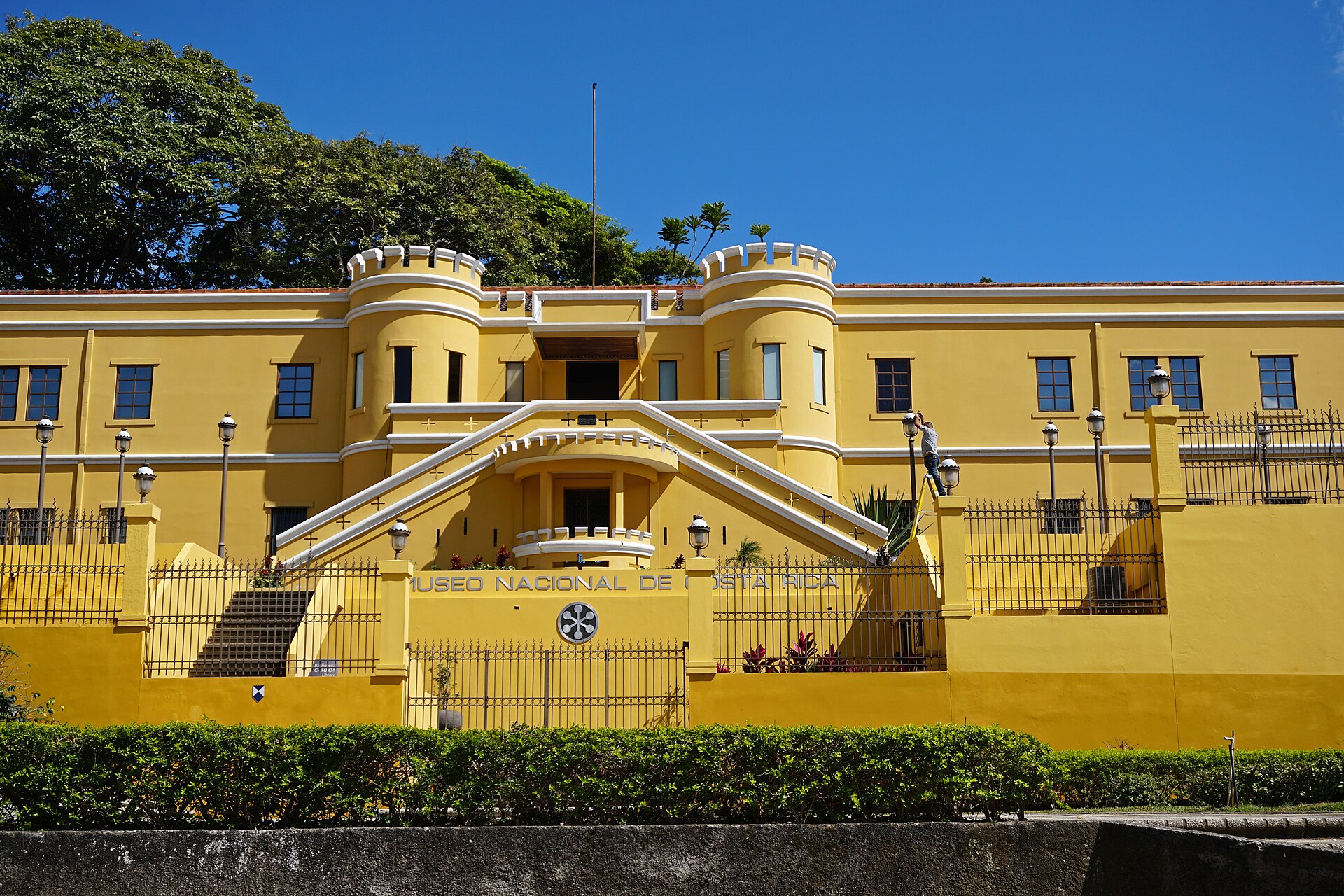
The defining fact is civilian. After the 1948 civil war, José Figueres Ferrer declared the army dissolved at the Bellavista barracks in San José on 1 December 1948. Article 12 of the 1949 constitution bans the army as a permanent institution and leaves public order to police forces.
That day the security minister handed the barracks’ keys to the education minister, and the building became the National Museum. The anniversary is a national holiday. A revolt against Figueres in April 1949 collapsed the next day, and no coup has followed.
Security today rests with the Public Force, the national police. The security ministry also runs a coast guard and an air surveillance service. So when the government talks about a “war” on crime, it means police, prosecutors, courts and prisons, not soldiers.
Who runs Costa Rica and how
The president is head of state and of government, elected directly for four years. More than 40 percent of valid votes wins outright; otherwise a runoff follows. Presidents cannot serve two terms in a row, so Rodrigo Chaves, president from 2022 to 2026, could not run again.
On Sunday 1 February 2026, Laura Fernández of the Sovereign People’s Party, Pueblo Soberano, won in the first round. The Supreme Electoral Tribunal’s final count gave her 1,243,141 votes, or 48.5 percent. Álvaro Ramos of the social-democratic National Liberation Party (PLN) took 33.7 percent, on a turnout of 69.2 percent.
Fernández, a political scientist, was Chaves’s minister of the presidency and of national planning. She is the second woman elected president, after Laura Chinchilla. She took office on Friday 8 May 2026, for a term ending on 8 May 2030.
She campaigned on continuity and kept Chaves on as minister of the presidency and minister of finance, in charge of the economy. AP reported that the posts preserve the immunity from prosecution he held as president, while he faces corruption allegations.
Congress is a single chamber, the Legislative Assembly, with 57 deputies elected by proportional representation for four years. Pueblo Soberano won 31 seats, the largest caucus since 1982. The PLN has 17, the left-wing Broad Front 7, and two smaller parties one each.
Thirty women won seats, the first female-majority Assembly, the Inter-Parliamentary Union notes. Ordinary laws, including the budget, need a simple majority, so the government can legislate alone. Constitutional amendments and choosing or removing Supreme Court justices need 38 votes, which it lacks.

The Supreme Electoral Tribunal (TSE) runs elections independently. The Constitutional Chamber of the Supreme Court, the Sala IV, has taken complaints from ordinary citizens since 1989. Its opinions can stall major bills.
How the economy works
Costa Rica earns its dollars mainly from free-trade zones and tourists. Free-trade zones are industrial parks where mostly foreign firms get tax exemptions in return for investment and jobs. In 2024, 626 such firms made 66 percent of goods exports and employed 197,000 people directly, the trade agency PROCOMER reported.
The biggest product is medical devices: syringes, catheters, prosthetic parts and surgical instruments. Goods exports hit a record US$22.7 billion in 2025 on PROCOMER’s final count, and medical devices supplied about US$10.9 billion, or 48 percent. Pineapples and bananas, the old staples, were 6 and 5 percent.
The United States bought 47 percent of goods exports in 2025, and Europe 21 percent. Since 24 July 2026 Costa Rican goods have faced an extra US tariff of 12.5 percent, up from 10 percent. Pineapples, bananas and coffee are exempt.
Free-trade-zone output grew 12.7 percent in 2025, against about 3 percent for the rest of the economy, the International Monetary Fund (IMF) calculated. Total output rose 4.6 percent. The IMF expects 3.6 percent in 2026, citing tariffs and higher oil prices.
Tourism is the second engine. The Costa Rican Tourism Institute (ICT) counted 2.94 million international arrivals in 2025, just 0.8 percent more than in 2024. North Americans made up 72 percent of arrivals by air.
Central government debt was 60.4 percent of output at the end of 2025, and reserves reached US$17 billion. Moody’s and S&P both upgraded the country, the IMF noted. In 2021 Costa Rica became the first Central American member of the OECD, the club of mostly rich democracies.
The odd feature is a currency that keeps rising while prices fall. The colón gained 2.2 percent against the dollar in 2025 and about 9 percent more by April 2026, the IMF says. Consumer prices in August 2026 were 0.17 percent lower than a year before, and have fallen year on year since May 2025.
The Central Bank of Costa Rica (BCCR) targets 3 percent inflation, plus or minus one point. It cut its policy rate to 3 percent from 24 July 2026 and held it on 24 September. Exporters and tourism firms, which earn dollars but pay wages in colones, say the strong colón squeezes them.
Unemployment was 7.0 percent in April to June 2026, INEC reports. Only 54.6 percent of people aged 15 and over were in the labour force. The IMF names low participation among women as a brake on growth.
What is happening right now
As of 25 September 2026, the Fernández government is four and a half months old and fighting on several fronts. Its central promise is security, and its sharpest quarrel is with the courts. On 14 September she told judicial leaders in a broadcast that the blame for the judiciary’s crisis “is yours.”
The dispute is partly about money. Chaves presented the 2027 budget on 1 September: 12.4 trillion colones (about US$27.4 billion), 3.1 percent below 2026. Fernández said she shrank a planned judicial cut from 27 billion colones (about US$60 million) to 11 billion (about US$24 million).
Crime is the backdrop. The Judicial Investigation Agency (OIJ) counted 654 homicides in 2022 and a record 905 in 2023. The total eased to 876 in 2024 and 873 in 2025, about 2.4 a day.
The 2023 rate was 17 per 100,000 people, against 5.8 in the United States. By 22 September 2026 the count had reached 600, OIJ figures reported by Monumental show. The security minister, Gerald Campos, said on 21 September that killings were 43 fewer than a year earlier.
The OIJ says more than half of killings are revenge or score-settling, often between gangs. Yet 85 bystanders died in 2025, about one victim in ten.
The cabinet is less settled than the majority suggests. On 24 September Fernández fired her foreign minister, Manuel Tovar, after 139 days. The government said he joined a US-led “Shield of the Americas” meeting with President Donald Trump on 22 September without telling her. Foreign trade minister Indiana Trejos is acting foreign minister.
Tovar was the fifth minister or deputy minister to leave in under five months, the newspaper La República counted. The same day, Fernández said she had not even reviewed the draft deal to join the CPTPP, a Trans-Pacific trade pact. Talks with its 12 members had concluded in substance in May.
In Congress, the opposition has slowed other flagship bills. They include 12-hour shifts over four days, auctioning gold from the Crucitas site, opening the electricity market and tougher security laws. In July Fernández said she was weighing a referendum on one of them.
Her standing is solid rather than spectacular. A National University (UNA) survey for August 2026 gave her 6.98 out of 10. Chaves scored 7.65 at the same stage of his term in 2022.
What to watch
Friday 9 October 2026: Fernández meets producers in Zapote, seat of the presidency, to review the CPTPP deal. Her reaction will show whether an accession negotiated under Chaves survives under his successor.
20 and 25 October: the Assembly’s budget committee must vote on the 2027 budget, then report. The plenary holds its first vote by 27 November and the final one by 29 November. Watch whether the judiciary’s money is restored.
1 November: the Assembly enters extraordinary sessions, when it may debate only bills the president chooses. That gives the government control of the agenda until the end of January 2027.
Thursday 26 November: the Central Bank’s last rate decision of 2026. Before it, INEC’s price releases for September and October will show whether prices stop falling year on year.
Homicides: at the pace recorded to 22 September, about 2.3 a day, the year would end near 825. That would be the lowest since 2022, yet far above that year’s 654. The OIJ publishes its official annual total in the first week of January.
Tourism: air arrivals rose 5.8 percent from January to August 2026, but fell 5.9 percent in August as US visitors dropped 13.9 percent. The December high season will show whether that dip is a trend.
What this means for foreigners
Citizens of the United States and Canada are in the visa-exempt “Group 1”. Immigration officers can grant them up to 180 days. They may ask for an onward ticket and proof of at least US$100 for each month of the stay.
Longer stays need residency. Retirees qualify as pensionados with a lifetime pension of at least US$1,000 a month. Rentistas need US$2,500 a month for two years or a US$60,000 deposit, and investors US$150,000.
Remote workers earning at least US$3,000 a month from abroad, or US$4,000 with family, can apply for the digital nomad stay. Costa Rica taxes income on a territorial basis, so foreign salaries and pensions are generally not taxed. US citizens must still file with the Internal Revenue Service.
For anyone living on dollars, the strong colón matters more than any tax rule. On IMF figures, a dollar bought roughly a tenth fewer colones in April 2026 than at the start of 2025. Falling local prices offset only part of that.
Violence is concentrated rather than random. By 22 September, San José province had 165 of the year’s homicides, Limón 150 and Heredia 15. Limón has just over a quarter of San José province’s population.
For investors, the team that has run economic policy since 2022 is still in charge. In September Fernández said she would not manipulate the exchange rate. The risks are US tariffs, a slowing free-trade-zone boom and open conflict with the courts.
Connected Coverage
Laura Fernández Seizes Congress Majority as Costa Rica Tourism Tops $5.5 Billion
Safety in Costa Rica 2026: What the Numbers Say and What Foreigners Actually Face
Costa Rica Residency: Guide for Expats
Expats Retire in Costa Rica as Pensionado and Rentista Residency Rules Hold at $1,000 to $2,500
Costa Rica Taxes for Expats: What You Actually Pay in 2026
Moving to Costa Rica: Full Relocation Guide
Cost of Living in Costa Rica: Budgets & Rent
Costa Rica Healthcare for Expats: Caja & Private
Open Bank Account Costa Rica Foreigner 2026 — DIMEX, Documents, SINPE and Fees
Costa Rica Property Guide for Foreigners
Investing in Costa Rica as a Foreigner in 2026: The US$150,000 Threshold
Sources: Election results from the Supreme Electoral Tribunal; population, prices and jobs from INEC; the policy rate from the Banco Central de Costa Rica; the 2027 budget from the Finance Ministry; exports from the foreign trade ministry; tourism from the ICT; homicides from the OIJ; and the macroeconomic assessment from the IMF. Exchange rate: 453.4 colones per US dollar on 25 September 2026 (open.er-api.com), against Central Bank reference rates of 447.19 to buy and 451.86 to sell on 23 September. All accessed 25 September 2026.
- Tribunal Supremo de Elecciones — resolution 1876-E11-2026, final presidential count
- Inter-Parliamentary Union — Legislative Assembly election of 1 February 2026
- IMF — Executive Board concludes 2026 Article IV consultation with Costa Rica
- IMF — 2026 Article IV staff report
- INEC — Consumer Price Index, August 2026
- INEC — Continuous Employment Survey, April to June 2026
- Ministerio de Hacienda — 2027 national budget and legislative timetable
- Banco Central de Costa Rica — Monetary Policy Report, July 2026
- Ministerio de Comercio Exterior — record goods exports in 2025
- Instituto Costarricense de Turismo — tourism yearbook 2025
- PROCOMER via Delfino — final 2025 export figures
- UNESCO Memory of the World — abolition of the army in Costa Rica
- OIJ via La Nación — 873 homicides in 2025
What Is Not Known
Whether the fall in killings holds. In March the OIJ saw 2026 ending between about 690 and 770 at the pace then, but the pace since has been faster. Double homicides are up 25 percent on the same period of 2025, OIJ data reported by El Observador show.
What Washington does on medical devices. The US Commerce Department opened a national-security investigation into medical-device imports in September 2025, which could lead to new tariffs. As of September 2026 no decision had been announced, and the sector is 48 percent of goods exports.
Whether Costa Rica joins the CPTPP. The accession still needs a signature and approval by the Assembly. Fernández has said only that she will consult affected sectors first.
Whether a referendum comes, and on what. A president can request one with 29 votes in the Assembly, and her party has 31. In July she called the process complex and had not chosen a topic.
How long the Chaves tandem lasts, and where the colón goes. His legal exposure cannot be predicted. The Central Bank held rates on 24 September, citing oil and food price risks, and exporters still want a weaker currency.
Frequently Asked Questions
Who is the president of Costa Rica in 2026?
Laura Fernández of the Sovereign People’s Party, in office since 8 May 2026 for a term ending on 8 May 2030. She won the election of 1 February 2026 in the first round with 48.5 percent of valid votes. Her predecessor, Rodrigo Chaves, serves as her minister of the presidency and of finance.
Does Costa Rica have an army?
No. The army was declared dissolved on 1 December 1948, and Article 12 of the 1949 constitution bans it as a permanent institution. Security is handled by police forces, and 1 December is a national holiday.
What does Costa Rica export?
Mostly medical devices, made largely by foreign companies in free-trade zones. Goods exports reached a record US$22.7 billion in 2025, of which medical devices were about US$10.9 billion, or 48 percent. The United States bought 47 percent of goods exports.
How safe is Costa Rica?
Homicides peaked at a record 905 in 2023, when the rate was about three times the US rate, and were 873 in 2025. The OIJ says more than half are revenge or score-settling killings. San José and Limón provinces record the most.
What currency does Costa Rica use?
The colón. On 25 September 2026 one US dollar bought about 453 colones. The colón gained 2.2 percent against the dollar in 2025 and about 9 percent more by April 2026, while consumer prices have fallen year on year since May 2025.
Do Americans need a visa for Costa Rica?
No. US and Canadian citizens can be granted up to 180 days without a visa, and may be asked for an onward ticket and proof of funds. Longer stays need residency, such as the pensionado route for a pension of at least US$1,000 a month.
This article was produced by The Rio Times’ automated newsroom system. How we use AI · Report an error
Read More from The Rio Times