Open Bank Account Costa Rica Foreigner 2026 — DIMEX, Documents, SINPE and Fees
GUIDES · COSTA RICA
Key Facts
- —What it is A residency-first banking system split between two state commercial banks and ten private banks.
- —Who it’s for Residents, retirees, remote workers and property owners who need to pay local bills.
- —What it costs Banks set their own fees and opening deposits; Banco de Costa Rica asks for no minimum balance.
- —Why it matters Rent, utilities, taxes and SINPE Móvil payments run far more smoothly through a local account.
- —The simple route A simplified-file account needs only an identity document, but caps deposits at one million colones a month.
- —The catch Without a DIMEX, expect fewer products, heavier source-of-funds checks and a bank that revisits the file later.
The rules to open bank account Costa Rica foreigner clients face in 2026 reward residency, clear paperwork and patience more than speed.
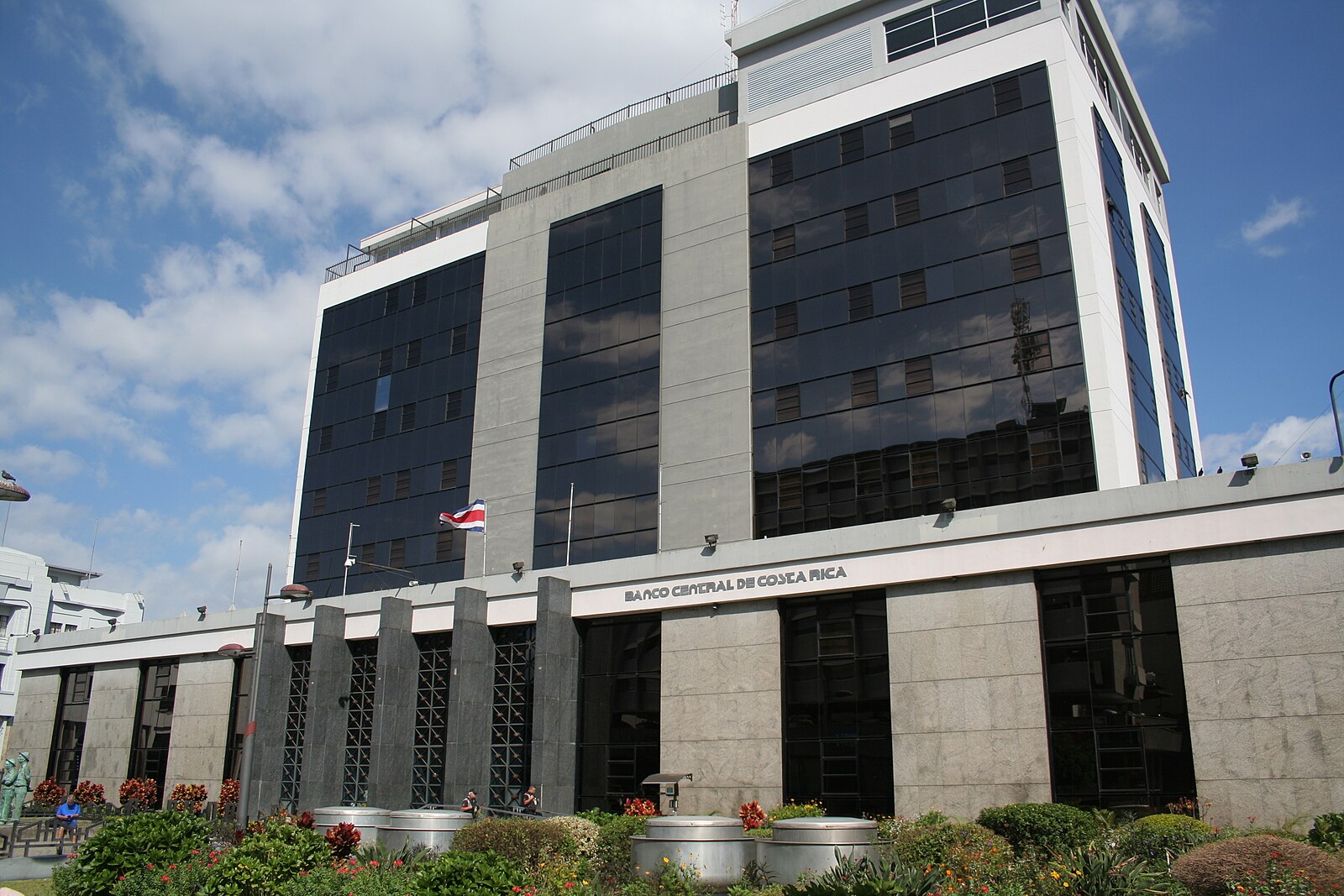
The rules to open bank account Costa Rica foreigner clients face in 2026 reward residency and clear paperwork. A DIMEX opens every door, but a valid passport and proof of a local tie can also work.
State banks, private banks and what stands behind your deposit
Costa Rica’s banking market has three layers. Sugef, the financial regulator, lists two state commercial banks, Banco Nacional and Banco de Costa Rica.
Ten private banks sit beside them, among them BAC San José, Promerica, Lafise, Improsa and Davibank. Sugef lists Davibank (Costa Rica) as the former Scotiabank de Costa Rica.
The bank’s own site says the same, so the Scotiabank name no longer belongs to a Costa Rican bank. Guides that still send readers there are pointing at a brand that has gone.
Banco Popular y de Desarrollo Comunal falls in a third group, banks created by special laws. The distinction decides what stands behind your deposit.
Article 4 of Ley 1644, the National Banking System law, gives the two state commercial banks the guarantee of the State. Private banks do not carry it.
Since Ley 9816 of February 2020, a Deposit Guarantee Fund run by the central bank also covers deposits at supervised institutions. It protects up to 6 million colones (about US$13,278) per depositor per institution.
Figures here use the Banco Central de Costa Rica reference selling rate for 23 September 2026. That is 451.86 colones to the US dollar.
The law says that cover complements the state guarantee rather than replacing it. Private banks, cooperatives and Banco Popular all pay into the fund.
In practice, many expat guides describe the state banks as slower and more paper-heavy, with the widest branch and ATM networks. Private banks are often described as quicker with foreigners and stronger in English-language digital banking.
These are market impressions, not rules, and they vary by branch. Neither route removes the residency question when you open a bank account in Costa Rica as a foreigner.
The residency gate to open bank account Costa Rica foreigner applications
The national rulebook is broader than the counter at your branch. Acuerdo CONASSIF 12-21, the money-laundering regulation for supervised entities, lists the identity documents a bank may accept.
Article 33 accepts a Costa Rican identity card and the migration document issued to foreign residents. It also accepts a passport from a non-resident, if valid and with permission to stay up to date.
DIMEX stands for Documento de Identidad Migratorio para Extranjeros, the identity card for foreign residents. The General Directorate of Migration and Foreigners (DGME) issues it once a residence category is approved.
Each bank then adds conditions of its own. BAC Credomatic takes a foreign resident’s valid passport with regular migratory status, or evidence of a migration application under way.
If that resident has been in the country under six months, BAC also wants a documento de arraigo. That is proof of a real tie: commercial activity, property, an employment contract or family.
A non-resident needs the passport and that proof of ties from the start. Someone applying from outside the country needs an apostille, or a notarial certification of the passport.
BAC also has a separate line for digital nomads. It accepts the remote-worker identity document, or a passport plus evidence that the remote-worker permit is being processed.
There is a lighter product with national rules, the cuenta de expediente simplificado. The central bank’s payment-system regulation sets exactly what opening one takes.
The client appears in person with an identity card, a DIMEX or a passport. Only the full name and the type and number of the document are compulsory.
One such account exists per person and per currency across the whole banking system. Deposits are capped at one million colones a month (about US$2,213), or the equivalent in another currency.
That cap is a national rule, not a bank-by-bank guess. It sits in the payment-system regulation in force since 12 December 2025.
Documents banks typically request
Expect to bring a valid passport, plus your DIMEX if you are a resident. Without a DIMEX, a passport showing a current entry into Costa Rica is the usual starting point.
Proof of local address comes next, usually a recent utility bill or lease. Some banks accept a notarised letter from a landlord.
Proof of income or source of funds follows: a pension letter, employment contract, tax return or recent bank statements. Several months of statements are a common request.
The regulation does allow relief. A bank may skip source-of-funds papers for a low-risk client whose gross monthly income is US$5,000 or less.
The same applies to low-risk salaried workers and pensioners, when the only money arriving is salary or pension. That covers a good share of retirees.
A reference letter from your home bank is still asked for at many institutions. A local phone number helps, because mobile banking and SINPE Móvil depend on it.
Documents issued abroad may need an apostille, the international certificate that authenticates a public document. Translations into Spanish may also be requested.
Every bank in Costa Rica keeps its own list for a foreigner who wants to open an account. Ask the branch for its current checklist before booking an appointment.
Colones and dollar accounts

Costa Rica runs on two currencies in practice. The colón is the legal currency, but US dollars are widely used for rent, cars, property and savings.
Most banks offer separate colón and dollar accounts, often opened side by side. The central bank says the country has run a managed float since January 2015.
It enters MONEX, the electronic currency market, during episodes of high volatility. It also buys there for its own reserves and for state companies.
The practical split is simple. A colón account handles daily spending and local transfers, while a dollar account holds income and savings received in dollars.
Many guides suggest opening both at the same appointment. Adding a second currency later can mean another round of paperwork.
SINPE Móvil: phone-to-phone payments
SINPE Móvil is the central bank’s instant-payment service linked to a mobile phone number. It is used for everyday transfers between people and many small business payments.
It works only with colón accounts. The central bank’s own conditions are a colón funds account and an active mobile line.
A foreigner can join once the bank account opened in Costa Rica is in colones and linked to a local number. One phone number can be tied to only one account in the entire system.
The limits are not purely a bank matter. Every participant must let a customer send at least 100,000 colones a day (about US$221) free of charge.
Each account must also be able to receive at least 2 million colones a month (about US$4,426) free of charge. Banks may set higher figures, and may charge above those sums.
One channel carries a hard ceiling. Payments ordered by plain text message may not exceed 100,000 colones a day (about US$221).
That channel starts at zero until the customer raises it, through a secure channel or in a branch. App and online limits are set by each bank, so ask for yours.
In daily life, SINPE Móvil often decides whether an account feels useful. Paying a landlord, a gardener or a market stall usually happens by phone number.
The compliance layer and source-of-funds checks
Costa Rica’s anti-money-laundering framework rests on Ley 7786, with banks supervised by Sugef, the General Superintendency of Financial Entities. Banks apply it through detailed know-your-customer files.
Expect questions about the origin of your money, expected monthly volumes and typical transfer sizes. Freelancers and people with income from several countries usually face the longest conversations.
Banks can ask for more documents after opening and refresh files periodically. If records look incomplete or inconsistent, activity may be restricted until the file is updated.
Costa Rica keeps that information centrally. A know-your-customer information centre, the CICAC, has run since 1 January 2022 under Article 16 bis of Ley 7786.
Sugef built it with the central bank’s technical support, and the four financial supervisors reach it through their own portals. The file you hand one bank does not stay with that bank alone.
A clear, consistent story of where your money comes from is the single most useful thing to bring. It shortens reviews more than any branch choice does.
Timeline, fees and minimums
Costa Rica’s banks generally require a foreigner to open a bank account in person at a branch. Bring originals and copies of every document.
The first appointment often takes an hour or two, with an interview and extensive forms. Approval can come the same day for simple files or take days or weeks when compliance review is heavier.
Debit cards and online access usually follow approval, not always the first visit. Branches in areas with many foreign clients, such as Escazú, Santa Ana or central San José, are often more practised.
No national schedule of fees or minimums exists. Opening deposits, maintenance charges and wire fees are set by each bank for each product.
Banco de Costa Rica states that it asks for no minimum balance on its accounts. Its published requirements for an adult are a valid identity document and papers showing where the money comes from.
Other banks publish their own tariff sheets, and those are the only reliable reference. Ask for the current one before you sign anything.
FATCA and tax reporting for US persons

FATCA, the US Foreign Account Tax Compliance Act, requires foreign banks to report accounts held by US persons. Costa Rica signed a Model 1 intergovernmental agreement with the United States on 26 November 2013.
The US Treasury records that agreement as in force since 8 July 2019. Under the Model 1 route, Costa Rican institutions report to the local tax authority, which passes the data on.
US citizens and green-card holders should expect a self-certification form and a request for their tax identification number.
Some banks apply extra checks to US-linked files under their own compliance policies. This is paperwork rather than a ban, and it is common across the region.
Non-US applicants may also be asked for their tax residence. Costa Rica takes part in international exchange of account information for tax purposes.
Moving money in: wires, transfer services and fintech
International wire transfers are the main route for moving larger sums into a Costa Rican account. They leave a clear paper trail, which compliance teams prefer.
Banks charge separate fees for sending and receiving wires, and currency conversion carries a spread. Compare the full cost before large transfers.
Money-transfer services and multi-currency fintech accounts can work well for regular, smaller amounts. Banks still expect incoming funds to match the profile you declared at opening.
Fintech accounts do not replace a local account for everything. Some residency, utility and tax payments still require a Costa Rican bank.
Keep records of every inbound transfer, especially large ones. A property purchase or a savings transfer is far easier to explain with documents already in hand.
Common pitfalls and how to avoid them
The most common mistake is arriving to open a bank account in Costa Rica as a foreigner without a DIMEX. Decide what you need the account to do before choosing a product.
A limited account opened on a passport may no longer fit once your migration status changes. Banks can review or restrict accounts when status, address or income details go out of date.
Proof of address and source-of-funds documents often need refreshing after the first year. Updating them before the bank asks avoids interruptions.
Many applicants underestimate how often banks still want a home-bank reference letter. Request one before leaving your home country, when it is easiest to obtain.
Another pitfall is relying on old online figures for caps or fees. Rules and product terms change, so confirm them with the bank on the day.
What to do first, and in what order
For most foreigners the practical order is residency, then a full account, then SINPE Móvil. A simplified-file account can bridge the gap in the meantime.
Bring the identity document the regulation names, not the one a forum recommends. A passport works, but only while the permission to stay is current.
Ask for the product terms in writing, including the monthly caps and the fee thresholds. The national floors are a minimum, and a bank may go above them.
The direction of travel is toward more documentation, not less. Nothing in the rules offers a shortcut around source-of-funds checks.
For a foreigner, the path to open a bank account in Costa Rica is smoothest once residency is approved. The underlying rule is unchanged: documented identity, documented money.
More: Costa Rica news in English, every day from The Rio Times.
Frequently Asked Questions
Can a foreigner open a bank account in Costa Rica?
Yes. The national money-laundering regulation accepts a valid passport from a non-resident whose permission to stay is current, and each bank then adds conditions of its own. A DIMEX residency card still makes a full-feature account far easier.
What documents will the bank ask for?
Typically a passport or your DIMEX residency card, proof of address in Costa Rica, and documents showing the source of your funds. A bank may skip the source-of-funds papers for a low-risk client earning US$5,000 a month or less.
How much can I send with SINPE Móvil?
Your bank must let you send at least 100,000 colones a day (about US$221) free of charge, and receive 2 million colones a month (about US$4,426) free. Banks may allow more, and payments ordered by plain text message are capped at 100,000 colones a day.
Does having an account here create a tax liability?
Not by itself. Costa Rica taxes territorially under Ley 7092, so holding an account does not make foreign income taxable. Reporting duties in your home country are a separate question and may still apply.
How do transfers from abroad work?
International transfers arrive but are slow and carry fees at both ends, and the bank may ask about the origin of the money. Many residents move funds in larger, less frequent transfers for that reason, and watch the colón rate when converting.
Connected Coverage
Sources: Ley 9816 via the Attorney General’s legal database, Sugef’s list of supervised entities, Acuerdo CONASSIF 12-21 and Acuerdo CONASSIF 11-21, the Banco Central de Costa Rica’s Reglamento del Sistema de Pagos with its SINPE Móvil and exchange-rate pages, BAC Credomatic’s published account requirements, Banco de Costa Rica, the US Treasury’s FATCA agreements table and the Ministerio de Hacienda exchange-rate indicator.
This article was produced by The Rio Times’ automated newsroom system. How we use AI · Report an error · Editorial responsibility: Matthias Camenzind, Editor-in-Chief
Expat Guide to Costa Rica
What The Rio Times publishes for foreigners who live in or move to Costa Rica.
Start here
- Fer De Lance Snake Facts and Safety Tips
- Best Places to Live in Costa Rica for Expats 2026
- Costa Rica Income Tax Bill Would Charge Residents 15% on Five Kinds of Foreign Investment Income
- Costa Rica Permanent Residency and Citizenship: How the Rules Work
City guides
Coming up in Costa Rica
- Def Leppard Costa Rica Concert Set for 27 October 27 Oct
- Ozuna Plays Costa Rica on 31 October 31 Oct
- Alejandro Sanz Plays Costa Rica on 7 November 2026 7 Nov
- Cazzu Plays Alajuela, Costa Rica, on 12 November 2026 12 Nov
Understand Costa Rica