Published Friday, 30 October, 7:30 a.m. ET (12:30 p.m. Paris) · Source: Paris Police Prefecture, French Interior Ministry
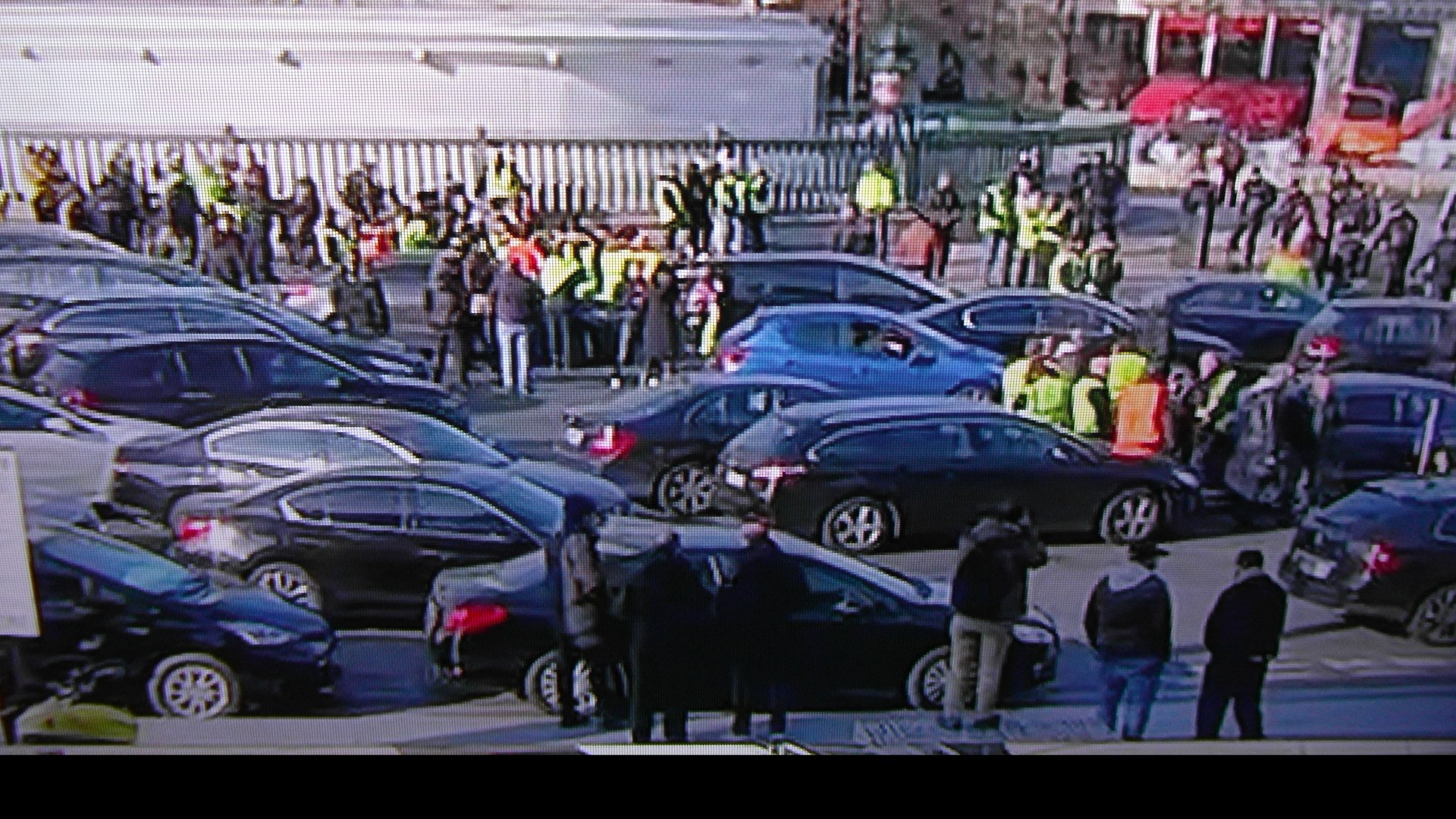
Paris police have told Saturday’s protesters where they may march, and it is not the city centre. The police prefecture, the office that runs policing in the capital, has banned the routes through central Paris that unions and “yellow vest” activists had filed for 31 October, and moved them to the outer boulevards, the latest twist in the wave of France protests.
The decision came on Friday, 30 October, one day before the march. The authorised route runs between Porte de Bagnolet and Porte de Charenton, two city gates on the eastern edge of Paris, from noon to 6 p.m. Paris time (7:00 a.m. to 1:00 p.m. ET), with the procession leaving at 2 p.m. (9:00 a.m. ET).
Key Facts
- What happened: Paris police banned central routes filed by the CGT, a major labour union, and the “yellow vests” for Saturday.
- The new route: One march along the Maréchaux boulevards, Porte de Bagnolet to Porte de Charenton, leaving 2 p.m. Paris time.
- Security: Laurent Nuñez, the interior minister, has 70,000 police and gendarmes mobilised across France.
- What next: Unions asked an emergency judge to rule on the ban before Saturday; no ruling is known.
- Prediction markets: Polymarket, a betting exchange, put a French state of emergency by 31 December at 7.5% (7:16 a.m. ET, 30 October).
This story is part of our coverage of the why France is in crisis. Dates, times and how to follow it are in our guide.
In plain English
The General Confederation of Labour (CGT) is one of France’s largest trade union federations. The “yellow vests” are a leaderless protest movement that began in 2018 over fuel prices and now campaigns on the cost of living and civil liberties.
The boulevards des Maréchaux are the wide avenues that circle Paris just inside the ring road. Marchers there are far from the monuments and shops of the centre.
Which Routes Were Refused
The union coalition had filed a march from Place de la Bastille to Place de la Nation, two landmark squares in eastern Paris. The “yellow vests” had asked for a longer walk from Bastille to Place de la Concorde, passing the Opéra and the Madeleine church and ending opposite the National Assembly.
The prefecture refused both. It cited an “extremely tense social context” and said it wanted to prevent breakages and violence while still protecting the freedom to demonstrate.
Why Unions Went to Court
On Thursday, seven employee and student unions asked an emergency judge to force the prefecture to publish its ban quickly. They wanted time to challenge it in court before Saturday.
A Country on Edge
Nuñez has said 70,000 police and gendarmes are mobilised nationwide for the day, the same scale as on 24 October. That echoes weeks of unrest over living costs, which we followed in our explainer on why France is protesting.
What Prediction Markets Say
Polymarket, a crypto-based prediction exchange, lists a market on whether France declares a state of emergency. At 7:16 a.m. ET on 30 October (12:16 p.m. Paris), it priced a declaration by 31 October at 2.1% and by 31 December at 7.5%, with US$2.07 million traded on the December market.
These prices are bets, not polls, and they show traders see a formal emergency as unlikely.
Why we show this: prediction markets turn real-money bets into a live probability that moves within minutes of the news, which is why investors, campaigns and newsrooms in the United States now follow them closely. We show them next to polls and official results, never instead of them.
What This Means for US Readers
Americans in Paris on Saturday should expect heavy policing and possible street closures, especially in the east of the city. The government’s message is clear: protest is allowed, but not in the heart of Paris.
For investors, repeated street unrest keeps pressure on a government facing the next presidential election, which we track in our France 2027 poll tracker.
What Is Not Known
No court ruling on the unions’ request has been reported yet. It is also unclear whether the organisers will accept the Maréchaux route or try to march in the centre anyway.
Reports also mention extra restrictions on gatherings and a curfew in parts of central Paris, but the areas and dates differ between accounts and are not confirmed here. Turnout, arrests and damage cannot be known before Saturday.
Frequently Asked Questions
Where can people march in Paris on 31 October?
The prefecture authorised one march between Porte de Bagnolet and Porte de Charenton on the Maréchaux boulevards. The gathering runs noon to 6 p.m. Paris time, with the procession leaving at 2 p.m.
Why did Paris police ban the central routes?
The prefecture cited an “extremely tense social context” and a wish to prevent breakages and violence. It says the outer route still gives marchers visibility.
Sources: Paris Police Prefecture decisions of 30 October 2026 (prefecturedepolice.interieur.gouv.fr), French Interior Ministry statements, statements by the CGT and the yellow-vest coordination.
This article was produced by The Rio Times’ automated newsroom system. How we use AI · Report an error · Editorial responsibility: Matthias Camenzind, Editor-in-Chief
France in Turmoil
- Why France Is in Crisis, and How Macron Lost His Grip
- Why Is France Protesting? Riots, Curfews and the 2027 Race
- Is It Safe to Travel to France Right Now? Curfews, Strikes
- Who Will Win France’s 2027 Election? Polls and Odds