
ARGENTINA · POPULATION
Key Facts
- —The country About 46.5 million people in mid-2026, INDEC projects.
- —What happened The 2022 census counted 45,892,285 people, 14.4% more than in 2010.
- —The groups 1.31 million Indigenous, 302,936 Afro-descendants, 1.93 million born abroad (2022).
- —Births INDEC projects 1.27 children per woman in 2025, far below 2.1.
- —Prediction markets Polymarket bettors give President Javier Milei a 54% chance of winning the 2027 election (7 October, 8:31 a.m. ET).
- —Still open How strictly the May 2025 migration decree is applied remains unclear.
Argentina’s births are falling fast, and its newcomers now come from Paraguay, Bolivia and Venezuela rather than Europe.
Argentina population figures tell the story of a nation built by European immigration that is now ageing quickly. INDEC, the national statistics institute, estimates 46.5 million people in mid-2026, against 45.9 million counted by the 2022 census.
For US readers, the shifts matter for investment, migration and travel, and about 212,000 Argentine-born people already live in the United States.
Argentina Population in 2026, the Key Numbers
The last national census, held on Wednesday, 18 May 2022, counted 45,892,285 people. That was 5.8 million more than in 2010, a rise of 14.4% in 12 years.
INDEC notes that a census count tends to fall slightly short of the real population. Its new projections, built on the 2022 census, therefore start from 46.1 million people in mid-2022.
Those projections put the population at 46,466,688 on 1 July 2026. That is roughly one-seventh of the population of the United States.
Growth has slowed to a crawl. INDEC projects an annual growth rate of 1.8 per thousand in 2025, or roughly 80,000 extra people a year.
Women outnumber men. The census counted 23.7 million women and 22.2 million men.
On current projections, Argentina will reach only 47.5 million people by 2040. For the economic backdrop to these numbers, see the Rio Times guide Argentina Explained and the Argentina news page.
An Ageing Country With Fewer Births
Argentina is getting older. The census put the median age at 32 in 2022, 12 years higher than a century earlier.
Children under 15 made up 22% of the population in 2022, while people aged 65 and over made up 11.9%.
INDEC’s projection tables put those shares at 19.9% and 12.7% in 2026. By 2040 they reach 14.3% and 16.4%, so older people will outnumber children.
The main driver is a sharp fall in births. INDEC projects a fertility rate of 1.27 children per woman in 2025, far below the 2.1 that keeps a population stable.
The same tables show about 436,000 children under one year old in 2026, down from almost 500,000 in 2022.
People are also living longer. Life expectancy at birth is projected at 75.7 years for men and 81.1 years for women in 2025.
Where Argentines Live
Argentina is overwhelmingly urban. World Bank estimates put the urban share of the population at about 92% in 2025.
More than a third of the country lives in and around Buenos Aires. The census counted 16.4 million people in private homes in the metropolitan region, 35.9% of all Argentines living in private homes.
Of those, 3.1 million live in the capital itself. Another 13.3 million live in 39 surrounding districts of Buenos Aires province.
The rest of the population is spread across the other provinces, from the subtropical north to Patagonia. The census covered 24 jurisdictions: 23 provinces and the City of Buenos Aires.
A Nation Built by European Immigration
Modern Argentina was shaped by mass migration from Europe in the late 19th and early 20th centuries. In 1914 almost 30% of residents had been born abroad, according to INDEC’s historical census series.
As those European immigrants died and were not replaced, the foreign-born share fell steadily, INDEC notes. At the 2022 census it stood at 4.2%, similar to 2001 and 2010.
The European legacy runs through Argentine society, but few European-born residents remain. The census counted 68,169 people born in Italy and 48,492 born in Spain.

Today’s Newcomers Come From Next Door
The census counted 1,933,463 people born abroad. Paraguay leads with 522,598, followed by Bolivia with 338,299.
Together, people born in Paraguay and Bolivia make up 44.5% of all immigrants, INDEC says. Venezuela has climbed to third place with 161,495.
Next come Peru with 156,251, Chile with 149,082 and Uruguay with 95,384. The census also counted 13,986 people born in the United States.
INDEC’s projections assume migration will roughly balance out. For 2025 to 2029 they expect 264,011 immigrants and 255,506 emigrants.
Policy has tightened under President Javier Milei, a libertarian in office since December 2023. On 28 May 2025 he rewrote parts of the 2003 Migration Law by emergency decree.
Applicants for permanent residence must now prove they can support themselves and have no disqualifying criminal record. Public universities may charge foreigners without permanent residence, and entrants must declare health insurance.
The decree’s preamble cites deportations from the United States as a reason to expect more arrivals. For the practical rules, see the Rio Times guide to residency in Argentina.
Indigenous and Afro-Argentine Communities
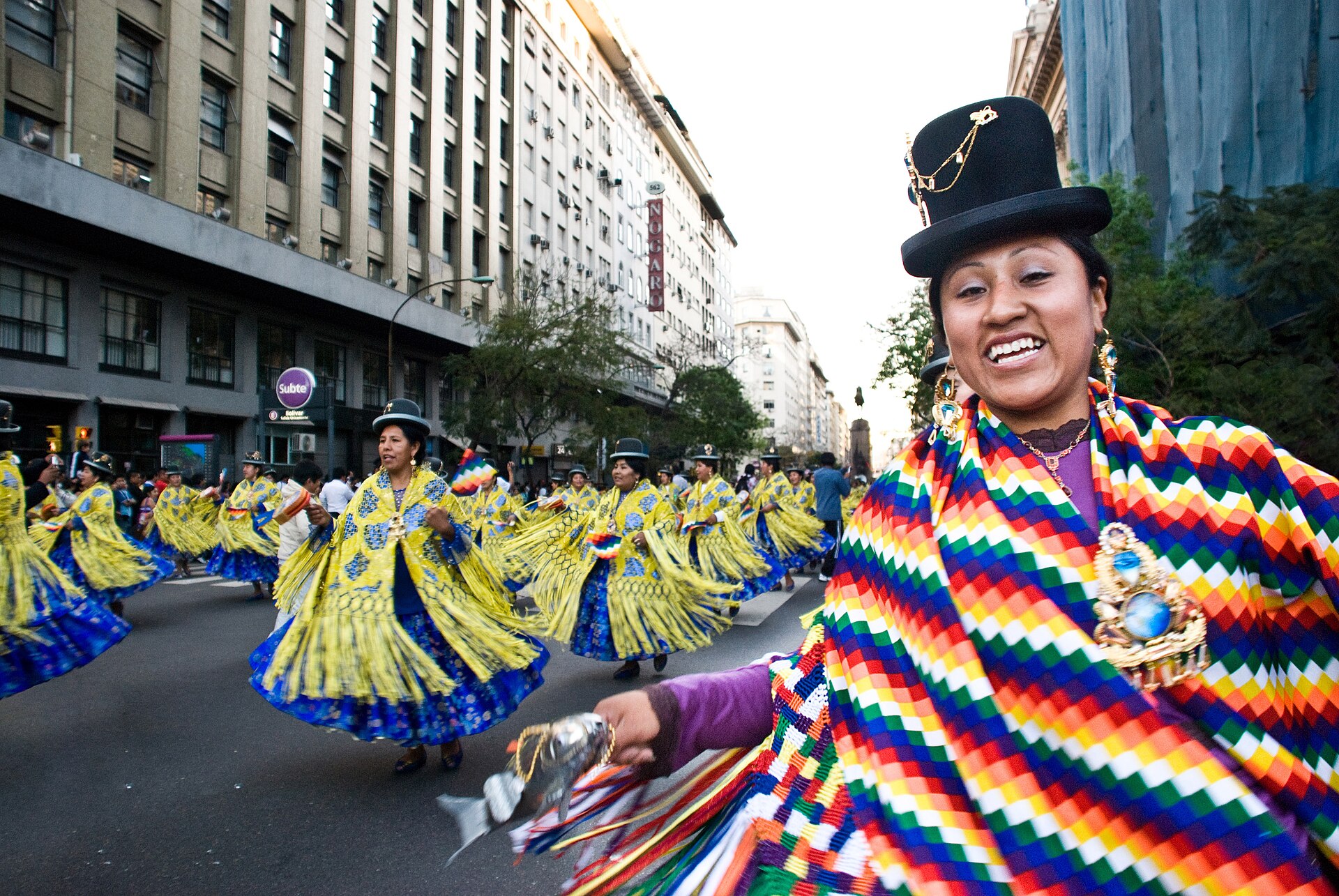
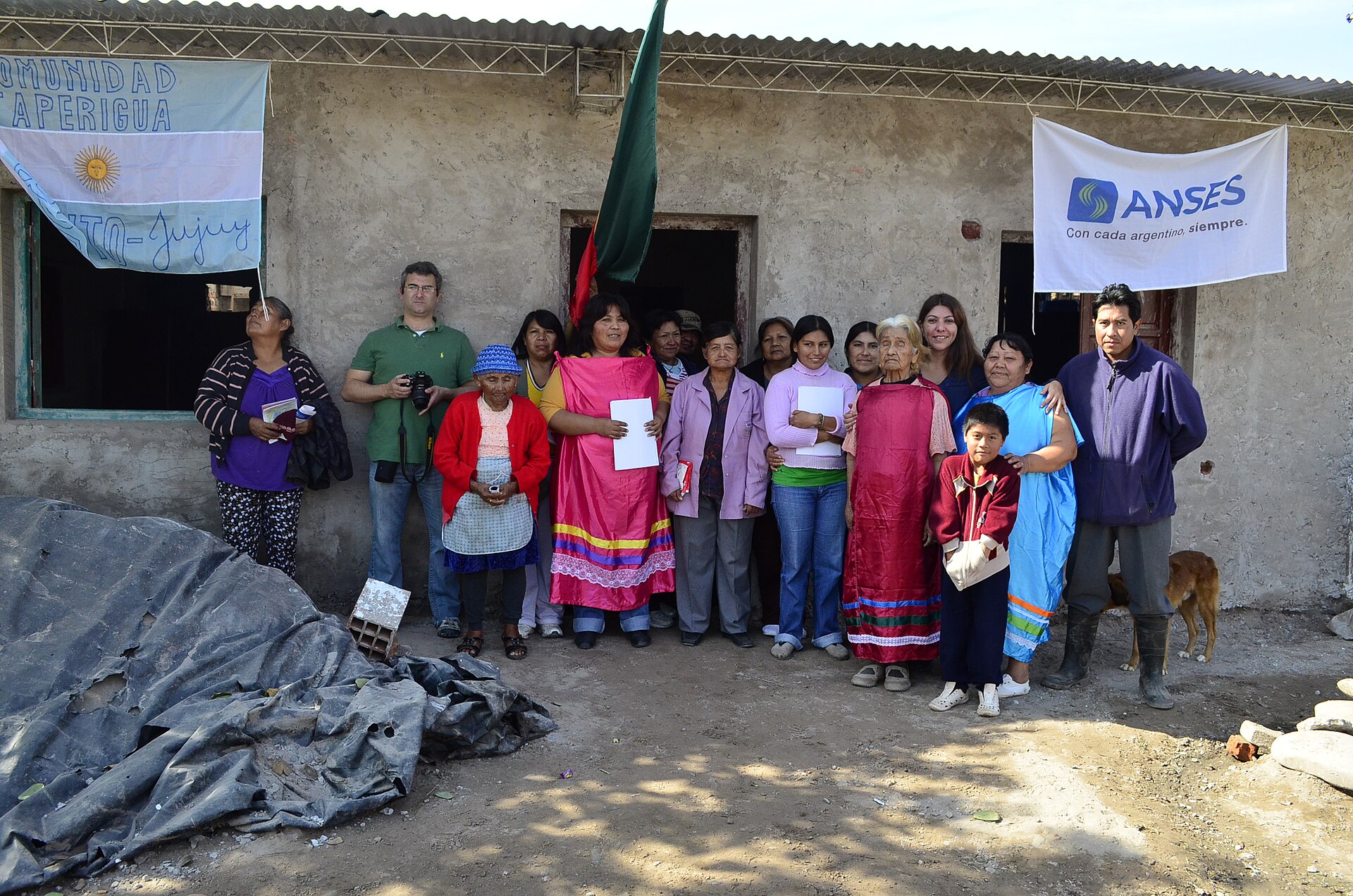
In the 2022 census, 1,306,730 people identified as Indigenous or descended from Indigenous peoples. That is 2.9% of people in private homes, up from 2.4% in 2010.
Respondents named 58 different peoples. The largest are the Mapuche (145,783), Guaraní (135,232), Diaguita (86,022), Qom or Toba (80,124), Kolla (69,121) and Wichí (69,080).
Geography still matters. The Mapuche are concentrated in Neuquén, Río Negro, Buenos Aires and Chubut, while most Kolla live in Jujuy and Salta.
Most Wichí live in Salta and Formosa, in the hot Chaco region of the north. Most Qom live in Chaco, Buenos Aires, Formosa and Santa Fe.
Only 29.3% of Indigenous people speak or understand their people’s language. The share is 89% among the Pilagá but only 17.9% among the Mapuche, the largest people.
The number of people who identify as Afro-descendant doubled between censuses, from 149,493 in 2010 to 302,936 in 2022. That is about 0.7% of the population.
More than half of Afro-Argentines, 55.9%, live in the City of Buenos Aires or Buenos Aires province.
Faith, Language and the Diaspora
The census does not ask about religion. A 2019 national survey by CONICET, the state science council, found that 62.9% of Argentines identified as Catholic.
The same survey, based on 2,421 interviews, found 18.9% with no religion and 15.3% evangelical Christians.
Spanish is the language of daily life. The census asked only about Indigenous languages, which a minority of Indigenous people still use.
Argentina also sends people abroad. About 1.18 million people born in Argentina lived in other countries in 2024, according to UN migrant stock estimates.
Spain hosts about 391,000 of them, the United States about 212,000 and Italy about 89,000. INDEC estimates that emigrants outnumbered immigrants by 32,008 over 2023 and 2024.
How the Groups Live Together
The 2003 Migration Law guaranteed migrants health care and education whatever their status, the 2025 decree’s own preamble notes. The decree now limits free routine care at federally run hospitals to permanent residents, though emergencies stay covered.
Public opinion had already shifted. In the 2019 CONICET survey, seven in ten respondents wanted stricter migration controls.
Economic stress cuts across every group. In the first half of 2026, INDEC counted 9.7 million people below the poverty line in 31 urban areas, or 32.3%.
Labour data add nuance. Indigenous people aged 14 and over were more likely to work or seek work than Argentines overall: 67.1% against 63.6%.
For more on living standards, see the Rio Times report on the latest poverty figures.
What It Means for US Readers
Argentina population trends reach the United States directly.
The two countries are linked by people. UN estimates count about 212,000 Argentine-born residents in the United States, while 13,986 US-born people lived in Argentina at the 2022 census.
Americans seeking permanent residency face the decree’s tougher tests, including proof of means and a clean criminal record.
The decree also requires entrants to declare that they hold health insurance, so travel cover is advisable. Federally run hospitals may charge foreigners without permanent residence for routine care.
For investors, INDEC’s projections point to a slowly growing and older consumer base. For the politics behind these changes, see the Rio Times profile Who Is Javier Milei?
What Prediction Markets Say
Polymarket, a crypto-based prediction market, gave Milei a 54% chance of winning the October 2027 presidential election. That price was recorded at 8:31 a.m. ET on 7 October 2026.
Axel Kicillof, the Peronist governor of Buenos Aires province, stood at 32.5%, and former economy minister Sergio Massa at about 8%. These are bets, not polls.
The market has drawn about US$820,000 in total volume. Milei slipped about two points over the previous 24 hours.
The result matters for population policy, because the 2025 migration rules came by presidential decree and a future government could revise them.
Why we show this: prediction markets turn real-money bets into a live probability that moves within minutes of the news, which is why investors, campaigns and newsrooms in the United States now follow them closely. We show them next to polls and official results, never instead of them.
What Is Not Known
Several Argentina population questions remain open. It is not clear how strictly the 2025 decree’s health and university charges are applied in practice.
The decree’s legal standing could also change through court rulings or a vote in Congress. BAE Negocios reported in June 2026 that the National Electoral Chamber had struck down its citizenship provisions in one case.
INDEC assumes fertility will recover slightly to 1.4 children per woman by 2040. Whether births follow that path is unknown.
The number of migrants living in Argentina without papers is not known. The religion figures date from 2019 and may have shifted since.
Frequently Asked Questions
What is the population of Argentina in 2026?
INDEC projects 46,466,688 people on 1 July 2026. The 2022 census counted 45,892,285 residents.
What are the main ethnic groups in Argentina?
The census does not ask about European ancestry, despite heavy European immigration before 1914. In 2022 it counted 1.31 million Indigenous people, 302,936 Afro-descendants and 1.93 million foreign-born residents.
How many Indigenous people live in Argentina?
The 2022 census counted 1,306,730 people who identify as Indigenous or of Indigenous descent, 2.9% of people in private homes. The Mapuche are the largest of 58 peoples named.
Where do immigrants in Argentina come from?
Most come from neighbouring countries. Paraguay (522,598), Bolivia (338,299) and Venezuela (161,495) led the 2022 census count.
Is Argentina’s population growing?
Barely. INDEC projects growth of 1.8 per thousand in 2025 and 47.5 million people by 2040, with fertility near 1.3 children per woman.
What religion are most Argentines?
A 2019 CONICET survey found 62.9% Catholic, 18.9% with no religion and 15.3% evangelical. The census does not ask about faith.
How many Argentines live abroad?
UN estimates put the Argentine-born population abroad at about 1.18 million in 2024. The largest groups live in Spain and the United States.
Sources: INDEC, Census 2022 demographic indicators; INDEC, Census 2022 migration; INDEC, Census 2022 Indigenous population; INDEC, Census 2022 Afro-descendant population; INDEC, Census 2022 metropolitan Buenos Aires; INDEC, population projections 2022-2040; INDEC, projection indicators; INDEC, poverty first half 2026; Boletin Oficial, Decree 366/2025; CONICET, Second National Survey on Religious Beliefs (2019); UN DESA, International Migrant Stock 2024; World Bank, urban population Argentina; Casa Rosada; Government of Buenos Aires Province; BAE Negocios, ruling on Decree 366/2025 (all accessed 7 October 2026).
This article was produced by The Rio Times’ automated newsroom system. How we use AI · Report an error · Editorial responsibility: Matthias Camenzind, Editor-in-Chief