Senegal Residency Visa Requirements 2026 — Entry, Residence Card, Work, Citizenship
GUIDES · SENEGAL
Key Facts
- —What it is a visa-free stay of up to three months for many passports, then a residence card for longer stays.
- —Who it’s for ECOWAS citizens, employees, retirees, remote workers, spouses and investors planning to live in Senegal.
- —What it costs French official guidance lists a 15,000 CFA franc (about US$26) card tax plus an annual stamp.
- —Why it matters the card makes banking, leases, work and renewals lawful, and it builds the record for citizenship.
- —The catch residence controls tightened in September 2026, and a reciprocal e-visa plan is announced but not dated.
Senegal residency visa requirements in 2026 rest on two steps: a visa-free stay of up to three months for many passports, then a residence card from the police in Dakar.
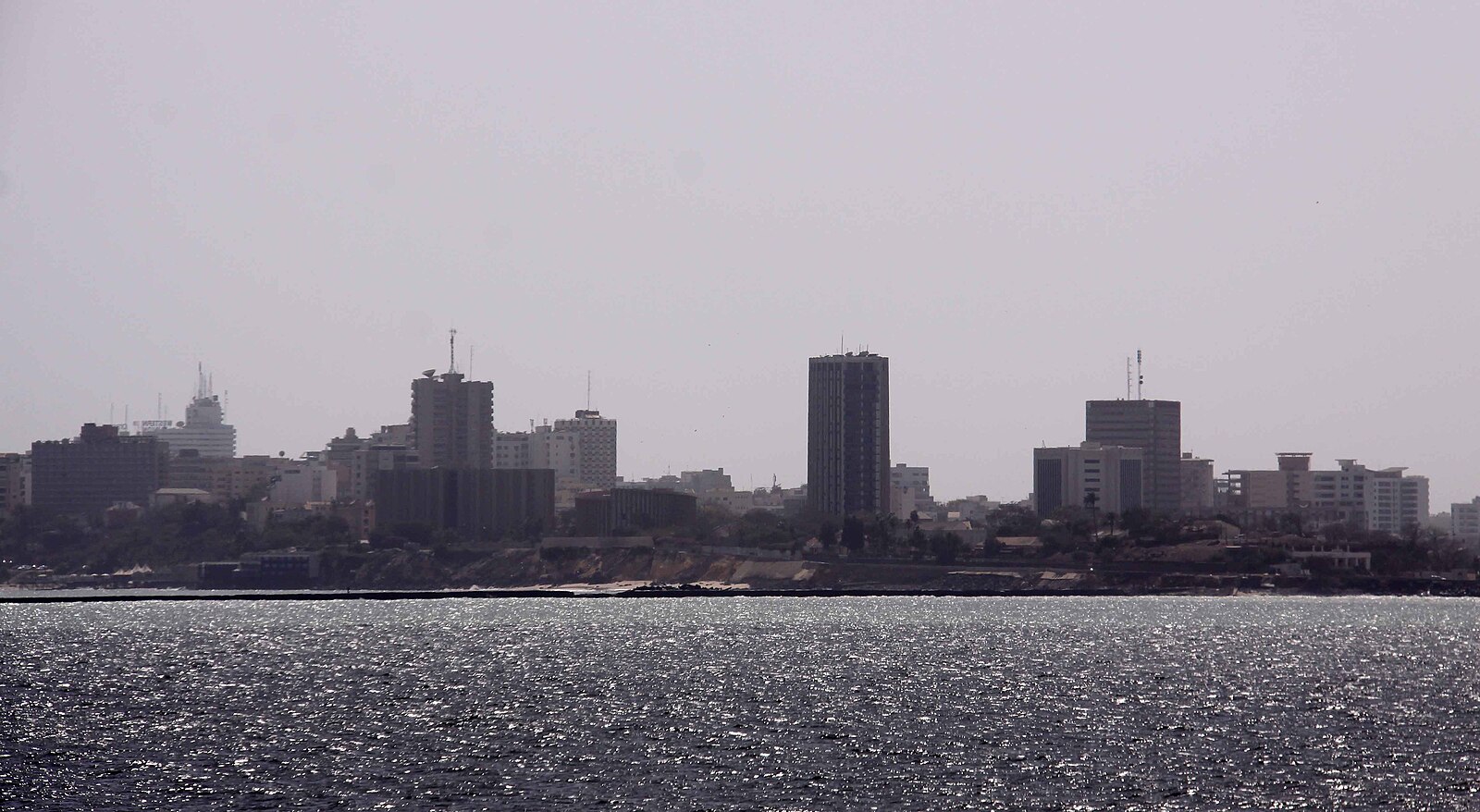
Senegal residency visa requirements in 2026 follow a simple structure. Many foreigners enter without a visa for up to three months, then need a residence card to stay longer.
The entry landscape: who can enter Senegal without a visa
Senegal runs one of West Africa’s more open entry regimes. Citizens of ECOWAS (the Economic Community of West African States) enter without a visa under the bloc’s free-movement protocol.
Many Western passports are also visa-exempt for short stays. France’s foreign ministry says French citizens need no visa for stays under three months, with a passport valid for over six months.
The US State Department gives the same picture for American citizens: no visa for 90 days or less. It also asks for six months of passport validity beyond arrival and one blank page.
Other nationalities should check their own passport against Senegalese consular guidance before travel. Senegal residency visa requirements for short stays differ by nationality, so this guide does not list them.
The e-visa reciprocity plan: what is announced and what is not
In July 2025, Senegal’s Council of Ministers backed a mandatory electronic visa for countries that demand visas from Senegalese citizens. The stated principle is reciprocity.
As of mid-September 2026, French official travel guidance still lists French citizens as visa-exempt for short stays. No start date, fee or final country list has been published in official form.
For a foreigner, this means the three-month visa-free window is real today but not guaranteed forever. Anyone planning a move should recheck Senegal residency visa requirements shortly before each trip.
What is not yet known is how an e-visa would treat foreigners who already hold a residence card. No official text has answered that question so far.
The residence card: Senegal’s core residence document
Anyone staying beyond the short-stay window needs a residence card, officially the carte d’identité d’étranger (foreigner’s identity card). French guidance says it becomes mandatory after three months.
Applications go to the Direction de la Police des Étrangers et des Titres de Voyage (DPETV) in Dakar. This police directorate is the central authority for foreigners’ residence documents.
The card is linked to a purpose of stay, such as salaried work, family ties, study or living on one’s own means. The documents you file depend on that purpose.
Fees can change without much notice, so confirm the current amounts at the office. Senegal residency visa requirements are applied by that office, not by online summaries.
France’s foreign ministry lists a tax of 15,000 CFA francs (about US$26) for the original card. The annual stamp costs 10,000 CFA francs (about US$18), at 19 September 2026 exchange rates.
Senegal residency visa requirements for employed foreigners

The residence card allows you to live in Senegal, but paid work adds a labour-law layer. Senegal residency visa requirements for employees therefore run through the employer as well as the police.
Expatriate employment contracts must be submitted to the labour directorate for approval, known locally as the contract visa. The employer files the contract, and the approval is tied to that job.
ECOWAS nationals benefit from regional free-movement rules but still work under Senegal’s labour code. Non-ECOWAS nationals should expect the employer-led approval before starting work.
In practice, the job offer comes first and the paperwork follows it. You cannot obtain work approval alone and then look for an employer.
The retiree and independent-means path
Senegal has no separately branded retirement or digital-nomad visa. Retirees and remote workers usually apply for the standard residence card on the basis of their own resources.
The police may ask for proof of sufficient means, such as pension statements or regular bank income. Senegal does not publish a fixed minimum income figure for this category.
Because no official threshold exists in public guidance, ask the police foreigners office what it expects for your file. Figures quoted in online forums are not a reliable basis.
Senegal residency visa requirements for this group also include proof of accommodation and a clean criminal record from home. A stable address in Senegal makes the file much easier to complete.
The investor angle: APIX and company formation
APIX, the national agency for investment promotion and major works, is the main public contact for investors. Its one-stop shop advises investors and handles approvals under the investment code.
Forming a Senegalese company is legally separate from obtaining personal residence. A company creates a legal entity, while the foreign manager or shareholder still needs a residence card.
What a company does provide is a documented reason to live in Senegal, usually through a manager or self-employed file. The two processes run in parallel, not as one.
Investors should budget for a local notary or lawyer for incorporation. Senegal residency visa requirements still apply to them in full, so the residence file needs its own timeline.
Documentation standards: what files generally require
Expat guidance describes a fairly stable core file for the residence card. It includes a signed letter to the Minister of the Interior, a birth certificate, a home-country criminal record and a medical certificate.
Applicants also add proof of residence, often a certificate from the neighbourhood chief and town hall, plus identity photos. An employment attestation or a host’s sponsorship declaration completes many files.
Some expat guides also describe a refundable deposit for repatriation costs, returned when the holder leaves for good. The current amount is not officially published online, so ask the office directly.
Documents not in French usually need a certified French translation. Senegal residency visa requirements vary by category, so confirm the list before collecting papers abroad.
The francophone ease for French-speaking applicants

Senegal’s administration works in French, and its legal system follows the civil-law tradition. For francophone applicants, this removes one of the biggest practical barriers of relocation.
Forms, office conversations and correspondence all happen in French. Applicants who speak it can often handle the file themselves rather than through intermediaries.
The civil-law structure also shapes leases, company statutes and notarial deeds. Applicants from France, Belgium or Quebec will often recognise the logic of these documents.
For non-French speakers, a local translator or adviser is the practical answer. The process is navigable, but the language layer is real and adds time.
The regional angle: WAEMU, the CFA franc and banking
Senegal belongs to the West African Economic and Monetary Union (WAEMU), whose eight members share the West African CFA franc. The regional central bank, the BCEAO, issues it.
The CFA franc is pegged at 655.957 to the euro, with France acting as financial guarantor. At 19 September 2026 exchange rates, that works out at about 571 CFA francs to the dollar.
A 2019 reform ended the duty to hold half of BCEAO reserves at the French Treasury. France also left the bloc’s governing bodies, but the euro peg itself has not changed.
For residents, this means stable prices against the euro but moving values against the dollar and pound. Banking and transfer rules follow regional regulation, so confirm details with your bank.
The permanent-residence and naturalization ladder
Senegal’s residence system works as a ladder of renewed cards rather than a single permanent document. Each renewal adds to your record of lawful, continuous residence.
Clear official criteria for a separate permanent-residence status are not published online. Long-term residents typically keep renewing their card, so ask the police directorate about your options.
Naturalization is governed by the 1961 nationality law, as amended in 2013. It generally requires ten years of habitual residence in Senegal before the application.
The law reduces this to five years for certain groups, including spouses of Senegalese nationals. Naturalization is granted by decree, so it is a discretionary decision, not an automatic right.
For a life, the ladder rewards patience and clean paperwork more than any single payment. Keep copies of every card, receipt and renewal, because they are your proof of years lived.
Common mistakes, the September 2026 controls and how Senegal compares
The most common mistake is overstaying the three-month window while assuming nobody checks. Another is believing a quick exit and re-entry resets the clock for a long stay.
On 8 September 2026, the Prime Minister’s general policy statement to parliament announced tighter nationwide control of residence permits. He noted that authorities cannot yet track who stays beyond three months.
The same speech rejected xenophobic rhetoric and promised electronic border registration. No new fees or legal texts had been published by mid-September 2026.
Côte d’Ivoire shares Senegal’s ECOWAS membership, French administration and CFA franc, so its logic feels similar. Ghana is also in ECOWAS but works in English and uses the floating cedi.
Senegal residency visa requirements are not harder than those of its neighbours. The choice depends more on language, currency exposure and existing ties.
Senegal suits francophone applicants who want euro-linked stability and a clear card system.
Connected Coverage
Cost of Living Dakar 2026 — European Rents, West African Market Prices
Sources: This guide draws on France’s foreign ministry, the US State Department, the French Treasury on the franc zone, Senegal’s nationality law, APIX, AllAfrica and Le Petit Journal Dakar.
This article was produced by The Rio Times’ automated newsroom system. How we use AI · Report an error
Read More from The Rio Times