Senegal Explained 2026: The Country, the Faye Government and What to Watch
GUIDES · SENEGAL
Key Facts
- —Capital Dakar, an Atlantic port city. The Dakar region holds 22 percent of all residents on just 0.28 percent of the national territory, the 2023 census found.
- —Population About 19.1 million in 2025 by the statistics agency’s projection, slightly more than the Netherlands. Half of all residents are under 19.
- —Currency The West African CFA franc, fixed at 655.957 to the euro. That meant 576.38 CFA francs to the US dollar on 25 September 2026.
- —Language French is the official language of the state. In daily life national languages such as Wolof dominate: 97.6 percent of residents aged three and over speak one.
- —GDP US$37.0 billion in 2025, close to the size of Iceland’s economy. Per person that is about US$1,950 a year, against about US$90,000 in the United States.
- —Government A presidential republic with a prime minister and a 165-seat National Assembly. President Bassirou Diomaye Faye has served since April 2024; Prime Minister Ahmadou Al Aminou Lô since May 2026.
Senegal explained from the ground up: a young, stable democracy that found oil, then learned its debts were far larger than reported. It is now renegotiating them, with an International Monetary Fund (IMF) loan agreed but not yet approved.
Senegal explained properly starts with one discovery. The public debt left by the previous government turned out to be about a third larger than official figures had said. The IMF talks and the president’s break with his former prime minister are both tied to it.
What kind of country is this?
Senegal sits on the Atlantic edge of West Africa. The Gambia, a separate country, cuts deep into it along the Gambia River. Senegal covers about 196,700 square kilometres, roughly twice the size of Portugal and four-fifths the size of the United Kingdom.
The 2023 census counted 18,126,390 residents, a number that grew 2.9 percent a year over the previous decade. Half are under 19, and three in four are under 35. Just over half, 54.7 percent, now live in towns and cities.
Senegal became independent from France in 1960, under the poet-president Léopold Sédar Senghor. It is often described as the only mainland West African country never to have had a military coup. Power changed hands peacefully at the ballot box in 2000, 2012 and 2024.
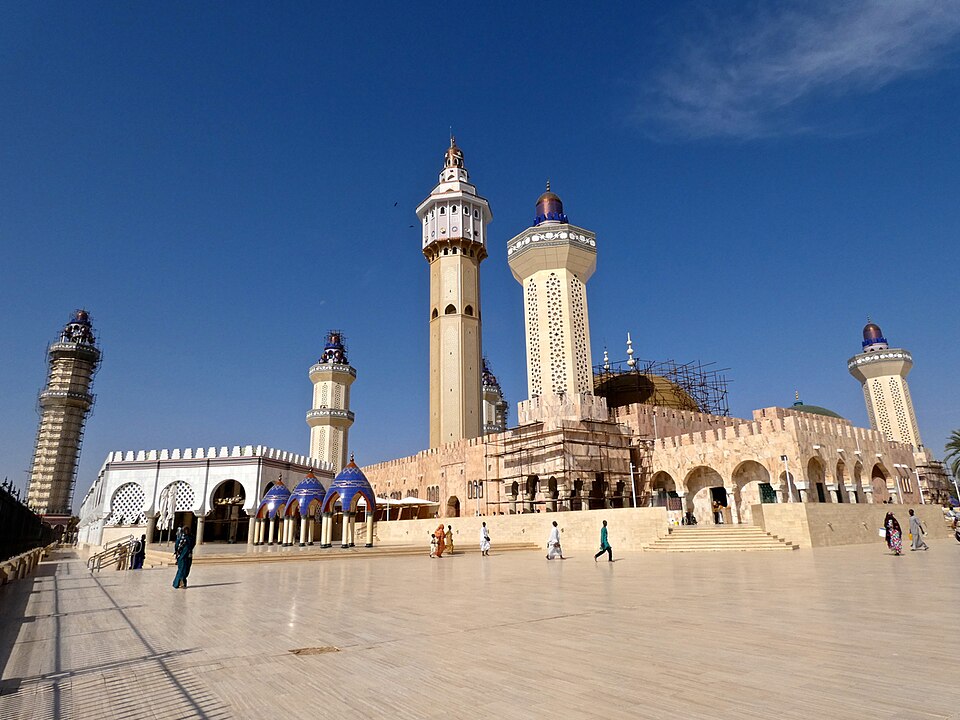
More than nine in ten Senegalese are Muslim, and religious leaders carry real social and economic weight. Much of that faith is organised through Sufi brotherhoods, the best known being the Mourides of the holy city of Touba.
The one long-running armed conflict was a separatist rebellion in the southern Casamance region. Violence eased after a ceasefire in 2014. France closed its last military bases on 17 July 2025, at Faye’s request, ending a troop presence that dated from independence.
Who runs Senegal and how
Senegal is a presidential republic that also has a prime minister. The president is directly elected for five years and can appoint or dismiss the prime minister by decree. Parliament is a single chamber, the National Assembly, with 165 seats.
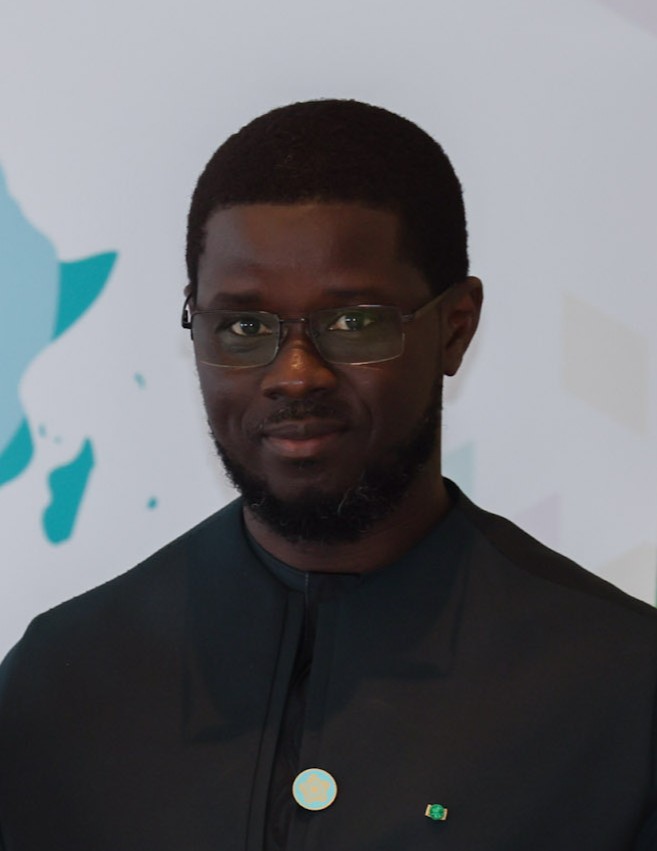
Bassirou Diomaye Faye, a former tax inspector, won the election of Sunday 24 March 2024 with 54.28 percent in the first round. He was 44 when sworn in on 2 April, the youngest president in the country’s history. He ran as the stand-in for Ousmane Sonko, the opposition leader barred from the race by a defamation conviction.
Faye made Sonko prime minister, then called an early parliamentary election. Their party, Pastef, the African Patriots of Senegal for Work, Ethics and Fraternity, won 130 of 165 seats in November 2024. The partnership later broke down over the debt, the approach to the IMF and senior appointments.
On Friday 22 May 2026 Faye dismissed Sonko and the whole government by decree. On 25 May he named Ahmadou Al Aminou Lô, an economist and former official of the regional central bank, as prime minister. The next day the Assembly elected Sonko as its speaker, with 132 votes out of 165.
The result is an unusual split. Faye and Lô run the executive, while the man Faye dismissed runs the legislature that must pass every budget. In April 2026 parliament also changed the electoral code, making Sonko eligible to run for president.
The constitution bars the president from dissolving the Assembly during its first two years. The current Assembly was installed on 2 December 2024, so that protection ends on 2 December 2026.
How the economy works
Senegal’s economy produced about US$37.0 billion of goods and services in 2025, according to the World Bank. That is close to the size of Iceland’s economy. Per person it comes to about US$1,950 a year, around a forty-sixth of the US figure.
Oil changed the arithmetic. Sangomar, an offshore field about 100 kilometres south of Dakar operated by Australia’s Woodside Energy, began production on 11 June 2024. It yielded 36.1 million barrels in 2025, above the government’s revised forecast of 34.7 million, the energy ministry reported.
Woodside says Sangomar held its plateau of about 100,000 barrels a day until late October 2025, then began moving to post-plateau rates. The energy ministry said in May 2026 that well optimisation was keeping the plateau in place. Three crude cargoes totalling 2.95 million barrels were sold in April 2026.
The Greater Tortue Ahmeyim gas project is shared with neighbouring Mauritania and operated by BP. It loaded its first cargo of liquefied natural gas (LNG) on 17 April 2025. Once fully commissioned, its first phase is expected to produce around 2.4 million tonnes of LNG a year.
Oil lifted growth to 6.7 percent in 2025, the IMF says. Without hydrocarbons the economy grew only 2.2 percent, before rebounding to 4.7 percent in the first quarter of 2026. Inflation was 1.4 percent in 2025.
The currency is the West African CFA franc, shared by eight countries of the West African Economic and Monetary Union. It is issued by the Central Bank of West African States, known by its French initials BCEAO. The rate is fixed at 655.957 CFA francs to the euro, or about 576 to the US dollar.
France backs that peg with an unlimited guarantee of convertibility from its Treasury. The Banque de France credits the arrangement with keeping inflation far lower than elsewhere in sub-Saharan Africa. The flip side is that Senegal has no exchange rate of its own to adjust when times are hard.
An agreement signed in December 2019 loosened the French link. The central bank no longer keeps reserves at the French Treasury, and France has left its boards except in a crisis. The peg and the guarantee stayed, and a promised new name, the eco, has not yet been adopted.
What is happening right now
As of 25 September 2026, Senegal is preparing to renegotiate part of its debt under an IMF deal not yet approved. The story began in September 2024. The new government then said the previous administration had understated its deficits and borrowing.
The Court of Auditors confirmed it on 12 February 2025. It found debt at the end of 2023 equal to 99.67 percent of economic output, not the 74.41 percent reported. The 2023 budget deficit was 12.3 percent of output, not 4.9 percent.
The IMF puts total public-sector debt at about 132 percent of output at end-2024, among the highest in sub-Saharan Africa. That wide measure includes some state companies and unpaid bills. The government’s narrower figure is 23,667 billion CFA francs (about US$41 billion), or 119 percent.
The IMF froze a US$1.8 billion programme agreed in June 2023. On Tuesday 1 September 2026 IMF staff agreed a 36-month Extended Credit Facility of about US$2.2 billion. The Fund says the budget deficit already fell from 13.4 percent of output in 2024 to 6.4 percent in 2025.
The Extended Credit Facility is the Fund’s lending line for low-income members, and its Executive Board must still approve this one. First, Senegal must take “decisive corrective actions” over the misreporting. It also needs financing assurances from partners such as the World Bank and the African Development Bank.
Alongside the deal, the government announced a “debt treatment” under an enhanced version of the G20 Common Framework. That is the process the G20 group of large economies set up to coordinate relief among creditors. Debt in CFA francs is excluded, so any losses would fall on lenders in dollars and euros.
Finance Minister Cheikh Diba calls it “not a restructuring in the traditional sense”. S&P Global disagreed: on Friday 4 September it cut Senegal to CC from CCC+, calling a distressed exchange or default “extremely likely”. Moody’s had already cut its rating to Caa2 in late August.
Senegal’s international bonds fell below 50 cents on the dollar or euro after the announcement. The government said it would keep paying for now and had begun transferring a 13 September coupon on its 2048 dollar bond. On 11 September a group of large institutional bondholders announced it had organised to negotiate.
Prime Minister Lô defended the IMF deal before the Assembly on Tuesday 8 September. Lô did not seek a confidence vote, and no censure motion followed. Sonko has demanded publication of the IMF commitments and wants them written into budget law.
Faye gave an interview to France 24 and RFI at the UN General Assembly in New York, published on 24 September. Asked about dissolving the Assembly, he declined to rule it out. “When the time comes, depending on what we face, we will decide,” he said.
What to watch
Deputies are due to examine a 2026 budget amendment carrying the IMF commitments, which reached parliament on 18 September. The 2027 budget is expected before parliament in October. How Sonko’s majority treats both is the clearest test of whether the programme can go ahead.
The IMF board vote has no date. It depends on corrective action over the misreporting and on assurances from other lenders. An IMF-hosted information session for all creditor groups is planned once work on debt sustainability is far enough along.
Wednesday 2 December 2026 is the first day Faye can dissolve the Assembly. A new election must follow 60 to 90 days after the decree, so no earlier than late January 2027.
Then come the terms of the debt deal. Bondholders want to know the size of any cut in principal, new maturities and how votes are counted across five international bonds. The 2048 dollar bond pays interest each March and September, so its next coupon falls due in March 2027.
In the real economy, watch Sangomar output past its plateau and LNG cargoes in the energy ministry’s monthly reports. The next scheduled presidential election is in 2029.
What this means for foreigners
US citizens need no visa for stays of up to 90 days, the State Department says. British citizens can stay up to three months without one, according to GOV.UK. A yellow fever certificate is required if you arrive from a country with transmission risk.
The United States has made travel harder in the other direction, citing visa overstays. Since 1 January 2026 it has suspended, with some exceptions, the entry of Senegalese nationals as immigrants, visitors, students and exchange visitors. Anyone hiring, hosting or marrying a Senegalese citizen should plan around that.
The State Department’s advisory of 1 December 2025 rates Senegal Level 1, “exercise normal precautions”, the lowest of four levels. Casamance is at Level 2 because of crime and landmines. Non-residents must declare cash above 1,000,000 CFA francs (about US$1,735) on arrival.
In March 2026 the Assembly voted 135 to none to double the maximum prison term for same-sex acts to ten years. The law also criminalises their “promotion” and allows fines of up to 10 million CFA francs (about US$17,350). Faye approved it at the end of March.
For investors, the euro peg removes most currency risk against the euro but not the credit risk. Senegal’s foreign bonds traded at around half their face value in early September. Local-currency government debt is, for now, outside the restructuring, though S&P has warned it could be drawn in later.
Our residency and healthcare guides cover permits, the foreigner’s identity card, clinics and insurance in detail. Senegal explained in one line: new oil, old debts bigger than reported, and a president at odds with parliament.
Connected Coverage
Faye Government Faces Moody’s Caa2 Downgrade as Senegal’s Oil Cash Meets Hidden Debt
Senegal Residency Visa 2026 — Entry, Cards, Work, Citizenship
Healthcare in Senegal for Expats 2026 — Costs, Clinics and Insurance
Sources: Population from Senegal’s national statistics agency (ANSD), output from the World Bank, the IMF programme from the International Monetary Fund, debt figures from the Court of Auditors and the IMF, the currency arrangement from the Banque de France and the French Treasury, oil and gas from Woodside and BP, and travel rules from the US State Department, the Federal Register and GOV.UK. Exchange rate: open.er-api.com, 25 September 2026, consistent with the fixed euro parity. All accessed 25 September 2026.
- ANSD — main results of the fifth general population census (RGPH-5, 2023)
- ANSD — population data and the 2025 projection
- World Bank — GDP in current US dollars, Senegal
- International Monetary Fund — staff-level agreement on an Extended Credit Facility with Senegal, 1 September 2026
- Reuters — Court of Auditors report on misreported debt, 12 February 2025
- Banque de France — Africa-France monetary cooperation and the CFA franc peg
- Direction générale du Trésor — the December 2019 WAEMU monetary reform
- Woodside Energy — fourth-quarter 2025 report, Sangomar production
- BP — first cargo from the Greater Tortue Ahmeyim LNG project, 17 April 2025
- US Department of State — Senegal travel advisory and entry requirements
- Federal Register — Proclamation of 16 December 2025 restricting entry of foreign nationals
- GOV.UK — Senegal entry requirements for British citizens
What Is Not Known
How much creditors will lose. Senegal has not published the terms of its debt treatment. The size of any cut in principal, new maturities and interest rates, and how bondholder votes are counted all remain open.
When the IMF board will vote. The staff-level agreement depends on corrective action over the misreporting and on financing assurances from other lenders. Neither the Fund nor the government has given a date.
Whether domestic debt stays protected. The government has excluded debt in CFA francs from the restructuring. On 24 September S&P said the large stock of local debt leaves open the possibility that it could be drawn in later.
Whether Faye dissolves the Assembly. He has kept the option open for when it becomes legal on 2 December 2026. Nobody can say whether a new election would give him a working majority or strengthen Sonko’s.
How long oil output holds up. Woodside says Sangomar has left its plateau, while the ministry says well work is sustaining production. No full-year 2026 figure exists yet, so oil revenue for a strained budget is hard to project.
Frequently Asked Questions
Who is the president of Senegal in 2026?
Bassirou Diomaye Faye, a former tax inspector, in office since 2 April 2024. He won the election of 24 March 2024 with 54.28 percent in the first round. The next scheduled presidential election is in 2029.
Is Ousmane Sonko still prime minister of Senegal?
No. Faye dismissed Sonko and his government on 22 May 2026, and on 25 May named Ahmadou Al Aminou Lô prime minister. The next day the National Assembly elected Sonko as its speaker, with 132 votes out of 165.
What is the IMF deal with Senegal?
On 1 September 2026 IMF staff and Senegal agreed a 36-month Extended Credit Facility worth about US$2.2 billion. It still needs IMF Executive Board approval, which first requires corrective action on past misreporting and assurances from other lenders. It replaces a US$1.8 billion programme frozen after the hidden debt came to light.
How big is Senegal’s public debt?
The Court of Auditors found debt equal to 99.67 percent of output at the end of 2023, not the 74.41 percent reported. The IMF puts total public-sector debt at about 132 percent of output at the end of 2024. The government’s narrower measure is 119 percent.
What currency does Senegal use?
The West African CFA franc, shared by eight countries and issued by the Central Bank of West African States. It is fixed at 655.957 to the euro, which meant about 576 to the US dollar on 25 September 2026. The French Treasury guarantees its convertibility.
Do Americans need a visa to visit Senegal?
No. US citizens can stay up to 90 days without a visa; British citizens, up to three months. A yellow fever certificate is required for travellers arriving from a country with transmission risk.
This article was produced by The Rio Times’ automated newsroom system. How we use AI · Report an error
Part of our ongoing coverage
Africa: The New Scramble — the great-power contest over the continent.
Read More from The Rio Times