Who Runs Senegal’s Economy, the Key Players in 2026
SENEGAL · ECONOMY · KEY PLAYERS
Key Facts
- Growth Senegal’s economy grew 6.7% in 2025, lifted by oil, but its economy ministry expects only 2.5% growth in 2026.
- Debt deal On 1 September 2026 the IMF announced a staff-level deal on a US$2.2 billion, three-year loan that still needs approval from its board.
- Oil Australian company Woodside reports that Senegal’s Sangomar oil field produced 99,000 barrels a day in the second quarter of 2026.
- Gas A shared gas project with Mauritania sent out its first export cargo in April 2025; bp and Kosmos Energy are partners.
- Money Senegal shares the CFA franc with its neighbors; the central bank sits in Dakar and its minimum bid rate is 3.00%.
- Budget fight Parliament’s finance committee rejected the 2026 supplementary budget a second time, the finance ministry noted on 31 October 2026.
The Senegal economy in 2026 is steered by the presidency, the finance ministry, a shared central bank and foreign oil firms. This guide names who they are, what they control and why the IMF and parliament now matter as much as oil.

The Senegal Economy at a Glance
Senegal has about 19.7 million people on the Atlantic coast of West Africa, with its capital and main port in Dakar. The IMF, the Washington-based international lender, gives that population figure on its country page.
The Senegal economy grew 6.7% in 2025 as oil production entered its first full year, the IMF said on 1 September 2026. Growth outside oil and gas was only 2.2% in 2025, though it rebounded to 4.7% in the first quarter of 2026.
For 2026 the economy ministry expects growth to slow to 2.5%, because oil adds less to growth than a year earlier. The IMF’s country page, updated on 18 August 2026, projects 2.2% growth and 2.5% inflation for 2026.
The ministry’s April 2026 report also projects a current account deficit of 5.1% of output, about one point worse than in 2025. That gap means Senegal pays out more abroad than it earns, and the difference has to be financed with loans or aid.
The State at the Center of the Senegal Economy
President Bassirou Diomaye Faye chairs the Council of Ministers, the cabinet whose communiqués record each decision. The communiqué of Tuesday 13 October 2026 says the 2027 finance bill was filed with parliament on time.
Prime Minister Ahmadou Al Aminou Lo heads the government day to day, according to the prime minister’s office. His cabinet list names 32 members, and a handful of them hold the economic portfolios.
Cheikh Diba is Minister of Economy, Finance and Plan, and he briefed the Council on the 2027 finance bill on 30 September. Two ministers work under him: Bassirou Sarr for the budget and Allé Nar Diop for the economy, planning and cooperation.
The Sector Ministers
El Hadji Abdourahmane Diouf is Minister of Energy and Petroleum, so he oversees both the oil fields and the power grid. Cheikhou Oumar Seck is Minister of Mines and Geology, and Serigne Guèye Diop is Minister of Industry and Commerce.
On Wednesday 30 September 2026 the Council adopted the 2027 finance bill and heard a review of electricity supply and demand. It also adopted a decree on a fund to repair mine and quarry sites.
Parliament Holds the Purse
The National Assembly, Senegal’s parliament, must pass every budget, and its Finance and Budget Control Committee is where the fight happens. On Saturday 31 October 2026 the finance ministry noted that the committee had rejected the 2026 supplementary finance bill a second time.
That matters because the IMF program rests on fiscal discipline, including stronger domestic revenue collection and tighter spending. The 2027 finance bill is also before the Assembly, whose single yearly session opened on 13 October 2026.
The Central Bank and the CFA Franc
Senegal does not control its own money. It uses the West African CFA franc, issued by the BCEAO, the regional central bank that has its headquarters in Dakar.
The BCEAO’s minimum bid rate, the floor for banks bidding for its cash, has been 3.00% since 16 March 2026. Its marginal lending rate is 5.00%, and both rates apply across the whole currency zone, not just Senegal.
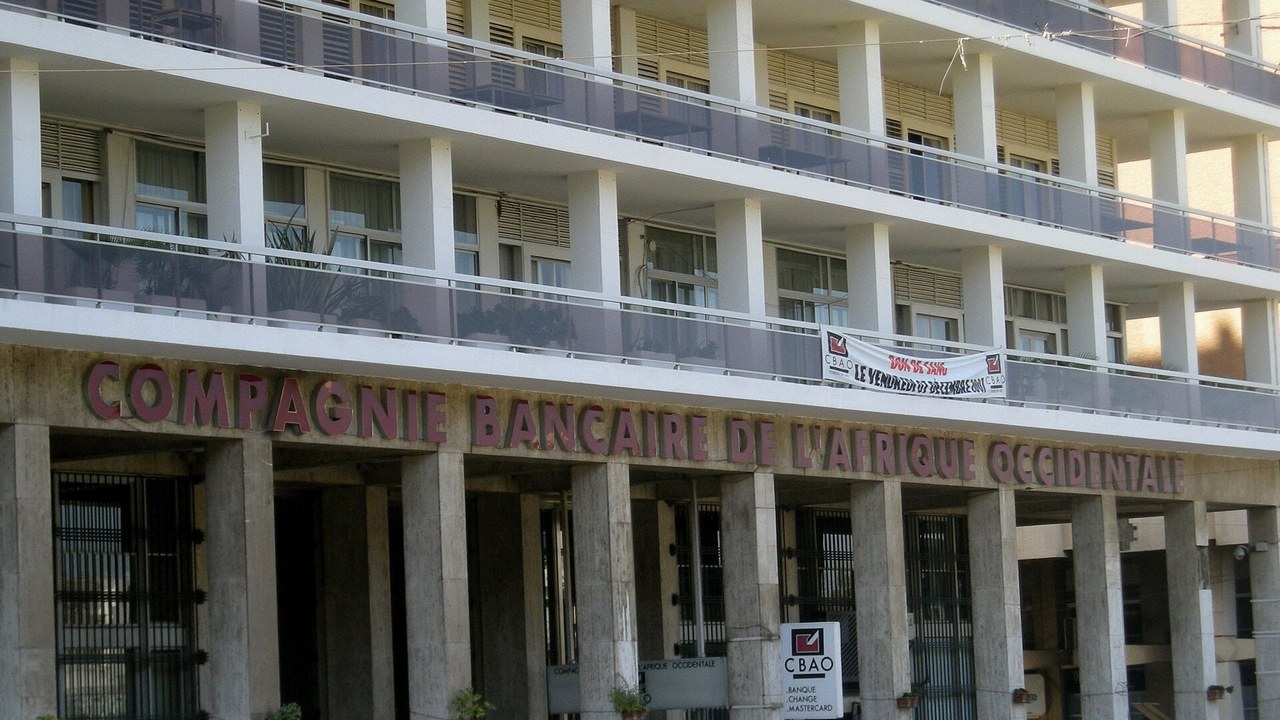
Commercial banks in Senegal, such as CBAO pictured here, work under the same BCEAO rates as the rest of the zone. The union’s Banking Commission oversees banks across the zone.
The franc is fixed at 655.957 CFA francs per euro, or about 587 per US dollar on 31 October 2026. A fixed rate gives stability, but Senegal cannot devalue alone to fight a debt crisis.
The regional stock exchange, the BRVM, is where the zone’s listed companies trade. On 30 October 2026 its equity market was worth about CFA 20,969 billion (US$35.7 billion), counting every listed company in the zone.
Oil and Gas, the New Money
Oil is the biggest change in the Senegal economy since 2024, and the IMF calls 2025 its first full year of production. The main producer is Woodside, an Australian oil and gas company listed in Sydney and New York, at the Sangomar field.
Petrosen is Senegal’s national oil company and the state’s partner in the Sangomar talks. Woodside’s report says Sangomar operations are governed by production sharing contracts, a common way for states to split output with oil companies.
Woodside’s second-quarter 2026 report shows Sangomar output of 99,000 barrels a day for the full field, 86,000 of them Woodside’s share. Woodside booked US$763 million of revenue from Sangomar in the quarter.
The company says reservoir performance continues to exceed expectations, and talks on a second phase with Petrosen and the government are ongoing. Our analysis of Woodside’s Sangomar revenue covers the quarterly figures in more detail.
The Shared Gas Project With Mauritania
The Greater Tortue Ahmeyim project, known as GTA, produces liquefied natural gas from a field shared by Senegal and Mauritania. The first export cargo was completed in April 2025, and bp and Kosmos Energy are partners alongside the two national oil companies.
Kosmos, a Dallas-based company, reports gross GTA output of about 64,300 barrels of oil equivalent a day in April to June 2026. Nine LNG cargoes were lifted in that period, and bp is the buyer under the long-term sales contract.
Power, Ports and Infrastructure
Senelec, the majority state-owned power utility, reports 2,290 megawatts of installed capacity and 2,527,726 customers. Senelec also lists a Luxembourg securitization that it calls the first for a public service in Africa.
On 30 September 2026 the Council also heard a report on electricity bills the central government and state bodies have not paid. The communiqué gives no figures for that debt.
DP World, a global port operator, runs terminals in Senegal and cites an Oxford Economics study of its impact. The study, covering 2022 to 2024, puts DP World’s average yearly contribution at US$1.1 billion, or 3.8% of GDP.
The same study counts about 170,000 jobs supported by DP World’s activity, or 3.1% of national employment. It also credits the company with about US$203 million a year in tax revenue, around 3.5% of the total.
Debt, the IMF and the Creditors
Debt is the story that now decides who has power over the Senegal economy. On 1 September 2026 the IMF announced a staff-level agreement on a US$2.2 billion, 36-month loan program, called an Extended Credit Facility.
An IMF team led by Mercedes Vera Martin held talks in Dakar from 19 August to 1 September 2026. The agreement is subject to approval by IMF management and its Executive Board.
What the IMF Wants First
The IMF names two requirements: corrective action on the misreporting case and financing assurances from Senegal’s partners. The IMF says past misreporting revealed weaknesses that need safeguards to prevent a repeat.
The program also plans a medium-term revenue strategy in 2027, and the authorities say they intend to seek a debt treatment. A debt treatment means changing the terms of existing loans; our guide to the debt crisis explains how it came about.
Borrowing at Home
While the IMF talks continue, the state is also borrowing from regional investors. Its second public savings appeal of 2026 ran from 23 September to 13 October and raised CFA 338.2 billion (about US$576 million).
The target was CFA 200 billion (about US$340 million), and the appeal covered it 169.1%, the finance ministry said on 14 October. Demand from investors was well above what the state asked for.
Farms, Fish and Mines
The economy ministry forecasts that farming, herding and fishing will grow 4.8% in 2026, after 7% in 2025. Those activities stay central to rural life even though oil draws the headlines.
On 30 September 2026 the president told the government to prepare the groundnut sales season and carry out the SONACOS industrial plan. Groundnuts are also called peanuts, and SONACOS is the company that processes them.
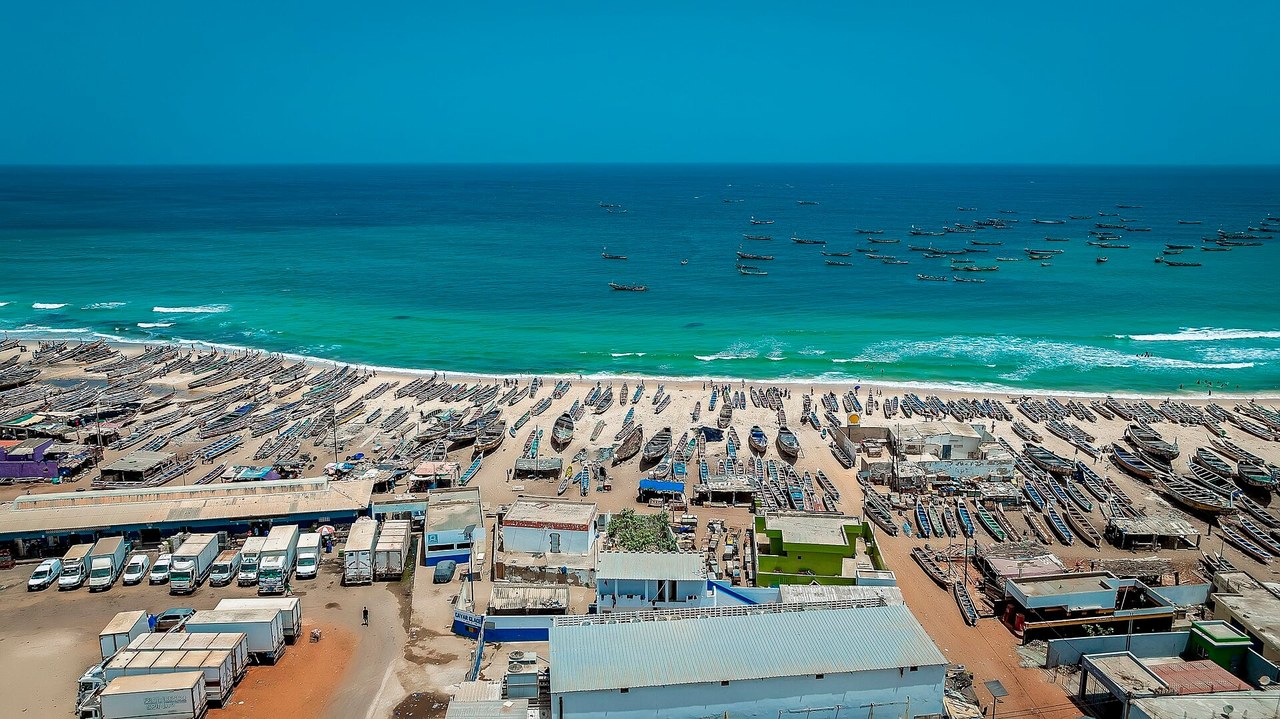
Fishing has its own ministry, the Ministry of Fisheries and Maritime Economy, led by Amy Mara. Painted wooden boats called pirogues line beaches such as Kayar, shown here.
Mining falls under the Ministry of Mines and Geology, and on 30 September 2026 the Council adopted rules for a mine-repair fund. The economy ministry expects the secondary sector, which includes oil, to grow only 1% in 2026 as oil lags.
Trade, Business Groups and Jobs
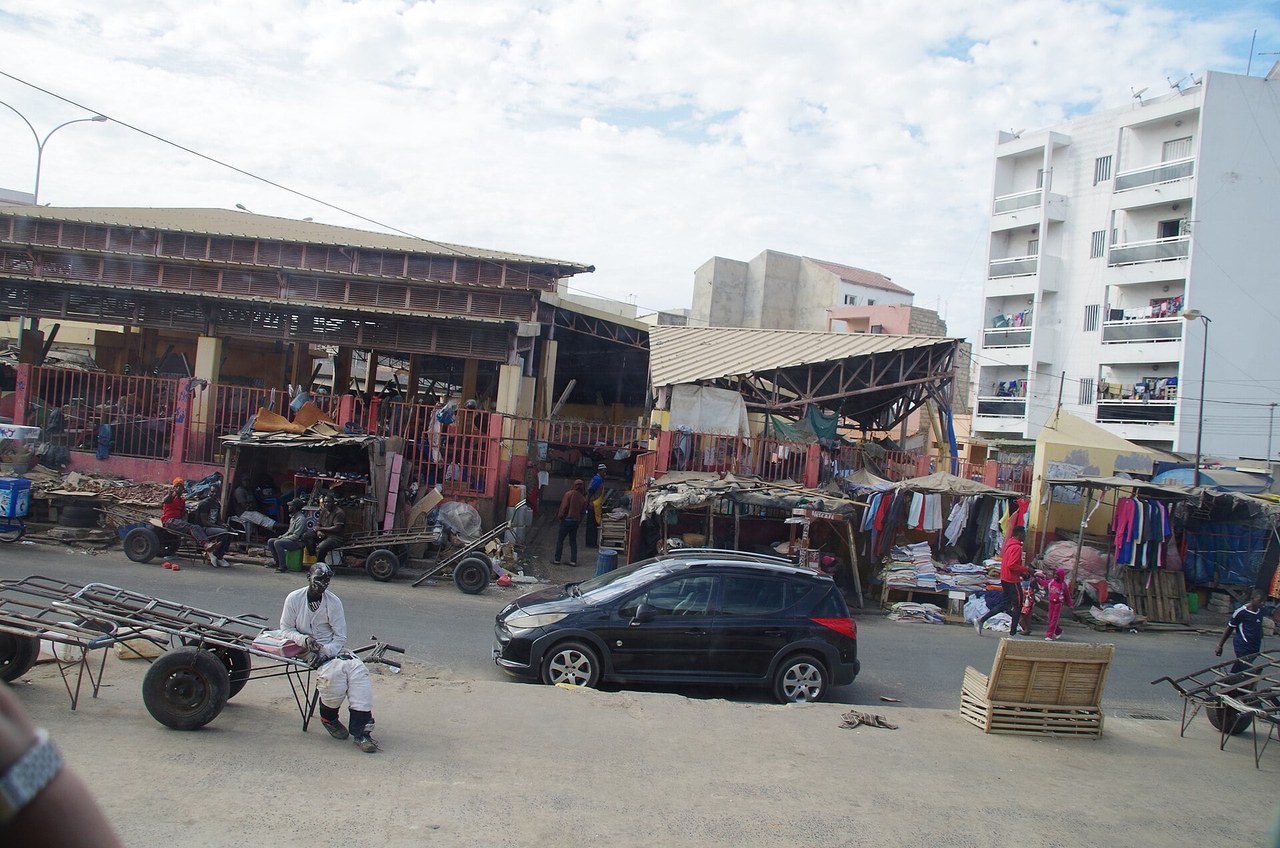
The Ministry of Industry and Commerce, led by Serigne Guèye Diop, oversees the formal side of trade. Markets such as Sandaga in central Dakar, shown here, sit far from the oil story and the debt talks.
Dakar hosts the Youth Olympic Games from 31 October to 13 November 2026, and the government says all venues are ready. The economy ministry’s April report counts the Games as an extra boost to 2026 growth.
Our report on the private sector dialogue covers one round of talks between the government and business. Read it to see how the two sides deal with each other.
What It Means for US Readers
For US readers, the IMF board date and the Assembly’s budget vote are the two dates to watch. Both bear on the loan the IMF announced on 1 September.
Two New York-listed companies report Senegal output: Woodside for Sangomar and Dallas-based Kosmos for the gas project. Their results depend on output and on how the state’s share is set under their contracts.
For travelers and companies, the CFA franc’s fixed rate to the euro means prices in dollars move with the euro-dollar rate. For context on Senegal’s place in the world, read our geopolitics guide and our country explainer, or browse the Senegal hub.
What Is Not Known
The IMF’s 1 September announcement gives no date for the Executive Board vote. The 2026 supplementary budget has been rejected twice in committee, and the 2027 budget is now before the Assembly.
The IMF says the authorities intend to seek a debt treatment, and it does not describe the terms. The program runs from 2026 to 2029 and totals about US$2.2 billion.
Frequently Asked Questions
Who runs the Senegal economy?
The president and the finance ministry set policy, while parliament approves the budget. The IMF, foreign oil companies and the regional central bank in Dakar also shape it.
Who is Senegal’s finance minister?
Cheikh Diba is Minister of Economy, Finance and Plan. Bassirou Sarr is the minister in charge of the budget, working under him.
How fast is the Senegal economy growing in 2026?
The economy ministry expects 2.5% growth, down from 6.7% in 2025. The IMF’s country page lists a lower projection of 2.2%.
What is the IMF deal with Senegal?
On 1 September 2026 the IMF reached a staff-level agreement on a US$2.2 billion, 36-month program. IMF management and its Executive Board still have to approve it.
What currency does Senegal use?
Senegal uses the West African CFA franc, which is fixed to the euro at 655.957 per euro. The regional central bank, the BCEAO, is based in Dakar.
Who produces Senegal’s oil?
Woodside, an Australian company, reports Sangomar output of 99,000 barrels a day, with the state company Petrosen as the government’s partner. Production sharing contracts govern how the output is split.
Sources: IMF, press release 26/282, staff-level agreement on a new Extended Credit Facility for Senegal, 1 September 2026; IMF, Senegal country page, 18 August 2026; Senegal Ministry of Economy, Plan and Cooperation, recent economic developments and outlook, 30 April 2026; Senegal Ministry of Finance, news and communiqués (public savings appeal, supplementary budget), 31 October 2026; Senegal Council of Ministers communiqué, 13 October 2026; Senegal Council of Ministers communiqué, 30 September 2026; Prime minister’s office, list of government members, 1 November 2026; BCEAO, central bank rates and headquarters, 1 November 2026; BRVM, regional stock exchange market capitalisation, 30 October 2026; Woodside, second quarter 2026 report, second quarter 2026; Senelec, state power utility, 1 November 2026; DP World, Senegal operations and economic impact, 1 November 2026; Kosmos Energy, quarterly report (Form 10-Q) filed with the US Securities and Exchange Commission, 3 August 2026; BCEAO, history of the CFA franc and its peg to the euro, 1 November 2026.
This article was produced by The Rio Times’ automated newsroom system. How we use AI · Report an error · Editorial responsibility: Matthias Camenzind, Editor-in-Chief
Expat Guide to Senegal
What The Rio Times publishes for foreigners who live in or move to Senegal.
Start here
- Opening a Bank Account in Senegal as a Foreigner: CFA Francs, Documents and Options
- Taxes in Senegal for Expats: Rates, Residency and What Foreigners Pay
- Healthcare in Senegal for Expats 2026 — Costs, Clinics and Insurance
- Senegal Residency Visa 2026 — Entry, Cards, Work, Citizenship
Understand Senegal
Brazil runoff date: Sunday, October 25, poll closing times and when results start · Brazil runoff polls: Flávio 51%, Lula 49% · Kalshi and Polymarket odds
Rotate for Best Experience
This report is optimized for landscape viewing. Rotate your phone for the full experience.
You've reached your free article limit
Subscribe to The Rio Times for unlimited access to our reporting from across Africa.
Keep reading for free
Your first article was on us. Register with your email address to read 6 free articles every month. You will also receive Africa Intelligence: African markets, politics and business, every weekday morning.
Expat Guide to Senegal
What The Rio Times publishes for foreigners who live in or move to Senegal.
Start here
- Opening a Bank Account in Senegal as a Foreigner: CFA Francs, Documents and Options
- Taxes in Senegal for Expats: Rates, Residency and What Foreigners Pay
- Healthcare in Senegal for Expats 2026 — Costs, Clinics and Insurance
- Senegal Residency Visa 2026 — Entry, Cards, Work, Citizenship
Understand Senegal