
GUIDES · SENEGAL
Key Facts
- —The country Senegal had 18.9 million people in 2025 and an economy of US$37.0 billion, the largest of its five land neighbours. Those neighbours are Mauritania, Mali, Guinea, Guinea-Bissau and The Gambia.
- —The corridor Mali has no coast, and the Dakar route is its main road to the sea, as of August 2026.
- —The gas The Greater Tortue Ahmeyim field, shared offshore with Mauritania, lifted 18.5 liquefied natural gas cargoes in the first half of 2026.
- —The blocs Senegal stays in ECOWAS. Mali, Burkina Faso and Niger left it on 29 January 2025 but remain in the CFA franc monetary union as of October 2026.
- —The next votes The Gambia elects a president on 5 December 2026. Guinea-Bissau’s planned 6 December vote was ruled out by its transitional government on 8 October 2026.
- —Travel risk US travel advice runs from Level 1 for Senegal (December 2025) to Level 4 for Mali (June 2026), with Casamance at Level 2.
How Senegal sits among Mauritania, Mali, Guinea, Guinea-Bissau and The Gambia: borders, trade routes, shared rivers and regional bodies. Each figure carries its date, and each neighbour has its own section.
The Senegal neighbourhood is small on the map but busy, with five land neighbours, a shared river, a shared gas field and a trade corridor that feeds landlocked Mali. It matters to US readers because it joins a new gas exporter, a Sahel war and a December election.
Where Senegal Sits Among Six Economies
The World Bank’s 2025 data show how unevenly the region is sized. Mali has the most people, while Mauritania has the highest income per person.
- Senegal: 18.9 million people, an economy of US$37.0 billion and about US$1,950 per person.
- Mali: 25.2 million people, US$30.1 billion and about US$1,190 per person.
- Guinea: 15.1 million people, US$28.3 billion and about US$1,880 per person.
- Mauritania: 5.3 million people, US$11.7 billion and about US$2,200 per person.
- The Gambia: 2.8 million people, US$2.6 billion and about US$920 per person.
- Guinea-Bissau: 2.2 million people, US$2.5 billion and about US$1,120 per person.
Senegal’s economy is about 14 times the size of The Gambia’s, yet The Gambia lies inside Senegal’s borders. Senegal also hosts the regional central bank, the BCEAO, which issues the CFA franc in Dakar.
The CFA franc averaged 581.93 to the US dollar in 2025, the World Bank’s official rate for Senegal. Mali and Guinea-Bissau use the same currency, while Mauritania, The Gambia and Guinea issue their own.
Mauritania, the River and the Gas
Mauritania lies to the north of Senegal, and the Diama dam on the Senegal River straddles the frontier, according to the river basin organisation OMVS. The river runs 1,790 kilometres from east to west, OMVS says.
OMVS was founded on 11 March 1972 in Nouakchott, and its headquarters are in Dakar. Mali, Mauritania and Senegal created it to manage the basin together.
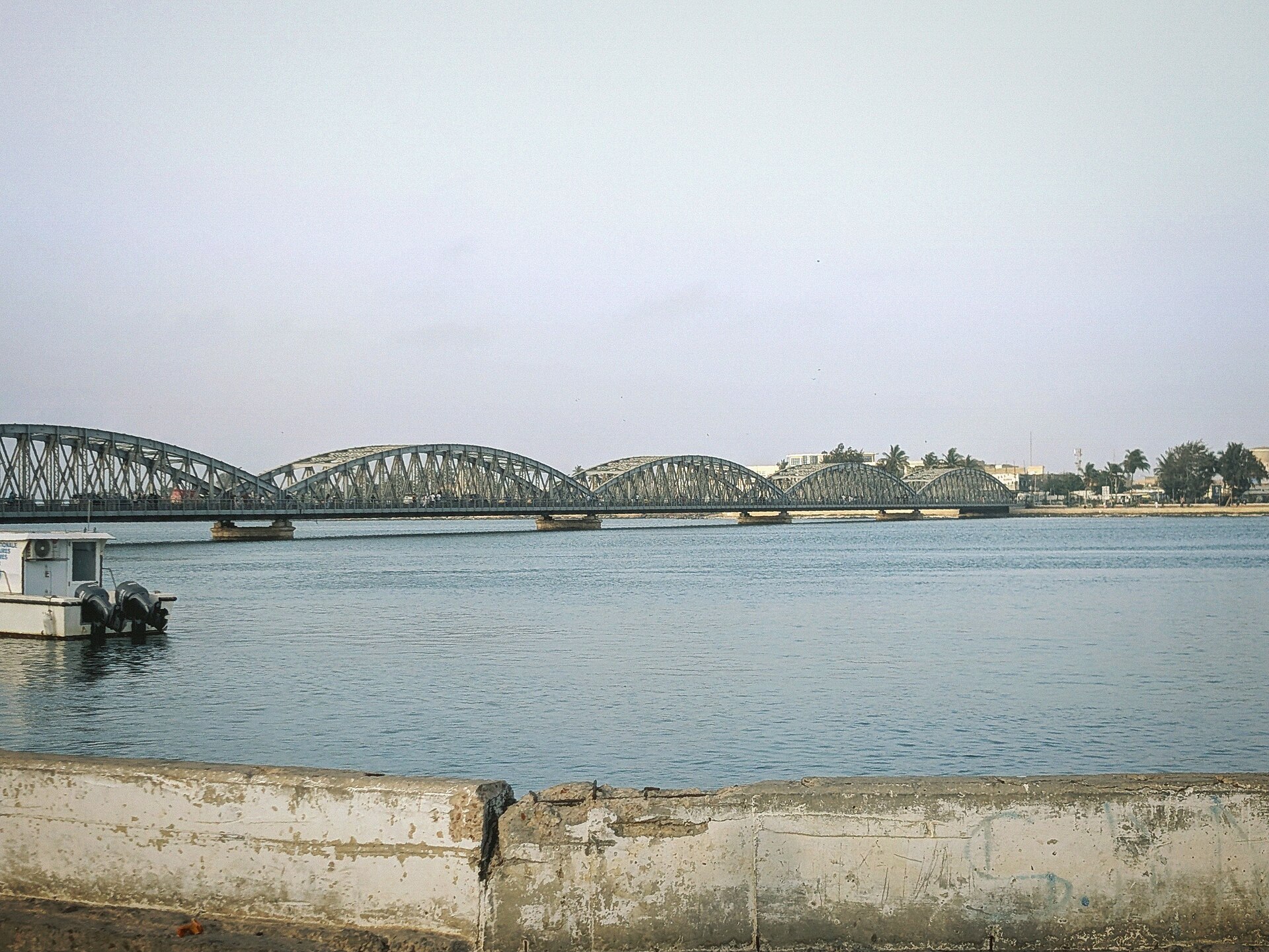
The Greater Tortue Ahmeyim field lies offshore between the two countries. It is developed by bp, Kosmos Energy and the state companies Petrosen of Senegal and SMH of Mauritania.
The first gas flowed on 31 December 2024, and bp loaded the first export cargo on 17 April 2025. In the first half of 2026 the project lifted 18.5 cargoes, and Kosmos guides to 32 to 36 for the full year.
Gross output averaged about 2.65 million tonnes a year in the second quarter of 2026, Kosmos said, against the 2.3 million tonnes a year that bp gave for the first phase in April 2025. Kosmos holds a net revenue interest of about 24%.
Both countries now want some of the gas at home. Senegal is building a power plant near Saint-Louis, and Mauritania has signed a 25-year deal with a Saudi power company for a 230 megawatt plant at N’Diago.
Mauritania also carries much of the Sahel’s refugee burden. The UN refugee agency counted 190,815 registered refugees and asylum seekers there on 30 September 2026, with 178,341 of them in Hodh Chargui on the Mali border.
The agency estimates about 305,000 people in all, counting those not yet registered. The US State Department rates Mauritania Level 3, reconsider travel, in an advisory of 18 August 2026, and bars travel within 60 miles of the Mali and Algeria borders.
Mali, the Corridor Under Pressure
Mali lies to the east and has no coast, so much of its trade runs through Senegal. Journal du Mali reported on 6 August 2026, citing the World Bank, that nearly 60% of Mali’s imports and exports use the Dakar corridor.
That corridor carries about 1,000 heavy trucks a day, the same report says. It gives the port of Dakar and the roads to the frontier real weight for both countries.
Security on that route is the main risk. The US State Department rates Mali Level 4, do not travel, in an advisory reissued on 8 June 2026, and tells travellers to avoid road travel outside Bamako.
It names the al-Qaeda affiliate JNIM and ISIS-Sahel as active, and it warns of kidnapping, bandit roadblocks and roadside bombs. Mali also suspended visa issuance to US citizens from 1 January 2026, with limited exceptions.
In late April 2026 a JNIM spokesperson claimed in a video that all routes into Bamako were blocked, Africanews reported. The outlet added that the claim could not be confirmed.
Dakar has tried to keep channels open to the Sahel’s military governments, and President Bassirou Diomaye Faye visited Bamako and Ouagadougou on 30 May 2024. ECOWAS named him a facilitator for talks with the three states in July 2024, and on 19 July 2026 its summit elected him chair of the ECOWAS Authority.
Mali, Burkina Faso and Niger left ECOWAS with effect from 29 January 2025, after the bloc approved the withdrawal on 15 December 2024. On 29 January ECOWAS said passports carrying its logo and its trade liberalisation scheme would still apply to the three countries until further notice.
The three countries remain in the CFA franc monetary union, whose central bank is headquartered in Dakar. The BCEAO’s member list still names Benin, Burkina Faso, Côte d’Ivoire, Guinea-Bissau, Mali, Niger, Senegal and Togo.
The Gambia, a Country Inside Senegal
The Gambia is a narrow English-speaking country that follows the Gambia River and is surrounded by Senegal except on its short Atlantic coast. It has about 2.8 million people and an economy of about US$2.6 billion, the World Bank’s 2025 data show.
The Senegambia Bridge near Farafenni joins the north and south banks of the river and, with them, northern Senegal and the Casamance. It was inaugurated on 20 January 2019 and opened to traffic on 23 January, Financial Afrik reported.
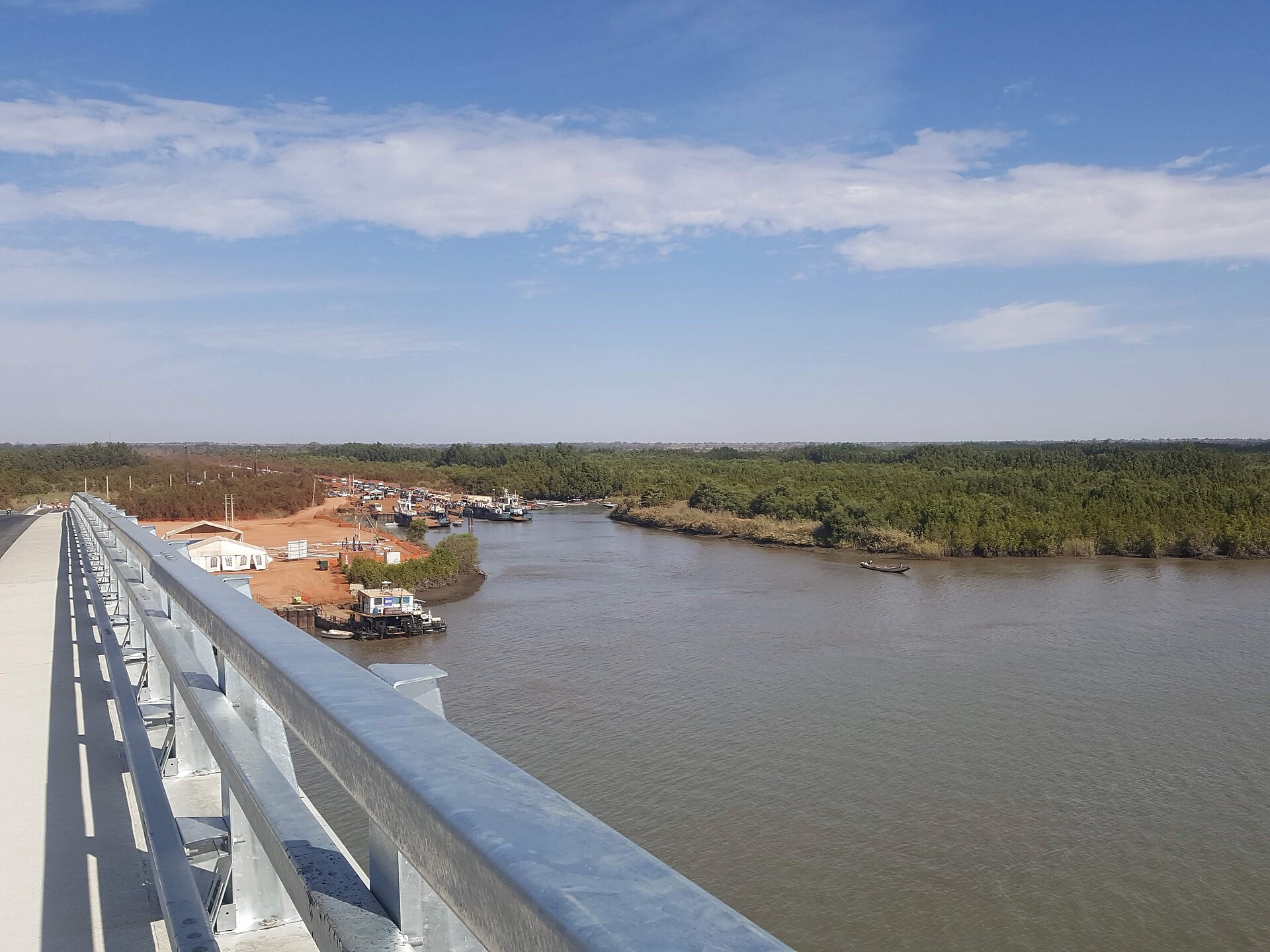
The bridge is 942 metres long and was financed mostly by the African Development Bank. Vehicle crossings rose from about 340,000 in 2019 to nearly 670,000 in 2023.
Before the bridge, ferry delays could last hours or a full day and pushed up the price of food and cement. Dakar to Ziguinchor, 450 kilometres apart, can now be covered by land in under eight hours.
Some transporters still call the tolls high. Border posts also cause occasional delays.
The Gambia votes for a president on 5 December 2026, its Independent Electoral Commission says. Nominations are set for 30 October, and the campaign period opens on 9 November.
President Adama Barrow has held office since January 2017, after a post-election crisis. UN Security Council resolution 2337 of 19 January 2017 had backed ECOWAS efforts to secure the transfer of power.
The US State Department rates The Gambia Level 2 in an advisory of 16 January 2026. It notes sporadic fighting along the southern border with Senegal.
Guinea-Bissau and the Casamance
Guinea-Bissau lies to the south, and Senegal’s Casamance region sits between it and The Gambia. About 2.2 million people live in Guinea-Bissau, and its economy was about US$2.5 billion in 2025, the World Bank’s data show.
The US State Department rates the Casamance Level 2 because of crime and landmines, and it notes armed banditry and separatist rebel activity there. US embassy staff may travel in the region only on main roads in daylight.
Guinea-Bissau has been run by the military since a coup on 26 November 2025, led by General Horta Inta-a. The State Department rated it Level 3, reconsider travel, on 11 December 2025, citing unrest, weak health care and landmines.
On 8 October 2026 the transitional prime minister, Ilídio Vieira Té, said the election planned for 6 December could not be held on that date. The national election commission called it technically improbable, and the transitional presidency has yet to announce a new calendar, Forbes Africa Lusofona reported.
Senegal and Guinea-Bissau also share the Gambia River basin organisation, OMVG, whose members are The Gambia, Guinea, Guinea-Bissau and Senegal. Its headquarters are in Dakar, and its power lines and substations were inaugurated in Guinea-Bissau on 25 April 2025.
Guinea in the South-East
Guinea borders Senegal in the south-east and, after Mali, is the most populous of Senegal’s neighbours, with about 15.1 million people in 2025. Its economy was about US$28.3 billion that year, the World Bank’s data show.
Mamadi Doumbouya, an army officer who took power in a 2021 coup, won the December 2025 presidential election, the Supreme Court confirmed, and was sworn in as president in January 2026. Guinéenews reported that he announced an end to raw gold exports after a meeting on 19 June 2026.
The US State Department rates Guinea Level 2, exercise increased caution, in an advisory of 25 February 2026, citing crime, unrest and limited health care. It bars US government employees from travelling between cities at night.
Guinea sits outside the CFA franc zone, but it shares OMVG with Senegal. That gives the two countries a formal framework for river and power projects.
ECOWAS, WAEMU and the River Bodies
Senegal belongs to several overlapping groups. ECOWAS covers the wider region, the CFA franc union covers eight states, and the river bodies OMVS and OMVG manage the Senegal and Gambia basins.
Senegal now chairs ECOWAS, after its president, Bassirou Diomaye Faye, was elected on 19 July 2026 at the bloc’s 69th summit in Freetown. The summit also named Senegal’s General Birame Diop president of the Commission from 1 September 2026, succeeding Omar Touray.
Senegal hosts the BCEAO, OMVS and OMVG headquarters in Dakar. That makes the city a working capital for regional finance and river management.
What It Means for US Readers
Investors can reach the region through listed energy companies such as Kosmos Energy, a US-listed partner in the Greater Tortue Ahmeyim project. Senegal’s own debt talks are covered in a separate report on its economy.
Overland trips across these borders mix very different risk levels. The latest dated US State Department advisories are listed below.
- Senegal: Level 1, 1 December 2025, with the Casamance at Level 2.
- The Gambia: Level 2, 16 January 2026.
- Guinea: Level 2, 25 February 2026.
- Guinea-Bissau: Level 3, 11 December 2025.
- Mauritania: Level 3, 18 August 2026.
- Mali: Level 4, 8 June 2026.
Anyone living in Guinea-Bissau relies on Dakar for US consular services, because the US embassy in Senegal covers that country. A land trip from Dakar to Bamako would need a visa check first, as Mali suspended visa issuance to US citizens from 1 January 2026.
Connected Coverage
- Senegal Explained: The Country, the Faye Government and What to Watch.
- Senegal River Flood Runs Low, Threatening Podor Farmers.
- Senegalese Migration to Spain: Why Boats Are Back.
- Senegal’s Economy Slows to 2.5% as Debt Talks Begin.
- Mauritania Explained: Iron Ore, Offshore Gas, Migration and the 2029 Question.
- Mali Explained: The Junta, the Gold and the Jihadist War Nearing Bamako.
- Guinea-Bissau Explained 2026.
- Ghana and Its Neighbours in West Africa.
- Nigeria Neighbours Explained, West Africa in 2026.
- More Senegal coverage from The Rio Times.
What Is Not Known
No date is set for Guinea-Bissau’s election. The transitional presidency has yet to publish a new calendar after the 6 December date was ruled out on 8 October 2026.
How much of Mali’s trade still moves through Dakar by late 2026 is not known. The 60% share is an estimate cited in August 2026, and the date of the underlying World Bank figure was not given.
The terms for selling Greater Tortue Ahmeyim gas inside Senegal and Mauritania are not settled. Kosmos said in August 2026 that heads of terms are targeted for 2026, and that construction of Senegal’s pipeline network was due to start in the third quarter.
The result of The Gambia’s election on 5 December 2026 is open. The candidate list is not final, because nominations are set for 30 October.
ECOWAS has said that passports and trade treatment for Mali, Burkina Faso and Niger hold until further notice. No end date for that arrangement was found.
Frequently Asked Questions
Which countries border Senegal?
Senegal borders Mauritania to the north, Mali to the east, and Guinea and Guinea-Bissau to the south. The Gambia is a separate country that lies inside Senegal along the Gambia River.
Is Senegal still in ECOWAS?
Yes, and its president, Bassirou Diomaye Faye, has chaired the bloc’s Authority since his election on 19 July 2026. Mali, Burkina Faso and Niger left ECOWAS with effect from 29 January 2025.
Why does Mali depend on Senegal?
Mali has no coast, and nearly 60% of its imports and exports use the Dakar corridor, according to a report of 6 August 2026 that cites the World Bank. The route carries about 1,000 heavy trucks a day.
When is The Gambia’s presidential election?
The Gambia votes on 5 December 2026, according to its Independent Electoral Commission. Nominations are set for 30 October and the campaign period opens on 9 November.
What is the Greater Tortue Ahmeyim project?
It is an offshore gas project between Senegal and Mauritania, developed by bp, Kosmos Energy and the two state companies. It lifted 18.5 liquefied natural gas cargoes in the first half of 2026.
Is it safe to travel around Senegal’s neighbours?
It depends on the country. The US State Department rates Senegal Level 1 and Mali Level 4, with The Gambia and Guinea at Level 2 and Mauritania and Guinea-Bissau at Level 3.
Sources: World Bank, GDP, population, income per person and official exchange rate, 2025; Independent Electoral Commission of The Gambia, 2026 calendar; US State Department, Senegal advisory; Mali advisory; Mauritania advisory; The Gambia advisory; Guinea-Bissau advisory; Guinea advisory; Kosmos Energy, second-quarter 2026 results, 3 August 2026; bp, first Greater Tortue Ahmeyim cargo, 17 April 2025; UNHCR, Mauritania operational data, 30 September 2026; OMVS; OMVG; BCEAO, member states; UN Security Council resolution 2337 (2017); Journal du Mali, 6 August 2026; ICIR on the ECOWAS statement of 29 January 2025; The Point, 9 July 2024; Institute for Security Studies, 12 June 2024; Africanews, April 2026; Africanews, Guinea inauguration, January 2026; ECOWAS, 69th summit decisions, 19 July 2026; Financial Afrik, 2 March 2026; Forbes Africa Lusófona, 8 October 2026; Guinéenews, 20 June 2026. All accessed 17 October 2026.
This article was produced by The Rio Times’ automated newsroom system. How we use AI · Report an error · Editorial responsibility: Matthias Camenzind, Editor-in-Chief
Part of our ongoing coverage
Africa: The New Scramble — the great-power contest over the continent.
Expat Guide to Senegal
What The Rio Times publishes for foreigners who live in or move to Senegal.
Start here
- Opening a Bank Account in Senegal as a Foreigner: CFA Francs, Documents and Options
- Taxes in Senegal for Expats: Rates, Residency and What Foreigners Pay
- Healthcare in Senegal for Expats 2026 — Costs, Clinics and Insurance
- Senegal Residency Visa 2026 — Entry, Cards, Work, Citizenship
Understand Senegal