Opening a Bank Account in Senegal as a Foreigner 2026: CFA Francs, Documents and Options
GUIDES · SENEGAL
Key Facts
- —What it is How foreigners open and run a bank account in Senegal, from the CFA franc to mobile money.
- —Who it’s for Expats, remote workers, retirees and investors moving to Dakar or doing business in Senegal.
- —What it costs Opening an account is free by central-bank rule; Wave transfers cost 1% of the amount sent.
- —The rules A 2024 regional regulation sets currency rules; non-resident accounts need central-bank approval.
- —The catch Mobile-money balances are capped at 2 million CFA francs (about US$3,480) for an identified customer.
- —What is still open The date for replacing the CFA franc with the eco, and the sale of Société Générale’s Senegal bank.
Senegal is a stable West African democracy of about 19 million people, roughly as many as the Netherlands. Its currency is tied to the euro, so money in a bank account in Senegal holds its value against Europe’s currency.
Opening a bank account in Senegal as a foreigner is routine in Dakar. The rules, however, come from a regional central bank, not from Senegal alone. Your residence status, your paperwork and your phone decide how smoothly it goes.
The CFA franc: a currency tied to the euro
Senegal uses the West African CFA franc, currency code XOF. It is shared by eight countries of the West African Economic and Monetary Union, known by its French initials UEMOA.
The other seven are Benin, Burkina Faso, Côte d’Ivoire, Guinea-Bissau, Mali, Niger and Togo. The notes are issued by the Central Bank of West African States (BCEAO), headquartered in Dakar.
Since 1999 the franc has been fixed at 655.957 CFA francs to one euro. On 26 September 2026 that meant about 575 francs to the US dollar, according to open.er-api.com market data.
All US$ figures in this guide use that rate, which is consistent with the euro peg. Against the dollar, the franc therefore moves with the euro, not with Senegal’s own economy.
In December 2019, Côte d’Ivoire’s president Alassane Ouattara announced a reform with France. The franc was to be renamed the eco, and the BCEAO would no longer have to keep half its reserves at the French Treasury.
The euro peg stayed in place, and the renaming has not happened. As of 26 September 2026, the notes in your wallet still say CFA francs.
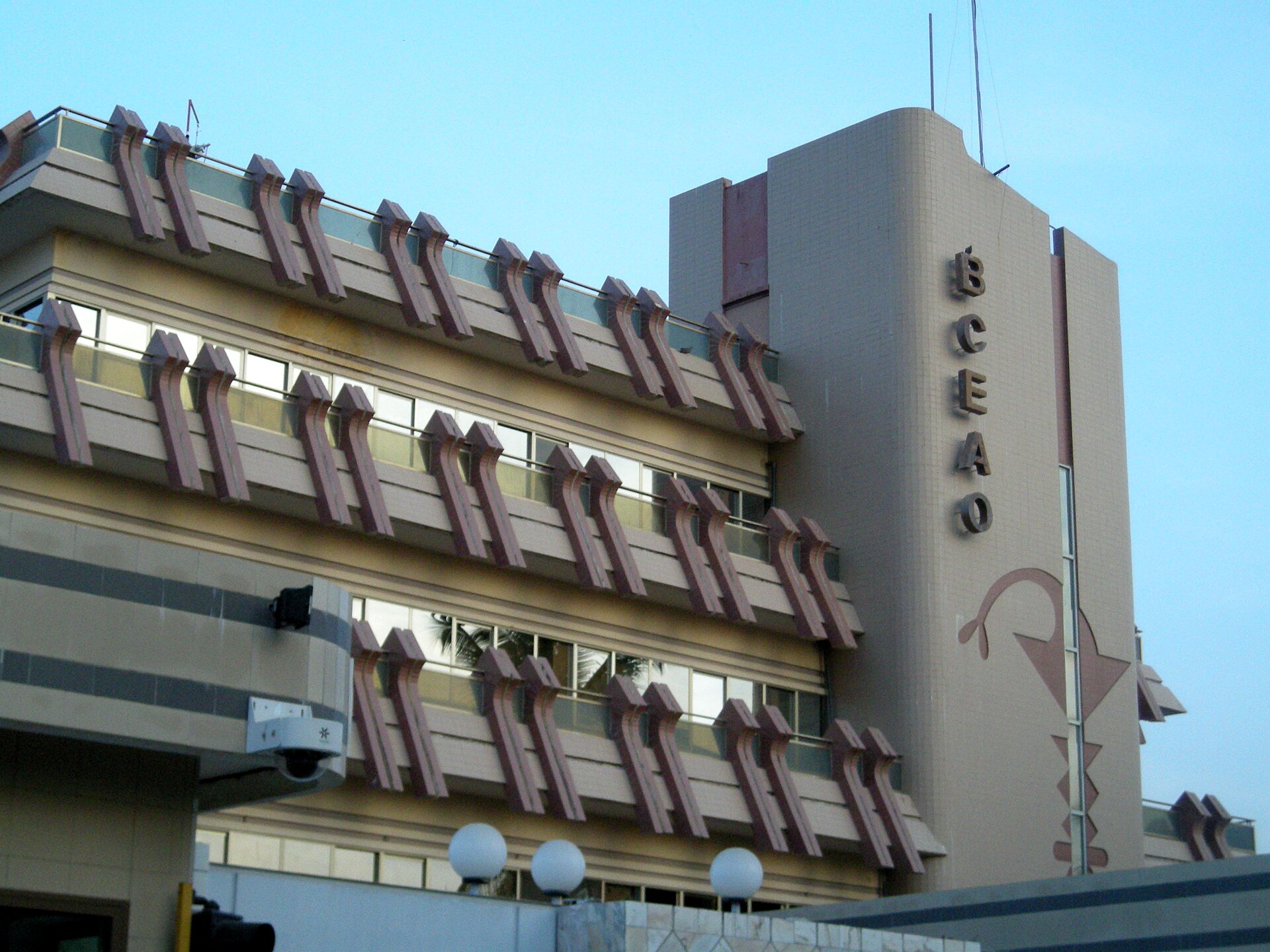
Separately, the wider ECOWAS bloc plans its own single currency, also called the eco. ECOWAS is the Economic Community of West African States. In 2021 it adopted a roadmap aiming for a 2027 launch.
At a July 2026 summit in Sierra Leone, ECOWAS leaders reaffirmed that plan. They lean towards a phased start with countries that meet convergence criteria. Whether UEMOA members such as Senegal join at the start is unresolved.
Resident or non-resident: the status that shapes your account
Currency rules across UEMOA are set by Regulation No. 06/2024/CM/UEMOA on external financial relations. It was signed in Bamako on 20 December 2024 and took effect on signature.
The regulation defines a resident as a person whose “predominant centre of economic interest” is in a UEMOA state. A non-resident is someone whose centre of economic interest lies abroad.
In practice, a foreigner who lives and works in Senegal is normally treated as a resident. A visitor who keeps income and home abroad is a non-resident.
The difference matters. Under Article 6, a bank needs the BCEAO’s prior authorisation to open a non-resident account. Called a compte étranger, it can be held in CFA francs or foreign currency.
The annex to the regulation adds that such accounts are credited only in the currency of the account. They cannot be funded with BCEAO banknotes or coins, so cash deposits are ruled out.
Residents face the opposite hurdle for foreign currency. Under Article 7, a resident’s US dollar or euro account at home needs prior approval from the finance minister, after a BCEAO opinion.
For most newcomers, the simplest bank account in Senegal is therefore an ordinary CFA franc current account, opened once residence is established.
Documents banks ask for
Senegalese banks apply regional anti-money-laundering rules, so identity checks come first. Expect to show a valid passport and, for a resident account, your Senegalese residence card, the carte de séjour.
Banks commonly ask for proof of address in Senegal, such as a lease or a recent utility bill. Salaried staff are often asked for an employment contract or an employer letter.
Self-employed people and investors should expect questions about the source of funds. Company directors may need the firm’s registration papers from the trade register.
Lists differ from bank to bank and are rarely published in full online. Ask the branch for its written list before your visit, and bring certified copies.
Getting the residence card itself is a separate process, covered in the Rio Times guide to Senegal visas and residency. Mobile money can bridge the gap while you wait.
The main banks foreigners use
Senegal’s banking market is crowded. The Banking Commission of the West African Monetary Union listed 23 banks and six branches of regional banks in September 2024.
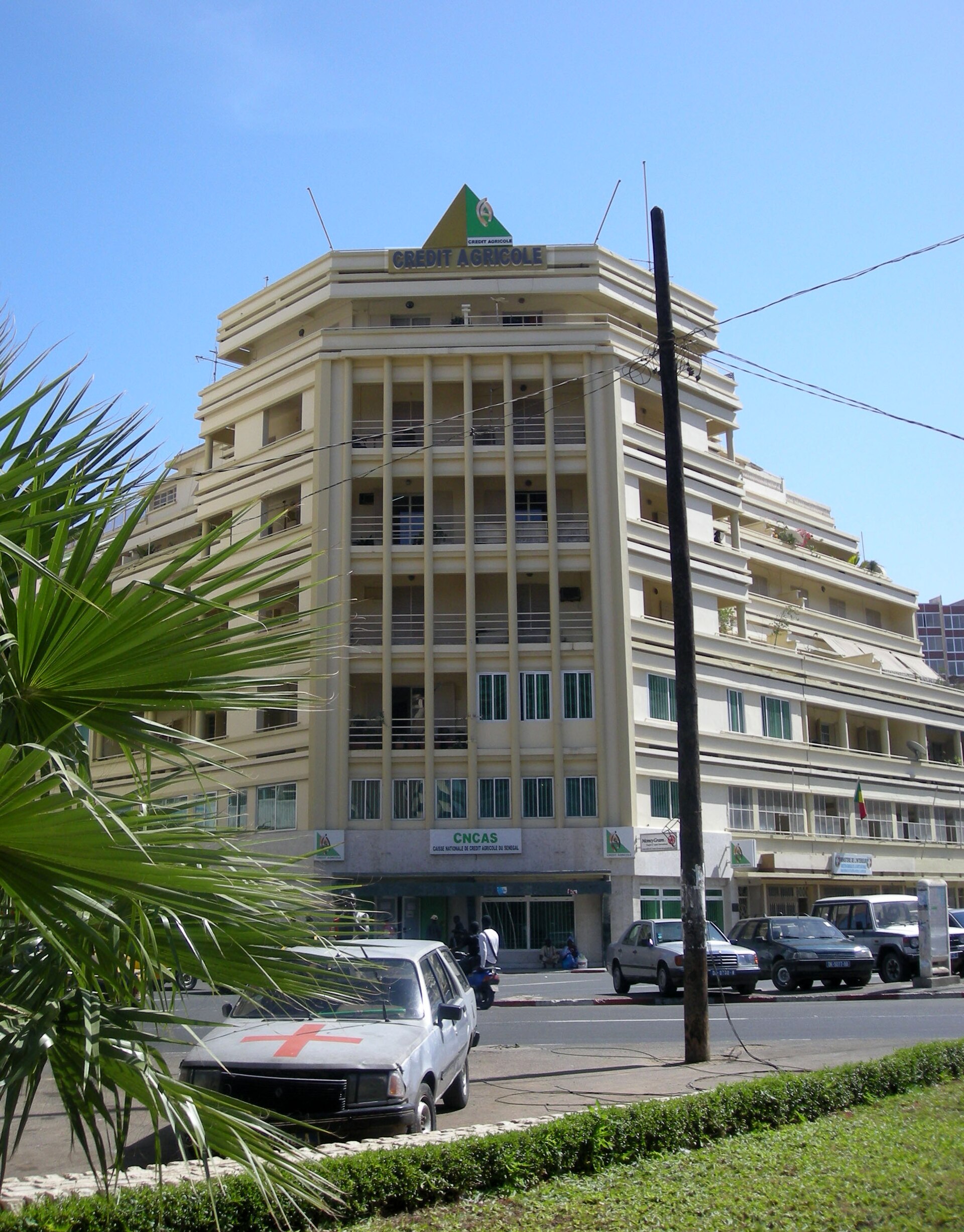
Société Générale Sénégal, formerly Société Générale de Banques au Sénégal (SGBS), is the local subsidiary of France’s Société Générale. The Dakar outlet SenePlus described it in December 2025 as the country’s second-largest bank by balance sheet.
SenePlus, citing Jeune Afrique, reported that month that the Senegalese state had activated its pre-emption right to buy the French group’s stake. In August 2026 the magazine Jeune Afrique reported that the group’s African sales were stalling. As of 26 September 2026, no completed sale had been announced.
CBAO is a subsidiary of Morocco’s Attijariwafa bank. Its roots go back to the Banque du Sénégal, founded in 1853. It is often described as the oldest banking institution in West Africa.
Ecobank Senegal belongs to the pan-African Ecobank group and advertises a dedicated “Diaspora Current Account”. In January 2026 it partnered with Visa and the mobile-money firm Wave on a virtual card.
Banque Islamique du Sénégal (BIS) is an Islamic bank, for customers who want sharia-compliant products. Citibank, Bank of Africa and United Bank for Africa are also on the regulator’s list.
What banking costs in US$
Since 1 October 2014, the BCEAO has required banks across UEMOA to provide 19 basic services free of charge. Opening an account and closing it are both on that list.
The free list also covers a monthly statement, cash deposits and withdrawals at your own bank, and withdrawals at your own bank’s cash machines. Card payments inside UEMOA and incoming national and international transfers are free too.
Everything else, from monthly account packages to outgoing international wires, is priced by each bank. Ask for the written tariff sheet, the conditions de banque, and compare before you choose.
For scale, sending 100,000 CFA francs (about US$174) by Wave costs 1%, or 1,000 francs (about US$1.74). That simple pricing makes a phone wallet a useful companion to a bank account in Senegal.
Wave, Orange Money and the limits of mobile money
Much of daily life in Senegal runs on mobile money, electronic cash held on a phone account. Orange Money, run by the telecoms group Orange, and Wave are the two leading brands.
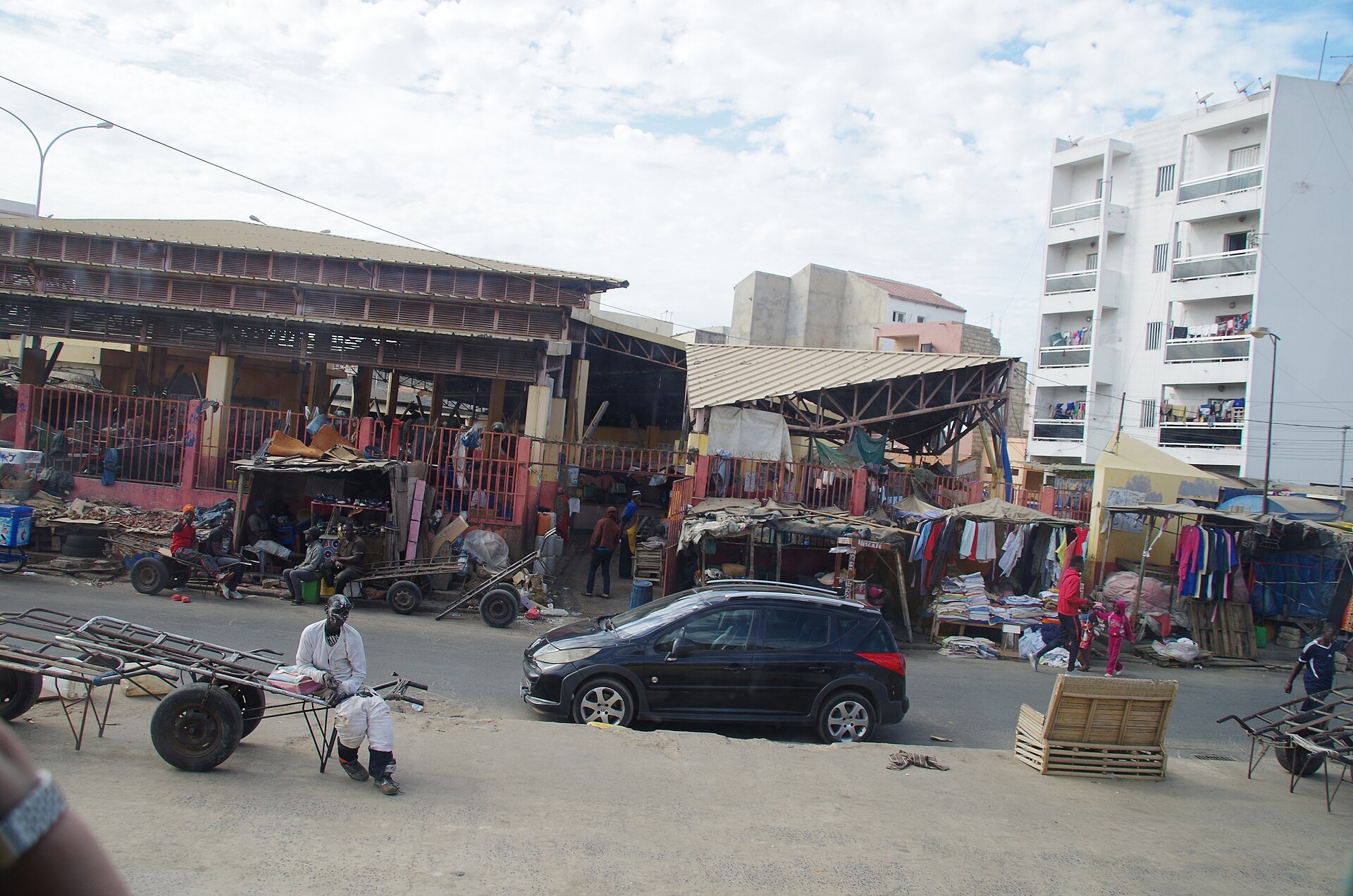
Wave advertises free deposits, withdrawals and bill payments. Sending money costs 1% of the amount. Its virtual Visa card, launched in Dakar on 23 January 2026 with Ecobank, extends the wallet to online shopping.
Mobile money is not a full substitute for a bank. Under BCEAO Instruction No. 008-05-2015, an identified customer’s balance with one issuer cannot exceed 2 million CFA francs (about US$3,480) without central-bank approval.
The same instruction caps a customer’s monthly top-ups at 10 million CFA francs (about US$17,380). A customer who has not been identified may be given at most 200,000 francs (about US$350) of e-money a month.
On 30 September 2025 the BCEAO launched its own instant-payment platform, PI-SPI, linking banks and wallets across the eight countries. The governor said transfers initiated by individuals would be free and settle instantly, around the clock.
Wave did not join PI-SPI at launch and was still absent in August 2026, according to the Dakar news site Dakaractu. For a foreigner, the practical rule is simple: keep savings in a bank and spending money in a wallet.
FATCA and tax reporting for Americans
US citizens and green-card holders face extra paperwork anywhere abroad. Under FATCA, the Foreign Account Tax Compliance Act, foreign banks must report US account holders or face US withholding.
Senegal does not appear on the US Treasury’s list of FATCA intergovernmental agreements. Even so, expect questions about US citizenship and tax status when you open an account.
Your own duties do not depend on the bank. You must file an FBAR, the Treasury’s foreign bank account report, if your foreign accounts together exceed US$10,000 at any time in the year.
Americans living abroad must also file IRS Form 8938 above higher thresholds. For a single filer, that is US$200,000 at year-end or US$300,000 at any time; married couples filing jointly face double those amounts.
Whether a mobile-money wallet counts as a reportable account is a question for a US tax preparer who handles expatriate returns. Keep year-end balance records for every account and wallet.
Moving money in and out: BCEAO foreign-exchange rules
Payments for current transactions, such as rent, school fees or imports, can be made abroad freely. Under Article 9 they must pass through an approved bank, the post office or the BCEAO, with supporting documents.
Small transfers below a threshold set by the BCEAO are exempt from paperwork, subject to anti-money-laundering checks. Larger amounts need invoices, contracts or similar proof of purpose.
Foreign currency held inside UEMOA must be sold to, or deposited with, an approved intermediary. That rule, in Article 5, applies to residents and non-residents alike.
Non-resident travellers may bring in foreign currency freely. They must declare cash on entry and exit when its value passes an amount set by the BCEAO, and keep the form.
Investing abroad is different for residents. Under Article 12, most investment outside UEMOA needs the finance minister’s prior approval. That matters if you become resident and keep assets at home.
The practical advice is to bring money in by bank transfer, not suitcase. Keep the transfer records, because banks may ask for them when you later send money out again.
Connected Coverage
Senegal Residency Visa 2026 — Entry, Cards, Work, Citizenship
Senegal Explained: The Country, the Faye Government and What to Watch
Sahel Juntas Exit ECOWAS Into AES as Investors Reprice Nigeria Côte d’Ivoire Senegal Ghana Risk
Faye Government Faces Moody’s Caa2 Downgrade as Senegal’s Oil Cash Meets Hidden Debt
Healthcare in Senegal for Expats 2026 — Costs, Clinics and Insurance
Sources: Currency and account rules come from the BCEAO, including Regulation No. 06/2024/CM/UEMOA and Instruction No. 008-05-2015; US reporting rules from the IRS and the US Treasury; population data from the World Bank; exchange rates from open.er-api.com. All accessed 26 September 2026.
- bceao.int
- cofeb.bceao.int
- cofeb.bceao.int
- bceao.int
- bceao.int
- koldanews.com
- open.er-api.com
- api.worldbank.org
- africanews.com
- france24.com
- radioguinee.com
- en.wikipedia.org
- en.wikipedia.org
- en.wikipedia.org
- fr.wikipedia.org
- seneplus.com
- jeuneafrique.com
- ecobank.com
- financialafrik.com
- wave.com
- dakaractu.com
- jeuneafrique.com
- irs.gov
- irs.gov
- home.treasury.gov
What Is Not Known
When, or whether, Senegal will swap the CFA franc for the eco is not known. ECOWAS still targets 2027 for its currency, but it has not said whether UEMOA members will join at the start. Any change of peg would be announced by the BCEAO and member governments.
Who will own SGBS is not settled. The Senegalese state had activated its pre-emption right by December 2025, according to SenePlus, but no completed sale had been announced by 26 September 2026.
Several cash thresholds are not published in the regulation itself. The amounts above which travellers must declare cash, and below which transfers need no documents, are set separately by the BCEAO.
Each bank’s exact document list and fee schedule is not published in full online. Figures and requirements should be confirmed in writing with the branch before an account is opened.
Frequently Asked Questions
Can a foreigner open a bank account in Senegal?
Yes. A foreigner who lives and works in Senegal is normally treated as a resident and can open an ordinary CFA franc current account. A non-resident account needs the prior authorisation of the BCEAO, the regional central bank, and cannot be funded with cash.
What documents do Senegalese banks ask for?
Expect to show a valid passport and, for a resident account, a Senegalese residence card, the carte de séjour. Banks commonly ask for proof of address and, for salaried staff, an employment contract or employer letter. Lists vary by bank, so ask the branch for its written list.
How much does a bank account in Senegal cost?
Opening and closing an account is free under a BCEAO rule in force since 1 October 2014, which lists 19 free basic services. Monthly packages and outgoing international transfers are priced by each bank. Sending money by Wave costs 1%, so 100,000 CFA francs, about US$174, costs about US$1.74.
Is the CFA franc still pegged to the euro?
Yes. The West African CFA franc has been fixed at 655.957 francs to one euro since 1999, which was about 575 francs to the US dollar on 26 September 2026. ECOWAS still targets 2027 for its eco currency, but it is unresolved whether Senegal and other UEMOA members will join at the start.
What are the limits on Wave and Orange Money?
Under BCEAO Instruction No. 008-05-2015, an identified customer’s balance with one issuer cannot exceed 2 million CFA francs, about US$3,480, without central-bank approval. Monthly top-ups are capped at 10 million CFA francs, about US$17,380. A customer who has not been identified may be given at most 200,000 francs, about US$350, of e-money a month.
Do Americans need to report a Senegalese bank account?
Yes. US citizens must file an FBAR if their foreign accounts together exceed US$10,000 at any time in the year. Americans abroad must also file IRS Form 8938 above US$200,000 at year-end or US$300,000 at any time for single filers. Senegal has no FATCA agreement listed by the US Treasury.
This article was produced by The Rio Times’ automated newsroom system. How we use AI · Report an error
Part of our ongoing coverage
Africa: The New Scramble — the great-power contest over the continent.
Read More from The Rio Times