PANAMA · ECONOMY
Key Facts
- —The country Panama is a Central American country whose balboa currency is fixed at par with the US dollar and whose income comes from the canal, banks, ports and flights.
- —Growth Official data show output up 4.8% in the first quarter of 2026 and 6.4% in the second, led by transport, construction and trade.
- —The canal The Panama Canal Authority reports US$6.6 billion in revenue for the year to 30 September 2026, up 16.6%, with 13,951 ship transits.
- —Banks The international banking centre held US$166.7 billion in assets in April 2026, and foreign depositors supplied 41.3% of all deposits.
- —The mine Cobre Panamá has been shut for almost three years, and as of 9 October 2026 the president had not allowed talks with First Quantum.
- —Prediction markets Kalshi gives a 20% chance that Trump takes back the Panama Canal during his term (24 October 2026, 9:29 a.m. ET).
- —Power Index Panama ranks 11th of 14 in The Rio Times Latin America Power Index, with 34.2 points (October 2026 edition).
The Panama economy turns on four things: the canal, banks, an airline hub and a closed copper mine. This guide names who controls each one in October 2026 and what it means for US readers.

How the Panama Economy Works
The Panama economy earns its money from movement: ships through the canal, planes through the capital and cash through the banks. The Rio Times guide to Panama’s role in Latin America explains why that position matters.
Panama’s balboa is fixed at par with the US dollar, and the canal authority reports its accounts in balboas equal to US$. Prices and bank balances therefore read much as they do in the United States.
Panama’s national accounts show output up 4.8% in the first quarter of 2026 from a year earlier. Quarterly output reached US$22.55 billion in constant 2018 prices, according to the statistics office, which published the figures on 16 June 2026.
In that quarter transport and storage grew 8.2%, construction 6.5% and wholesale and retail trade 6.4%. Financial and insurance activities slipped 0.6% and farming fell 4.3%.
The Ministry of Economy and Finance says growth quickened to 6.4% in the second quarter of 2026. Finance Minister Felipe Chapman told a competitiveness forum in September 2026 that he expects the trend to last twelve months.
José Raúl Mulino is the president who sets the policy line, and Chapman runs the budget and the state’s debt. On 19 October 2026 the ministry said Moody’s rates Panama’s long-term debt Baa3, the lowest investment-grade step.
- Head of government: President José Raúl Mulino, who attended the canal administrator’s inauguration on 7 September 2026.
- Finance chief: Felipe Chapman, Minister of Economy and Finance (September and October 2026).
- Credit rating: Baa3 long term, with new Treasury bill and note programmes rated (P)P-3 and (P)Baa3 (19 October 2026).
- Foreign holders of Treasury bills and notes: US$1.31 billion as of 30 September 2026.
The Canal Authority, the State’s Biggest Earner
No single body matters more to the Panama economy than the Panama Canal Authority, known as the ACP. The state-run authority runs the waterway and transfers money to the national Treasury.
Ilya Espino de Marotta took office as administrator on 7 September 2026 for a term running to 2033. She is an engineer who joined the canal in 1985 and played a key role in completing its expansion.
She is the first woman to lead the waterway. Her predecessor, Ricaurte Vásquez Morales, stepped down when she took over.
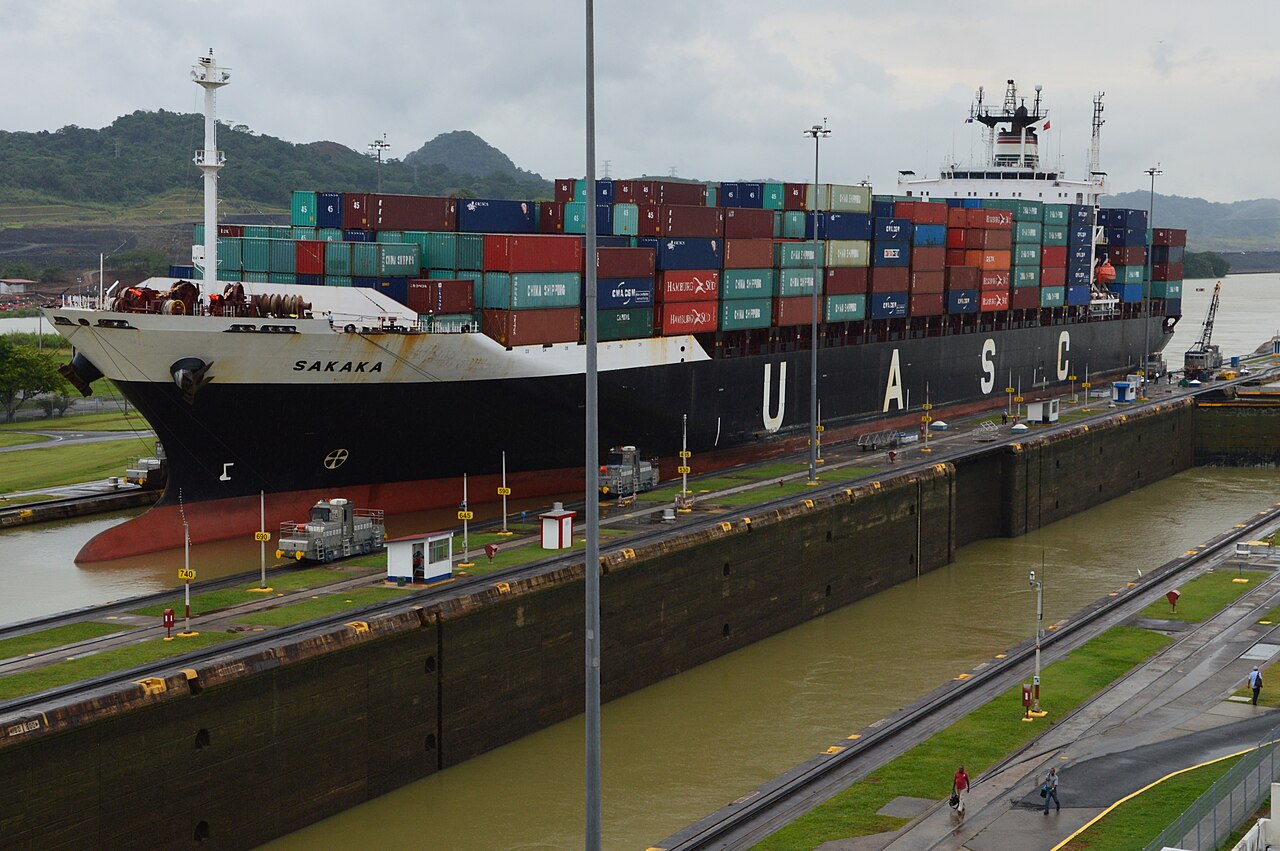
For the year to 30 September 2026, the ACP reports revenue of US$6.6 billion, up 16.6%, and 13,951 transits, up 4.1%. Cargo rose 6.5% to 521 million PC/UMS tons, the canal’s own measure of ship volume, and the figures are still unaudited.
The ACP’s interim accounts for the nine months to 30 June 2026 show toll revenue of US$3.26 billion and net income of US$3.61 billion. It transferred US$2.37 billion to the Treasury in that period, against US$1.95 billion a year earlier.
The Rio Times report on the canal’s fiscal-year revenue gives the shipping detail.
Ports and Shipping After the Hutchison Ruling
From 1997 Panama Ports Company, owned by CK Hutchison of Hong Kong, ran the Balboa and Cristóbal container ports at the canal’s two entrances. On 29 January 2026 the full Supreme Court declared the 1997 law behind that contract unconstitutional, along with its 2021 extension.
The ruling reached the official gazette on 23 February 2026. The Maritime Authority of Panama then gave Balboa to APM Terminals, part of Denmark’s Maersk group, for up to 18 months.
Cristóbal went to TIL, the port arm of Mediterranean Shipping Company, on the same terms. Both contracts are temporary while permanent concessions are prepared.
President Mulino said on 24 July 2026 that both ports will be tendered separately for terms of 25 to 30 years. Awards are targeted before mid-2027, and the canal authority is promoting new terminals at Corozal and Telfers.
CK Hutchison told investors it began arbitration against Panama on 20 August 2026 under an investment treaty, seeking more than US$1.5 billion. The ports company has a separate arbitration of its own, which La Prensa puts at about US$2 billion.
The Rio Times report on the Puerto Barú port fight covers the newer terminal projects.
Cobre Panamá, the Copper Mine in Limbo
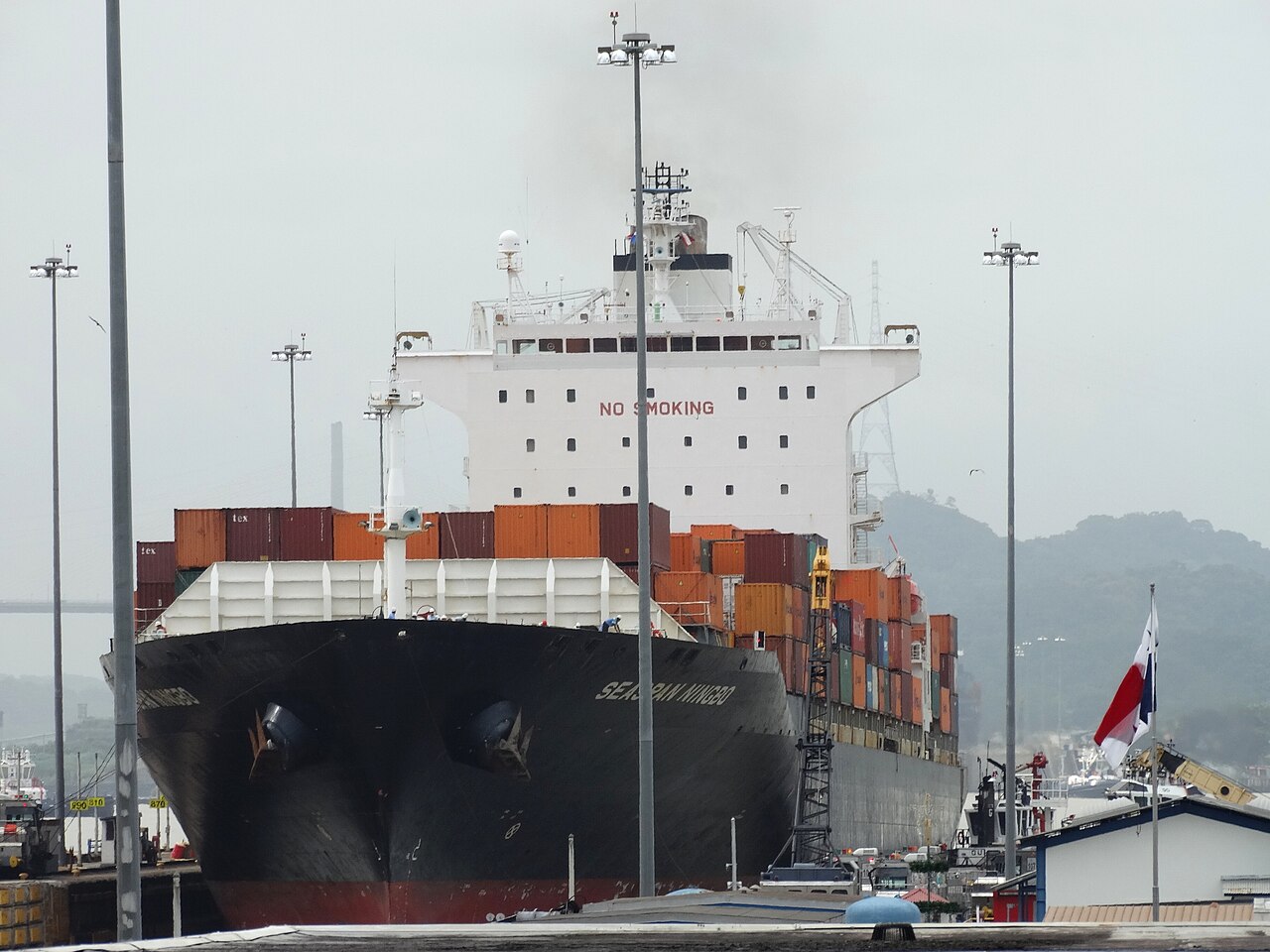
Cobre Panamá has produced no copper since 2023, when the Supreme Court ruled the law behind its contract unconstitutional. It is operated by First Quantum Minerals, a Canadian copper miner.
The statistics office shows the cost. Mining value added fell from US$2.58 billion in 2023 to about US$1.03 billion in 2024, in constant 2018 prices.
The 2025 estimate is US$1.06 billion, and recent growth in the sector comes from stone, sand and clay.
In April 2026 the government allowed the company to process and export ore already mined, but not to reopen the pit.
An interministerial commission delivered 17 proposals and six criteria on 30 September 2026. Its main idea is a limited operation that pays for the closure.
Juan Carlos Navarro, the Environment Minister, said about 87% of the mine’s 370 environmental commitments had been met. The rest, he said, will be enforced whatever the decision.
A state-commissioned audit put the company’s weighted overall compliance at 87.73%. Officials
The suspension affected more than 6,000 direct jobs, about 30,000 indirect jobs and roughly 2,000 registered suppliers. First Quantum has said it is willing to talk in good faith and to respect Panama’s constitution.
The Banks Behind the Panama Economy
Panama’s international banking centre is the group of banks licensed to serve clients at home and abroad. According to the banking superintendency, it held US$166.73 billion in assets in April 2026, up 5.26% in a year.
Deposits reached US$120.74 billion, up 7.34%, and net loans stood at US$102.69 billion. Net profit from January to April 2026 was US$900.2 million.
The capital adequacy ratio was 16.04%, against a legal minimum of 8%. That ratio measures how much cushion banks hold against losses.
Foreign money matters to the Panama economy. In April 2026 external deposits totalled US$49.86 billion, or 41.3% of all deposits, and Colombia was the top origin with 23.0% of them.
Costa Rica, Venezuela, Ecuador and the Dominican Republic followed Colombia as sources of foreign deposits.
Banistmo changed hands on 30 June 2026. Banco La Hipotecaria, owned by Inversiones Cuscatlán Centroamérica, bought all of it for US$1.418 billion.
The seller was Grupo Cibest, the parent of Colombia’s Bancolombia. Banistmo has more than 600,000 clients.
Banco Nacional de Panamá, known as Banconal, coordinates a US$310 million small-business credit and guarantee programme after the earthquake of 9 October 2026. Its general manager, Javier Carrizo, announced it with the finance ministry on 21 October 2026.
Copa and Tocumen, the Air Hub
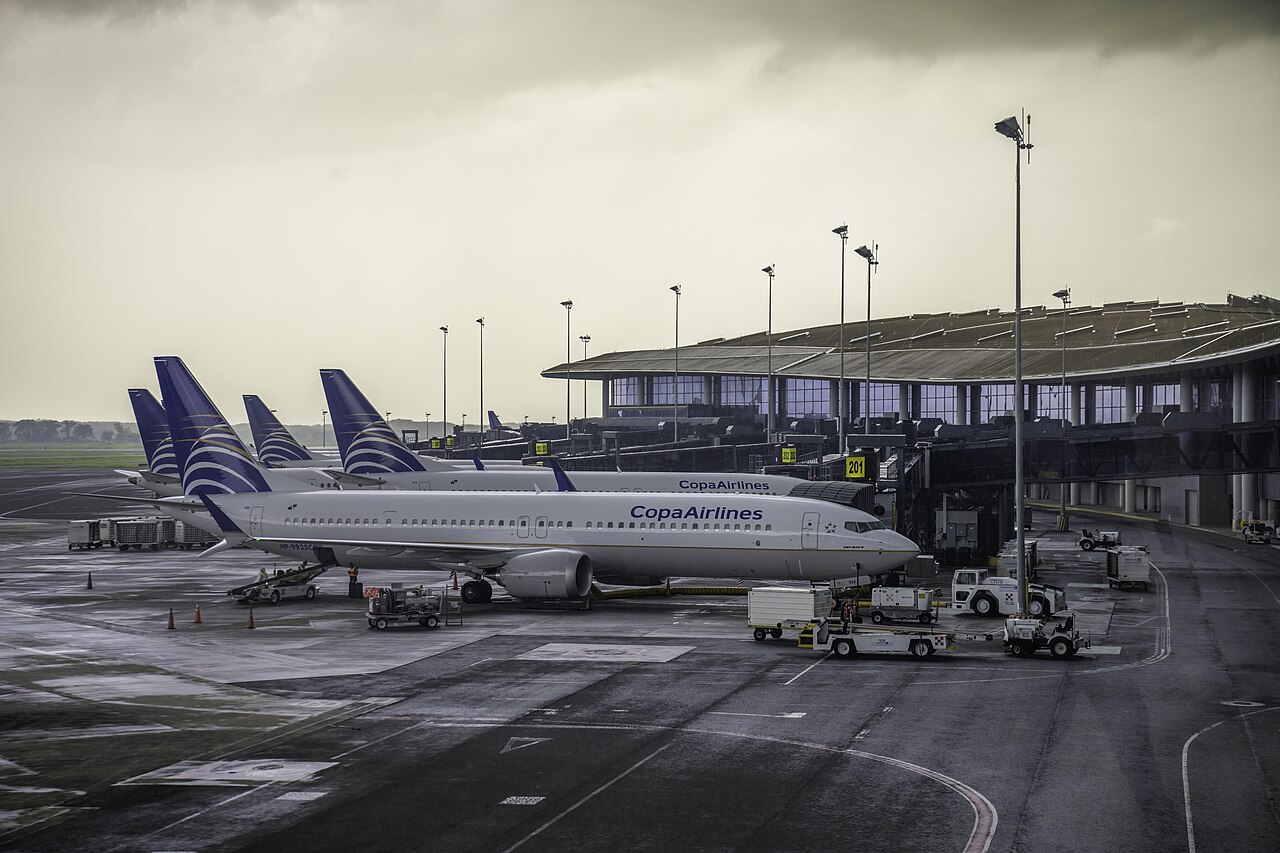
Tocumen International Airport, the Panama economy’s air gateway, handled 17.8 million passengers from January to September 2026, up 15% on the same months of 2025. About 77% of the 1.96 million passengers in September were changing planes, which shows the hub model at work.
José Ruiz Blanco is the airport’s general manager, and the airport expects 23 million passengers in 2026 and 30 million by 2030. It warns the terminal may reach its capacity limit in 2027.
Copa Airlines has asked to lift its daily connection banks at Tocumen from six to eight from March 2027. A connection bank is a wave of linked flights.
Copa Holdings trades on the New York Stock Exchange under the ticker CPA.
For the second quarter, Copa Holdings reported on 5 August 2026 a net profit of US$68.2 million and a fleet of 131 aircraft. Its load factor, the share of seats filled, was 86.7%.
Trade, the Colón Free Zone and the Money Flows
The Colón Free Zone is a duty-free trading area in the city of Colón where firms import goods and re-export them across the region. The Ministry of Economy and Finance says re-exports grew 26.5% from January to July 2026 against the same months of 2025.
July alone was up 35.9%, and monthly re-exports stayed above US$1 billion. The biggest gains were Venezuela (US$256.2 million), Costa Rica (US$204.7 million) and the United States (US$167.9 million).
The Rio Times report on the budget deficit cap explains how the state is paying for earthquake recovery. The Panama country page tracks the latest news.
What Prediction Markets Say
Kalshi, a US exchange regulated by the CFTC, lists a market titled “Will Trump take back the Panama Canal?” Its price for “during Trump’s term” was 20% on 24 October 2026 at 9:29 a.m. ET, down from 23% the previous day.
About 611,022 contracts have traded on that market, and each contract pays US$1 if the answer is yes. These are bets, not polls, and they price a political event rather than any legal change at the canal.
On Polymarket, a market titled “US takes Panama Canal before 2027?” priced a yes at 2.9% on the same morning, with US$178,242 traded. The deadline is shorter, which is one reason for the gap.
Why we show this: prediction markets turn real-money bets into a live probability that moves within minutes of the news, which is why investors, campaigns and newsrooms in the United States now follow them closely. We show them next to polls and official results, never instead of them.
What It Means for US Readers
The canal is the part of the Panama economy most visible to Americans, because tolls and transit numbers feed into shipping costs for US cargo. Revenue of US$6.6 billion and 13,951 transits in the year to 30 September 2026 show a busy waterway.
The ports are now run by Maersk’s APM Terminals and MSC’s TIL on temporary contracts, with new tenders to come. CK Hutchison is seeking about US$1.5 billion from Panama in arbitration.
Panama’s banks held US$120.74 billion in deposits as of April 2026, part of it from neighbouring countries. Moody’s rates Panama’s government debt Baa3, and foreign holdings of Treasury bills and notes reached US$1.31 billion by 30 September 2026.
Cobre Panamá matters to copper buyers and to First Quantum investors, since a deal would restart a very large mine. For the Panama economy it is the biggest open question.
Panama’s own assessment puts the lost foreign-currency earnings from the shutdown at an average of US$6.85 million a day.
Flyers should know that Tocumen says its terminal may reach its capacity limit in 2027.
What Is Not Known
President Mulino has not yet decided whether to allow talks with First Quantum, so the mine’s future is open. The amounts, the length of any limited operation and the share of the deposit that could be mined have not been set.
The canal authority’s year-end figures for the 12 months to 30 September 2026 are unaudited, and the final audited numbers will come later. The winners of the Balboa and Cristóbal tenders and the outcome of the Hutchison arbitration are also open.
The earthquake of 9 October 2026 will first show in third-quarter output data for the Panama economy, which the statistics office has not yet released. No official ranking of Panama’s richest families or business groups is available.
Frequently Asked Questions
Who runs the Panama economy?
President José Raúl Mulino and Finance Minister Felipe Chapman steer policy and the budget of the Panama economy. The canal authority under Ilya Espino de Marotta, the big banks and the airport hub carry much of the activity.
How big is the Panama economy?
In the first quarter of 2026 the Panama economy produced US$22.55 billion in constant 2018 prices, the statistics office says. The finance ministry’s own site lists 2023 nominal output at US$83.4 billion.
Does Panama use the US dollar?
The Panama economy uses a balboa fixed at par with the US dollar. The canal authority reports its accounts in balboas equal to US$.
Is the Cobre Panamá mine open?
No. Mining has been paused for almost three years, and the government has allowed only the export of ore already mined. As of 9 October 2026 the president had not authorised talks on its future.
Who runs the Panama Canal ports?
APM Terminals runs Balboa and TIL runs Cristóbal on temporary contracts of up to 18 months. New tenders for 25 to 30 years are planned, with awards targeted before mid-2027.
How big is the Panama banking sector?
In April 2026 the international banking centre held US$166.73 billion in assets and US$120.74 billion in deposits, the banking superintendency reports. Banistmo was sold for US$1.418 billion on 30 June 2026.
Will the United States take back the Panama Canal?
Bettors on Kalshi gave that a 20% chance during Trump’s term as of 24 October 2026, 9:29 a.m. ET. Those prices are bets, not facts, and Panama’s canal authority continues to run the waterway.
Sources: Panama Canal Authority, fiscal year 2026 results, 21 October 2026; Panama Canal Authority, administrator takes office, 7 September 2026; Panama Canal Authority, interim financial statements, third quarter FY2026, June 2026; Ministerio de Economía y Finanzas, economy accelerates to 6.4%, 21 September 2026; Ministerio de Economía y Finanzas, Moody’s ratings for Treasury programmes, 19 October 2026; Ministerio de Economía y Finanzas, Colón Free Zone trade, 15 October 2026; Ministerio de Economía y Finanzas, SME programme of US$310 million, 21 October 2026; INEC, Producto Interno Bruto Trimestral, first quarter 2026, 16 June 2026; Superintendencia de Bancos de Panamá, Informe de actividad bancaria, April 2026, April 2026; Infobae Panamá, Banistmo sale closes, 1 July 2026; Infobae Panamá, Tocumen passenger traffic, 16 October 2026; Infobae Panamá, new concessions for Balboa and Cristóbal, 24 July 2026; La Prensa, CK Hutchison arbitration claim, 19 August 2026; Minería & Desarrollo, Cobre Panamá commission recommendation, 13 October 2026; TVN, interministerial commission awaits presidential authorisation, 9 October 2026; CK Hutchison Holdings, announcement on Panama arbitration, August 2026; Copa Holdings, second-quarter 2026 results, 5 August 2026.
This article was produced by The Rio Times’ automated newsroom system. How we use AI · Report an error · Editorial responsibility: Matthias Camenzind, Editor-in-Chief
Expat Guide to Panama
What The Rio Times publishes for foreigners who live in or move to Panama.
Start here
- Cost of Living Boquete Panama 2026: Rent Above the Average Wage
- Panama Residency Visa Routes in 2026 and What Each One Actually Costs
- Healthcare in Panama 2026, Specialist Visits US$60-300
- Panama Safety for Expats in 2026: One Province Skews Everything
City guides
Coming up in Panama
- InterNations Panama City Masquerade Set for 30 October at Tío Navaja 30 Oct
- Ad Sidera Semper 2026 in Bocas del Toro, Panama: Five Days of Island Festival from October 30 to November 4 30 Oct
- Omar Courtz in Panama: Estadio Emilio Royo on 26 November, Tickets from 25 US Dollars 26 Nov
- Rawayana Panama Concert Set for 10 December 10 Dec
Understand Panama
Rotate for Best Experience
This report is optimized for landscape viewing. Rotate your phone for the full experience.
You've reached your free article limit
Subscribe to The Rio Times for unlimited access to our news, expat and nomad guides and market intelligence on Latin America and Africa.
Expat Guide to Panama
What The Rio Times publishes for foreigners who live in or move to Panama.
Start here
- Cost of Living Boquete Panama 2026: Rent Above the Average Wage
- Panama Residency Visa Routes in 2026 and What Each One Actually Costs
- Healthcare in Panama 2026, Specialist Visits US$60-300
- Panama Safety for Expats in 2026: One Province Skews Everything
City guides
Coming up in Panama
- InterNations Panama City Masquerade Set for 30 October at Tío Navaja 30 Oct
- Ad Sidera Semper 2026 in Bocas del Toro, Panama: Five Days of Island Festival from October 30 to November 4 30 Oct
- Omar Courtz in Panama: Estadio Emilio Royo on 26 November, Tickets from 25 US Dollars 26 Nov
- Rawayana Panama Concert Set for 10 December 10 Dec
Understand Panama