Panama in Latin America, Its Role, Weight and Alliances

GUIDES · PANAMA
Key Facts
- —The country Panama had 4.57 million people and a US$90.5 billion economy in 2025, about 0.7% and 1.2% of the Latin American and Caribbean totals. Income per person, US$19,790, trails only Uruguay and Costa Rica among Spanish-speaking Latin American countries.
- —The Canal The waterway logged 13,404 transits and US$5.705 billion of revenue in the year to September 2025. It paid US$2.965 billion into the national treasury that year.
- —The clubs Panama belongs to the Organization of American States and the Central American Integration System (SICA) and holds a UN Security Council seat for 2025 and 2026. It hosts the Latin American Parliament and became an associate state of Mercosur on 20 December 2025.
- —The partners A free-trade agreement with the United States has been in force since 31 October 2012. Panama gave notice on 6 February 2025 that it was leaving China’s Belt and Road programme.
- —The growth Panama’s economy is projected to grow 5.0% in 2026, after 4.4% in 2025. The projections for 2026 are 3.3% for Costa Rica, 1.3% for Uruguay and 0.6% for Chile.
- —Power Index Panama ranks 11th of 14 in The Rio Times Latin America Power Index, with 34.2 points (October 2026 edition).
- —Prediction markets Kalshi gives a 19% chance that Trump takes back the Panama Canal during his term (17 October, 9:55 a.m. ET).
Panama is small by population and large by position, a country of 4.6 million between two continents and two oceans. This guide measures its weight in the Americas, its seats in regional bodies and the powers it leans on, as of October 2026.
The Panama continent role comes down to geography: it is the hinge between North and South America, and the Canal makes it matter far beyond its size. For US readers it is a free-trade partner, a security partner and the place where US and Chinese interests meet most visibly.
Every figure below carries its date, and the Rio Times Panama page tracks the daily news. For the country itself, see the companion guide to Panama and Its Neighbours in Central America.
Panama’s Weight in the Americas
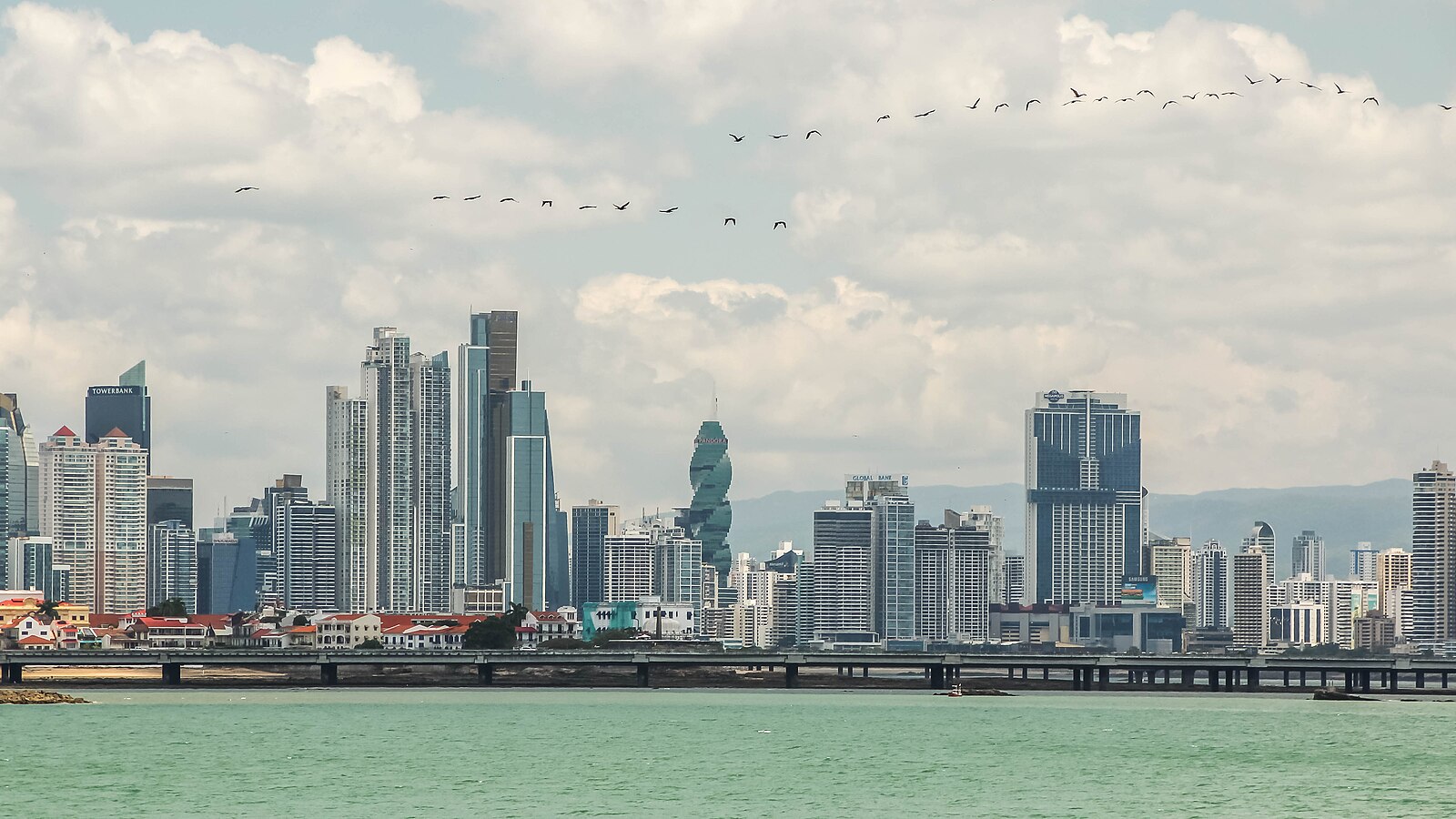
Panama counted 4.57 million people in 2025, about 0.7% of the 667 million in Latin America and the Caribbean. Its economy of US$90.5 billion was about 1.2% of the regional total of US$7.4 trillion that year.
Size is not what sets Panama apart; income is. Output per person reached US$19,790 in 2025, against US$11,095 for the region as a whole.
Among Spanish-speaking countries in Latin America, only Uruguay (US$25,216) and Costa Rica (US$19,970) were higher in 2025. Chile stood at US$17,995 and Argentina at US$14,898.
The International Monetary Fund (IMF) projects Panama’s economy to grow 5.0% in 2026, after 4.4% in 2025. Its database, checked on 17 October 2026, shows 3.3% for Costa Rica, 1.3% for Uruguay and 0.6% for Chile in 2026.
How Panama Compares With Its Closest Peers
Costa Rica is the natural comparison, with similar income and a similar population. It counted 5.15 million people and a US$102.9 billion economy in 2025, a little larger than Panama on both measures.
Uruguay is smaller still, with 3.38 million people and US$85.3 billion of output in 2025. Its income per person is higher, at US$25,216, but its growth was slower, at 1.8% in 2025.
Chile and Colombia show what scale adds. Chile’s economy of US$357.4 billion is nearly four times Panama’s, and Colombia’s US$457.4 billion is about five times as large.
Panama’s own model leans on the Canal, ports and trade services rather than on mining or farm exports. That is why a population of 4.6 million carries more weight in shipping than in headcount.
The Canal Gives Panama Continental Reach
In the year to September 2025 the Canal handled 13,404 ship transits totalling 489.2 million PC/UMS tons, the authority’s measure of vessel size. Revenue reached US$5.705 billion.
Nearly 3% of world maritime trade passes through the waterway, and 69.9% of its cargo starts or ends in the United States. China ranks second by cargo, at 53.5 million long tons against 183.4 million for the United States.
The Canal paid US$2.965 billion into the national treasury in the 2025 fiscal year, a record. Since Panama took full control on 31 December 1999, the authority reports cumulative payments of B/.31.232 billion, equal to US$31.2 billion at the balboa’s one-to-one peg.
Traffic has recovered since the drought years of 2023 and 2024. From October 2025 to June 2026 the Canal logged 10,726 transits, up 5.2%, and revenue of US$4.802 billion, up 17%.
Administrator Ricaurte Vásquez Morales has warned that a severe El Niño could bring capacity limits on both ship draft and daily bookings. The Canal’s weight is therefore also a weather risk for every trade route that depends on it.
Panama in the OAS, the UN and Regional Parliaments
Panama has deep roots in hemispheric diplomacy, and Simón Bolívar convened the Congress of Panama in 1826. The Organization of American States (OAS) counts it among the early origins of the idea of an association of American states.
The OAS is the hemisphere’s main political forum, with its secretariat in Washington. Panama hosted its General Assembly in June 2007, and the 1977 Panama Canal Treaties were signed at the OAS by US President Jimmy Carter and Panama’s leader Omar Torrijos.
At the United Nations, Panama holds a non-permanent seat on the Security Council for 2025 and 2026. The General Assembly elected it on 6 June 2024 with 183 of 190 votes, for its sixth term on the Council.
The seat ends on 31 December 2026. Until then a country of 4.6 million votes on the same files as the great powers.
The Latin American and Caribbean Parliament, known as Parlatino, has its seat in Panama City. It held a session there in March 2026 with legislators from 23 countries, which gives the capital a standing role as a meeting place for the region’s lawmakers.
Mercosur, Central America and Trade Ties
Mercosur is the South American trade bloc of Argentina, Brazil, Paraguay and Uruguay. Panama formally became an associate state on 20 December 2025, when President José Raúl Mulino deposited the adhesion document at the bloc’s summit in Brazil.
Associate status is a step short of full membership. Mulino said integration should advance gradually and without disruption, and he pointed to Panama’s air links and Canal ports as ways to carry Mercosur exports to world markets.
Panama is also a member state of the Central American Integration System (SICA), whose foreign ministries met virtually on 15 October 2026. Deputy Foreign Minister Carlos Guevara Mann presented a Panamanian proposal to modernise the bloc, according to Panama’s foreign ministry.
The Pacific Alliance, the trade bloc of Chile, Colombia, Mexico and Peru, lists Panama and Costa Rica as observer states and candidates to join. That page is undated, so the current stage of the candidacy is not clear.
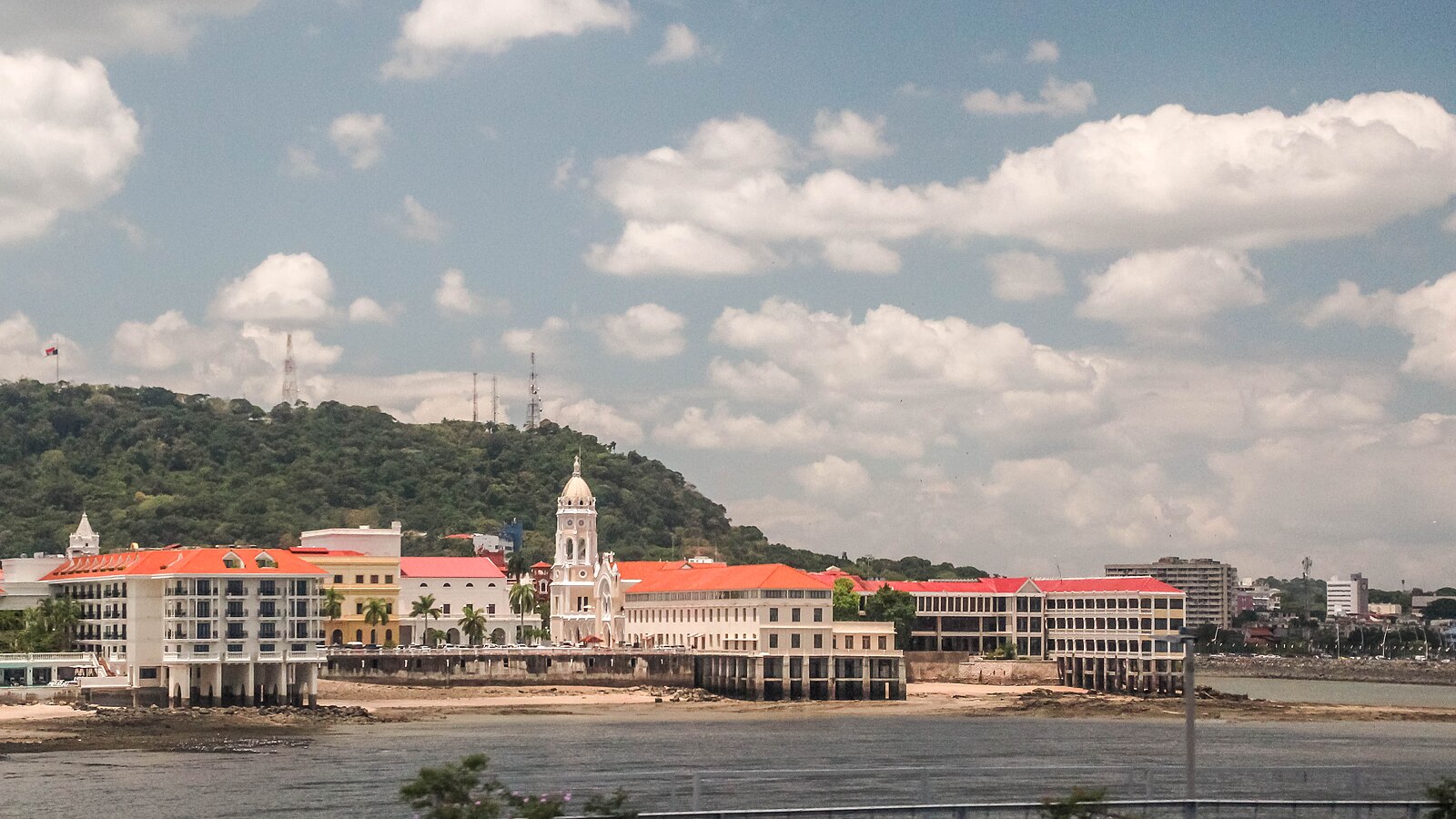
The US Department of Commerce lists Panama’s free-trade agreements with Chile, Costa Rica, Peru, Mexico, Canada, South Korea, Israel, Singapore and the EFTA states, among others. The agreement with the United States was signed on 28 June 2007 and took effect on 31 October 2012.
Agreements with El Salvador, Honduras, Guatemala and Nicaragua took effect between 2003 and 2009. Border questions with Costa Rica and Colombia are covered in the guide to Panama and Its Neighbours in Central America.
One dispute with a neighbour sits before the World Trade Organization. Costa Rica asked for consultations on 11 January 2021 over Panama’s import measures on products including strawberries, dairy, pork, poultry, pineapples and bananas.
The United States as Panama’s Main Partner
The United States is the Canal’s biggest customer, with 69.9% of cargo starting or ending there in the 2025 fiscal year. It is also a close security partner, under a joint statement signed on 8 April 2025.
In that statement Pete Hegseth, the US secretary of defense, recognised Panama’s non-waivable sovereignty over the Canal and adjacent areas. It promised more joint training, including jungle operations, and the return of the PANAMAX 2026 canal-defence exercise.
The statement sets no troop numbers and no basing arrangements. It also leans on the Neutrality Treaty, which it says should give warships and auxiliary vessels of both countries expeditious passage.
In his inaugural address of 20 January 2025, President Donald Trump said China was operating the Canal and that the United States was taking it back. Those words explain why traders bet on whether the United States will try to take the Canal back.
China, the Ports and a Balancing Act
Panama switched diplomatic recognition from Taiwan to the People’s Republic of China in 2017, which ended a free-trade deal with Taipei in force since 2004. Free-trade talks with Beijing began on 12 June 2018 and were later put on hold.
On 6 February 2025, days after a visit by US Secretary of State Marco Rubio, Mulino said Panama was leaving China’s Belt and Road programme. A Chinese foreign ministry spokesman, Lin Jian, replied that cooperation under the programme was producing results.
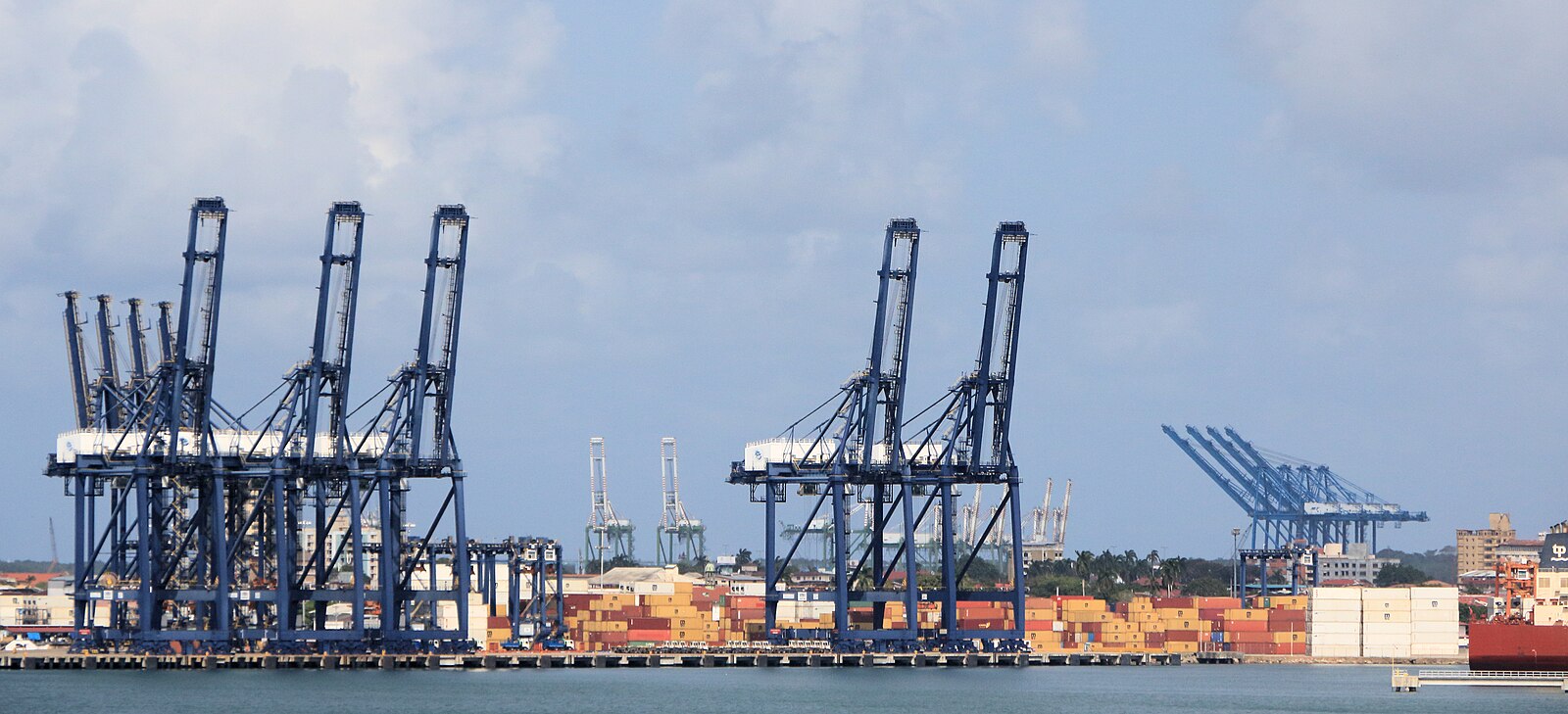
In late January 2026 the Supreme Court annulled the concession of Panama Ports Company, a subsidiary of Hong Kong’s CK Hutchison, to run the Balboa and Cristóbal terminals. The court found the laws behind the contract unconstitutional, and the ruling reached the Official Gazette on 23 February 2026.
Panama’s Maritime Authority signed interim contracts of up to 18 months with two operators. APM Terminals, part of Denmark’s Maersk, takes Balboa, and TiL, the port arm of MSC, takes Cristóbal.
CK Hutchison started international arbitration against Panama on 3 February 2026. The company says it invested US$1.8 billion, against a contractual obligation of US$1 billion.
Beijing promised to take all necessary measures to safeguard the rights of Chinese companies. Hong Kong’s government rejected the ruling, and the company said it lacked legal basis.
What Prediction Markets Say
Kalshi, a US-regulated exchange, lists a market on whether Trump will take back the Panama Canal during his term. Its last trade on 17 October 2026 at 9:55 a.m. ET implied a 19% chance, with buyers bidding 20 cents and sellers asking 21 cents for a one-dollar contract.
About 610,000 contracts have traded since the market opened in January 2025, and about 100,000 remain open. The market pays out if the United States takes control of any part of the Canal before 20 January 2029.
These are bets, not polls, and they price a forced change of control rather than the cooperation described above. A 19% price means traders see a low but real chance, and it can move within minutes of news.
Why we show this: prediction markets turn real-money bets into a live probability that moves within minutes of the news, which is why investors, campaigns and newsrooms in the United States now follow them closely. We show them next to polls and official results, never instead of them.
What It Means for US Readers
Investors in Panama face a dollar economy and projected growth of 5.0% in 2026. The main risks to watch are the outcome of the CK Hutchison arbitration, El Niño limits on the Canal and US-China friction over the ports.
US shippers and importers account for most of its cargo, so draft limits or booking caps would show up in freight costs. That link also explains why Washington watches who runs the ports at both ends.
Travellers and expats find a country that uses the US dollar, which removes exchange-rate risk for visitors from the United States. A magnitude 7.7 earthquake struck Panama on 9 October 2026, so check local conditions before booking.
Connected Coverage
What Is Not Known
It is not known how the CK Hutchison arbitration will end, or how much, if anything, Panama would have to pay. The interim port contracts run for up to 18 months, and no permanent operator has been named in the sources reviewed.
It is also not known how far Mercosur associate status will turn into trade deals or full membership. No timetable has been announced, and Mulino has said only that integration should be gradual.
Finally, the US troop presence beyond training remains a political question. The April 2025 joint statement sets no numbers, and any rotation beyond the joint training exercises is not spelled out in it.
Panama’s status in the Community of Latin American and Caribbean States (CELAC) could not be confirmed from a primary source for this guide. It is therefore not described here.
Frequently Asked Questions
How big is Panama compared with the rest of Latin America?
Panama had 4.57 million people and a US$90.5 billion economy in 2025, about 0.7% and 1.2% of the regional totals. Its income per person of US$19,790 was well above the regional figure of US$11,095.
Which regional bodies does Panama belong to?
Panama is a member of the Organization of American States and the Central American Integration System (SICA), and it hosts the Latin American and Caribbean Parliament in Panama City. It became an associate state of Mercosur on 20 December 2025.
Is Panama on the UN Security Council?
Yes, Panama holds a non-permanent seat for 2025 and 2026, elected on 6 June 2024 with 183 of 190 votes. It is the country’s sixth term on the Council.
Does the United States control the Panama Canal?
No, Panama has run the Canal since taking full control on 31 December 1999. The April 2025 joint statement with the United States recognises Panama’s non-waivable sovereignty over it.
Did Panama leave China’s Belt and Road programme?
Panama gave notice on 6 February 2025 that it was withdrawing from the programme. China’s foreign ministry said cooperation under the programme was producing results.
What happened to the Hutchison ports at the Canal?
The Supreme Court annulled the Panama Ports Company concession in late January 2026, and the ruling was published on 23 February 2026. APM Terminals and TiL now run Balboa and Cristóbal under interim contracts of up to 18 months.
Sources: World Bank open data (population, GDP and GDP per person, 2025): data.worldbank.org/country/panama; IMF DataMapper growth projections: imf.org/external/datamapper/NGDP_RPCH@WEO; Panama Canal Authority annual report 2025: pancanal.com/wp-content/uploads/2026/02/Informe-2025Eng.pdf; Telemetro, 22 July 2026, on fiscal 2026 canal figures: telemetro.com; Panama Canal Authority annual report 2025, cumulative treasury payments (p. 54): pancanal.com; Panama Ministry of Foreign Affairs on SICA, 16 October 2026: mire.gob.pa; Pacific Alliance, observer states: alianzapacifico.net; Presidency of Panama, joint statement of 8 April 2025: presidencia.gob.pa; US International Trade Administration, Panama trade agreements: trade.gov; Embassy of Panama on the Security Council vote: embassyofpanama.org; OAS background: nti.org; Parlatino: parlatino.org and Ecuador’s National Assembly, 28 March 2026: asambleanacional.gob.ec; La Estrella de Panamá on Mercosur, 20 December 2025: laestrella.com.pa; WTO dispute page: wto.org; Noticias RCN on the Belt and Road exit: noticiasrcn.com; Seatrade Maritime on the ports concession: seatrade-maritime.com; Malay Mail, 30 January 2026: malaymail.com; White House, inaugural address of 20 January 2025: whitehouse.gov; US Geological Survey event us6000u18k: earthquake.usgs.gov. Prediction-market prices and volume read from the exchange’s public data on 17 October 2026. All sources accessed 17 October 2026.
This article was produced by The Rio Times’ automated newsroom system. How we use AI · Report an error · Editorial responsibility: Matthias Camenzind, Editor-in-Chief
Expat Guide to Panama
What The Rio Times publishes for foreigners who live in or move to Panama.
Start here
- Cost of Living Boquete Panama 2026: Rent Above the Average Wage
- Panama Residency Visa Routes in 2026 and What Each One Actually Costs
- Healthcare in Panama 2026, Specialist Visits US$60-300
- Panama Safety for Expats in 2026: One Province Skews Everything
City guides
Coming up in Panama
- Oktoberfest Panama 2026: Sixth Edition at Mi Pueblito on 16–17 October 17 Oct
- Fiesta Alrededor del Mundo Brings 40+ Countries to Panama on 18 October 18 Oct
- Cristo Negro Portobelo Festival Moves Outdoors in Panama on 21 October 21 Oct
- InterNations Panama City Masquerade Set for 30 October at Tío Navaja 30 Oct
Understand Panama