Panama Explained 2026: The Canal, the Economy, the Politics and What to Watch
GUIDES · PANAMA
Key Facts
- —Capital Panama City, at the Pacific entrance to the canal. Panamá province, which contains it, held about 1.7 million people in 2023, 38.5 percent of the total.
- —Population About 4.6 million in 2026, according to the International Monetary Fund (IMF), roughly as many as Louisiana. More than half live in the two provinces around the capital.
- —Currency The US dollar, legal tender since 1904. The balboa is fixed at one to one (1.00 on 25 September 2026, open.er-api.com) and exists only as coins.
- —Language Spanish is official. Indigenous languages are spoken in the semi-autonomous comarcas, and outside the capital’s business districts a newcomer needs Spanish.
- —GDP US$90.5 billion in 2025 at current prices, about US$19,700 per person, according to the statistics institute INEC. Real growth was 4.4 percent in 2025.
- —Government A presidential republic with a single-chamber, 71-seat National Assembly. José Raúl Mulino has been president since 1 July 2024, on a five-year term.
Panama explained for newcomers: how 4.6 million people run a global shortcut, why they use the dollar, and which dates matter next.
Panama explained in one sentence: a small, dollarised services economy wrapped around a canal that runs on rainwater. Public money, politics and relations with Washington and Beijing all lead back to that waterway.
What kind of country is this?
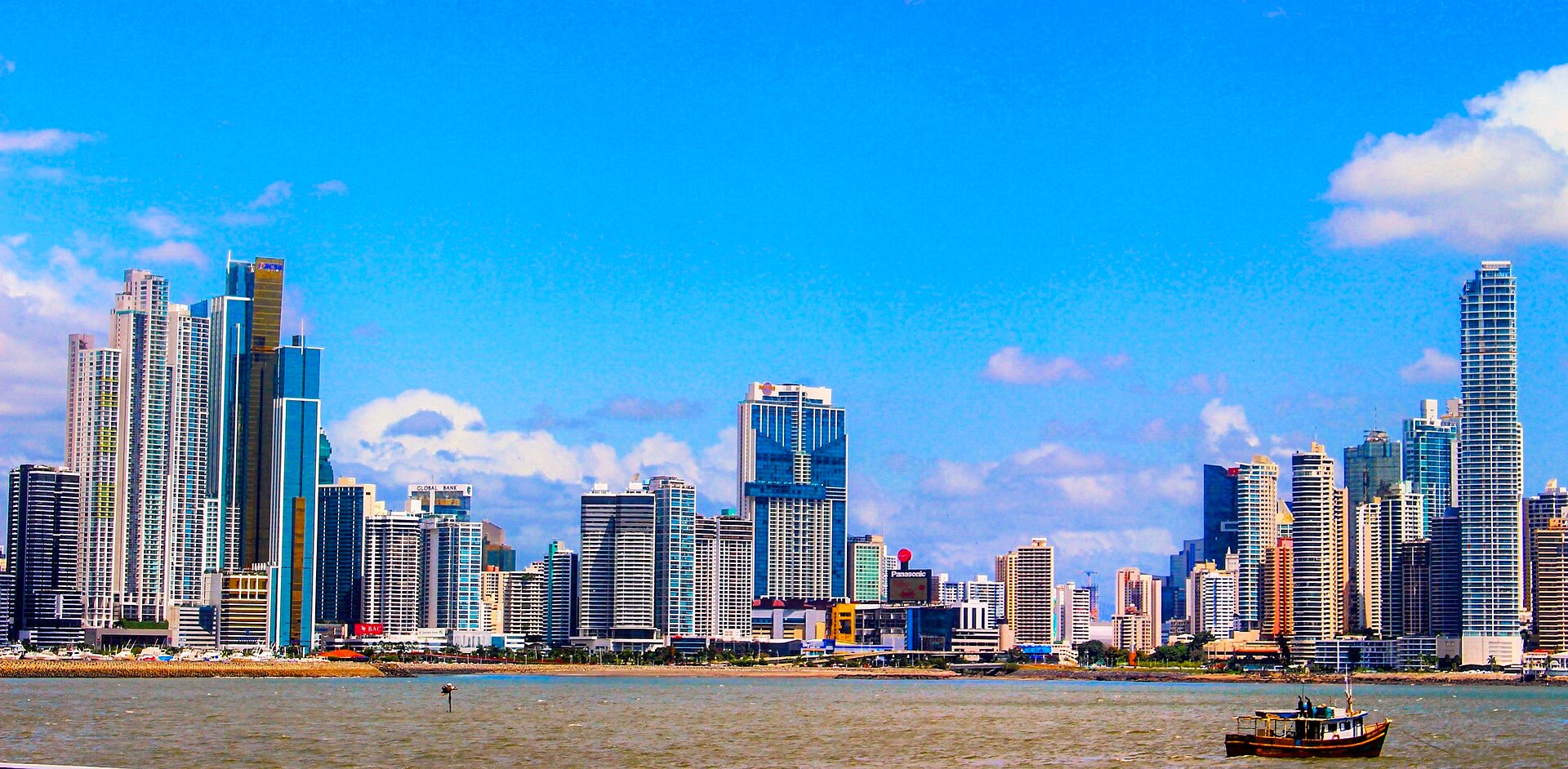
Panama is the narrow isthmus joining Central and South America. At about 75,000 square kilometres, it is a little smaller than South Carolina or the Czech Republic. The canal, about 80 kilometres (50 miles) long, links the Atlantic and the Pacific.
Panama broke away from Colombia in November 1903 with American backing, and the United States then built the canal. Washington ran it, with a surrounding Canal Zone, for most of the 20th century. Under the 1977 Torrijos–Carter treaties, Panama took full control on 31 December 1999.
That history shapes the national mood. The United States invaded in December 1989 to remove the military ruler Manuel Noriega. Talk in Washington of taking the canal back therefore sounds old to Panamanians, not new.
More than half of Panamanians live in Panamá and Panamá Oeste provinces, around the capital and the canal’s Pacific end. Indigenous peoples govern semi-autonomous territories called comarcas, such as Ngäbe-Buglé and Guna Yala.
Who runs Panama and how
Panama is a presidential republic. The president is head of state and government, elected in one round by simple plurality for five years. Laws pass through one chamber, the 71-seat National Assembly.
José Raúl Mulino, a lawyer and security minister from 2010 to 2014, won on 5 May 2024 with 34.2 percent. He replaced former president Ricardo Martinelli, barred after his money-laundering conviction was upheld. Mulino took office on 1 July 2024 and governs without a vice-president, having entered the ballot alone.
Mulino has no majority: his Realizando Metas party and its ally Alianza won 17 of the 71 seats. Twenty independents, nearly all from the Vamos coalition, form the largest bloc, so major laws are negotiated vote by vote.
Two institutions stand partly apart. The Panama Canal Authority (ACP, from its Spanish initials) has its own board and budget, with toll rules set in the constitution. The Supreme Court has struck down big contracts: a copper-mine law in 2023 and the canal ports concession in 2026.
Pension reform was Mulino’s first big test. Law 462, signed on 18 March 2025, kept retirement at 57 for women and 62 for men and raised employer contributions. Moody’s says it commits the state to about US$966 million a year.
Teachers, builders and banana workers struck for weeks in protest in 2025, and Chiquita dismissed thousands of strikers. In June the government suspended some rights in Bocas del Toro province for about ten days. Raising the retirement age was left to a review due within six years.
Foreign policy turns on Washington and Beijing. China is the canal’s second-largest user, and Panama switched recognition from Taipei to Beijing in 2017. Since January 2025, US pressure has shaped Mulino’s term.
Donald Trump used his second inaugural address to claim China was running the canal and to threaten to take it back. Panama denied any Chinese control but in February 2025 gave formal notice that it was leaving China’s Belt and Road programme. When the State Department claimed that month that US government ships would cross free, Mulino called it false.
In April 2025 a memorandum allowed rotating US troop deployments at three former American bases, but no permanent bases. A declaration promised US warships “first and free” passage. Panama calls it a cost-neutral compensation scheme, because the constitution bars waiving tolls.
How the economy works
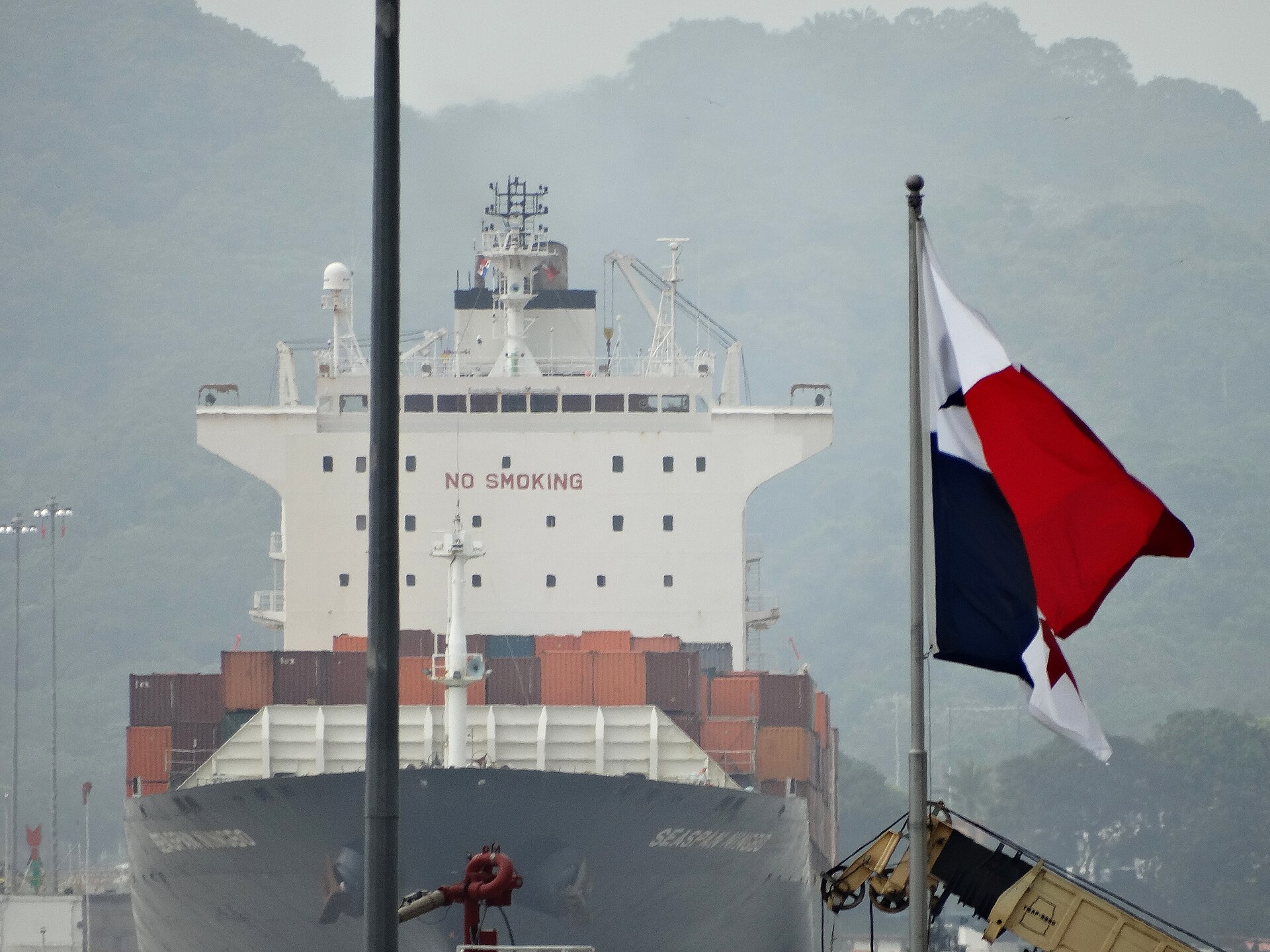
Panama earns its living from services, not factories. Transport, logistics, commerce, banking and tourism carry the economy. The canal’s direct payments to the state equalled 3.4 percent of gross domestic product (GDP) in fiscal 2025, the ACP says.
It is the state’s cash machine. In the year to 30 September 2025 it earned US$5.7 billion and handled 13,404 transits of all kinds, up 19.3 percent after a drought year. It paid US$2.965 billion to the Treasury, roughly US$645 per Panamanian.
Panama has used the US dollar as legal tender since 1904, under a monetary agreement signed as canal construction began. There is no central bank to print money or set interest rates. Prices are stable: consumer prices fell 0.1 percent in 2025, INEC says.
The biggest hole is Cobre Panamá, a copper mine run by Canada’s First Quantum Minerals that produced 350,000 tonnes in 2022. The IMF puts its direct and indirect weight at about 5 percent of GDP. The Supreme Court voided its contract law on 28 November 2023, after mass protests, and the mine stopped.
Growth survived. GDP rose 4.4 percent in 2025, and INEC reports 5.5 percent in the first half of 2026, led by transport and commerce. For all of 2026, the IMF forecasts 3.8 percent and S&P Global Ratings about 4.5 percent.
The weak spots are jobs and public finances. Unemployment was 10.4 percent in September 2025, and 47.1 percent of non-farm workers were informal. The public-sector deficit fell to 3.7 percent of GDP in 2025, but Moody’s sees debt stabilising only at 66 to 67 percent.
Ratings straddle the line between investment grade and junk. Fitch cut Panama to BB+, below investment grade, in March 2024. Moody’s rates it Baa3 with a negative outlook, and S&P affirmed BBB- with a stable outlook in September 2026.
What is happening right now
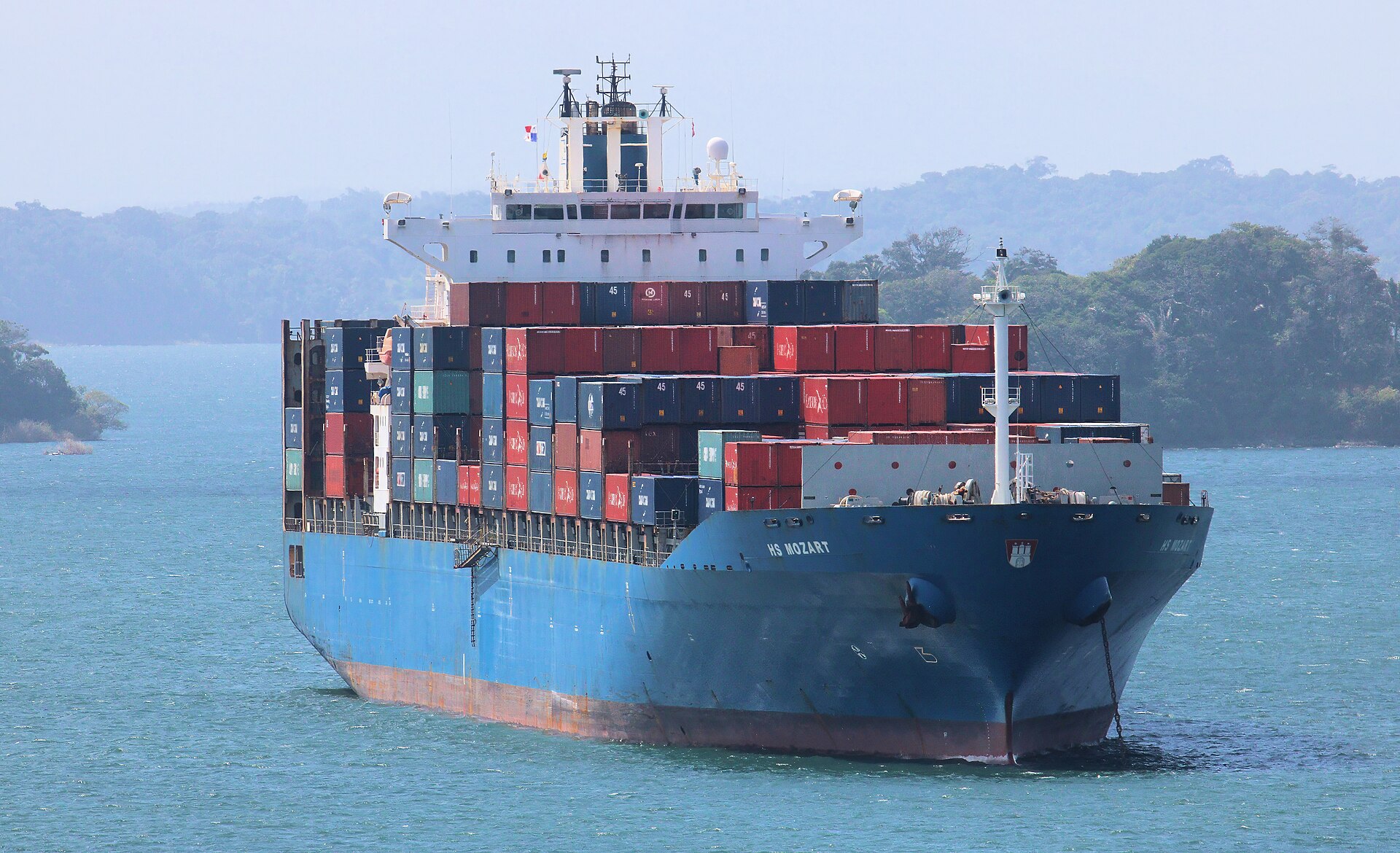
As of 25 September 2026, the canal is short of water again. The cabinet declared a national emergency over El Niño on 25 August. The ACP cut maximum daily transits from 36 to 34 on 4 September, then to 32 on 15 September.
It also lowered the maximum draft, how deep a ship may sit, from 50 to 48 feet (15.2 to 14.6 metres). The locks run on fresh water from Gatún and Alajuela lakes, which also supply more than two million people. In the 2023 drought, crossings fell to 22 a day.
September brought relief. Rain in the month’s first 21 days beat the historical average after four months of deficits, the ACP’s hydrology manager said. Gatún stood at 84.53 feet on 22 September, almost three feet below its 87.5-foot operating maximum.
The canal also has new leadership. Ilya Espino de Marotta took office on 7 September, the first woman to run it, for a term to 2033. She has said slots could fall to around 29 a day in February or March if rains fail.
Her budget for the year from 1 October plans US$5.555 billion in revenue and US$3.608 billion for the Treasury. It assumes 10,750 large-ship (deep-draft) transits, 743 fewer than budgeted for 2026, offset by pricier auction slots and more gas carriers. The Assembly approved it unanimously in second debate by 24 September.
Demand is strong. Al Jazeera reported on 8 September that some ships had paid over US$1 million at auction to cross. Traffic through the Strait of Hormuz had fallen sharply, it said.
Mulino’s long-term answer is a reservoir on the Río Indio, west of the canal. At the UN General Assembly on 23 September he asked for support; Panamanian authorities cost it at about US$1.6 billion. In New York he also pitched a US$8.5 billion canal investment plan.
The reservoir would flood about 4,600 hectares and feed Gatún Lake by gravity through an 8.7-kilometre tunnel. About 2,000 people, mostly small farmers, would be resettled, and many campaign under the slogan “Río Indio No, Bayano Sí”. The ACP says the Bayano option would cost about three and a half times more.
The copper mine is the other open file. Since April 2026 First Quantum may process 38 million tonnes of ore dug before the shutdown, but may not mine anew. A three-minister commission will give Mulino options within weeks, and the government says the process ends before December.
On 23 February 2026 Panama took the Balboa and Cristóbal port terminals from a CK Hutchison unit, and Maersk and MSC affiliates now run them temporarily. Beijing had warned of a “heavy price” after the court ruling. Detentions of Panama-flagged ships in Chinese ports then rose and later fell, says Panama’s Maritime Chamber.
What to watch
The canal’s fiscal 2027 begins on Thursday 1 October; last year the preliminary annual results came on 8 October. Rain in October and November decides whether slots are cut again for January to March.
The Cobre Panamá decision is due before December. The commerce minister has ruled out reviving the annulled contract, so a new model may need Assembly votes. First Quantum’s third-quarter results, due later in 2026, will show what the stockpile yields.
Moody’s is scheduled to review Panama in November 2026, according to the business outlet Nexo. The European Union (EU) revises its tax blacklist in October 2026, with Panama on it. The Río Indio environmental study is due around the turn of the year, with main construction planned for 2028 to 2031.
Employer social-security contributions rise from 13.25 to 14.25 percent of payroll on 1 March 2027. The temporary Balboa and Cristóbal port contracts run to about August 2027 unless extended. The next general election is due in May 2029.
What this means for foreigners
Money is simple. Prices are in US dollars, banknotes are American, and balboa coins circulate at the same value as US coins. Dollar earners face no exchange-rate risk, but get no cheap-currency discount either.
Panama largely exempts income earned abroad from tax. That, plus gaps in sharing tax information, kept Panama on the EU’s non-cooperative tax list on 17 February 2026. Europeans with Panamanian companies or accounts can face extra rules at home.
The main employer contribution to social security is 13.25 percent of payroll, rising to 15.25 percent by March 2029. Self-employed professionals must now register with the Social Security Fund (CSS).
The El Niño emergency matters beyond shipping. The cabinet warned of drought, low reservoirs and weaker hydropower, and its emergency spending powers run to 30 June 2027. Residents should watch for water notices in the dry season.
Residency, property, healthcare, safety and living costs each have their own Rio Times guide below. Panama explained in one line: a dollar-priced, open country where politics moves by protest and court ruling as much as by statute.
Connected Coverage
Cost of Living Boquete Panama 2026: Rent Above the Average Wage
Panama Residency Visa Routes in 2026 and What Each One Actually Costs
Buying Property in Panama as a Foreigner 2026: Title, Possession or Concession
Panama Safety for Expats in 2026: One Province Skews Everything
Retire in Panama 2026: The US$750 Rule Most Guides Leave Out
Panama City Tops San José for Expat Rent But Miami Still Costs Nearly Double
Panama Canal Caps Daily Transits as El Niño Threatens Its 2026 Recovery
Investing in Panama as a Foreigner 2026 — Residency Rules, Property, Banks and Tax
Sources: Canal figures from the Panama Canal Authority, output, prices and jobs from INEC, the monetary history and forecasts from the IMF, the pension law from the Ministry of Economy and Finance, the emergency from the Official Gazette, election results from the National Scrutiny Board, and the tax list from the Council of the EU. All accessed 25 September 2026.
- Panama Canal Authority — fiscal 2025 results
- Panama Canal Authority — fiscal 2027 budget
- INEC — GDP 2025, advance figures
- Contraloría General — GDP, first half of 2026
- INEC — labour market survey, September 2025
- IMF — 2025 Article IV consultation
- IMF — Selected Issues on dollarisation
- Ministry of Economy and Finance — Law 462
- Official Gazette — El Niño national emergency
- National Scrutiny Board — 2024 presidential result
- Council of the EU — tax jurisdictions list
- US Department of Defense — joint statement, April 2025
What Is Not Known
Whether Cobre Panamá reopens, and on what legal basis. Ministers say the annulled contract will not return and taxpayers must bear no cost. Reported options include a joint venture with a state company or a lease-back, but none is confirmed.
How dry the coming dry season will be. The ACP’s planning assumes a below-average October, and the weather service expects El Niño to last into March 2027. Whether slots stay at 32 or fall towards 29 depends on rain that has not yet fallen.
Whether Río Indio keeps its timetable. The environmental study is not yet filed, and cost estimates range from US$1.5 billion (main works) to US$1.6 billion (total). Counts of families to be moved range from about 420 to 500.
Where the US–China contest settles. CK Hutchison calls the port takeover unlawful and the dispute is in arbitration. How the promised cost-neutral passage for US warships works in practice is also unclear.
Whether Panama stays investment grade. Moody’s negative outlook remains, and Fitch already rates Panama below investment grade. The answer depends on fiscal reforms that need Assembly votes Mulino does not control.
Frequently Asked Questions
What currency does Panama use?
The US dollar, legal tender since 1904. Panama’s own balboa is fixed at one to one with the dollar and exists only as coins. There is no central bank to print money or set interest rates.
Who is the president of Panama in 2026?
José Raúl Mulino, a lawyer and former security minister. He won the election of 5 May 2024 with 34.2 percent, after replacing Ricardo Martinelli on the ballot. He took office on 1 July 2024 for five years and has no majority in the 71-seat National Assembly.
Does the United States control the Panama Canal?
No: Panama took full control on 31 December 1999 under the 1977 Torrijos–Carter treaties, and the Panama Canal Authority runs it. An April 2025 memorandum allows rotating US troop deployments but no permanent bases. Panama says US warship passage must be cost-neutral, not free.
Why is the Panama Canal limiting ships in 2026?
An El Niño drought: the locks use fresh water from Gatún and Alajuela lakes, which also supply more than two million people. Panama declared a national emergency on 25 August 2026. The canal cut daily transits to 32 from 15 September and the maximum draft to 48 feet.
Is the Cobre Panamá copper mine open?
No: the Supreme Court voided its contract law on 28 November 2023 and the mine stopped. Since April 2026 First Quantum may process ore dug before the shutdown, but may not mine anew. The government says a decision process will end before December 2026.
What is the Río Indio reservoir?
A planned reservoir west of the canal that would feed Gatún Lake through an 8.7-kilometre tunnel. Panamanian authorities cost it at about US$1.6 billion. About 2,000 people would be resettled, and main construction is planned for 2028 to 2031.
This article was produced by The Rio Times’ automated newsroom system. How we use AI · Report an error
Read More from The Rio Times