Spain’s Right Loses Ground in Latest Poll

Key Facts
- When: Sunday, 29 November 2026; Madrid is six hours ahead of US Eastern Time.
- Newest poll: IMOP has PP 28.5%, PSOE 27.1% and Vox 20.0%, published 23 October.
- State poll: The CIS has PSOE at 34.0% and PP at 22.2%, an 11.8-point gap.
- Campaign: Official campaigning runs from Friday 13 November to the end of Friday 27 November.
- Prediction markets: Polymarket gives Feijóo 81.0% to become prime minister; Kalshi 78%. Read 9:24 p.m. ET, 23 October.
This story is part of our coverage of the Spain Election 2026. Dates, times and how to follow it are in our guide.
The conservative People’s Party (PP) led by Alberto Núñez Feijóo has lost ground in the newest poll ahead of Spain’s Spain Election 2026 vote on 29 November. Pollster IMOP, working for the newspaper El Confidencial, put the PP only 1.4 points ahead of Prime Minister Pedro Sánchez’s Socialist Workers’ Party (PSOE).
For US readers, Spain is a NATO member and one of the euro area’s large economies, so a change of government in Madrid would matter to investors and diplomats. The polls disagree sharply on who is ahead, which is why the race is hard to call.
New IMOP Poll Narrows the Gap
IMOP published its survey on 23 October, based on fieldwork from 13 to 16 October. It gave the PP 28.5%, PSOE 27.1%, Vox 20.0%, Frente Amplio 8.9% and Podemos 1.9%.
Against IMOP’s previous survey, taken on 5 to 7 October, the PP fell 1.9 points, while Vox gained 1.0 and PSOE 0.6. IMOP’s seat projection is 123 for the PP, 113 for PSOE and 72 for Vox, in a 350-seat Congress where 176 seats are a majority.
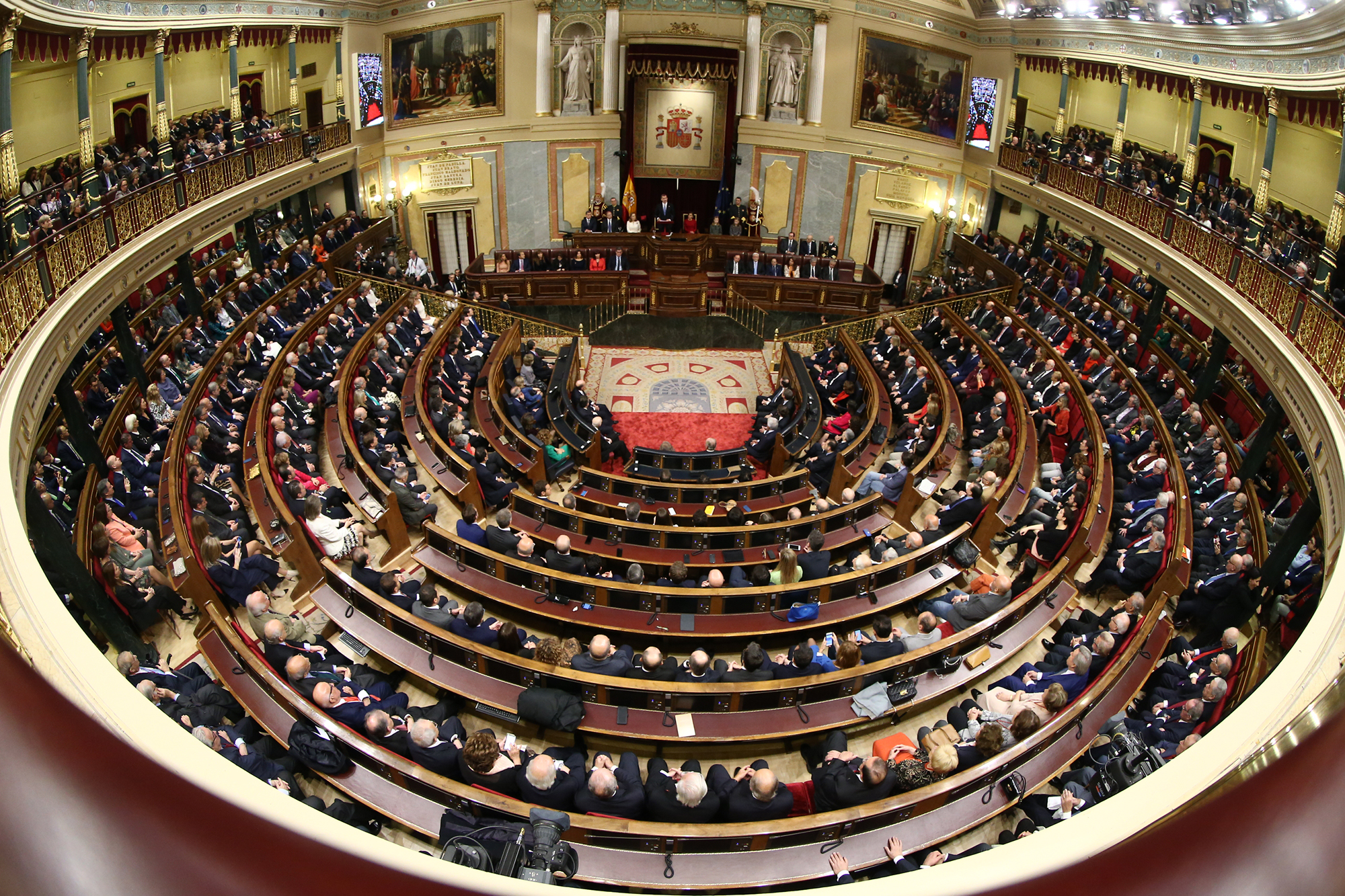
Frente Amplio is a left alliance whose lead candidate is Ada Colau. Vox is a conservative party led by Santiago Abascal.
Other Pollsters Still Favour the PP
Sigma Dos, polling for El Mundo from 1 to 14 October, put the PP at 31.5% with 132 to 137 seats. It gave PSOE 25.3% with 101 to 106 seats and Vox 19.5% with 65 to 68 seats.
That would leave the PP and Vox with 197 to 205 seats together, above the 176 needed. The PolitPro average of polls on 23 October had the PP at 31.8%, PSOE at 26.4% and Vox at 18.9%.
The State Pollster Disagrees
The Centre for Sociological Research (CIS) is Spain’s state pollster. Its October barometer, published on 14 October after 5,025 interviews from 1 to 6 October, gave PSOE 34.0%, PP 22.2%, Vox 17.1%, Frente Amplio 6.1% and Podemos 3.1%.
That is an 11.8-point PSOE lead, the opposite of most private surveys. Our reading is that the gap between the CIS and the others has not been explained by any common method, so no single poll should be treated as decisive.
What Prediction Markets Say
On Polymarket’s “Next Prime Minister of Spain” market, Feijóo stood at 81.0%, Sánchez at 16.2% and Abascal at 2.1% at 9:24 p.m. ET on 23 October (3:24 a.m. in Madrid on 24 October). The market has traded about US$2.1 million.
On Kalshi, which is regulated in the US by the CFTC, Feijóo was at 78%, Sánchez at 19% and Abascal at 3%, with 22,455 contracts traded. These prices are bets, not polls.
Why we show this: prediction markets turn real-money bets into a live probability that moves within minutes of the news, which is why investors, campaigns and newsrooms in the United States now follow them closely. We show them next to polls and official results, never instead of them.
How We Got Here
Sánchez called the snap election on 5 October, three days after Congress rejected two government housing decrees on 2 October. The vote falls 55 days after the snap election call.
The campaign starts at 00:00 Central European Time on Friday 13 November and ends at the close of Friday 27 November. Spain’s statistics office counts 38,728,356 eligible voters, of whom 2,769,645 live abroad.
What It Means for You
If you follow European markets or travel to Spain, the practical point is that the outcome is not settled. A PP win with Vox support would be a clear shift to the right, while a PSOE win would be a surprise relative to most surveys and to the betting markets.
Expect the numbers to move once the campaign opens on 13 November. Polls and market prices will then be the main signals to watch.
What Is Not Known
It is not known whether the PP and Vox will reach 176 seats, because Spain allocates seats by province and polls differ by many seats. The shape of any government, whether a PP majority, a PP and Vox deal or a hung parliament, is also open.
Which pollster is closest to the truth will only be known on 29 November. Even then, coalition talks could take weeks.
Frequently Asked Questions
When is Spain’s general election?
It is on Sunday, 29 November 2026. Sánchez called it on 5 October after Congress rejected two housing decrees.
Who is ahead in the polls?
Most private pollsters put the PP first, although IMOP shows only a 1.4-point lead. The state CIS has PSOE ahead by 11.8 points.
What do prediction markets say?
Polymarket gave Feijóo 81.0% to become prime minister and Sánchez 16.2% on the evening of 23 October. Kalshi showed 78% and 19%; these are bets, not polls.
How many seats win a majority?
The Congress of Deputies has 350 seats, so a party or bloc needs 176 for an absolute majority.
Sources: IMOP for El Confidencial (via Electomanía); Sigma Dos for El Mundo; CIS; PolitPro; National Statistics Institute (INE); Euronews and rtvc.es on the election calendar; Polymarket; Kalshi.
Related: Spain election poll tracker, Alberto Núñez Feijóo, Pedro Sánchez.
Editorial responsibility: Matthias Camenzind, Editor-in-Chief · Editorial standards · Report an error