Saint Kitts and Nevis and Its Neighbours in the Caribbean

SAINT KITTS AND NEVIS · NEIGHBOURHOOD
Key Facts
- —What is happening Saint Kitts and Nevis, a two island country of about 51,500 people, shares a currency, a regional bank and a citizenship rulebook with its eastern Caribbean neighbours, and its acting prime minister Dr Geoffrey Hanley has run the government since at least 23 September 2026.
- —Why it matters The country belongs to CARICOM, the Caribbean Community, and the OECS, the Organisation of Eastern Caribbean States, so US entry limits on neighbour Antigua and Barbuda since 1 January 2026 show how citizenship sales can draw US action.
- —The numbers The economy produced about US$1.05 billion in 2024; in 2025 tourism earned 37.5% of GDP, public debt stood at 58.4% of GDP, and citizenship sales brought in 5.3% of GDP, down from about 26% in 2022.
- —Who is who CARICOM is a 23 member Caribbean community, the OECS a smaller eastern Caribbean group, and the Eastern Caribbean Central Bank issues the shared dollar; Denzil Douglas is a senior minister who led foreign affairs in May 2026, and Mark Brantley is Nevis premier.
- —What to watch Watch the regional citizenship regulator ECCIRA, the new Citizenship (Amendment) Bill passed on 23 October 2026, the rollout of the biometric passport scheme, any change to US travel rules, and how long Dr Hanley stays acting prime minister.
- —What it means for you US travellers face no US restriction on going to Saint Kitts and Nevis, but buyers of its citizenship, property or passports in the region face tightening rules and US scrutiny.
Saint Kitts and Nevis shares a currency, a central bank and a passport rulebook with its island neighbours. That closeness shapes its risks and its choices in October 2026.
Saint Kitts and Nevis neighbours form a tightly bound group of small states sharing a currency, a central bank and passport rules. The federation is only two islands, home to about 51,500 people in 2024.
This guide explains who lives next door, which regional clubs tie them together and what US policy changes in October 2026. Every figure is dated, and local currency amounts carry their US$ value.
For more on the country itself, see the Rio Times guide to Saint Kitts and Nevis and the Rio Times Caribbean page. Conversions use about XCD 2.70 per US$1, the fixed rate implied by figures from the International Monetary Fund (IMF, the global lender).
Saint Kitts and Nevis Neighbours on the Map
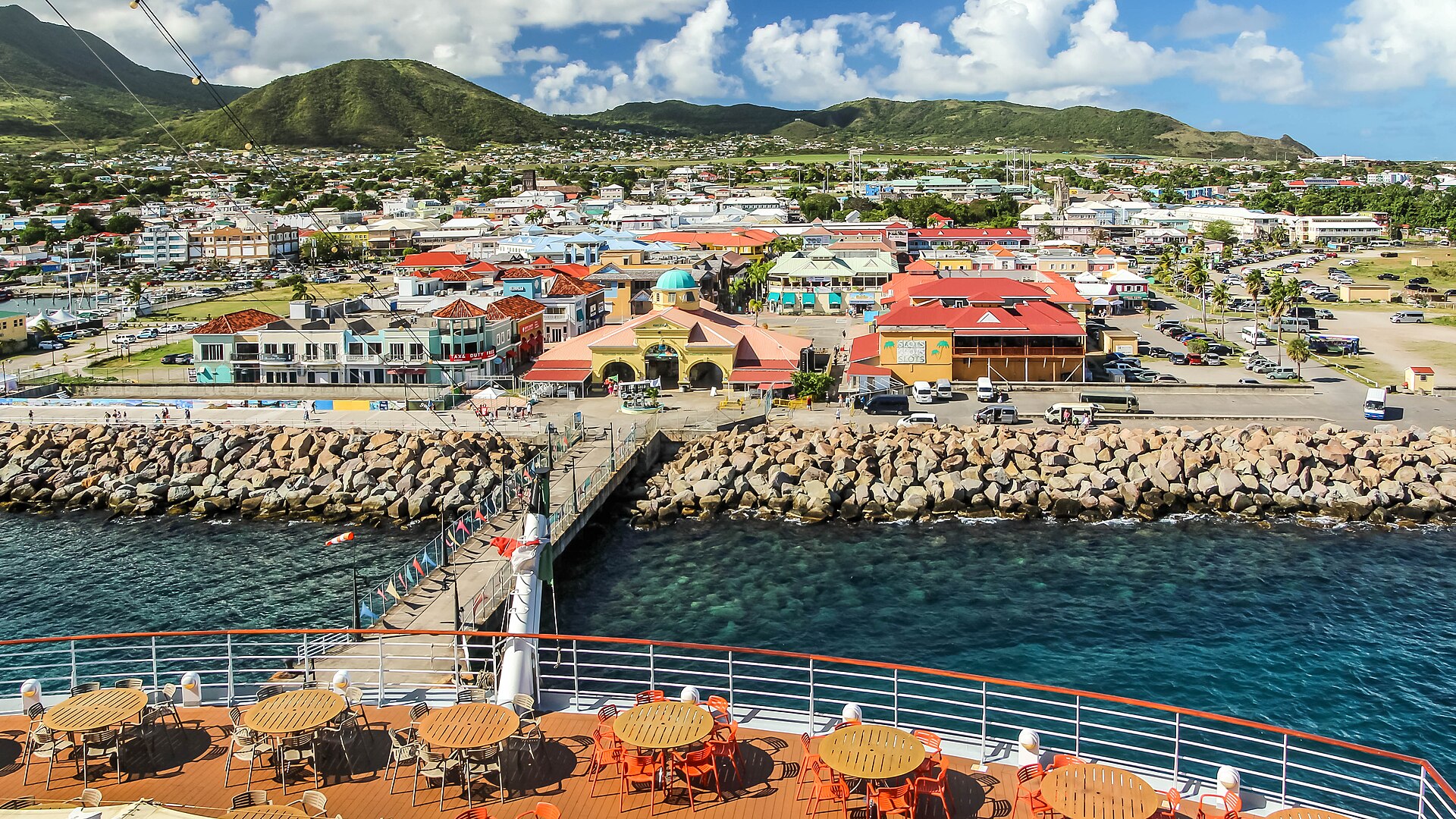
The two islands are separated by a channel called the Narrows, about three kilometres wide at its shortest point. Saint Kitts is larger, with roughly 35,000 people, and Nevis has about 11,000, in census era figures.
To the north-west lie Sint Eustatius and Saba, two Dutch Caribbean islands that belong to the Kingdom of the Netherlands. To the south-east lie Antigua and Barbuda, an independent country, and Montserrat, a British overseas territory.
Anguilla, another British territory, and the French islands of Saint Barthélemy and Saint-Martin sit further north. Saint Martin is shared with Sint Maarten, a self governing country within the Dutch kingdom.
The federation’s statistics office counted 47,195 people in the 2011 census. The IMF estimated the population at 51,500 in 2024, growing about 0.17% a year.
The economy is small and exposed to storms. The IMF puts nominal output at XCD 2.84 billion (US$1.05 billion) in 2024, or US$20,392 per person.
Two Islands, One Federation
Saint Kitts and Nevis became independent from Britain as a single federation on 19 September 1983. Nevis keeps its own island government, the Nevis Island Administration, which was created in 1983 under the constitution.
Mark Brantley, premier of Nevis, leads that administration as of October 2026, according to its official site. The federal government sits in Basseterre on Saint Kitts and is led by the prime minister.
The constitution allows Nevis to leave the federation if two thirds of voters agree in a referendum. On 10 August 1998, 61.7% voted yes, which fell short of the threshold.
That vote still shapes politics, because it shows Nevis is a partner and not a province. The internal border is therefore the first neighbour relationship any investor or visitor should understand.

Government releases from 23 September to 23 October 2026 style Dr Geoffrey Hanley acting prime minister, and give no reason. This guide draws no conclusion about why.
Senior minister Denzil Douglas led foreign affairs in May 2026. He ended the federation’s chair of COFCOR, the CARICOM foreign ministers’ council, on 20 May 2026 in Paramaribo, Suriname.
Sea Borders and the Dutch Islands
Sea borders matter in the Caribbean because small islands claim large areas of sea for fishing, energy and shipping. Saint Kitts and Nevis signed a maritime delimitation agreement with the Kingdom of the Netherlands in Basseterre on Thursday, 4 April 2024.
The Dutch treaty database lists the agreement but gives no date of entry into force. An undated Dutch defence page lists Saint Kitts and Nevis as a neighbour whose boundary it described as not yet laid down.
Sint Eustatius is a close neighbour, so the agreement matters for fishing and seabed rights. No comparable treaty with Antigua and Barbuda or Montserrat was found in the sources checked.
Most daily contact with these neighbours runs through trade, tourism, schools and family ties. Hurricane Irma in 2017 brought only about US$1.5 million from CCRIF, the regional disaster insurance fund.
CARICOM, the Wider Family
CARICOM, the Caribbean Community, was founded in 1973 by Barbados, Guyana, Jamaica and Trinidad and Tobago, through the Treaty of Chaguaramas. As of October 2026 it has 23 countries: 15 member states and eight associate members.
CARICOM says it speaks for about 16 million people, and its secretariat is in Georgetown, Guyana. A revised treaty in 2002 allowed for the CARICOM Single Market and Economy, a plan for freer trade and one economy.
Prime Minister Drew chaired CARICOM from January to June 2026, and Saint Lucia’s prime minister, Philip Pierre, took over on 1 July. The 51st heads of government meeting ran in Saint Lucia from 5 to 8 July 2026.
The agenda covered regional security, climate finance, food security, the single market, enlargement and reparations for slavery. Pierre’s six month term as chair began on 1 July 2026.
The OECS and the Shared Dollar
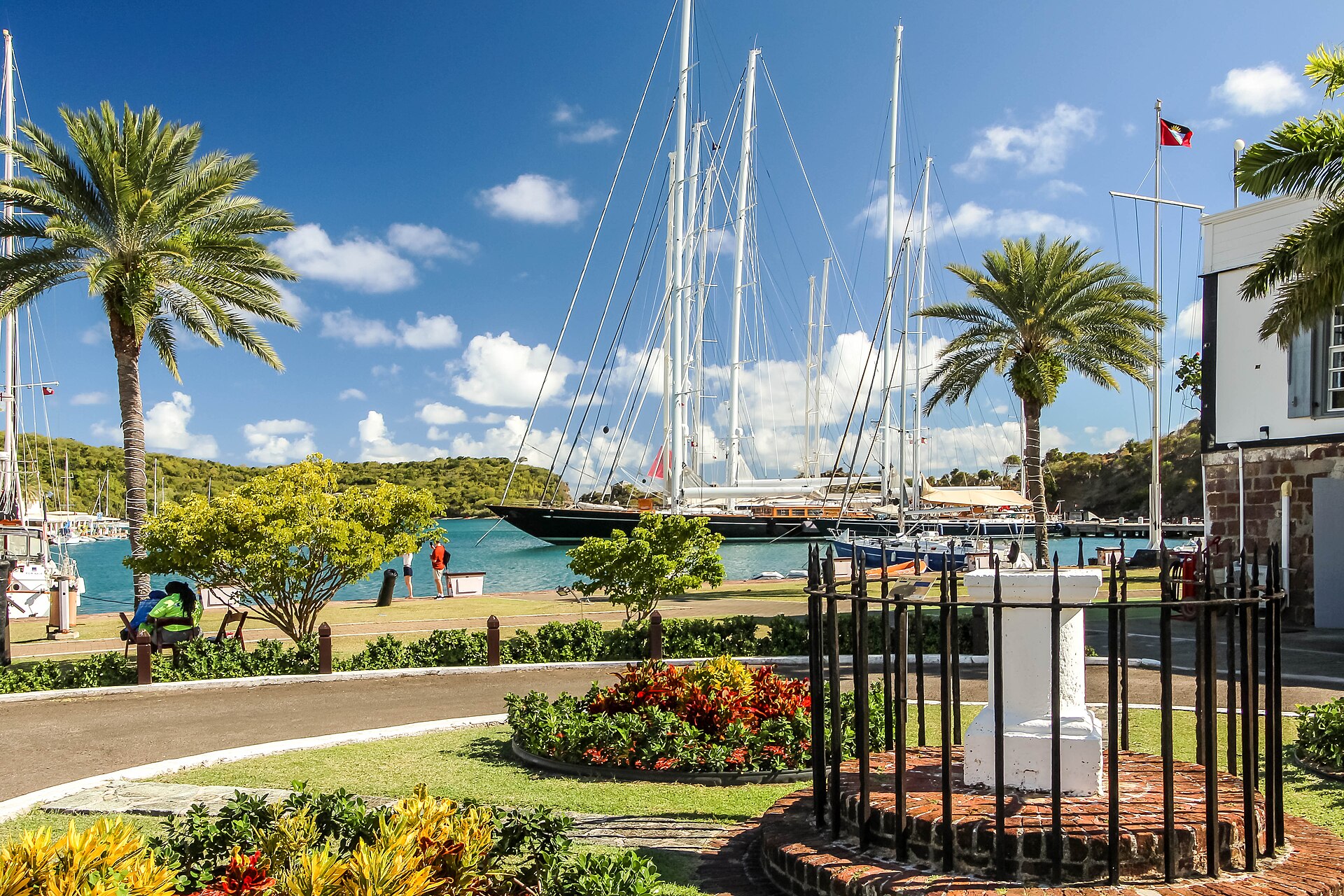
The Organisation of Eastern Caribbean States (OECS) was founded by the Treaty of Basseterre, signed in Basseterre on Thursday, 18 June 1981. Seven countries signed: Antigua and Barbuda, Dominica, Grenada, Montserrat, Saint Kitts and Nevis, Saint Lucia, and Saint Vincent and the Grenadines.
A revised treaty signed on 18 June 2010 entered into force in January 2011 and created the OECS Economic Union. The organisation’s headquarters is at Morne Fortune, Castries, in Saint Lucia.
Eight territories use the Eastern Caribbean dollar, issued by the Eastern Caribbean Central Bank (ECCB). The members are Anguilla, Antigua and Barbuda, Dominica, Grenada, Montserrat, Saint Kitts and Nevis, Saint Lucia and Saint Vincent.
The dollar is fixed to the US dollar at about XCD 2.70, which gives stability but no control over interest rates. The IMF notes that only Saint Kitts and Nevis and Saint Lucia lack an explicit fiscal framework in the union.
Citizenship for Sale and the Regional Rulebook
Citizenship by investment, or CBI, lets foreigners buy a passport through a government fund or approved property. Saint Kitts and Nevis runs one of five such programmes in the region, alongside Antigua and Barbuda, Dominica, Grenada and Saint Lucia.
The citizenship unit lists four routes: a Sustainable Island State Contribution, developer or private real estate, and a Public Benefit Option. Applicants must attend an interview.
From 14 April 2026 people who gained citizenship through the programme must join a biometric passport scheme. The deadline is 31 July 2027.
On Tuesday, 23 September 2025 the five governments announced common standards in Castries, including a regional minimum investment of US$200,000. They also agreed biometric checks for new applicants and stricter residency and genuine link rules.
The five also agreed to create a regional regulator, the Eastern Caribbean Citizenship by Investment Regulatory Authority (ECCIRA). The National Assembly of Saint Kitts and Nevis passed the ECCIRA Bill on Friday, 17 October 2025.
The money is large, and the IMF estimates CBI revenue at 5.3% of GDP in 2025. That is down from 8.6% in 2024 and almost 26% at the 2022 peak.
On Friday, 23 October 2026 the National Assembly passed a Citizenship (Amendment) Bill. It covers adults born abroad on or after 19 September 1983 whose parent or grandparent is a citizen.
This is a diaspora route and not a sale of passports. Its full eligibility rules were not available in the sources checked.
Washington, Taipei and the Neighbourhood
The United States acts on the region mostly through immigration and security rules. A presidential proclamation of 16 December 2025 restricts entry for nationals of listed countries from 1 January 2026.
It places two of the federation’s OECS neighbours, Antigua and Barbuda and Dominica, under partial suspension. Immigrant entry and B, F, M and J visas are suspended for their nationals abroad without a valid visa.
The text says both countries have had citizenship by investment without residency, and argues such programmes complicate vetting. Saint Kitts and Nevis and Saint Lucia are not named in the proclamation.
On Friday, 9 January 2026 the government announced a memorandum with the United States on CARICOM nationals who cannot return home. Washington would pay relocation costs, and Saint Kitts and Nevis keeps sole discretion.
People convicted of violent or sexual offences are excluded. The arrangement covers citizens of CARICOM countries only.
Prime Minister Drew first described the arrangement on his programme on Thursday, 8 January 2026. The government gave no numbers of people.
Taiwan’s foreign ministry lists Saint Kitts and Nevis, Saint Lucia and Saint Vincent and the Grenadines as diplomatic allies. That puts three OECS members on Taipei’s side of the China question, among only 12 countries on the list.
Where Saint Kitts and Nevis Leads and Follows
The federation leads in diplomacy for its size. Drew chaired CARICOM in the first half of 2026, and Douglas handed over the COFCOR chair in May.
It also moved early on the regional CBI rulebook, passing the ECCIRA law 24 days after the Castries announcement. Timing in the other four countries was not checked.
It follows on money. The IMF puts public debt at 58.4% of GDP in 2025 and projects 64.0% in 2026.
By 2031 the IMF projects debt of 79.2% of GDP, above the 60% regional benchmark. Few neighbours can lend a hand, since most face similar limits.
The IMF also found a primary deficit of 15.7% of GDP in 2025, excluding CBI income and bank transfers. Its Board concluded the 2026 review on Friday, 8 May 2026, and expects 2.0% growth in 2026.
Tourism is the other pillar, earning 37.5% of GDP in 2025, and it depends on the US market. A one point fall in US growth would cut growth here by about 0.7 points, the IMF estimates.
What It Means for US Readers
The US proclamation of 16 December 2025 limits foreign nationals entering the United States and does not list Saint Kitts and Nevis. Americans travelling there face no US restriction, but the State Department advisory level was not confirmed.
Investors in the citizenship programme face a moving target. Neighbours Antigua and Barbuda and Dominica already carry US partial entry restrictions, which shows how Washington may treat CBI without residency.
Tourism is the main US link, and the IMF says the economy is sensitive to US growth. A weak US economy or a storm would hit the federation quickly.
Readers planning a stay can start with the Saint Kitts and Nevis explained guide. Neighbouring islands are covered in the Jamaica guide and the Barbados guide.
For the energy side, read the Rio Times report on the Nevis geothermal project. It covers financing for the island’s geothermal power plan.
What Is Not Known
Why Dr Hanley has been styled acting prime minister, and for how long, is not stated in the government releases checked. Terrance Drew chaired CARICOM from January to June 2026.
The entry into force of the 2024 maritime agreement with the Netherlands was not shown in the Dutch treaty database. No border deal with Antigua and Barbuda or Montserrat was found.
The number of people sent to Saint Kitts and Nevis under the January 2026 US memorandum has not been published. Whether the proclamation of 16 December 2025 has been amended since was not checked.
The full rules of the Citizenship Bill and any US tariff rate were not confirmed. No prediction market is shown.
Frequently Asked Questions
Who are the neighbours of Saint Kitts and Nevis?
The nearest are Sint Eustatius and Saba to the north-west, and Antigua and Barbuda and Montserrat to the south-east. Anguilla, Saint Barthélemy and Saint-Martin lie further north.
Is Saint Kitts and Nevis part of CARICOM?
Yes. CARICOM has 23 countries, and Prime Minister Terrance Drew chaired it from January to June 2026.
What currency does Saint Kitts and Nevis use?
It uses the Eastern Caribbean dollar, shared by eight territories and fixed to the US dollar at about XCD 2.70. The Eastern Caribbean Central Bank issues it.
Can Nevis leave Saint Kitts and Nevis?
The constitution allows it if two thirds of voters agree in a referendum. On 10 August 1998 only 61.7% voted yes, so Nevis stayed.
Does the United States restrict entry from Saint Kitts and Nevis?
The US proclamation of 16 December 2025 does not name Saint Kitts and Nevis. It does restrict nationals of neighbours Antigua and Barbuda and Dominica from 1 January 2026.
Who runs Saint Kitts and Nevis in October 2026?
Government releases from 23 September to 23 October 2026 style Dr Geoffrey Hanley acting prime minister. They give no reason, and none is assumed here.
Sources: IMF, St. Kitts and Nevis 2026 Article IV, Country Report 26/93; White House, proclamation of 16 December 2025; Government of Saint Kitts and Nevis, memorandum with the United States (9 January 2026); Government of Saint Kitts and Nevis, Citizenship (Amendment) Bill 2026, passed 23 October 2026; Government of Saint Kitts and Nevis information service, acting prime minister releases; Citizenship by Investment Unit, ECCIRA Bill (17 October 2025); Citizenship by Investment Unit; OECS, citizenship by investment standards (23 September 2025); OECS, Treaty of Basseterre; Government of Saint Lucia, 51st CARICOM Heads of Government meeting; CARICOM Secretariat; Eastern Caribbean Central Bank; Dutch treaty database, maritime delimitation agreement (4 April 2024); Netherlands Ministry of Defence, maritime boundaries of the Caribbean part of the Kingdom; Taiwan Ministry of Foreign Affairs, diplomatic allies; Nevis Island Administration; Saint Kitts and Nevis Statistics Department; Forum of Federations, Saint Kitts and Nevis policy brief (July 2026) (all accessed 27 October 2026).
This article was produced by The Rio Times’ automated newsroom system. How we use AI · Report an error · Editorial responsibility: Matthias Camenzind, Editor-in-Chief