Haiti Anti-Gang Force Gets 600-Ton Airlift

HAITI · SECURITY
Key Facts
- The country Haiti shares the island of Hispaniola with the Dominican Republic and has not held a national election since 2016. Armed gangs control large areas, including parts of the capital, Port-au-Prince.
- Why it matters The United States backs the UN-authorised force that is trying to retake ground from the gangs. Haiti is a Level 4 Do Not Travel destination for Americans, and instability there feeds migration and security pressure across the Caribbean.
- Why now On Friday 30 October 2026 a senior US diplomat publicised the airlift. It comes while the force is still far below its authorised size.
- What happened More than 600 tons of priority equipment was airlifted from Bangladesh to Haiti for the Gang Suppression Force. No weapons were listed.
- The numbers The force had 1,563 uniformed members on 12 October 2026 against 5,550 authorised, and its mandate runs to 31 March 2027.
- What it means for you The airlift does not change the US travel advice for Haiti, which stays at Level 4, Do Not Travel. Americans in Haiti have very limited help from their embassy.
- Still open The owner of the equipment, the aircraft, the landing site and the date when the force reaches full strength are not public.
The United States publicised on Friday 30 October 2026 an airlift of more than 600 tons of priority equipment to Haiti for the Gang Suppression Force, the UN-authorised multinational unit that is trying to push armed gangs out of Port-au-Prince. Juan Pablo Segura, the US Assistant Secretary of State for Western Hemisphere Affairs, shared the news through the US Embassy in Haiti, which posted photographs of an armored vehicle marked GSF being loaded onto or unloaded from a military transport aircraft.
The post says the cargo came from Bangladesh, which sent an advance team of 50 soldiers toward the force on 15 October, as covered in Bangladesh army deployment to Haiti, and it thanks the German government for its generous contributions to the force. A Dominican headline spoke of heavy artillery, but the announcement as published by Diario Libre and Listín Diario names no weapons and no route through the Dominican Republic.
What the Airlift Carried
The announcement describes the load only as priority equipment and gives a weight of more than 600 tons. It does not say what is inside the crates, how many aircraft were used or where they landed in Haiti.
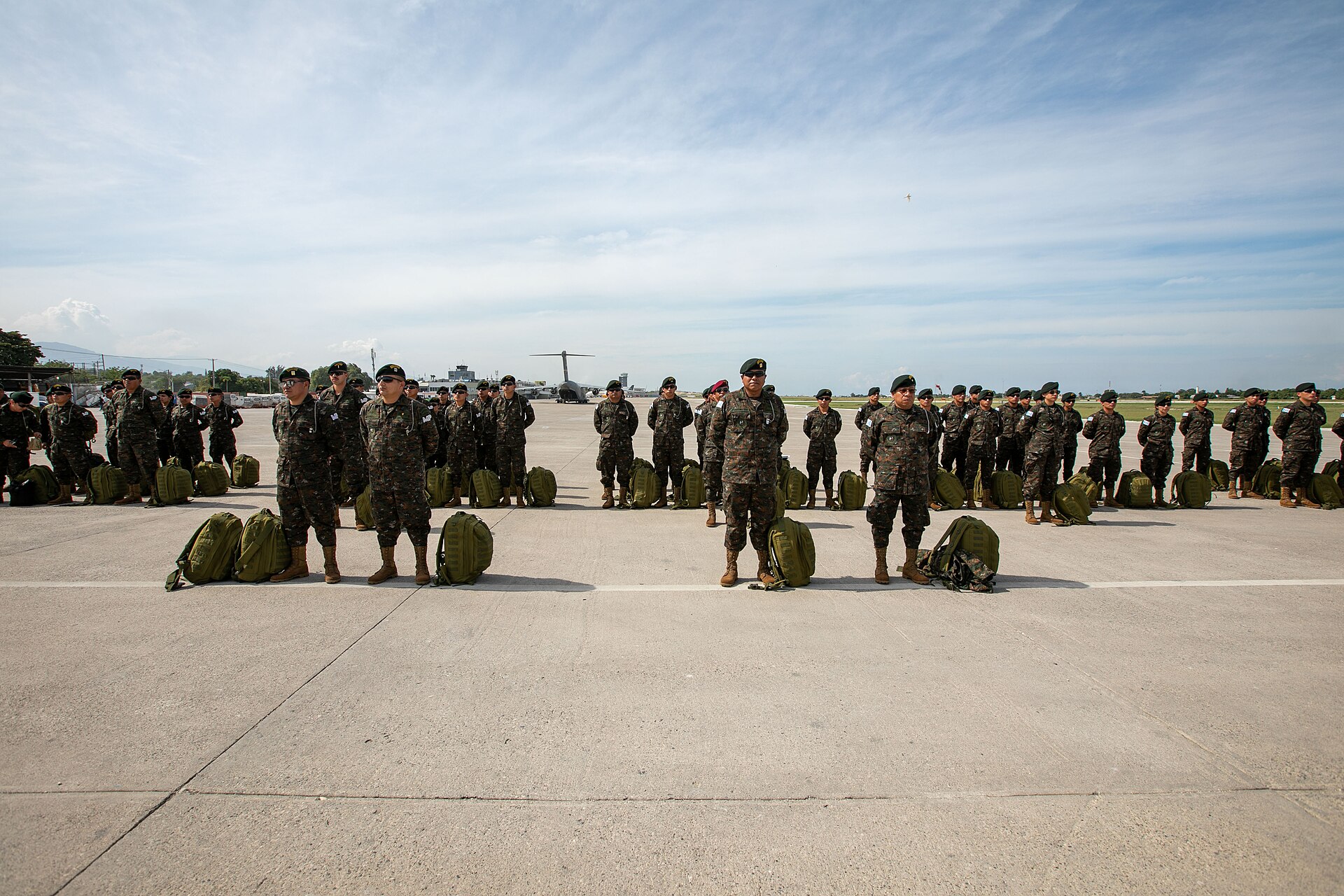
The one item visible in the photographs is an armored vehicle with GSF painted on its side, which fits the force’s need to move vehicles, supplies and equipment from contributing countries to its bases. In the post, Segura wrote that the airlift “enables significant security gains in shared efforts to restore stability to the Haitian people,” as embedded by Diario Libre.
Germany’s Role in the Airlift
Segura thanked the German government for its “generous contributions” to the force in the same post, and El Día reads the thanks as recognition of German help with the air transport. The post does not say which aircraft flew the cargo or who paid for it, although the German defence ministry announced in August 2026 that the Bundeswehr would provide air transport capacity to move the contingents’ equipment to Haiti.
The UN Support Office, known as UNSOH, was created under Security Council resolution 2793 of 30 September 2025 and supplies the force with accommodation, food, fuel and medical care at Camp Vertières, the airport and a base near the port. Its head, Daniela Kroslak, thanked Belgium and Germany for their contributions to strategic airlift, and the Dominican Republic for facilitating the deployments, when she briefed the Security Council on 19 October.
The Mandate and the Size of the Force
Resolution 2793 authorised member states to turn the earlier Multinational Security Support mission into the Gang Suppression Force, and the Security Council extended it on 29 September 2026 until 31 March 2027 by 12 votes in favour and three abstentions. China, Pakistan and Russia abstained, according to Caribbean National Weekly, while the US representative said the force was taking the fight to the gangs.
The Security Council was told on 19 October that the force had 1,563 uniformed members as of 12 October, far below the 5,550 it is authorised to field. UNSOH said on 29 September that it supports more than 1,500 personnel, expects several hundred more in October and November, and projects nearly three times as many by the end of the year.
The Dominican Link
The Dominican Republic says it lets international contingents transit its territory because Haitian ports and airports face operational difficulties, and Foreign Minister Víctor Bisonó has said it will not take part directly in military operations against the gangs. Seven military helicopters, five Salvadoran MD500Es and two Black Hawks, refuelled at the El Rodeo fortress in Jimaní on 29 October before flying on to Haiti, according to Diario Libre.
None of the published texts says the 600 tons passed through Dominican territory, so that link remains unconfirmed. Infobae reports about 11,000 Dominican troops on the border, and two more battalions were announced on 25 October, as described in coverage of the Dominican border reinforcement.
Why the Gangs Are the Test
Carlos Ruiz Massieu, the UN’s top official in Haiti, told the Security Council on 19 October: “What is particularly worrying is the gangs’ ability to adapt their tactics as security operations intensify.” He added that security operations alone cannot bring about lasting stabilisation, and an armored vehicle carrying Salvadoran soldiers had been attacked the day before in Croix-des-Bouquets.
Haiti’s presidential and legislative elections planned for 13 December had been postponed indefinitely as of that briefing, and the country has not held national elections since 2016. The force has set up a base in the Artibonite region, and more vehicles and supplies would let it operate farther from its bases.
What It Means for You
The State Department kept Haiti at Level 4, Do Not Travel, in its advisory of 10 July 2026, citing crime, kidnapping, terrorism, unrest and limited health care. US government employees may not travel away from the US embassy for non-essential reasons, and the department says it has an extremely limited ability to provide emergency services to US citizens there.
A bigger force with better equipment may reduce gang control over time, but the numbers show that most of the authorised troops have not arrived. Americans with business, church or family ties in Haiti should therefore expect the security situation to stay dangerous for months, and readers can follow the wider region in the Caribbean section.
What Is Not Known
The public texts do not say who owns the 600 tons, whether it is Bangladeshi contingent equipment, UN-owned equipment or a donation, and they do not name the aircraft or the number of flights. The landing site in Haiti and the date of arrival are also missing.
It is not known how quickly the force can grow from 1,563 toward 5,550, or whether further airlifts will follow in November. The US Embassy’s own post could not be opened directly, so the Segura statement is taken from the version embedded by Diario Libre and repeated by El Día and Listín Diario.
Frequently Asked Questions
What is the Gang Suppression Force in Haiti?
It is a UN-authorised multinational unit created by Security Council resolution 2793 in September 2025 to fight armed gangs. Its mandate was extended on 29 September 2026 until 31 March 2027.
Did the United States send the 600 tons?
The US Embassy in Haiti publicised the airlift, and the post says the equipment came from Bangladesh. It thanks Germany for its contributions but does not say who flew, owns or paid for the cargo.
How many troops does the force have?
The force had 1,563 uniformed members on 12 October 2026. The Security Council authorised 5,550, so it is at about 28 percent of its planned size.
Is it safe for Americans to travel to Haiti?
No, the State Department rates Haiti Level 4, Do Not Travel, because of crime, kidnapping, terrorism, unrest and limited health care. The advisory dates from 10 July 2026 and the airlift does not change it.
Is the Dominican Republic sending troops?
No, the Dominican foreign minister says the country will not take part directly in military operations against the gangs. It allows contingents to transit and provides humanitarian and logistical support.
Sources: Juan Pablo Segura on X, 30 October 2026, as embedded by Diario Libre; UN Support Office in Haiti, Kroslak briefing, 19 October 2026; German Federal Ministry of Defence, UN engagement in Haiti, August 2026; UN News, Security Council briefing, 19 October 2026; UN Support Office in Haiti, mandate extension, 29 September 2026; Security Council Report, resolution 2793, 2025; US State Department, biography of Juan Pablo Segura; US State Department travel advisory feed, Haiti Level 4, 10 July 2026; Diario Libre, 30 October 2026; Listín Diario, 31 October 2026; El Día, 30 October 2026; Diario Libre on Dominican logistics, 30 October 2026; Infobae, Dominican position, 27 October 2026; Caribbean National Weekly, 30 September 2026; The Business Standard, Bangladesh advance team, 15 October 2026.
This article was produced by The Rio Times’ automated newsroom system. How we use AI · Report an error · Editorial responsibility: Matthias Camenzind, Editor-in-Chief
Haiti
- What Is Happening in Haiti?
- What Is Happening in Haiti?
- Haiti Gang Crisis Explained 2026 Gangs and the UN Force
- Haiti’s 13 December Vote, What US Travellers Need to Know