Haiti Regions and Provinces Explained
Haiti’s map has ten departments, but in 2026 the line that matters most to travellers and aid workers is not printed on it: it runs between places armed groups contest and places they do not.

Haiti · Explainer
Haiti is divided into ten departments, the country’s top-level regions, which are split into 42 arrondissements and 149 communes. The word “provinces” is not used in Haiti’s official system, so a search for Haiti provinces leads to the same ten departments.
For readers in the United States, the map matters because the departments are the units in which the UN and aid agencies report displacement and access. The ten regions are not equally exposed, because UN agencies’ 2026 reports place the heaviest pressure from armed groups on Ouest (the West), Artibonite and Centre, a trend we track on our Haiti crisis hub.
Key Facts
- Who. Haiti’s ten departments, from Ouest (capital Port-au-Prince) to Nord (Cap-Haïtien) and Sud (Les Cayes).
- What. Below them sit 42 arrondissements and 149 communes; “provinces” is not an official Haitian term.
- Where. Ouest, Artibonite and Centre are the departments under the most pressure from armed groups in 2026.
- Population. Haiti’s statistics institute estimates 11,867,032 people in 2024, and 4,038,816 of them in Ouest.
- As of. 19 November 2026, 20:00 GMT.
Haiti’s map has ten departments, but in 2026 the line that matters most to travellers and aid workers is not printed on it: it runs between places armed groups contest and places they do not.
How Haiti Is Divided
Haiti’s statistics institute, the IHSI (Institut haïtien de statistique et d’informatique), lists ten departments, 42 arrondissements and 149 communes in its 2024 population estimates. A department is roughly what a US reader would call a state or a large county, an arrondissement is a district inside it, and a commune is the local town or city government.
Each department has a capital, called a chef-lieu in French, and the institute’s figures are the only official population series Haiti has right now. They are estimates because the country’s fifth census could not be carried out, so every number in this guide is an estimate rather than a count.
How the Map Got Here
Haiti won independence in 1804, and the IHSI says a decree of 30 October 2003 made Nippes the tenth department, which gave the country its present map. The country’s last national election was in 2016, and President Jovenel Moïse was assassinated at his home on 7 July 2021, which left the state without an elected head.
Since then armed groups have taken over neighbourhoods that the police could not hold, and the foreign-backed Gang Suppression Force, authorised by the UN Security Council in 2025, is deploying alongside Haitian forces. Each department’s story therefore depends on how close it sits to the capital and to the roads that feed it.
The Ten Departments at a Glance
The institute’s 2024 estimate puts Haiti at 11,867,032 people across 27,065 square kilometres, a little smaller than Maryland. The list below follows its figures, from the most populous department to the least.
Haiti’s Ten Departments
- Ouest Capital Port-au-Prince. 4,038,816 people, 34.0% of the total.
- Artibonite Capital Gonaïves. 1,896,380 people, 16.0% of the total.
- Nord Capital Cap-Haïtien. 1,172,476 people, 9.9% of the total.
- Sud Capital Les Cayes. 955,607 people, 8.1% of the total.
- Centre Capital Hinche. 852,280 people, 7.2% of the total.
- Nord-Ouest Capital Port-de-Paix. 797,013 people, 6.7% of the total.
- Sud-Est Capital Jacmel. 749,803 people, 6.3% of the total.
- Grand’Anse Capital Jérémie. 570,687 people, 4.8% of the total.
- Nord-Est Capital Fort-Liberté. 430,925 people, 3.6% of the total.
- Nippes Capital Miragoâne. 403,045 people, 3.4% of the total.
Two departments hold half the country: Ouest and Artibonite together account for about 50% of the population. The institute warns that its Ouest figure may be too high, because people have fled the Port-au-Prince metropolitan area to escape insecurity.
Ouest: The Capital Region Under Pressure
Ouest is the heart of the crisis, and its capital, Port-au-Prince, sits on a bay of the Gulf of Gonâve. In the institute’s definition, the Port-au-Prince arrondissement covers eight communes: Port-au-Prince, Delmas, Cité Soleil, Tabarre, Carrefour, Pétion-Ville, Kenscoff and Gressier.
Croix-des-Bouquets, a commune east of the capital, belongs to a separate arrondissement of the same name. Together these areas make up the sprawl that Haitians and aid agencies call the metropolitan area.
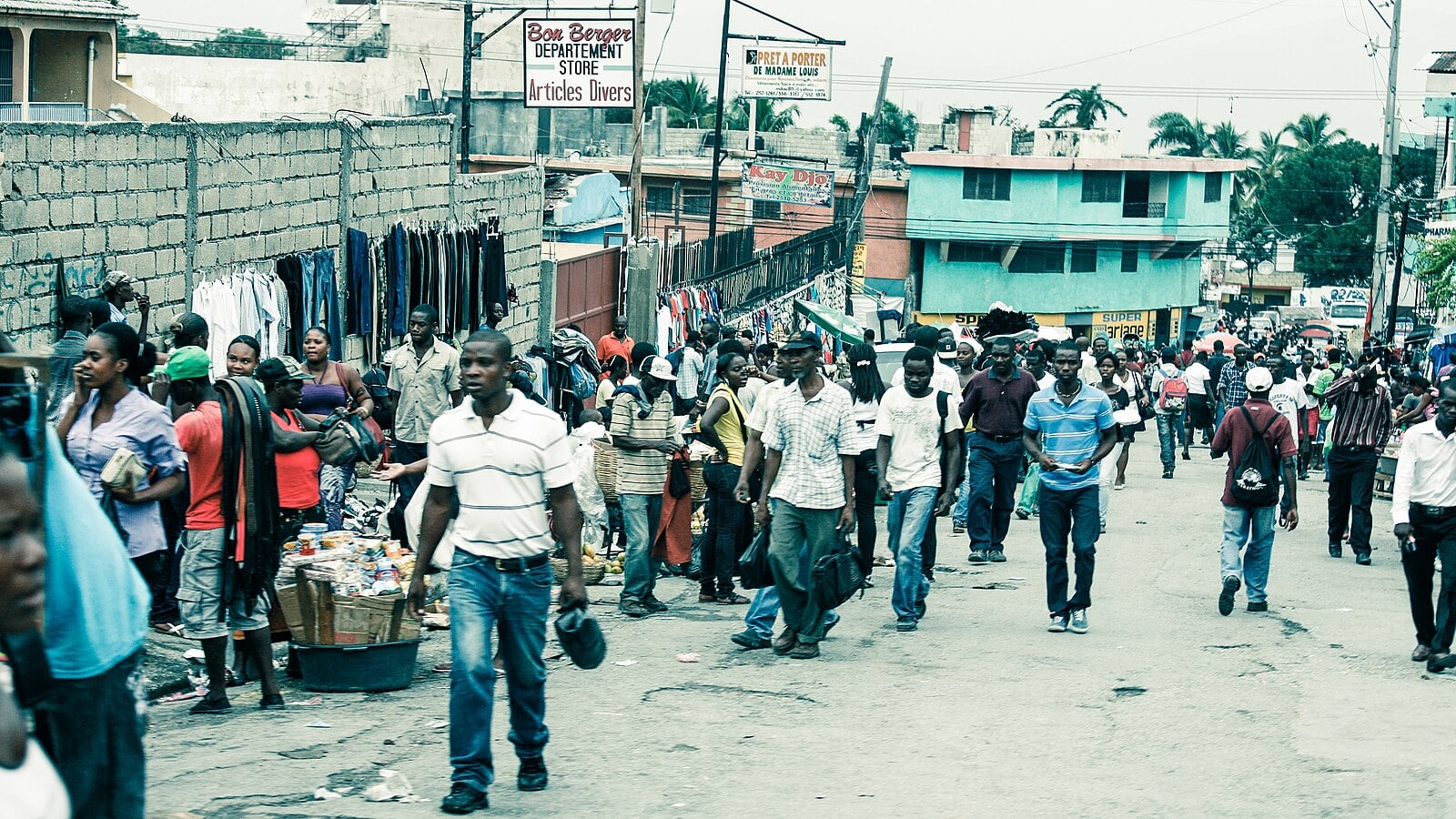
The UN’s humanitarian data show how concentrated the 2026 violence is in this department. Of the 50,867 people newly displaced in the second quarter of 2026, the Pan American Health Organization (the World Health Organization’s regional office for the Americas) reported on 15 July 2026 that Ouest took 64%, mainly in Cité Soleil.
In Cité Soleil, a poor district on the capital’s northern waterfront, fighting from 10 May 2026 displaced 17,496 people by 27 May, according to a flash update from the UN Population Fund (UNFPA, the UN’s reproductive health agency). Cité Soleil itself hosted 52% of those families, Delmas 35% and Tabarre 12%.
The UN has said gangs control large parts of the capital but has not given an official percentage, so this guide does not either. Counts of how much of Port-au-Prince is held by armed groups vary widely between organisations, and none is a map of fixed front lines.
Artibonite and Centre: The Rice Belt and the Highlands
Artibonite is Haiti’s second-largest department, with 1,896,380 people, and its capital is Gonaïves. It is the country’s main rice-growing region, so attacks on its towns hit food supplies as well as travel.
On 25 March 2026 an attack in Verrettes and Petite-Rivière de l’Artibonite displaced 2,010 people, and 96% of them went to live with host families, according to UNFPA. In late October 2026 the UN said more than 7,000 people fled Petite-Rivière in four days, based on IOM, the UN migration agency, counts.
Centre is a smaller highland department of 852,280 people with its capital in Hinche. Violence around Boucan-Carré displaced about 4,761 people in the first quarter of 2026, UNFPA reported.
The pattern matters for travel, because National Route 1, the main road north from the capital, runs through Artibonite on its way to Cap-Haïtien. UNFPA said in its first-quarter 2026 report that expanding gang control over key road and sea routes delayed its projects and made supplies hard to move beyond Port-au-Prince.
Cap-Haïtien and the North
Cap-Haïtien, the capital of Nord, is Haiti’s second city and the gateway to the north, which also includes Nord-Est (capital Fort-Liberté) and Nord-Ouest (capital Port-de-Paix). Nord has 1,172,476 people, Nord-Ouest 797,013 and Nord-Est 430,925 in the institute’s estimate.
For US readers, Cap-Haïtien is where American Airlines flies again. The airline restarted a daily nonstop flight from Miami on Sunday 1 November 2026.
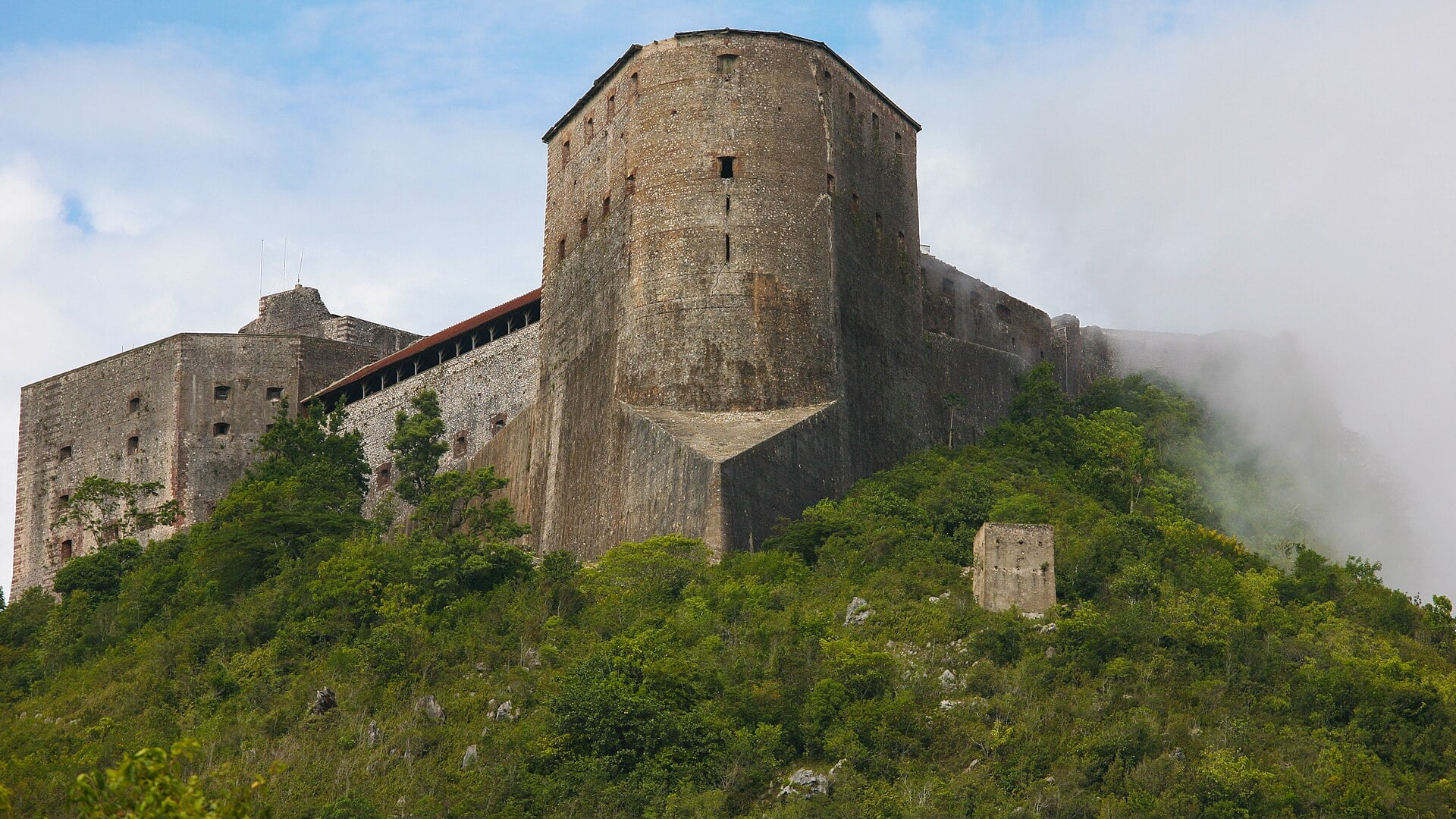
The north is also where a famous Haitian landmark stands: the Citadelle Laferrière, near Milot, a mountaintop fortress that is part of a UNESCO World Heritage site. That heritage is one reason the region has long drawn visitors, although the US State Department’s warning against travel covers the whole country.
Les Cayes and the South
The south is made up of four departments: Sud (capital Les Cayes, 955,607 people), Sud-Est (Jacmel, 749,803), Grand’Anse (Jérémie, 570,687) and Nippes (Miragoâne, 403,045). Together they hold about 2.7 million people, or 23% of the country.
The south’s best-known recent shock was natural rather than man-made. A magnitude 7.2 earthquake struck the south-west of Haiti on 14 August 2021.
The UN’s 2026 displacement reporting centres on Ouest, Artibonite and Centre rather than on the southern departments. The US warning against travel covers the southern departments as well.
Travel and Humanitarian Access in 2026
The US State Department rates Haiti at Level 4, Do Not Travel, its highest warning, and the rating covers the whole country rather than single departments. The US aviation regulator, the FAA, has also extended its ban on US flights to Port-au-Prince into 2027, which is why Cap-Haïtien has become the practical entry point.
For aid agencies, access is the main constraint. The UN says about 6.4 million people in Haiti need help, more than half the population, and its 2026 appeal of US$880 million was about 27% funded in late June.
Movement is the other limit: 1,466,862 people were displaced across the country as of May 2026, according to IOM tracking cited by the Pan American Health Organization. Displacement sites operate in Delmas, Pétion-Ville and Port-au-Prince, so aid has to reach people inside the most contested part of the country.
What This Means for US Readers
If you are planning travel, the department map helps you read the news rather than plan a trip, because official US guidance says not to go at all. Anyone with family, a church group or a business in Haiti should check current conditions department by department with the US embassy and the organisations on the ground.
The map also frames migration and politics. Haiti’s electoral council postponed the 13 December 2026 election and has since announced 18 July 2027 for a first round, so no department will vote this year.
Read the headlines department by department: Ouest means the capital and its gangs, Artibonite means food and roads, Centre means the highland corridor, and the north and south mean the places where travel and aid can still get through. For the wider story, see our guides to the Haiti crisis hub, how the gangs and the foreign force work and Haiti among its Caribbean neighbours.
Our reporting also covers the UN’s count of people killed this year, the 10,000 people who fled home in four days, the return of American Airlines to Cap-Haïtien and who lives in Haiti and where. Readers weighing a longer stay can read our visa and residency guide alongside the State Department’s advice.
Frequently Asked Questions
Does Haiti have provinces or departments?
Haiti has ten departments, not provinces. Below them are 42 arrondissements and 149 communes, according to Haiti’s statistics institute.
Which Haitian department is the largest?
Ouest is the most populous department, home to Port-au-Prince and about a third of all Haitians. Artibonite, with its capital Gonaïves, is second.
Is Cap-Haïtien safer than Port-au-Prince?
The UN has reported far more displacement in Ouest than in Nord, but the US State Department’s Level 4 warning covers all of Haiti. Cap-Haïtien is easier to reach by air than the capital.
Where are Haiti’s gangs strongest?
Armed groups press hardest on the capital region in Ouest, then on parts of Artibonite and Centre. The UN gives no official percentage of the territory they hold.
Which Haitian department is Les Cayes in?
Les Cayes is the capital of Sud, one of four southern departments. The others are Sud-Est, Grand’Anse and Nippes.
Sources: Haiti’s statistics institute IHSI, Estimations désagrégées de la population haïtienne en 2024 (ihsi.gouv.ht); Pan American Health Organization Health Cluster Bulletin, 15 July 2026; UN Population Fund Haiti situation report, January to March 2026, and flash update, 15 to 27 May 2026; UN News, 26 June and 19 July 2026; UN spokesperson briefing, 23 October 2026; US State Department travel advisory for Haiti (travel.state.gov); FAA; American Airlines schedule; Haiti’s electoral council communiqué of 6 October 2026.
This article was produced by The Rio Times’ automated AI newsroom. Editorial responsibility: Matthias Camenzind, Publisher and Editor-in-Chief. The Rio Times also runs Ask Rio Times, which answers from 100,000+ of our own articles, the daily Latin America Power Map, and prediction-market odds on elections and markets.. How we use AI · Report an error
Expat Guide to Haiti
What The Rio Times publishes for foreigners who live in or move to Haiti.
Start here
- Haiti Visa and Residency Rules for Foreigners
- Spain and Portugal Close Their Golden Visa Doors, Forcing LATAM Investors to Reroute
Understand Haiti
Haiti
- What Is Happening in Haiti?
- What Is Happening in Haiti?
- Haiti Gang Crisis Explained 2026 Gangs and the UN Force
- Haiti’s July 2027 Vote, What US Travellers Need to Know