Ecuador Regions and Provinces Explained 2026
Read the regions first and the ballot makes sense: each one votes on a different set of problems.
PILLAR · ECUADOR
Ecuador is one small country with four different worlds, and on Sunday 29 November 2026 they all vote on who runs their local governments. A banana farmer in Los Ríos, a shrimp exporter in Guayas, an oil worker in the Amazon and a tour operator in the Galápagos Islands each want something different from the winners.
For a US reader the map matters because the regions decide what reaches your supermarket shelf and your fuel tank. Ecuador’s central bank, the Banco Central del Ecuador (BCE), says shrimp, oil, cacao, bananas and mining earned the country about US$28.5 billion between them in 2025.
Key Facts
- Who 13.8 million voters fill 5,749 posts on Sunday 29 November 2026.
- Where Costa, Sierra, Amazonía and the Galápagos: four regions, 24 provinces.
- Why Shrimp, oil, cacao and bananas make each region a different economy.
- Prediction markets Polymarket traders (bets, not polls) give Quito candidate Pabel Muñoz 46% (25 November, 4:45 a.m. ET).
- Power Index Ecuador ranks 8th of 14 in The Rio Times Latin America Power Index, with 37.2 points (November 2026 edition).
Read the regions first and the ballot makes sense: each one votes on a different set of problems.
In Plain English
Region is a geographic zone, not a government. Province is the level of government below the national one, and Ecuador has 24 of them.
Prefect is the elected head of a province. Parish board is the elected council of a rural parish, the smallest local government.
CPCCS is the Council of Citizen Participation and Social Control, a state body whose members the voters also elect this time.
Four Regions, One Dollar Economy
Ecuador’s 2022 census, run by the national statistics institute INEC, counted 16,938,986 people. The country has four natural regions: the Costa on the Pacific coast, the Sierra in the Andes, the Amazonía (Amazon rainforest) in the east and the Insular region, which is the Galápagos Islands.
Ecuador uses the US dollar as its currency, so every export below is paid in the money a US reader already holds. Adding up INEC’s 2022 provincial counts, the Rio Times calculates that the Costa’s six provinces hold about 8.54 million people, the Sierra’s ten about 6.95 million, the Amazonía’s six about 0.93 million and the Galápagos 28,583.
One province, Santo Domingo de los Tsáchilas, sits between coast and mountains and is left out of those sums. It had 492,969 people in the 2022 census.
The Sierra: Capital, Volcanoes and Flowers
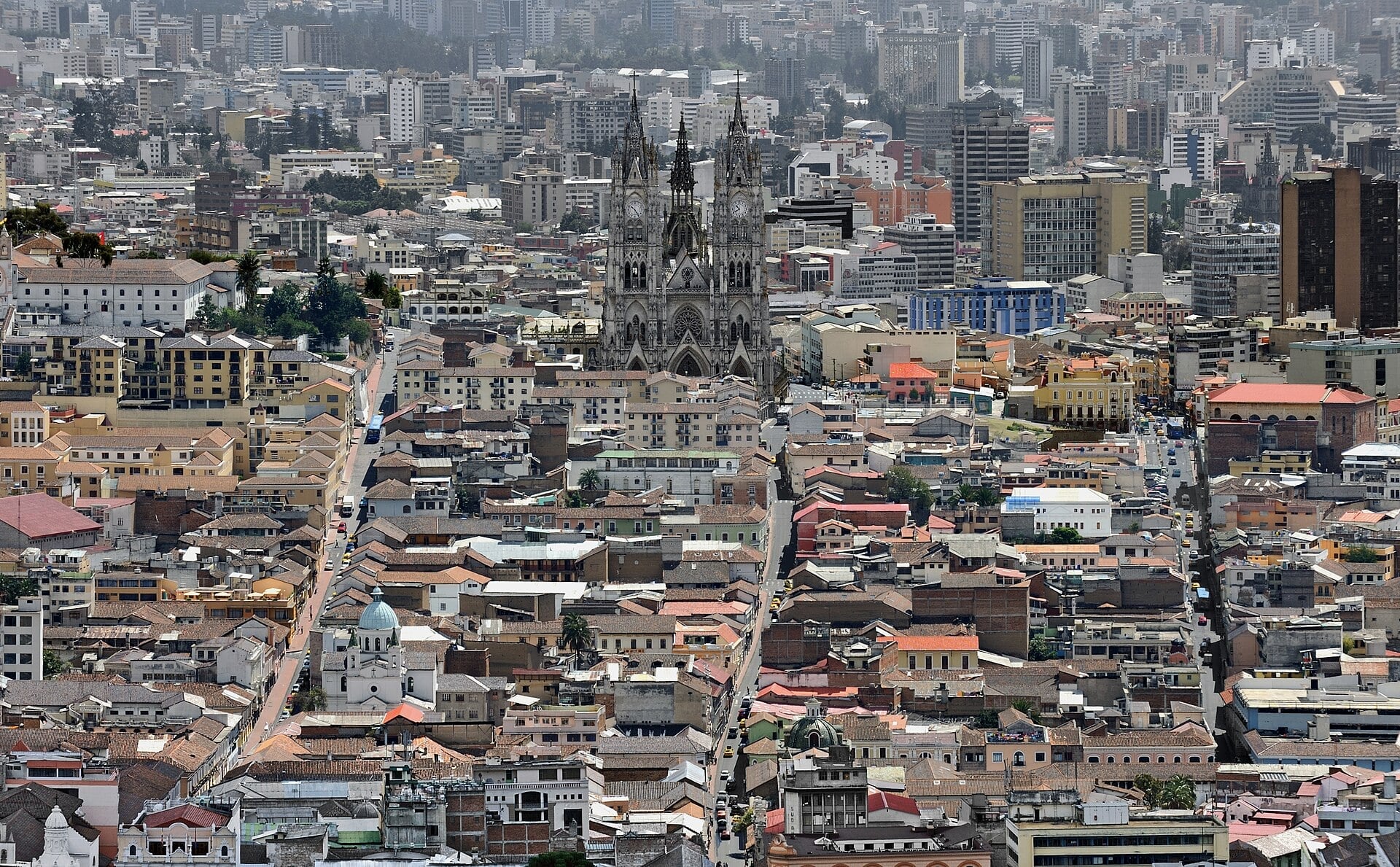
The Sierra is the Andean highland, home to the capital Quito in Pichincha province, which INEC counted at 3,089,473 people, or 18.2% of the country. Other Sierra provinces include Azuay (capital Cuenca, 801,609 people), Tungurahua (Ambato), Chimborazo (Riobamba), Cotopaxi (Latacunga), Imbabura (Ibarra), Loja, Cañar (Azogues), Bolívar (Guaranda) and Carchi (Tulcán).
The Sierra is where the national government sits, and its farms and greenhouses grow flowers for export. The BCE counted natural flower exports at about US$1.05 billion in 2025, up 2.8%.
Gold and copper mining is a separate story: the BCE put all mining exports at about US$4.16 billion in 2025, up 35.4%. One big gold project, Los Cangrejos, lies in El Oro province on the coast and is held by CMOC Group, a Chinese miner, as our guide to foreign investors explains.
The Costa: Ports, Bananas and Shrimp
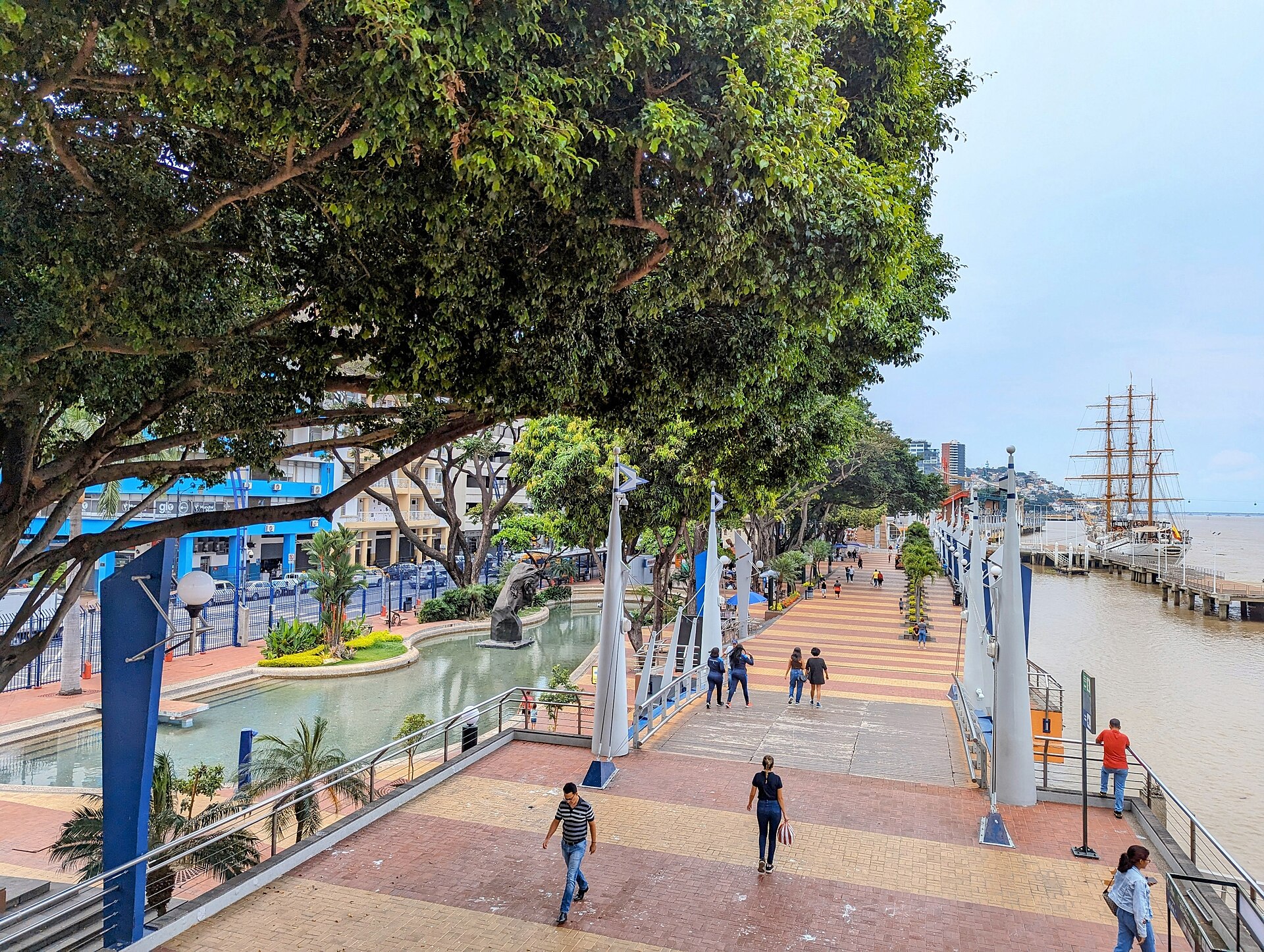
The Costa is the economic engine. INEC counted Guayas province, whose capital Guayaquil is the main port, at 4,391,923 people (25.9% of Ecuador), Manabí (capital Portoviejo) at 1,592,840 and Los Ríos (capital Babahoyo) at 898,652.
The BCE says shrimp was Ecuador’s top export in 2025 at about US$8.4 billion, up 20.2%, ahead of crude oil at about US$7.0 billion. Cacao and its products earned about US$4.67 billion, up 29%, and bananas and plantains about US$4.26 billion, up 11%.
The Costa is also where violence is worst. The Ecuadorian Organised Crime Observatory (OECO), an independent research group, counted 9,216 homicides in 2025, a rate of 50.9 per 100,000 people, and says Los Ríos had the highest provincial rate at 130.4.
On 11 November 2026 President Daniel Noboa renewed a 30-day state of exception, an emergency regime, in eight provinces: El Oro, Esmeraldas, Guayas, Los Ríos, Manabí, Pichincha, Santa Elena and Santo Domingo de los Tsáchilas. Our police-data report tracks the latest killing figures.
The Amazonía: Where the Oil Comes From
The Amazonía is the least populated of the three mainland regions, with six provinces that INEC counted at roughly 930,000 people in total, by the Rio Times’s sum. It includes Sucumbíos (capital Nueva Loja, 199,014 people), Orellana (capital Puerto Francisco de Orellana, 182,166), Napo (Tena), Pastaza (Puyo), Morona Santiago (Macas) and Zamora Chinchipe (Zamora).
Sucumbíos and Orellana are the heart of Ecuador’s oil country. The BCE put crude oil exports at about US$6.99 billion in 2025, and total oil exports including fuels at about US$7.75 billion, down 19% from 2024.
Oil is also a falling business. Our oil output report shows production dropped to its 2026 low in October.
The Galápagos: Tiny, Protected and Exposed
The Galápagos had 28,583 residents in the 2022 census, spread over three cantons (county-level districts): San Cristóbal, Santa Cruz and Isabela. Visitors outnumber residents many times over, and the national park authority counted 290,404 tourists in 2025.
Foreign visitors generally pay a US$200 park entry fee. A special regime gives the islands a Government Council instead of an elected prefect, so voters there choose three mayors but no provincial head.
Weather is the live risk. Heavy rain hit La Cascada on Santa Cruz island on 14 November 2026, and local emergency officials called for evacuations, our flood report explains.
Why the Vote on 29 November Matters
The National Electoral Council (CNE), which runs Ecuador’s elections, says 13,827,643 people are registered: 13,331,335 in Ecuador and 496,308 abroad. Voters pick 23 prefects, 222 mayors, 1,366 councillors, 4,131 rural parish board members and 7 CPCCS councillors, 5,749 posts in all.
The CNE roll puts 3,251,668 voters in Guayas, 2,408,780 in Pichincha and 1,321,583 in Manabí. Together those three provinces hold about 7 million of the 13.8 million registered voters, which is why three provinces decide so much of the result.
Voting is compulsory for most adults, and those who skip it face a fine. Our election-day guide explains the rules and the amount.
What Prediction Markets Say
On Polymarket, a prediction market where users trade real money on outcomes, mayoral candidate Pabel Muñoz is priced at 46% to win in Quito, ahead of Harold Burbano at 26.5% and Bernardo Jijón at 15.8%. About US$38,730 has been traded on the market, as of 25 November 2026, 4:45 a.m. ET. These prices are bets, not polls.
Why we show this: prediction markets turn real-money bets into a live probability that moves within minutes of the news, which is why investors, campaigns and newsrooms in the United States now follow them closely. We show them next to polls and official results, never instead of them.
What to Watch After the Count
The winners take over the local jobs that touch daily life, such as water, local roads and city permits. Security is decided by President Noboa’s national government, which also runs the state of exception, a temporary emergency regime that lets the president deploy troops and limit some rights, in eight provinces.
José Cabrera, president of the CNE, said in remarks reported on 17 November 2026 that the speed of the first results rests with the people at the polling tables: “We depend on the agility and skill of the members of the Voting Reception Boards” (translated from Spanish). The boards are citizens chosen by the CNE to run each polling table, and they face fines if they do not show up.
The next date is the vote itself on Sunday 29 November 2026, and the CNE will publish the official results. Guayas, Pichincha and Manabí hold about half of the roll, so their counts are the ones to read first.
No province-level export values are given here, because the BCE figures cited are national totals. How much oil and mining money flows back to the regions that produce it remains an open question.
More: Ecuador news in English, every day from The Rio Times.
Frequently Asked Questions
How many regions and provinces does Ecuador have?
Ecuador has four regions, the Costa, Sierra, Amazonía and Galápagos, and 24 provinces. The regions are geographic zones, while the provinces are the levels of government.
Which province has the most people?
Guayas, on the coast, with 4,391,923 people in the 2022 census run by INEC. Pichincha, home of the capital Quito, is second with 3,089,473.
What does each region produce?
The coast grows bananas and cacao and farms shrimp, the Amazonía pumps oil, and the Sierra grows flowers and hosts government. The BCE ranks shrimp as the top export for 2025.
How many officials does Ecuador elect on 29 November 2026?
The National Electoral Council counts 5,749 posts: 23 prefects, 222 mayors, 1,366 councillors, 4,131 rural parish board members and 7 CPCCS councillors.
Why does the Galápagos have no prefect?
A special regime in Ecuador’s constitution and a Galápagos law give the islands a Government Council instead. Voters there still elect three mayors.
Is it safe to travel in Ecuador during the election?
Ecuador has a state of exception in eight provinces, mostly on the coast and in Pichincha. Check your government’s official travel advisory before you go.
Sources: INEC (Censo 2022), National Electoral Council CNE (voter roll approved 2 July 2026 and authorities count), Banco Central del Ecuador (2025 exports), Ecuadorian Organised Crime Observatory (2025 homicides), Galápagos National Park, Polymarket (25 November 2026). Read on 25 November 2026.
This article was produced by The Rio Times’ automated AI newsroom. Editorial responsibility: Matthias Camenzind, Publisher and Editor-in-Chief. The Rio Times also runs Ask Rio Times, which answers from 100,000+ of our own articles, the daily Latin America Power Map, and prediction-market odds on elections and markets.. How we use AI · Report an error
Expat Guide to Ecuador
What The Rio Times publishes for foreigners who live in or move to Ecuador.
Start here
- Best Places to Live in Ecuador for Expats 2026
- How to Get Residency in Ecuador in 2026: Visas From US$1,446 a Month
- Cost of Living Cuenca, Ecuador — Rent, Bills and Doctors, Priced in Dollars
- Healthcare in Ecuador for Foreigners: Costs & Steps
City guides
Coming up in Ecuador
- Ecuador Voting Weekend Rules for Expats on 29 November 2026 29 Nov
- Camilo Ecuador 2027: Quito and Cuenca Shows Move to 9 and 10 April 9 Apr
Understand Ecuador