Ecuador Moves 10 Polling Sites Before Vote
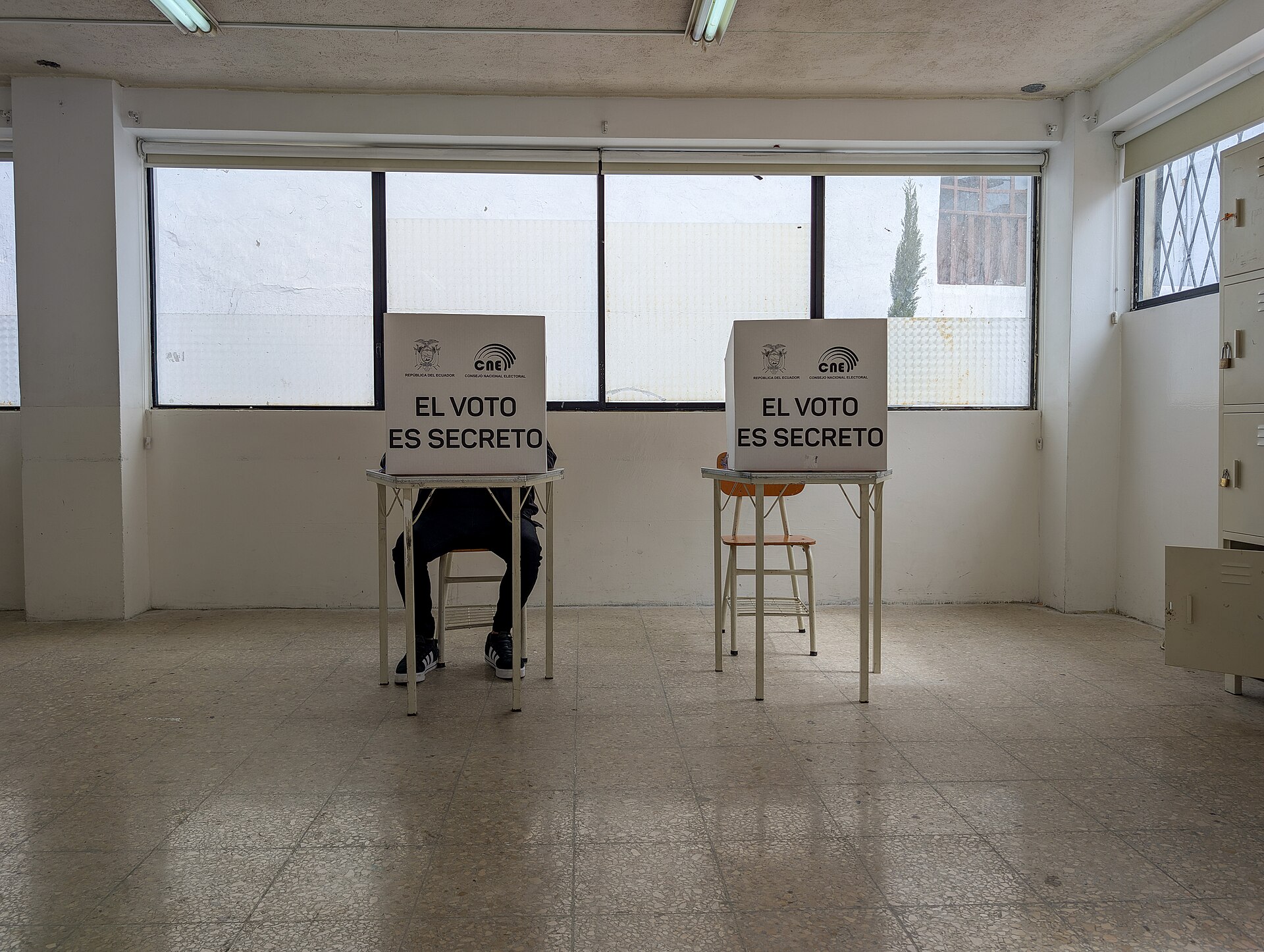
Five days before Ecuador votes for mayors and governors, the electoral authority has finished its debates and is moving some polling stations to safer ground. The vote itself is still set for Sunday 29 November.

Brief: Ecuador
Ecuador’s electoral authority finished its programme of 45 mandatory candidate debates on Sunday 22 November 2026. On Tuesday 24 November it moved 10 polling stations because of weather damage, five days before voters choose mayors and provincial governors.
The Consejo Nacional Electoral (CNE, the body that runs Ecuador’s elections) says the debates were meant to leave voters better informed. It says the relocations aim to protect voters’ safety.
Key Facts
- Who. The CNE, Ecuador’s electoral authority, finished 45 mandatory candidate debates on 22 November.
- What. On 24 November it moved 10 polling stations in five provinces.
- Prediction markets. Polymarket, a US betting platform, puts Quito Mayor Pabel Muñoz at about 50% (25 November, 02:00 ET).
- Power Index. Ecuador ranks 8th of 14 in The Rio Times Latin America Power Index, with 37.2 points (November 2026 edition).
- As of. 25 November 2026, 07:00 GMT.
Five days before Ecuador votes for mayors and governors, the electoral authority has finished its debates and is moving some polling stations to safer ground. The vote itself is still set for Sunday 29 November.
The 45 debates covered 21 races for prefect, the head of a province, and 24 races for mayor in cantons, the country’s local districts, with more than 100,000 voters. The debates were held in 21 provinces and 24 cantons, the CNE said.
Quito’s mayoral debate took place on Sunday 22 November, in two blocks of five of the ten qualified candidates. It brought together, among others, Pabel Muñoz, Quito’s mayor, who runs through the Alianza Ciudadana alliance backed by the Citizen Revolution movement of former president Rafael Correa, and Harold Burbano of President Daniel Noboa’s party, Acción Democrática Nacional (ADN).
Guayaquil’s mayoral debate was also held on Sunday 22 November. Each debate had four themes, two where candidates question each other and two where the National Debates Committee, which sets the themes, asks.
Under the CNE’s debate rules, skipping a mandatory debate is an electoral offence. The penalty is a fine of 11 to 50 basic monthly salaries (US$5,302 to US$24,100, at US$482 each), or removal or suspension of participation rights for up to one year.
On Tuesday the CNE relocated 10 polling stations, known as recintos, because of weather damage. As of its statement at 20:30 that day, four were in Guayas province (three in Milagro and one in Balao), two in Esmeraldas (Quinindé), two in Galápagos (Santa Cruz), one in Carchi (Espejo) and one in El Oro (Santa Rosa).
CNE president José Cabrera Zurita called the weather “worrying” on 18 November. “If there is a landslide … we have to make decisions,” he said (both quotes translated from Spanish).
Between 15 and 18 November Cabrera gave the CNE’s own figures: 20 polling stations in Guayas and one in Los Ríos with flooding problems, and 2,500 alternative sites nationwide. Ecuador has 4,399 polling stations, so the 10 moved so far are a small part of the total.
On Sunday 29 November voters elect prefects and vice-prefects, mayors, councillors, rural parish board members and the Citizen Participation and Social Control Council (CPCCS, a state body that appoints officials such as the comptroller). The CNE counts more than 13.8 million registered voters, and the date was brought forward from February 2027, as we explain in Ecuador Votes Nov. 29 Under Flood Watch.
The CNE has also dropped its planned quick count because of the weather, and the vote date stays unchanged. Rains linked to the El Niño weather pattern are hitting Ecuador’s coast, and several relocated stations lie there.
The CNE has said it does not plan to postpone the vote nationwide, but it does not rule out suspending it in specific places. It has not said whether more stations will move before Sunday.
The next fixed date is Sunday 29 November, when voting, which is compulsory in Ecuador, takes place. Until then the CNE’s list of relocated stations is the one voters in the affected areas need to check.
Frequently Asked Questions
Can the vote be postponed because of the rains?
The CNE says it does not plan a nationwide postponement, but it has not ruled out suspending voting in specific places.
Where do voters find out if their polling station moved?
The CNE announced the moves in a statement on 24 November. Voters can look up their polling place through the CNE’s official channels.
Why do the debates matter for voters?
They let candidates for prefect and mayor present their plans and question each other in public. That gives voters a chance to compare them before Sunday.
Sources
Source: Consejo Nacional Electoral of Ecuador (debate rules and calendar, statements of 18 and 24 November 2026) · Polymarket (Quito Mayoral Election Winner market).
Connected Coverage
Ecuador news · Ecuador Votes Nov. 29 Under Flood Watch · Ecuador Drops Quick Count for Sunday’s Vote
This article was produced by The Rio Times’ automated AI newsroom. Editorial responsibility: Matthias Camenzind, Publisher and Editor-in-Chief. The Rio Times also runs Ask Rio Times, which answers from 100,000+ of our own articles, the daily Latin America Power Map, and prediction-market odds on elections and markets.. How we use AI · Report an error