Ecuador Power Cuts Hit Quito and Guayaquil
A grid failure across several regions is not the rationing of 2024, but the reservoirs behind the grid are low and no official cause has been given.

Ecuador: Energy
Power failed at the same moment in several of Ecuador’s biggest cities at about 20:30 local time on Monday 23 November 2026, leaving parts of Quito, Guayaquil, Cuenca and other cities dark. The state distributor CNEL EP (Corporación Nacional de Electricidad) said at 22:14 that supply was returning progressively, but it blamed only bad weather.
For readers abroad, the cuts matter because Ecuador, which uses the US dollar as its currency, is short of hydropower and votes in local elections on Sunday 29 November 2026. No official has linked the two, and the cause of Monday’s failure is still unconfirmed.
Key Facts
- Who. CNEL EP, Ecuador’s state power distributor; no official cause has been given so far.
- What. Power cuts in several cities; CNEL blames El Niño weather (a Pacific warming pattern); demand fell 24.7%.
- Where. Quito, Guayaquil, Cuenca and other cities; CNEL cites four provinces.
- Power Index. Ecuador ranks 8th of 14 in The Rio Times Latin America Power Index, with 37.2 points (November 2026 edition).
- As of. 24 November 2026, 07:00 GMT.
A grid failure across several regions is not the rationing of 2024, but the reservoirs behind the grid are low and no official cause has been given.
Ecuadorians have lived through this before: in 2024, scheduled cuts ran up to 14 hours a day, according to Prensa Latina, a Cuba-based regional news agency. Prensa Latina noted that President Daniel Noboa has said homes would face no cuts this year, a pledge that the unannounced outages of mid-October had already tested.
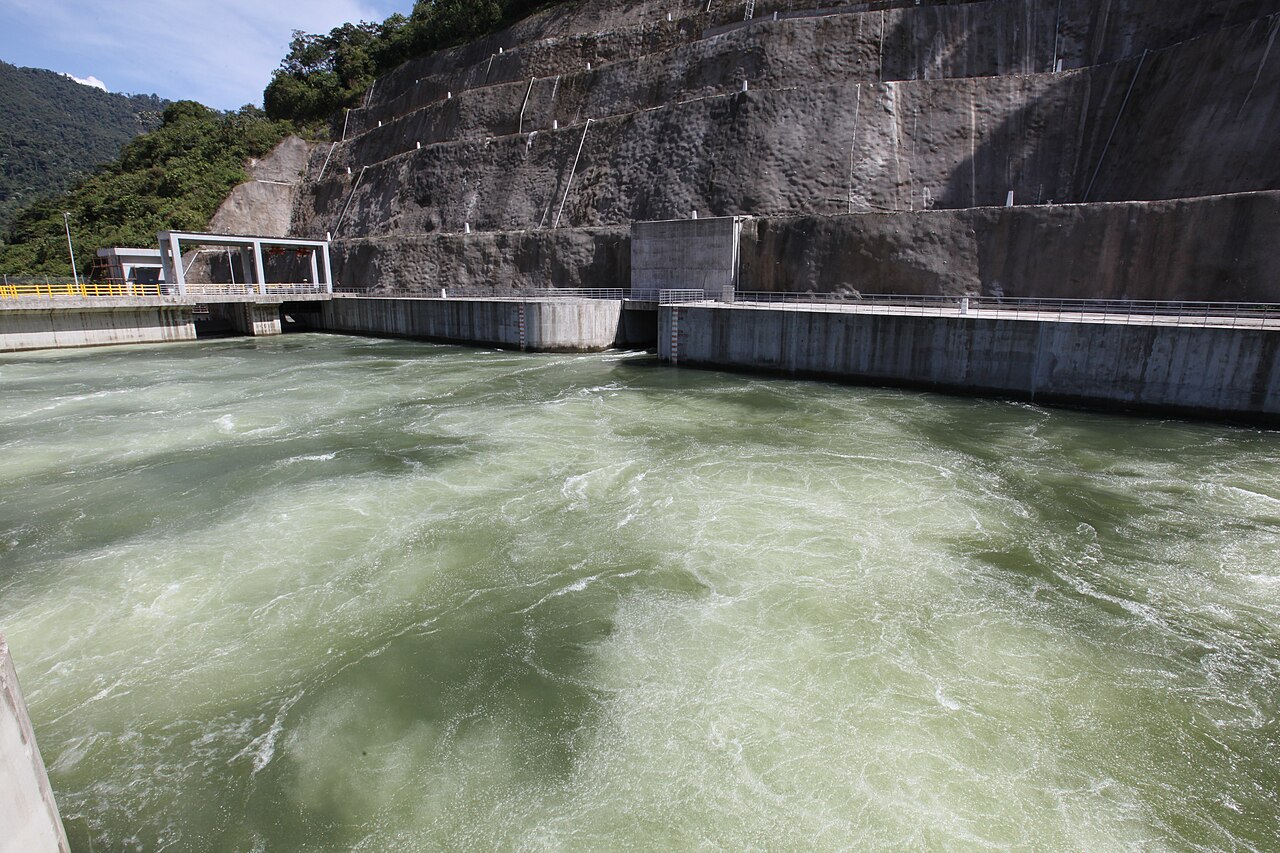
The strain sits in the water. Primicias, an Ecuadorian news site, reported on Wednesday 18 November 2026 that the Amaluza reservoir, which feeds the 1,100-megawatt Paute-Molino plant, stood at 1,970.99 metres above sea level, below its 1,975-metre minimum operating level (a megawatt, MW, measures electrical power).
The Paute hydro complex, a chain of dams in the southern Andes, has 1,757 MW, almost 38% of national demand, so a shortfall there reaches the whole grid. Mazar, another Paute reservoir, stood at 2,118 metres on Monday 23 November (2,120.74 metres on 18 November), three metres above the 2,115-metre level that technicians treat as critical, according to Prensa Latina.
In 2024, reaching that critical level forced scheduled cuts, Primicias reported, and large industrial users were disconnected earlier this November. On 18 November the 1,500 MW Coca Codo Sinclair hydroelectric plant had river flow of 148 cubic metres a second against the 222 it needs, and averaged 789 MW, about 53% of capacity.
The failure itself was abrupt. Data from CENACE, the national grid operator, reported by Prensa Latina, showed demand falling from a peak of 5,169 MW at 20:30 to 3,890 MW an hour later, a drop of 1,279 MW or 24.7%.
That is about one quarter of national demand gone within an hour, and no operator has named a technical fault. CENACE’s data do not say what caused the drop.
At 22:14 CNEL EP, the state distributor serving most of Ecuador, said the disruption had reached localities in four provinces and hit distribution networks and transmission lines. It tied this to “weather conditions associated with the El Niño phenomenon”, the periodic Pacific warming that alters rainfall, and said supply was being restored progressively.
CNEL did not name the four provinces, the technical fault, the number of customers affected or a time for full restoration. Its statement came roughly an hour and three-quarters after the cuts began.
CNEL points to the weather. It does not say whether one fault or several caused the sudden loss of power, and the Ministry of Energy had offered no explanation in the reports available on the morning of Tuesday 24 November.
No official statement links Monday’s cuts to the reservoir shortage, so the low water is the backdrop rather than an established cause. The Ministry of Energy had made no statement in the reports available on the morning of Tuesday 24 November.
In 2024, reaching the 2,115-metre level preceded scheduled cuts. Monday’s cuts came without warning, in a country whose president has said households would face none this year.
Ecuadorians vote on Sunday 29 November 2026 for mayors, prefects, who head provinces, and councillors, on the calendar set by the National Electoral Council. No official has connected the cuts to that vote, and neither CNEL nor the Ministry of Energy has said when it will publish a cause.
Frequently Asked Questions
What caused the power cuts in Ecuador?
The distributor CNEL EP points to weather linked to El Niño. No official cause has been published, and low reservoirs are background, not a confirmed reason.
Is Ecuador facing rationing again?
Large industrial users were disconnected earlier in November, and the president has said homes would face none this year. The Paute reservoirs are the supply to follow.
Is the blackout connected to the 29 November election?
No official or report links them. The vote simply falls days after the outage.
Living in or visiting Quito? See this month's events and our Quito city guide with rents, safety and upcoming concerts.
Sources
CNEL EP statement of Monday 23 November 2026, 22:14 local time, via Metro Ecuador (23 November) · CENACE demand data, via Prensa Latina (23 November) · Primicias (18 November)
This article was produced by The Rio Times’ automated AI newsroom. Editorial responsibility: Matthias Camenzind, Publisher and Editor-in-Chief. The Rio Times also runs Ask Rio Times, which answers from 100,000+ of our own articles, the daily Latin America Power Map, and prediction-market odds on elections and markets.. How we use AI · Report an error