
Ecuador: Oil
Ecuador pumped an average of 448,736 barrels of oil a day in October 2026, its lowest monthly level of the year, according to Banco Central del Ecuador (BCE) data reported on 16 November. A fire at a pumping station on Thursday 1 October halted one of the country’s two main oil pipelines for several days.
Ecuador uses the US dollar as its currency, and crude oil is one of its main exports, so output matters for the dollars that flow into the economy. For US readers the figures show how one pipeline fault can pull down a South American supplier; more in our Ecuador news.
Key Facts
- What. Ecuador’s oil output averaged 448,736 barrels a day in October, the lowest month of 2026.
- Change. That is about 2.8% below September, a drop of roughly 13,100 barrels a day.
- Cause. A fire at the Baeza pumping station halted a main oil pipeline on 1 October.
- Low point. Daily output fell to 353,922 barrels on Monday 5 October, as pumping began to restart.
- As of. 17 November 2026, 07:00 GMT.
The monthly average is the central bank’s measure of crude output across the whole country. It therefore includes the days when the main pipeline stood idle.
What the Central Bank Data Show
The BCE, Ecuador’s central bank, put the October average at 448,736 barrels a day, the lowest monthly figure of 2026 so far. That is about 17,700 barrels a day below the January average of roughly 466,400, a slide of about 3.8%.
September was higher by about 13,100 barrels a day, or 2.8%. National daily output bottomed out at 353,922 barrels on Monday 5 October, while the series of Petroecuador, the state oil company, which counts only its own output, showed 314,569 barrels on Sunday 4 October.
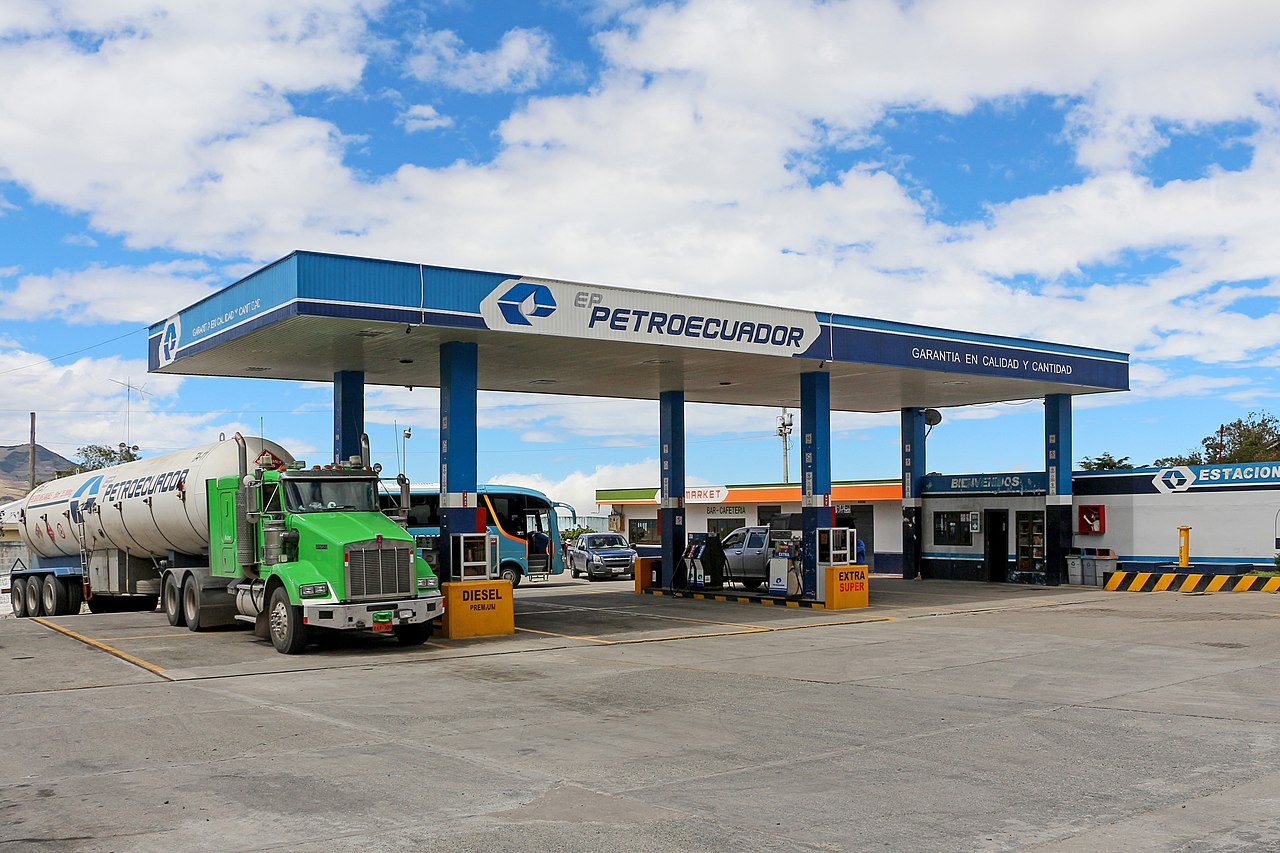
How a Pipeline Fire Cut the Month
Petroecuador, the state oil company, said the fire started on Thursday 1 October at pumping station 4 of the Trans-Ecuadorian Pipeline System (SOTE) in Baeza, in Napo province. The pipeline stopped pumping after the fire, as we reported in our account of the pipeline restart.
The SOTE carries crude from Ecuador’s Amazon region over the Andes towards the coast. Pumping restarted within days, by 6 October at the latest, and the stoppage fell in the first days of the month.
What Petroecuador Says Comes Next
In late October Petroecuador announced that ten new wells were adding a combined 19,521 barrels a day. The wells are in Amazon-region fields in Orellana and Sucumbíos provinces, including the Auca and Shushufindi oil fields.
Whether those wells lift November output above October’s average will show in the next central bank release. The date of that release is not confirmed.
What It Means for You
For US readers the main link is Ecuador’s role as a crude exporter in a dollarised economy. The October figure is a supply signal about one producer, not a measure of world oil prices.
Readers who follow Ecuador’s finances can watch the monthly central bank oil figure for a recovery after the pipeline restart. Our earlier report on Ecuador’s oil sale to Peru covers another strand of the sector.
What Is Not Known
Petroecuador had not published a cause for the fire when it issued its 6 October statement, and its technical analysis was still under way. The central bank’s November figure, and the date of its release, have not been confirmed.
Frequently Asked Questions
How much oil did Ecuador produce in October 2026?
Ecuador produced an average of 448,736 barrels a day in October, based on central bank data. That is the lowest monthly figure of 2026 so far.
Why did Ecuador’s oil output fall in October?
A fire at the Baeza pumping station of the Trans-Ecuadorian Pipeline System on 1 October halted the pipeline. National daily output fell to 353,922 barrels on 5 October, and pumping restarted within days.
What is the SOTE pipeline?
The SOTE, or Trans-Ecuadorian Pipeline System, carries crude oil from Ecuador’s Amazon region over the Andes towards the coast. It is one of the country’s two main oil pipelines.
Sources: Banco Central del Ecuador, monthly oil production statistics for October 2026 (bce.fin.ec); EP Petroecuador statements of 5 to 6 October and late October 2026.
This article was produced by The Rio Times’ automated AI newsroom. Editorial responsibility: Matthias Camenzind, Publisher and Editor-in-Chief. The Rio Times also runs Ask Rio Times, which answers from 100,000+ of our own articles, the daily Latin America Power Map, and prediction-market odds on elections and markets.. How we use AI · Report an error