
Ecuador picks its mayors and provincial governors in 12 days. A new poll shows a three-point gap in the capital, while bettors see a different favourite, according to Ecuador local elections 2026 coverage from The Rio Times.
Key Facts
- What. Ecuador votes on Sunday, 29 November 2026 for 23 prefects (provincial governors) and 222 mayors.
- Poll. Harold Burbano 26.5%, Pabel Muñoz 23.5% in Quito, published 14 November.
- Prediction markets. Polymarket gives Muñoz 49.5% and Burbano 25.0% (17 November, 4:22 a.m. ET).
- Next. Debates resume Thursday, 19 November; polls close 5 p.m. ET on 29 November.
This story is part of our coverage of the Ecuador local elections 2026. Dates, times and how to follow it are in our guide.
Where the Race Stands
Ecuador votes on Sunday, 29 November 2026, according to the National Electoral Council (CNE), the body that runs the country’s elections. Voters will fill 23 prefect posts, 222 mayoralties, 909 urban and 457 rural council seats and 4,131 parish board seats.
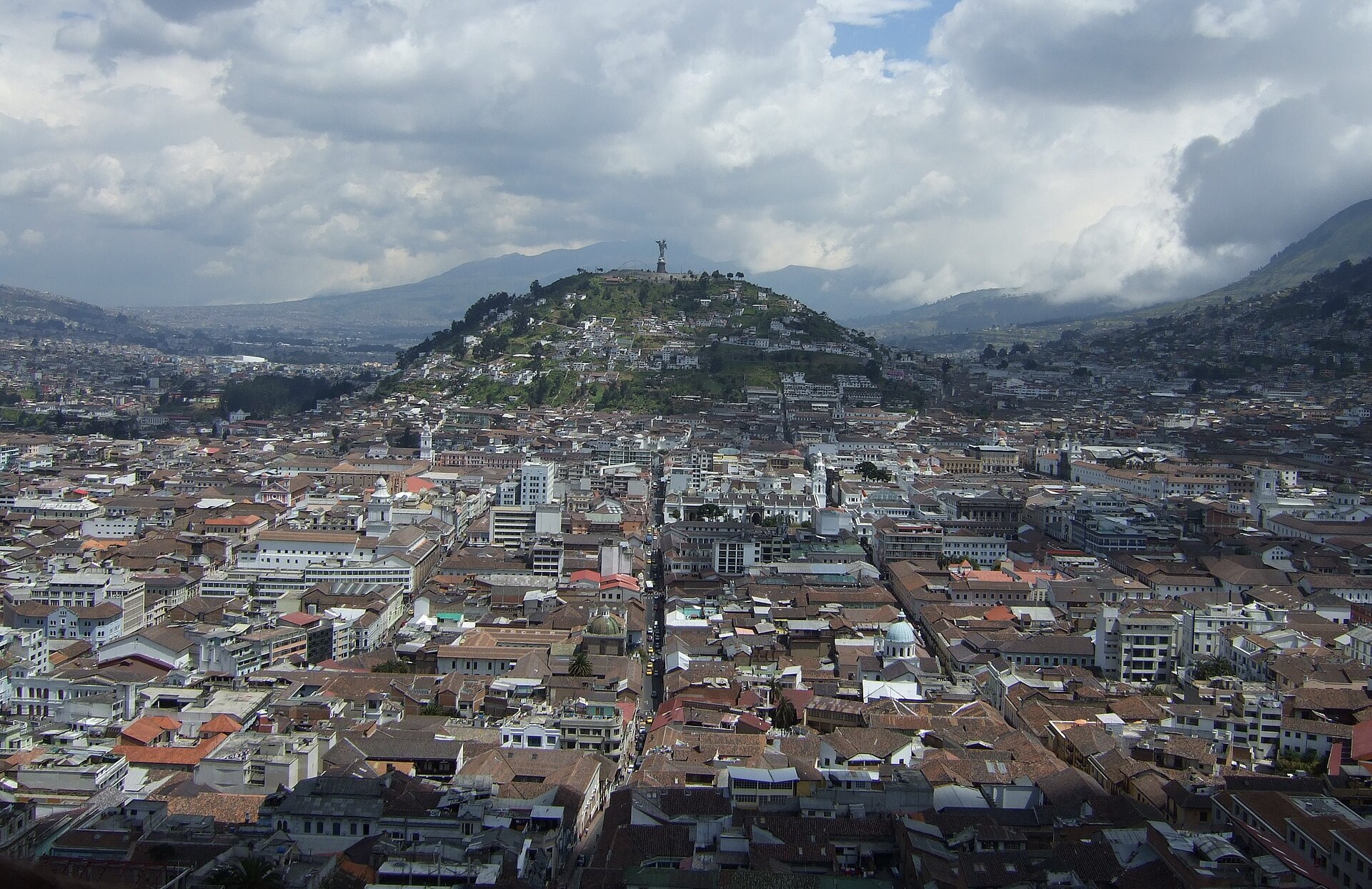
The freshest poll, by AAP-Advertising SAS, a little-known Ecuadorian pollster, was published on 14 November. It puts Harold Burbano of ADN (Acción Democrática Nacional, President Daniel Noboa’s party) at 26.5% in the Quito mayor race, ahead of Pabel Muñoz at 23.5%, with 5.7% undecided and 5.8% blank or null.
Muñoz runs for an alliance backed by the Partido Socialista Ecuatoriano (PSE), a left-wing party. In Guayaquil, Cynthia Viteri of ADN leads Fiorella Ycaza of PSE by 43.2% to 24.7%, in a survey fielded from 2 to 11 November.
The published figures give no overall sample size and mix the pollster’s name with others in the same report, so treat them with care. An earlier AtlasIntel survey from 4 October had Muñoz at 21.1% and Burbano at 16.6%, but it predates the campaign.
What Prediction Markets Say
On Polymarket, a prediction market where users trade real money on outcomes, the Quito mayoral market had traded about US$11,786 by 4:22 a.m. ET on 17 November. It prices Muñoz at 49.5%, Burbano at 25.0%, former mayor Jorge Yunda at 7.5% and Bernardo Jijón at 2.8%.
These prices are bets, not polls, and they point to a different leader than the AAP survey. The volume is small, so the odds can move quickly.
Why we show this: prediction markets turn real-money bets into a live probability that moves within minutes of the news, which is why investors, campaigns and newsrooms in the United States now follow them closely. We show them next to polls and official results, never instead of them.
Debates Before the Vote
The CNE has set 45 mandatory debates, held where a district has more than 100,000 voters. Skipping one counts as a very serious infraction, with a fine of 11 to 50 basic salaries (the legal fine unit) and a suspension of participation rights for up to a year.
The first block of 23 debates ran from 12 to 15 November. The second block of 22 debates runs from 19 to 22 November, with the Guayas prefect and Guayaquil mayor debates on Friday, 20 November.
The Quito mayoral debate is set for Sunday, 22 November. A prefect is the elected head of a province, and Guayas is the province that includes Guayaquil.
Election Day Timetable
The official campaign runs from 12 to 26 November, and electoral silence, a ban on campaigning and poll publication, begins on 27 November. Polls close at 5 p.m. on Sunday, 29 November, and Ecuador’s clocks match US Eastern time, so that is 5 p.m. ET.
The count takes place on election day once polling stations close. Provincial and overseas electoral boards then sit from 30 November to 9 December, and definitive results can be proclaimed between 2 January and 13 February 2027.
Winners take office on 14 May 2027. The CNE brought the vote forward from 14 February 2027.
What It Means for US Readers
More than 13.8 million Ecuadorians are registered, and about 496,000 of them live abroad and vote abroad. Readers can follow the CNE at cne.gob.ec and The Rio Times live hub on the vote.
What Is Not Known
Broadcast times for the debates were not published in the sources we reviewed. We could not confirm the exact rules on poll publication during electoral silence.
Other November polls, including one by Click Research, could not be verified for date or sample size. Some outlets count 24 provinces and 221 cantons, a tally we could not reconcile with the CNE figures above.
Frequently Asked Questions
When do Ecuador’s local elections take place?
Voting is on Sunday, 29 November 2026. Polls close at 5 p.m. local time, which is 5 p.m. ET.
Who leads the Quito mayor race?
An AAP-Advertising SAS poll published on 14 November has Harold Burbano at 26.5% and Pabel Muñoz at 23.5%. The pollster is little known and its results are unchecked, while the Polymarket prediction market favours Muñoz.
When is the next debate?
The second block of mandatory debates starts on Thursday, 19 November 2026. The Guayas prefect and Guayaquil mayor debates follow on Friday, 20 November, and Quito’s is on Sunday, 22 November.
When are the final results official?
Provincial boards count votes from 30 November to 9 December. Definitive proclamation falls between 2 January and 13 February 2027.
This article was produced by The Rio Times’ automated AI newsroom. Editorial responsibility: Matthias Camenzind, Publisher and Editor-in-Chief. The Rio Times also runs Ask Rio Times, which answers from 100,000+ of our own articles, the daily Latin America Power Map, and prediction-market odds on elections and markets.. How we use AI · Report an error
Living in or visiting Quito? See this month's events and our Quito city guide with rents, safety and upcoming concerts.