Dominican Republic’s Role in Latin America Explained

GUIDES · DOMINICAN REPUBLIC
Key Facts
- —Where it stands A Caribbean country on eastern Hispaniola with about 11.5 million people and a US$127.4 billion economy in 2025. Each is about 1.7 percent of the Latin American and Caribbean total, per the World Bank.
- —Growth record Output grew 5.2 percent a year on average from 2005 to 2024, against 2.2 percent for the region. The central bank measured 4.5 percent growth in January to August 2026.
- —Regional clubs A full member of SICA since 2013 and of the OAS, as of October 2026. It is not in CARICOM, but it sits in CARIFORUM and has a 1998 free-trade deal with CARICOM.
- —United States The main trading partner. US goods exports to it reached US$12.9 billion in 2025. Most Dominican goods have faced a 12.5 percent US tariff since 24 July 2026.
- —Haiti Its only land neighbour. The migration authority deported or returned 250,429 Haitians from January to July 2026, up 16.2 percent on a year earlier.
- —Who decides President Luis Abinader, in office since August 2020, and Foreign Minister Víctor Bisonó, appointed in August 2026. The next presidential election is on 21 May 2028.
The Dominican Republic role in Latin America rests on growth, close ties with Washington and seats in Central American and Caribbean clubs. It is a mid-sized country by population and output. For US readers it matters as a trade partner, a tourism giant and the frontline state facing Haiti’s crisis.
This guide sets out its weight, its alliances and how it compares with its peers, as of October 2026. Its land border, sea lanes and neighbours are covered in a separate guide, Dominican Republic and Its Neighbours in the Caribbean. Daily news sits on the Dominican Republic page.
Weight in Population and Economy
The World Bank puts the Dominican population at about 11.5 million in 2025. That is roughly 1.7 percent of the 667 million people in Latin America and the Caribbean. Haiti, on the same island, is slightly larger at about 11.9 million.
The economy was worth US$127.4 billion in 2025, again about 1.7 percent of the regional total. Haiti’s output was US$32.1 billion, about a quarter of the Dominican figure. That gap helps explain migration across the border.
Income per person reached about US$11,060 in 2025, almost exactly the regional average of US$11,100. That makes it richer per head than Guatemala, Honduras or El Salvador, but poorer than Costa Rica or Panama.
Speed sets it apart. World Bank data show average growth of 5.2 percent a year from 2005 to 2024, more than double the regional 2.2 percent. Growth slowed to 2.1 percent in 2025. It picked up to 4.5 percent in January to August 2026, the Central Bank of the Dominican Republic reported.
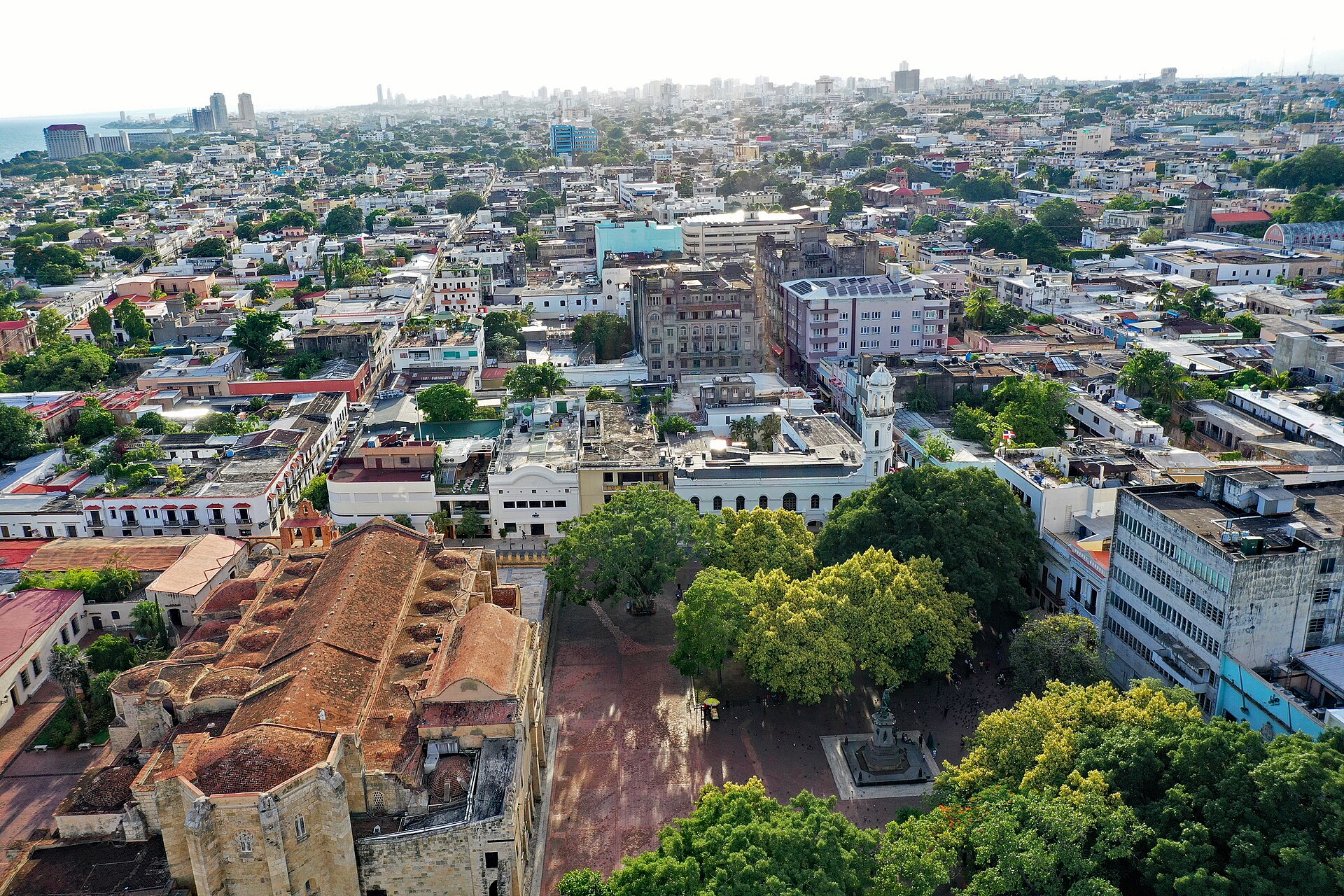
Two channels bring in much of its foreign money. Remittances reached a record US$11.87 billion in 2025, up 10.3 percent, the central bank said. A 1 percent US tax on remittances sent in cash has applied since January 2026.
Tourism is the second channel. The tourism ministry counted 11,676,901 visitors in 2025, a record, with 8.8 million arriving by air and 2.8 million by cruise ship.
How It Compares With Its Peers
On World Bank figures for 2025, the Dominican Republic has the largest economy in SICA, the Central American Integration System. It sits just ahead of Guatemala and just behind Ecuador and Puerto Rico, its closest comparisons.
- Guatemala: a US$123.3 billion economy with 18.7 million people, so income per person is about US$6,600, lower than the Dominican level.
- Costa Rica: US$102.9 billion and 5.2 million people, about US$20,000 a head. It averaged 4.0 percent growth from 2005 to 2024.
- Panama: US$90.5 billion and 4.6 million people, about US$19,800 a head. Its 6.2 percent average growth from 2005 to 2024 beat the Dominican record.
- Puerto Rico: a US territory, not a country, with a US$129.4 billion economy and 3.2 million people.
- Ecuador: US$130.3 billion and 18.3 million people, a South American economy of similar size.
- Jamaica: an English-speaking island neighbour, with a US$22.7 billion economy and 2.8 million people.
The big economies of Latin America are in another league. Brazil and Mexico each produce more than US$1.8 trillion a year. The Dominican Republic is a leader among small and mid-sized states, not a regional power.
SICA, CARICOM and CARIFORUM
SICA is the political and economic system of the Central American states. The Dominican Republic became a full member at a summit in San José, Costa Rica, in June 2013, Diario Libre reported. Membership lets it chair the bloc and take part in all its bodies.
It held SICA’s rotating presidency in the first half of 2026, its fourth term in the chair. On 25 June 2026 Foreign Minister Roberto Álvarez handed it to Belize’s prime minister, John Briceño, in El Salvador, the presidency said.
CARICOM, the Caribbean Community, groups 15 member states, including Haiti and Jamaica. The Dominican Republic is not among its members or associate members, according to CARICOM’s own list. It signed a free-trade agreement with the bloc in Santo Domingo on 22 August 1998.
Its main Caribbean framework is CARIFORUM, which negotiates with the European Union. The European Commission lists the Dominican Republic among the 14 Caribbean countries in the EU-CARIFORUM trade pact. That pact has been in place since 2008.
The OAS, CELAC and the United Nations
The OAS, the Organization of American States, is the hemisphere’s main political forum. All 35 independent states of the Americas are members. Its General Assembly picked the Dominican Republic in 2022 to host the tenth Summit of the Americas.
The summit was due in Punta Cana in December 2025. On 3 November 2025 the foreign ministry postponed it to the following year, citing deep divisions in the region. It said the decision was agreed with partners including the United States.
CELAC, the Community of Latin American and Caribbean States, is a regional forum without the United States and Canada. The Dominican Republic held its rotating presidency in 2016 and hosted the fifth CELAC summit in Punta Cana on 25 January 2017.
At the United Nations it served on the Security Council for 2019 and 2020, its first term. The General Assembly elected it on 8 June 2018. From 7 to 9 October 2026, Santiago de los Caballeros hosts the 41st session of ECLAC, the UN’s regional economic commission.
Relations With the United States
Trade and Tariffs
Trade runs under DR-CAFTA, a pact with the United States and five Central American states. It has applied to the Dominican Republic since 2007. US Census Bureau data show US goods exports of US$12.9 billion in 2025 and imports of US$7.6 billion.
That left the United States with a goods surplus of US$5.3 billion. In January to August 2026, US exports of US$9.8 billion were nearly double imports of US$5.1 billion.
On 23 July 2026 the US Trade Representative imposed tariffs on 60 economies for failing to ban imports made with forced labour. Most Dominican goods pay an extra 12.5 percent from 24 July. Guatemala, Honduras and El Salvador got a lower 10 percent rate.
Abinader said in September 2026 that the treatment had not been fair and reciprocal. His government wants a reciprocal tariff deal that respects DR-CAFTA, El Nuevo Diario reported on 25 September. Washington also pressed for open access for US rice.
Abinader signed Decree 635-26 on 9 September 2026, repealing a 2024 rice regime, Diario Libre reported. That regime had charged up to 99 percent on rice above a duty-free quota of 23,300 tonnes for US rice. See Dominican Republic Drops 99% Rice Tariff After US Push.
Security and Deportations
In May 2026 the government extended a permit for US aircraft and personnel at Las Américas airport and San Isidro air base. The permit runs from 1 May to 31 October 2026, under the US-backed Shield of the Americas security initiative, Diario Libre reported.
The same memorandum lets the country receive a limited number of third-country deportees from the United States, excluding Haitians. The government also designated Iran’s Revolutionary Guard and Hezbollah, the Lebanese armed group, as terrorist organisations.
Haiti, the Neighbour That Shapes Its Image
The two countries share Hispaniola, and Haiti’s deep security crisis drives migration across the border. Santo Domingo has answered with a hard line.
In October 2024 Abinader ordered mass deportations of undocumented Haitians. The migration authority, known as the DGM, deported or returned 250,429 Haitians from January to July 2026, Acento reported.
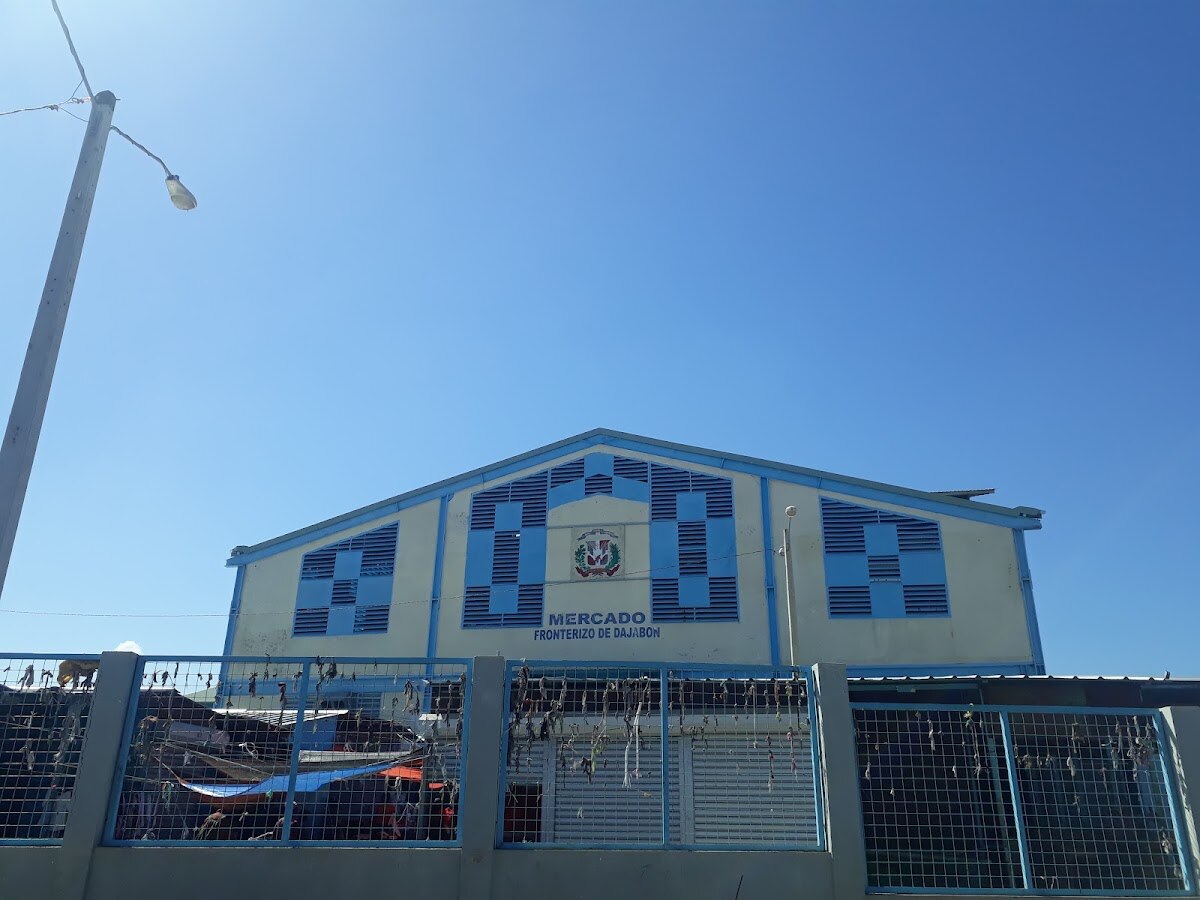
Trade binds the two all the same, and it is a source of friction. On 30 September 2026 Haiti’s finance ministry barred third-country goods from reaching Haiti through Dominican territory, Le Nouvelliste reported. Goods made in the Dominican Republic can still cross at official land points.
As Haiti’s only land neighbour, the Dominican Republic deals with its crisis more directly than any other government in the region. Coverage of the dispute includes Haiti Transit Ban Orders Overseas Imports to Bypass Dominican Republic.
Where It Stands on China, Cuba and Venezuela
On 1 May 2018 the Dominican Republic established diplomatic relations with China and cut official ties with Taiwan. The joint communique was signed in Beijing, China’s foreign ministry records.
In September 2026 Abinader called the United States the country’s main strategic ally. In 2025 the foreign ministry decided not to invite Cuba, Nicaragua and Venezuela to the Punta Cana summit, Bloomberg Línea reported. Colombia’s then president, Gustavo Petro, said he would not attend.
Abinader belongs to the Modern Revolutionary Party (PRM), a centrist party in power since 2020. In August 2026 he named Víctor “Ito” Bisonó foreign minister by Decree 554-26. Bisonó replaced Roberto Álvarez, minister since 2020.
What It Means for US Readers
Investors and exporters: the 12.5 percent tariff and the DR-CAFTA talks set the terms for free-zone factories and farm trade. US rice exporters gained from the repeal of the 2024 rice regime.
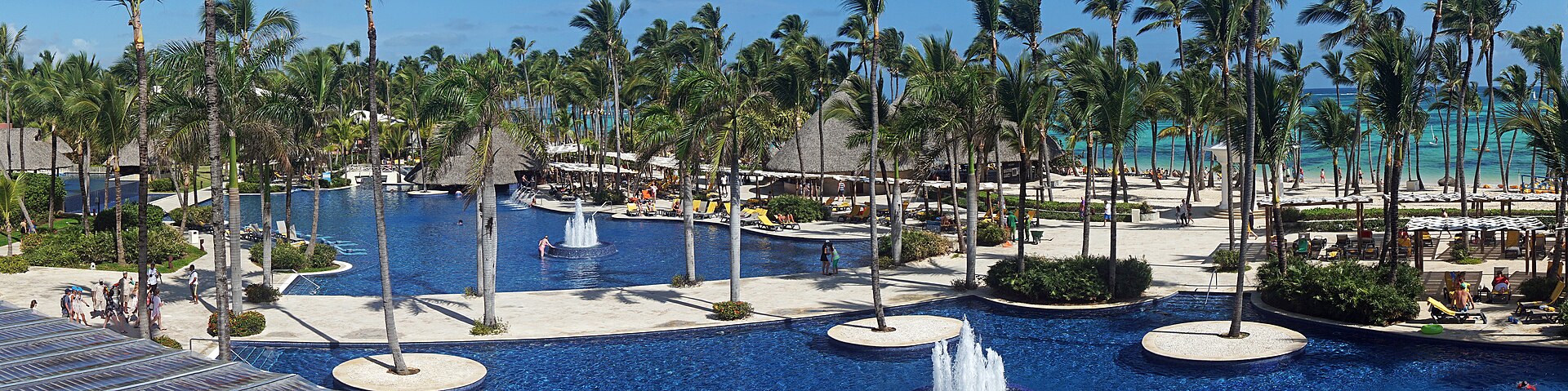
Travellers: the country drew a record 11.68 million visitors in 2025, and Punta Cana is its best-known resort area. Most visitors fly in: 8.8 million arrived by air in 2025.
Families and expats: about 2.4 million people of Dominican origin lived in the United States in 2021. That is a Pew Research Center estimate from Census data. Remittances they send in cash now carry the 1 percent US tax.
Policy watchers: the airport permit, the deportee memorandum and the summit guest list show Santo Domingo working closely with Washington. Tariffs are where that partnership is under strain.
Connected Coverage
Dominican Republic and Its Neighbours in the Caribbean
Dominican Republic Explained 2026: The Country, Its Economy, Its Politics and What to Watch
Dominican Republic Drops 99% Rice Tariff After US Push
Dominican Republic Deports 1,139 to Haiti in One Day
Dominican Republic Deficit Reaches US$3.2 Billion
What Is Not Known
As of early October 2026, no tariff deal with Washington had been announced. The 12.5 percent rate still applied. Abinader said in late September that the US tariffs would remain while talks continue.
No new date for the Summit of the Americas in Punta Cana had been made public. The permit for US aircraft runs to 31 October 2026, and no renewal had been announced.
It is unclear who will succeed Abinader. The constitution as amended in 2024 bars him from running again. Parties must pick candidates by October 2027 for the vote on 21 May 2028. Whether growth holds near 4.5 percent for all of 2026 is also open.
Frequently Asked Questions
What is the Dominican Republic’s role in Latin America?
It is a mid-sized, fast-growing economy that bridges Central America and the Caribbean. It is a full member of SICA, sits in CARIFORUM and the OAS, and is a close partner of the United States.
How big is the Dominican economy?
The World Bank puts it at US$127.4 billion in 2025, about 1.7 percent of the Latin American and Caribbean total. That makes it the largest economy in SICA, just ahead of Guatemala.
Is the Dominican Republic a member of CARICOM?
No. It is not a CARICOM member or associate member, but it signed a free-trade agreement with CARICOM in 1998 and belongs to CARIFORUM, which trades with the European Union.
What tariff does the United States charge on Dominican goods?
Since 24 July 2026 most Dominican goods pay an extra 12.5 percent US tariff, imposed under Section 301 over forced-labour import rules. The government is seeking a reciprocal deal that respects DR-CAFTA.
Who is the president of the Dominican Republic?
Luis Abinader of the centrist Modern Revolutionary Party, in office since August 2020. The 2024 constitution bars him from running again, and the next presidential election is on 21 May 2028.
How many Haitians does the Dominican Republic deport?
The migration authority deported or returned 250,429 Haitians from January to July 2026, Acento reported. That was 16.2 percent more than in the same months of 2025.
Sources: World Bank, GDP, population and growth data; Central Bank of the Dominican Republic, IMAE and remittances; Ministry of Tourism, 2025 visitor arrivals; US Census Bureau, trade in goods with the Dominican Republic; Office of the US Trade Representative, Section 301 forced labour action, 23 July 2026; Federal Register notice 2026-15181; Presidency, SICA presidency handover, 26 June 2026; Presidency, Decree 554-26; Foreign Ministry, Summit of the Americas postponed, 3 November 2025; CARICOM, member states and associate members; CARICOM, free trade agreement with the Dominican Republic; European Commission, EU trade with the Caribbean; OAS, member states; SELA, Political Declaration of Punta Cana, CELAC, 25 January 2017; UN, Security Council election, 8 June 2018; ECLAC, 41st session; China Ministry of Foreign Affairs, diplomatic relations, 1 May 2018; Central Electoral Board, 2028 calendar; Diario Libre, rice decree repealed; Diario Libre, US aircraft permit; Diario Libre, SICA membership, 2013; El Nuevo Diario, Abinader on US tariffs; Dominican Today, tariff treatment; Acento, deportations January to July 2026; Le Nouvelliste, transit ban; Bloomberg Línea, summit postponed; Pew Research Center, Dominican-origin population; Listín Diario, Constitutional Court ruling TC/0407/25; all accessed 6 October 2026.
This article was produced by The Rio Times’ automated newsroom system. How we use AI · Report an error · Editorial responsibility: Matthias Camenzind, Editor-in-Chief