Haiti Natural Resources Explained 2026
Farmland, water and trees are Haiti’s real wealth, and armed violence now limits who can reach farms, roads and markets.

Haiti · Explainer
Haiti has plentiful rain and little developed mining, so its real wealth is farmland, water and trees. Armed gangs now disrupt farming, roads and aid.
For a reader in the United States, the stakes are migration, humanitarian aid and the stability of a Caribbean neighbour. The World Bank, a development lender, puts Haiti’s population at 11.9 million in 2025, and the UN’s migration agency counts almost 1.5 million of them as displaced.
Key Facts
- What. Haiti’s wealth lies in farmland, water and trees, not in developed mines or oil.
- Who. 11.9 million people live in ten regions called departments, and every population figure is an estimate.
- Gap. Just over half of Haitians have electricity, and acute hunger is projected to rise in early 2027.
- Unknown. The March 2026 mining decree’s content and Péligre hydroelectric station’s status are unconfirmed.
- As of. 20 November 2026, 13:00 GMT.
Farmland, water and trees are Haiti’s real wealth, and armed violence now limits who can reach farms, roads and markets.
What Natural Resources Does Haiti Have?
Haiti’s main resources are biological and hydrological rather than mineral, according to the sources below. The coast has mangroves too, and each of these resources is explained below.
The country is divided into ten departments, the regions that make up its map, according to IHSI, Haiti’s national statistics institute. Its fifth census could not be carried out, so every population number, including the institute’s 2024 estimate, is an estimate and not a head count.
Readers who want the map behind these resources can follow our guide to Haiti’s regions. The sections below take land, water, forests, minerals and energy in turn, then show how violence cuts across them.
How Much Land Does Haiti Have, and Who Farms It?
The World Bank’s World Development Indicators (WDI), its public database, give Haiti 27,560 square kilometres of land in 2024. That is about 10,600 square miles.
Agricultural land covers 65.1% of that area, and arable land, the part that can be ploughed, covers 36.5%, both for 2024 in the same database. Agriculture employed about 47% of workers in 2025 in that database, which uses modelled estimates from the International Labour Organization, the UN labour agency.
More than 96% of Haitians are exposed to hurricanes, floods and earthquakes, according to the World Bank’s Haiti overview. The World Food Programme adds that El Niño, a recurring weather pattern, is causing droughts and floods that are already reducing harvests.
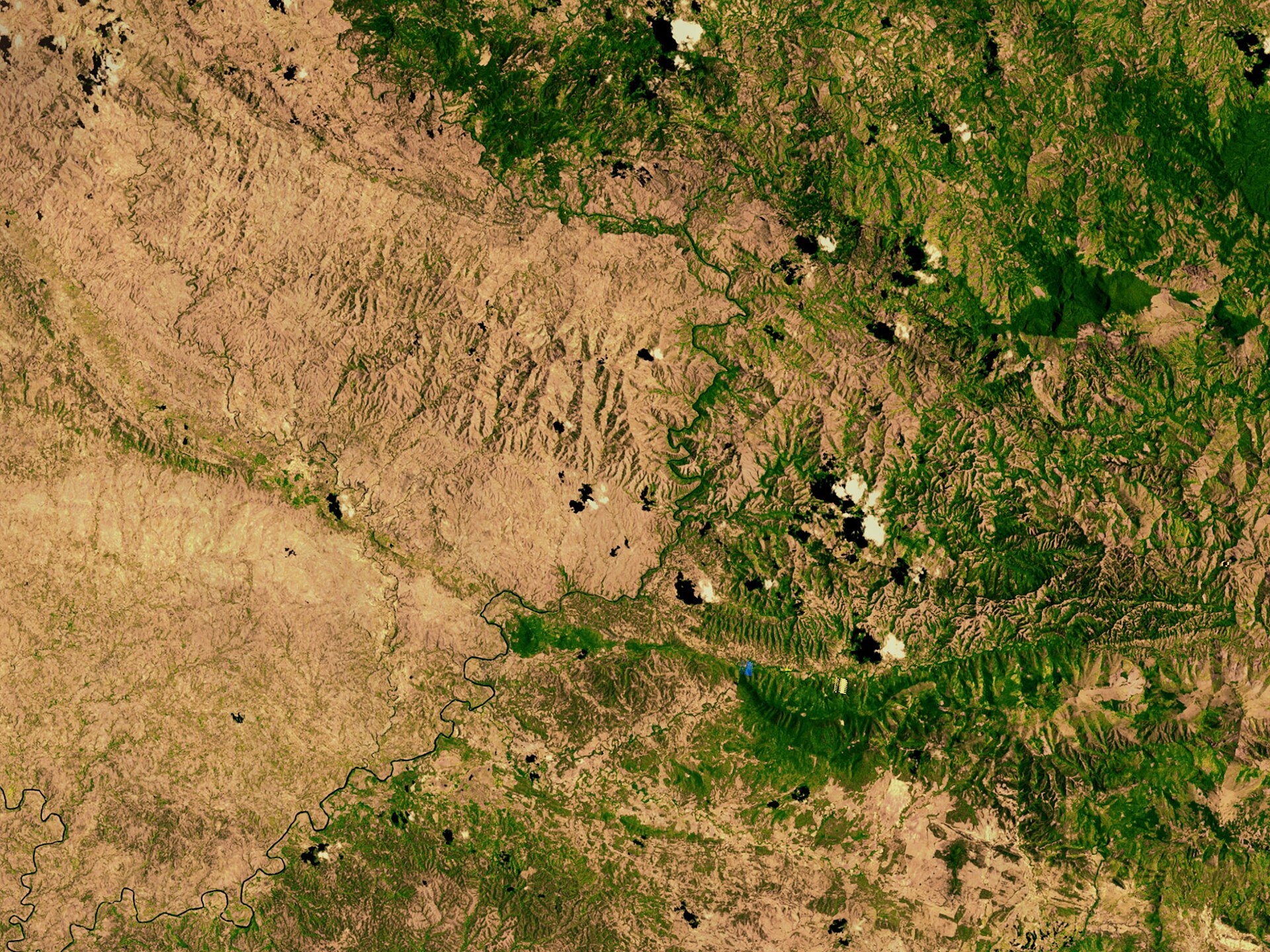
The World Food Programme (WFP), the UN hunger agency, said in March 2024 that satellite analysis found up to 3,000 hectares of farmland abandoned in 2023 compared with 2018 in Artibonite, Haiti’s major farming region northwest of the capital. BINUH, the UN Integrated Office in Haiti, reported in August 2026 that armed groups there killed farmers working in their fields, and our report on at least 10 farmers killed covers a later attack.
Does Haiti Have Enough Water?
On paper Haiti has plenty of water, and FAO, the UN food agency, puts rainfall at 1,440 millimetres a year, with total renewable water resources of 14.02 cubic kilometres a year in its AQUASTAT database for 2023. Total withdrawals are about a tenth of that.
Farming takes the largest share: 1.21 of the 1.45 cubic kilometres go to agriculture, about 83%, against 0.19 for towns and 0.05 for industry. Only 91,500 hectares, 7% of cultivated area, are equipped for irrigation, and total dam capacity is 0.30 cubic kilometres.
The gap seems to lie in services more than in supply, judging by World Bank figures. Its WDI database gives 1,131 cubic metres of renewable internal freshwater per person in 2022, but only 73.3% of people had basic drinking water in 2024.
Just 29.1% of people used at least basic sanitation in 2024, the same database shows. Cholera returned in October 2022, and UNICEF, the UN children’s agency, counted 442 suspected cases, 250 hospitalisations and 2 deaths in 2026 up to 28 June.
UNICEF said transmission was active in the departments of Ouest, the department around the capital, Centre and Artibonite, mainly in Cité Soleil and Delmas, communes of the capital area. PAHO, the World Health Organization’s regional office for the Americas, said weekly suspected cases peaked at 3,683 in 2023 and transmission fell by nearly 80% in 2024.
What Is Left of Haiti’s Forests, and What Do People Burn?
The World Bank’s WDI put forest area at 13.5% of Haiti’s land in 2024, using a series based on FAO data. That figure depends on the definition, because FAO counts forest only as land over 0.5 hectare with trees taller than 5 metres and more than 10% canopy.
The World Bank figure is one reading of a contested picture, not a final count. Most families cook with wood or charcoal, according to the 2012 survey data below.
The Clean Cooking Alliance, an international clean-cooking group, built a Haiti market assessment on the 2012 Demographic and Health Survey, a household health survey. It found that 93% of households, about 2.2 million, cooked mainly with wood or charcoal.
More than 80% of urban households used charcoal and 72% of rural households used wood in that assessment. The survey is now 14 years old, so today’s shares may differ.
There is constructive news on the coast, where the Haiti Côte Sud project, a coastal restoration effort in southern Haiti, rehabilitated 750 hectares of mangroves. The Global Environment Facility (GEF), a global environmental fund, said in a January 2026 results brief that the project also stabilised 20 kilometres of shoreline and riverbank.
Does Haiti Have Minerals, Gold or Oil?
Haiti’s minerals are a promise on paper, because very little has been measured or mined. The US Geological Survey (USGS), the American government’s earth science agency, said in its 2019 Minerals Yearbook that the country’s mineral resources “remained largely undeveloped”.
The USGS added that northern Haiti hosts numerous copper, gold and silver occurrences and prospects. It said the mineral industry is largely based on cement, but that the available information was inadequate for reliable output estimates.
The sector “did not play a significant role” in the economy, the USGS said. It also records that mining needs authorisation from the Bureau des Mines et de l’Énergie, the Bureau of Mining and Energy.
In 2012 the government awarded the first gold and copper permits in over 30 years, to two companies, Société Minière du Nord-Est and Delta Société Minière. In 2013 it suspended all mining permits and began reforming the 1976 mining law, and a draft law went to Parliament in 2017.
Prime Minister Alix Didier Fils-Aimé confirmed in May 2026 that a decree governing mining was published in Le Moniteur, the official gazette, on Monday 30 March 2026. He said the country needed appropriate regulation before considering any investment, and that publication puts a legal framework in place for interested companies.
We have not read the text of the decree in the gazette, so what it allows, and for whom, is not confirmed. We also found no announcement of offshore oil, so we leave oil and gas out of the picture.
How Much Electricity Does Haiti Have?
The World Bank’s WDI show that 53.9% of Haitians had electricity in 2024, up from 51.3% in 2023. That leaves roughly 46% of the population without it.
Hydropower made 18.3% of electricity production in 2024, according to the same database. The best-known plant is Péligre, a hydroelectric station on the Artibonite river.
Péligre was reported out of service in 2025, and we found no report of a restart. Its present status is not confirmed.
The World Bank’s 2024 access figures are the firmest baseline for the grid. Hours of supply are not given here because we could not confirm them.
How Does the Gang Crisis Change All of It?
Armed groups have made Haiti’s roads, farmland and neighbourhoods contested ground. BINUH reported in August 2026 that the capital’s sprawling Plaine du Cul-de-Sac lies along two major roads linking the container port and the Varreux oil terminal with northern Haiti.
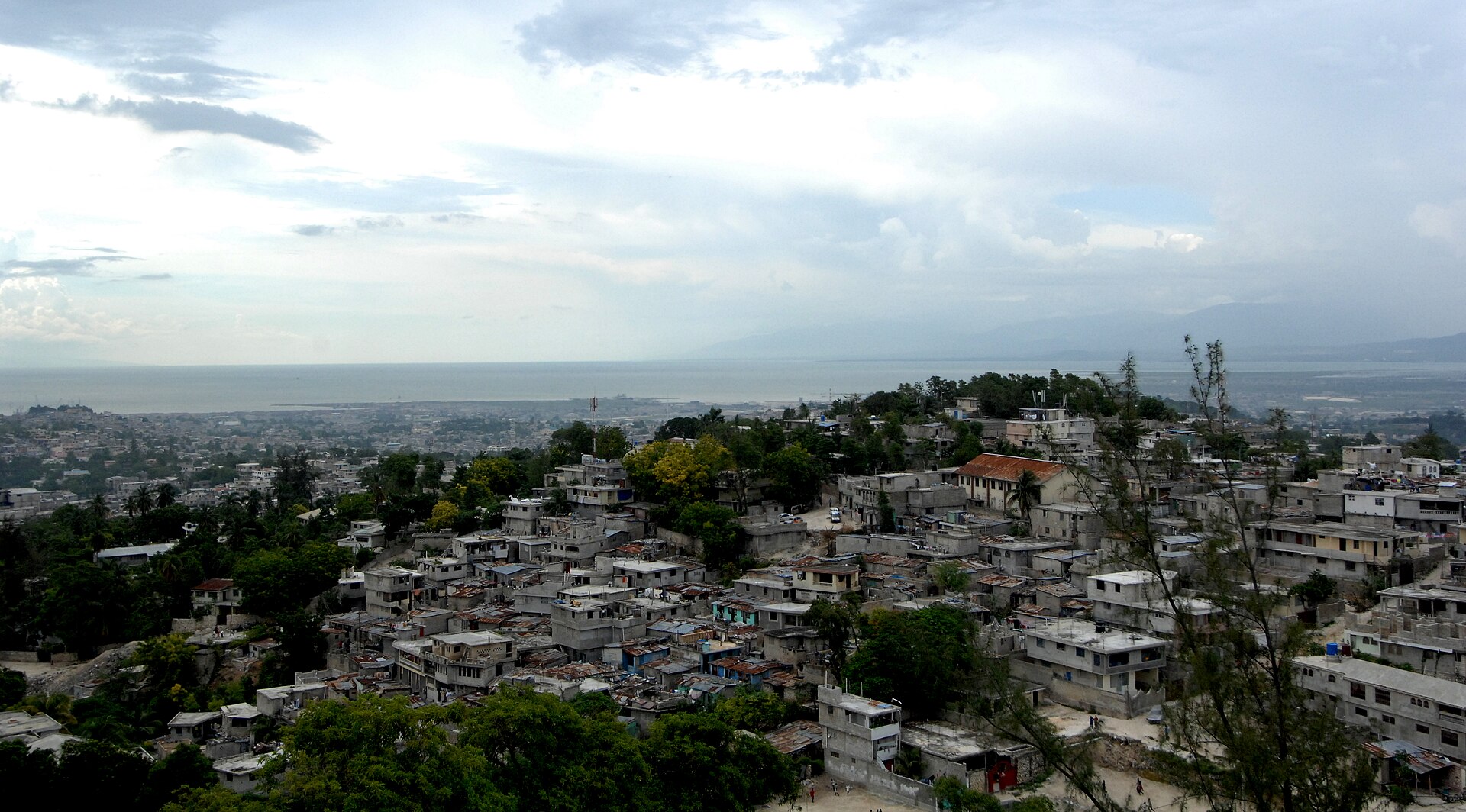
BINUH counted at least 1,167 people killed from July to September 2026, after 1,408 from April to June. It reported that armed groups keep a grip on neighbourhoods in the capital, and we found no official percentage of the city they control.
Our report on the UN death count tracks how the quarterly figures have moved. Our Haiti crisis hub collects the latest reporting on the violence.
The International Organization for Migration (IOM), the UN migration agency, tracks people forced from their homes through its Displacement Tracking Matrix. Its latest report, published in September 2026, counted almost 1.5 million displaced people.
Artibonite, a major farming region, had the largest increase between May and August 2026, at 16%. IOM tied it to worsening security and new displacement triggered by armed violence there.
WFP said on 28 October 2026 that 6.35 million people are likely to be acutely food insecure from March to June 2027. Almost 2 million of them would be at Emergency level, IPC 4, on the Integrated Food Security Phase Classification, the global hunger scale.
WFP says armed groups constrain agricultural and market supply chains, and the weather shocks already cut harvests. The projected number is an increase of more than half a million people on the same period of 2026.
Pressures on Haiti’s Resources and People
- Land farmland in Artibonite abandoned in 2023, and farmers killed in their fields, per UN reports.
- Roads routes from the port and oil terminal to the north cross the Plaine du Cul-de-Sac.
- Food supply chains constrained by armed groups, harvests cut by El Niño.
- Water cholera active in Ouest, Centre and Artibonite, per UNICEF.
- People displacement still rising, led by Artibonite.
- Forests and minerals no source we found links them to armed groups.
What Could Change the Picture?
Three dated checkpoints matter. The first is the WFP projection window from March to June 2027, which will show how severe hunger becomes.
The second is the mining decree published in March 2026, whose application will show whether it leads to investment. Until the text is read and its rules applied, the sector stays a question for the future.
The third is the next round of IOM displacement tracking, which will show whether the displacement total keeps rising. IOM has not given a date in the sources we found, so we do not guess one.
Péligre’s status is the clearest open question for power, because we found no report of a restart. Each checkpoint rests on a named source, and none depends on a forecast of ours.
Frequently Asked Questions
Does Haiti have oil or gold?
Haiti has copper, gold and silver prospects in the north, but they remain largely undeveloped. We found no offshore oil announcement.
Is Haiti running out of trees?
The answer depends on how forest is defined. The World Bank’s series, based on FAO data, shows 13.5% of land in 2024.
Does Haiti have enough water?
Total renewable supply is large against what is withdrawn, but services lag. Basic drinking water, sanitation and cholera control remain the weak points.
How does the gang crisis affect food?
Armed groups constrain farming and market supply chains, and farmers have been killed in their fields. Weather shocks add pressure, according to the World Food Programme.
Why should US readers care about Haiti’s resources?
Haiti is a close Caribbean neighbour. Hunger and displacement figures there are large, and many Haitians lack electricity.
Sources: World Bank World Development Indicators, Haiti; FAO AQUASTAT Haiti fact sheet, 2023 data; US Geological Survey Minerals Yearbook 2019, Islands of the Caribbean; International Organization for Migration, Displacement Tracking Matrix Haiti, Round 14 (September 2026); World Food Programme, 28 October 2026; United Nations (BINUH quarterly human rights report), 12 November 2026; IHSI (Haiti statistics institute); UNICEF Humanitarian Situation Report No. 2, 2026; PAHO; GEF and UNEP; Clean Cooking Alliance; Haiti’s prime minister (mining decree announcement).
This article was produced by The Rio Times’ automated AI newsroom. Editorial responsibility: Matthias Camenzind, Publisher and Editor-in-Chief. The Rio Times also runs Ask Rio Times, which answers from 100,000+ of our own articles, the daily Latin America Power Map, and prediction-market odds on elections and markets.. How we use AI · Report an error
Expat Guide to Haiti
What The Rio Times publishes for foreigners who live in or move to Haiti.
Start here
- Haiti Visa and Residency Rules for Foreigners
- Spain and Portugal Close Their Golden Visa Doors, Forcing LATAM Investors to Reroute
Understand Haiti
Haiti
- What Is Happening in Haiti?
- What Is Happening in Haiti?
- Haiti Gang Crisis Explained 2026 Gangs and the UN Force
- Haiti’s July 2027 Vote, What US Travellers Need to Know