
DJIBOUTI · AFRICA
Key Facts
- What is happening Djibouti, a Red Sea state of 1.18 million people, supplies the chair of the African Union Commission, Mahmoud Ali Youssouf, and gave President Ismail Omar Guelleh a sixth term in its 10 April 2026 election.
- Why it matters Djibouti’s ports carry nearly 90% of landlocked Ethiopia’s goods, and it hosts the only enduring US military base in Africa and the secretariat of the regional bloc IGAD.
- The numbers Djibouti ranks 50th of 54 African states by population and 43rd of 52 by output (US$4.6 billion in 2025), but 15th by income per head (US$3,906), with exports equal to 110% of GDP.
- Who is who Guelleh won 97.01% of the vote in April 2026, Youssouf has led the AU Commission since 13 March 2025, and Workneh Gebeyehu is Executive Secretary of IGAD.
- What to watch Watch the expiry of the AGOA trade law on 31 December 2026, the Eritrean border, the Somaliland recognition row and Red Sea tensions that the World Bank says may slow growth to 5.7% in 2026.
- What it means for you The US State Department rates Djibouti Level 2, exercise increased caution, and Level 3 within 10 miles of the Eritrean border, while US exporters use its AGOA-eligible ports to reach Ethiopia.
Djibouti is one of Africa’s smallest states. Yet it holds the African Union Commission chair, a US base and the ports that serve Ethiopia.
This Djibouti continent guide explains where the country stands in Africa in November 2026. It is one of Africa’s smallest states, yet its port, bases and diplomats give it weight far above its size.
More coverage sits on the Rio Times Djibouti page and in the Djibouti explainer. Read Djibouti and the Horn of Africa for the neighbours.
Djibouti Continent Profile: Small Size, Large Position
Djibouti sits at the southern entrance to the Red Sea, the World Bank says, and serves as a regional trade hub. It covers about 23,200 square kilometres, roughly the size of New Jersey.
The country became independent from France in 1977, and formal US relations began that year, the State Department says. Its location on the sea lanes between Europe and Asia is its main asset.
Arable land is only about 1,000 square kilometres and rainfall averages 130 millimetres a year, so Djibouti imports most of its food. That dependence makes ports and trade the centre of its economy.
Weight in Population and Economy
World Bank data show 1,184,076 people in Djibouti in 2025, or about 0.08% of Africa’s 1.55 billion. Among the 54 African countries in the bank’s data it ranks 50th by population.
Its economy produced about US$4.6 billion in 2025, or 0.15% of the total for 52 African countries, and ranks 43rd. Output per person reached US$3,906, which ranks 15th of 52 and is well above Ethiopia’s US$933.
Ethiopia, its giant neighbour, has 135.5 million people and an economy of about US$126 billion. That is 114 times Djibouti’s population and 27 times its output, which explains why ports tie the two together.
Real growth was an estimated 6.5% in 2025, down from 7.0% in 2024, the World Bank reports. It expects 5.7% in 2026 because Red Sea and Strait of Hormuz tensions weigh on the Ethiopia corridor.
Exports of goods and services equalled 110% of GDP in 2025, a sign that much income comes from moving other countries’ cargo. Public debt fell below 65% of GDP, and the budget showed a surplus of 0.9% of GDP.

The Ghoubet Wind Farm, 60 megawatts and running since December 2023, shows the push into renewable power. The World Bank also lists agri-food and logistics among Djibouti’s priority sectors.
Politics at Home: A Sixth Term for Guelleh
Djiboutians voted on Friday, 10 April 2026, and President Ismail Omar Guelleh, 78, won a sixth term. The interior ministry’s first count on 11 April gave him 97.8%; the Constitutional Council’s official result, published by 22 April, was 97.01%.
The Council counted 204,874 votes for Guelleh and 6,318, or 2.99%, for his only opponent, Mohamed Farah Samatar. A constitutional amendment passed in November 2025 removed the upper age limit of 75 for candidates.
The African Union Election Observation Mission, led by former Rwandan Prime Minister Bernard Makuza, was present. The AU Commission chair congratulated Guelleh on 11 April 2026 and noted the peaceful vote.
Turnout was not found in an official source, and the AU statement does not publish the observers’ findings. Without them, the 97% result cannot be set against an independent count.
The African Union and the Continental Bodies
The African Union, or AU, is the body of 55 African states, and its Commission is the secretariat. Mahmoud Ali Youssouf of Djibouti, a former foreign minister, won the chair on 15 February 2025 and took office on 13 March.
That gives a state of 1.2 million people the top administrative post in Addis Ababa, where the AU sits. The chair also speaks for the AU on Djibouti-related events, such as the April 2026 election and an October 2026 migrant shipwreck.
On 11 October 2026 Youssouf mourned migrants who died off the Djiboutian coast, citing a United Nations report of 109 dead. The route runs from the Horn of Africa toward Yemen and the Gulf.
The African Continental Free Trade Area, or AfCFTA, is the AU’s single-market treaty, which Djibouti signed on 21 March 2018. It ratified on 5 February 2019 and deposited on 11 February 2019, before the treaty took effect in May 2019.
Regional Bodies and Trade Rules
The Intergovernmental Authority on Development, or IGAD, is an East African regional bloc, and its secretariat is in Djibouti city. Its Executive Secretary is Dr Workneh Gebeyehu, and it lists Djibouti, Ethiopia, Kenya, Somalia, South Sudan, Sudan and Uganda as members.
The IGAD website says the bloc was created in 1996. Djibouti’s foreign minister, Abdoulkader Houssein Omar, chaired IGAD’s council of ministers in January 2026.
Djibouti also belongs to the Common Market for Eastern and Southern Africa, or COMESA, a 21-member trade bloc based in Lusaka. COMESA took its current form in 1994, and the State Department notes a US trade and investment framework agreement with it.
Beyond Africa, Djibouti is a member of the Arab League and the Organisation of Islamic Cooperation, the State Department says. That double identity, African and Arab, shapes its votes and its Gulf ties.
Alliances and Foreign Bases
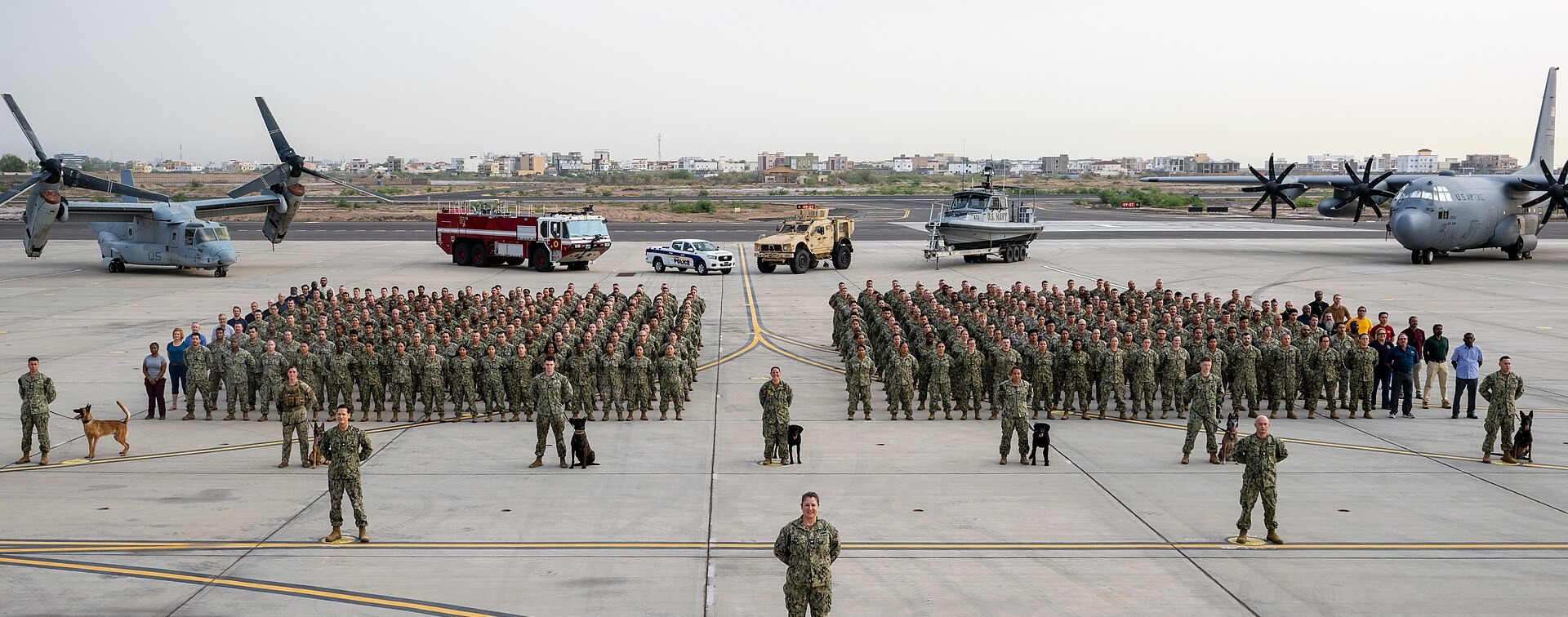
Camp Lemonnier, a US Navy base by the airport, is the only enduring US military presence in Africa, the State Department says. A formal agreement set it up in 2003, and a separate deal gives the US access to Djibouti’s port and airport.
In April 2023 the base received US embassy staff evacuated from Sudan, as the US Navy documented at the time. The Rio Times covers the other garrisons in its guide to Djibouti military bases.
Other governments, among them France, Japan and China, are widely understood to keep forces there. This guide did not confirm the current list against a primary document, so it names no troop numbers.
The State Department notes that the Addis Ababa to Djibouti railway began operating in early 2018. The US is the largest bilateral food aid donor in Djibouti, and the UN World Food Programme is its main food-security partner.
Disputes and Pressure Points
The first pressure point is Somaliland, the self-declared state that Somalia claims. On 6 January 2026 the AU Peace and Security Council rejected Israel’s recognition of Somaliland and said it had no legal effect.
The Council noted the statement of Djibouti’s foreign minister, who then chaired IGAD’s council of ministers. The AU’s own line is support for Somalia’s territorial integrity.
The second is Ethiopia, which exports nearly 90% of its goods through Djibouti, the State Department says. For Addis Ababa’s push for its own coast, see the Rio Times report on Ethiopia’s sea access debate.
The third is the border with Eritrea. The State Department advises Americans to reconsider travel within 10 miles of it, in the Tadjoura and Obock regions, citing government restrictions.
The fourth is Red Sea shipping, where regional conflict raises risks and costs for the ports. The World Bank links its lower 2026 growth forecast to those tensions.
How Djibouti Compares With Its Peers
Among small African states, Djibouti is richer per person than Comoros (US$2,056) and The Gambia (US$919). It is poorer than Eswatini (US$4,108) and Mauritius (US$12,991), whose 1.26 million and 1.24 million people are close to its 1.18 million.
What sets it apart is that its economy is a service to others: ports, rail and bases rather than farms or mines. Few small states hold both an AU Commission chair and the headquarters of a regional bloc.
What It Means for US Readers
The State Department reissued its Djibouti advisory on 6 March 2025 at Level 2, exercise increased caution, because of terrorism. US government employees may not travel after dark within 10 miles of the Eritrean border.
Djibouti is among the 33 countries designated for AGOA benefits in 2026, a USTR notice of 30 June 2026 says. The law is set to expire on 31 December 2026 unless Congress extends it.
Companies shipping to Ethiopia or the Red Sea region rely on Djibouti’s port and rail link. For the US military side, read the Rio Times guide to the bases.
What Is Not Known
The list and size of foreign garrisons, April 2026 turnout and the observers’ findings were not found in primary sources. The status of the Djibouti-Eritrea border dispute also could not be checked against a UN document.
The death toll of the October 2026 shipwreck is uncertain, since the AU cited a UN figure of 109 on 11 October. Later counts may differ.
This guide did not confirm who is foreign minister after January 2026. World Bank values for Eritrea are older, so Eritrea’s rank is uncertain.
Frequently Asked Questions
Where is Djibouti and why does it matter?
Djibouti sits at the southern entrance to the Red Sea, next to Ethiopia, Eritrea and Somalia. Its ports handle nearly 90% of Ethiopia’s goods and host foreign bases.
How big is Djibouti compared with other African countries?
About 1.18 million people live there, which ranks 50th of 54 African countries in World Bank data. Its US$4.6 billion economy ranks 43rd of 52 with data, but income per head ranks 15th.
Is Djibouti in the African Union?
Yes, and a Djiboutian, Mahmoud Ali Youssouf, has chaired the African Union Commission since 13 March 2025. Djibouti ratified the continental free trade treaty in February 2019.
Which regional bodies does Djibouti belong to?
It belongs to IGAD, which is headquartered in Djibouti city, and to COMESA, the Arab League and the Organisation of Islamic Cooperation. It is also an AfCFTA member.
Does the United States have a base in Djibouti?
Yes, Camp Lemonnier, set up under a 2003 agreement, is the only enduring US military presence in Africa. The State Department says other governments also use Djibouti.
Is Djibouti safe for American travellers?
The State Department rates Djibouti Level 2, exercise increased caution, because of terrorism, and Level 3 near the Eritrean border. Check the advisory before booking.
Sources: World Bank (Djibouti and African country data); World Bank (Djibouti overview); African Union (new Commission leadership, 13 March 2025); African Union (Chairperson statement, 11 April 2026); African Union (Chairperson statement on migrant deaths, 11 October 2026); African Union (AfCFTA status list); AU Peace and Security Council (communique of 7 January 2026); IGAD; COMESA (in brief); US State Department (US relations with Djibouti); US State Department (Djibouti travel advisory); US Trade Representative (AGOA eligibility notice, 30 June 2026); Constitutional Council and Interior Ministry of Djibouti (April 2026 election results) (all accessed 4 November 2026).
This article was produced by The Rio Times’ automated newsroom system. How we use AI · Report an error · Editorial responsibility: Matthias Camenzind, Editor-in-Chief
Horn of Africa and the Red Sea
- Horn of Africa 2026: Why It Matters and Who Backs Whom
- Ethiopia’s Neighbors Explained, Ports, Eritrea, Somalia
- Eritrea Explained 2026, a Red Sea Country Guide
- Somalia Explained: Al-Shabaab, Somaliland, the Ports and the Fight Over a 2026 Vote