
Nigeria: Infrastructure
Aliko Dangote, a Nigerian billionaire, said at a summit in Accra on Monday 16 November 2026 that his companies are spending 3.3 trillion naira (about US$2.4 billion at 1,350.84 naira per US$, the market rate on 17 November 2026) on roads at home. Reports of the announcement say he wants goods to move more cheaply from his factories to markets.
He spoke in Ghana’s capital, where he attended a summit with Ghana’s President John Mahama. His Dangote Group makes cement, refines oil, and also runs sugar, food, shipping and power businesses.
The figure matters to Nigerian manufacturers, truck drivers and shoppers who depend on freight moving across the country. It also matters to investors who follow Dangote companies, although the reports do not say what the money covers.
Key Facts
- Who. Aliko Dangote, a Nigerian billionaire and founder of the Dangote Group conglomerate.
- What. His businesses are spending 3.3 trillion naira (about US$2.4 billion) on Nigerian roads.
- When. Said in Accra, Ghana, on Monday 16 November 2026.
- Why. He wants cheaper, easier movement of goods from his factories to markets.
- As of 17 November 2026, 18:00 GMT
A large road bill has been announced, but the record we found does not say what it buys or over what period. Readers cannot yet test the claim against a public project list.
The Big Picture
Nigeria runs a scheme that lets private firms build roads and earn tax credits in return. It is called the Road Infrastructure Development and Refurbishment Investment Tax Credit scheme.
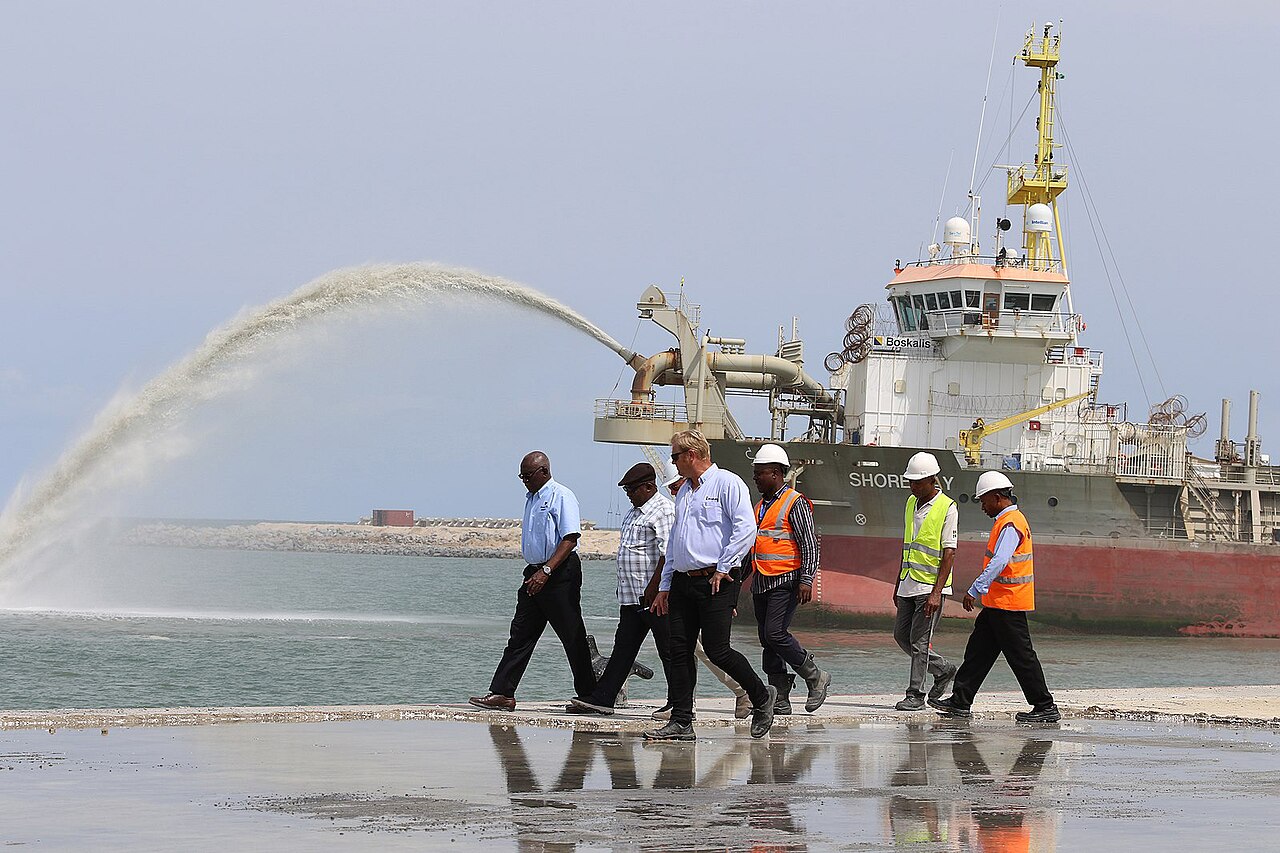
Reports say the Dangote group funds the access road to the Lekki Deep Sea Port in Lagos. The Federal Executive Council, Nigeria’s federal cabinet, approved 158 billion naira (about US$117 million at today’s rate) in September 2024 for service lanes on it, reported as repayable through tax credits.
Nigeria’s President Bola Tinubu commissioned a 37 km section in June 2025. Dangote’s remarks in Accra add a far larger figure but give no list of projects.
In Accra he also proposed a 1,000 km road linking Nigeria, Ghana and Côte d’Ivoire, and said he would press Mahama and other regional leaders to prioritise it. He tied regional production growth to a possible common currency across ECOWAS, the West African regional bloc.
In plain English
- Naira: Nigeria’s currency.
- Tax credit: a cut in tax owed, given in return for spending.
- ECOWAS: the West African regional bloc.
More: Nigeria news in English, pension funds eye Dangote refinery shares, Dangote’s Kenya refinery case
What We Know
Dangote said the 3.3 trillion naira goes into road infrastructure in Nigeria, according to reports of the announcement. He gave the aim as making it cheaper and easier to move goods from his factories to markets.
His companies run about 14,000 trucks in Nigeria. Some reports of the announcement convert the sum to US$2.2 billion at a different rate, so the dollar figure depends on the exchange rate used.
World Bank data cited in reports of the announcement says more than 90% of passenger and freight movement in Nigeria goes by road. The same data, as cited, says about 80% of roads are in poor condition.
Why It Matters
Roads carry most of Nigeria’s goods, so a bad road raises the cost of every delivery. With about 80% of roads in poor condition, trucks wear out faster and trips take longer.
Dangote’s companies run about 14,000 trucks, so better roads would cut costs first for his own factories. Other manufacturers, truckers and shoppers could gain if the roads serve all traffic, though the reports do not say which roads are meant.
Investors weighing Dangote companies may read the spending as a sign of how the group plans to reach customers. We offer no investment view, and the figure alone shows neither returns nor timing.
The Counter-View on Tax Credits
In February 2026, Zacch Adedeji, chairman of the Nigeria Revenue Service (the federal tax authority), reportedly said that using corporate tax credits to fund roads had been discontinued. This is reported, not confirmed by us.
He reportedly argued that it raised constitutional concerns, because public spending should follow the legislature’s appropriation process. We do not know whether any of Dangote’s 3.3 trillion naira is financed through tax credits.
What to Watch Next
No scheduled event was confirmed at an official source in the reports we found. A breakdown of the 3.3 trillion naira, or a response from Mahama and regional leaders on the 1,000 km road, would be the next clear signals.
What Is Not Known
The reports give no breakdown of what the 3.3 trillion naira covers, over what period, or on which roads. They also do not say how much is already spent.
What It Means for You
If you ship goods in Nigeria or buy products made there, the real test is whether roads improve and delivery costs fall. For now the claim is Dangote’s own, with no public project list to check it against.
Frequently Asked Questions
How much is Dangote spending on roads in Nigeria?
Dangote said his businesses are spending 3.3 trillion naira, about US$2.4 billion at 1,350.84 naira per US$. Some reports of the announcement convert it to US$2.2 billion at a different rate.
Why is Dangote investing in roads?
He wants to make it cheaper and easier to move goods from his factories to markets. His companies run about 14,000 trucks in Nigeria.
What road did Dangote propose across West Africa?
He proposed a 1,000 km road linking Nigeria, Ghana and Côte d’Ivoire. He said he would press Mahama and other regional leaders to prioritise it.
Sources: Dangote’s remarks in Accra, 16 November 2026; World Bank road-sector data as cited; Nigeria’s Road Infrastructure Tax Credit scheme records; Federal Executive Council approval of September 2024; market close USD/NGN of 17 November 2026.
This article was produced by The Rio Times’ automated AI newsroom. Editorial responsibility: Matthias Camenzind, Publisher and Editor-in-Chief. The Rio Times also runs Ask Rio Times, which answers from 100,000+ of our own articles, the daily Latin America Power Map, and prediction-market odds on elections and markets.. How we use AI · Report an error